
Power Plants (1896, 1933)
Heating and power facilities have been important to the University of Northern Iowa since its founding as the Iowa State Normal School. Faculty member David Sands Wright recalled the first day of class at UNI on September 6, 1876 in his book Fifty Years at the Teachers College. He stated, "It was a dismal day! The moisture-laden clouds which had already obscured the sun for the previous two days released their contents in a drenching, cold September rain. Since the heating system was under repair and not yet completed, there was no heat to relieve the cold in the room in which the twenty-seven prospective students and four faculty members met."
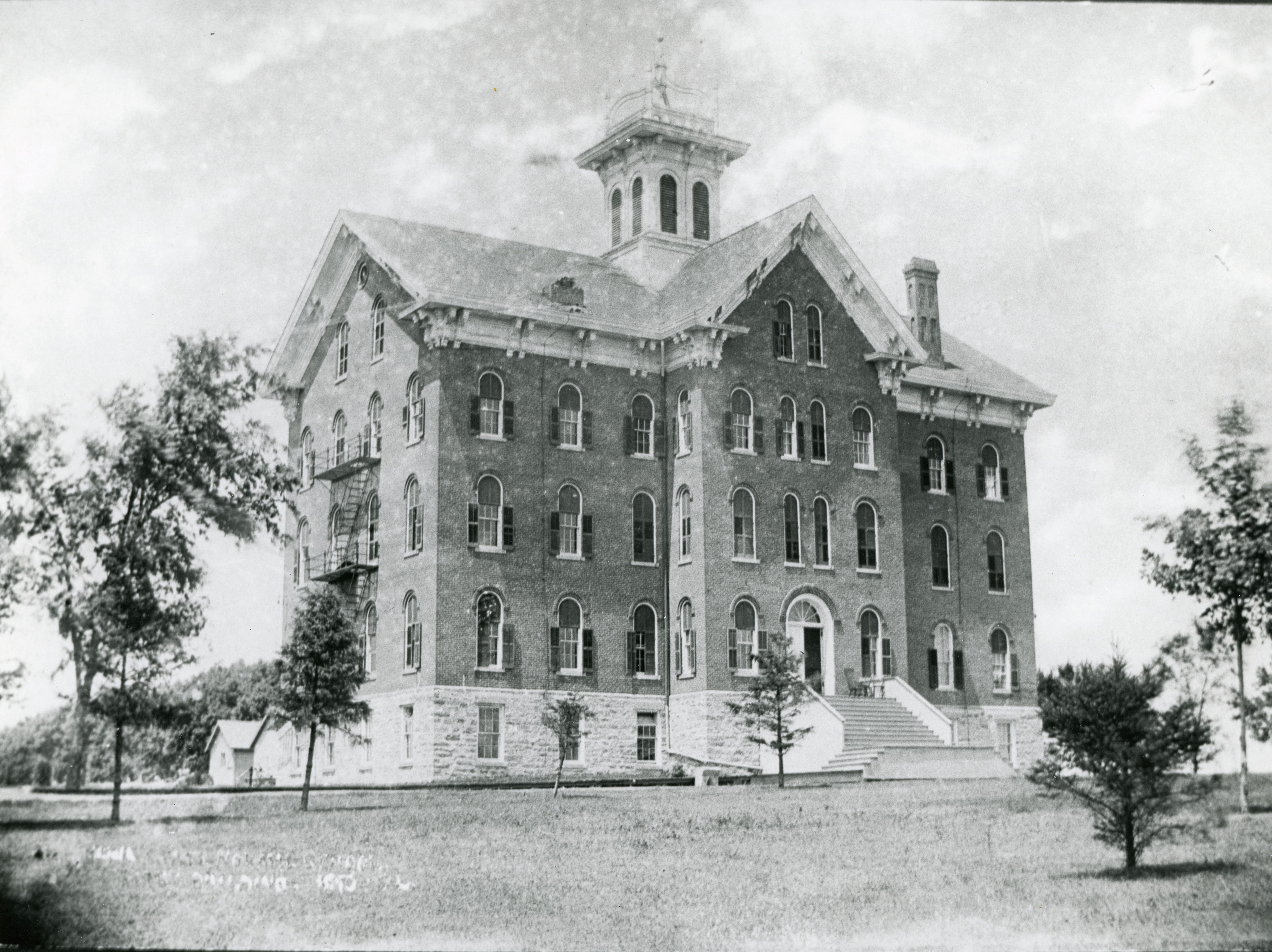
The Iowa State Normal School inherited its facilities from the Civil War Soldiers Orphans Home when the orphanage consolidated operations in Davenport. The buildings included the main building, later called Central Hall, and several smaller outbuildings. The main building seems to initially have been heated with wood or coal stoves. In recalling the opening of the building on October 12, 1869, the Orphans Home Superintendent stated 30 stoves were unable to comfortably heat the orphans' living quarters.
By the time the Normal School inherited the building from the Orphans Home in 1876, there was a steam system installed. Maude Gilchrist, daughter of the school’s first principal James Gilchrist, later recalled: "Here, too, lived Mr. Marks [actually Martz], a faithful engineer, who managed the steam heating plant, keeping us warm with those creaking pipes, and providing steam for hot water on each floor. We drew a pitcher of cold water from the big pipe, then let the steam from a near-by pipe bubble into the pitcher."
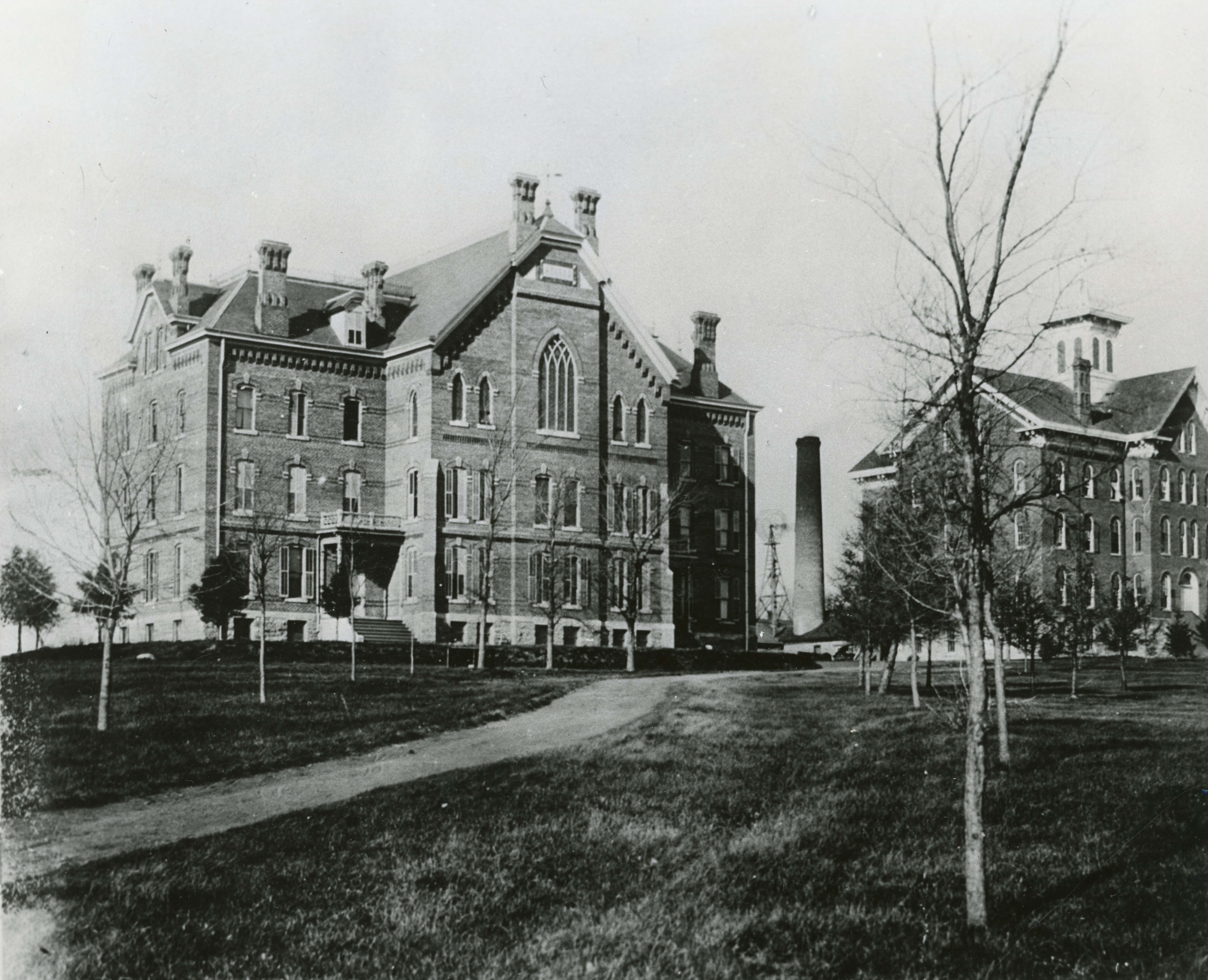
With a combination of state appropriations and local donations, the Normal School added a new building, South Hall (later called Old Gilchrist Hall), in fall 1883. The Normal School directors asked for funds to connect the new building to the steam system in Central Hall, but the General Assembly did not respond. The directors redirected $3,000 from other school funds to complete the project. A visiting committee from the General Assembly noted this and commended the action anyway. They stated that "the directors and officers acted wisely."
The steward was responsible for the heating system as well as for lighting (kerosene lamps), repairs, board bills and property inventory. Initially the steward William Pattee reported directly to the Board of Directors. However, the Board later directed the Steward to report to the Normal School President.
In 1892, the General Assembly approved $9,000 for a new smokestack and improvements to the steam heating system. In 1895, the Normal School added a third building, the Administration Building. Although this building was not as large as the earlier two buildings, it still required additional steam to provide heat and power. An engineer certified the old boiler, after 20 years of service, needed to be replaced. The General Assembly supplied funds to replace the old system.
By 1896, the school had built a separate building called the Steam Plant and a 135-foot tall smokestack, which stood in the area of the current Maucker Union. By 1902, the school catalog reported the Steam Plant included the "Engine and Dynamo Rooms" for generating electricity. In 1905, President Homer Seerley announced the combined steam and power plant would be able to provide enough heat and electricity for many years to come. During the next few years, at least five major buildings were added to campus. No major changes in the power plant were noted until 1923, when two new boilers were installed.
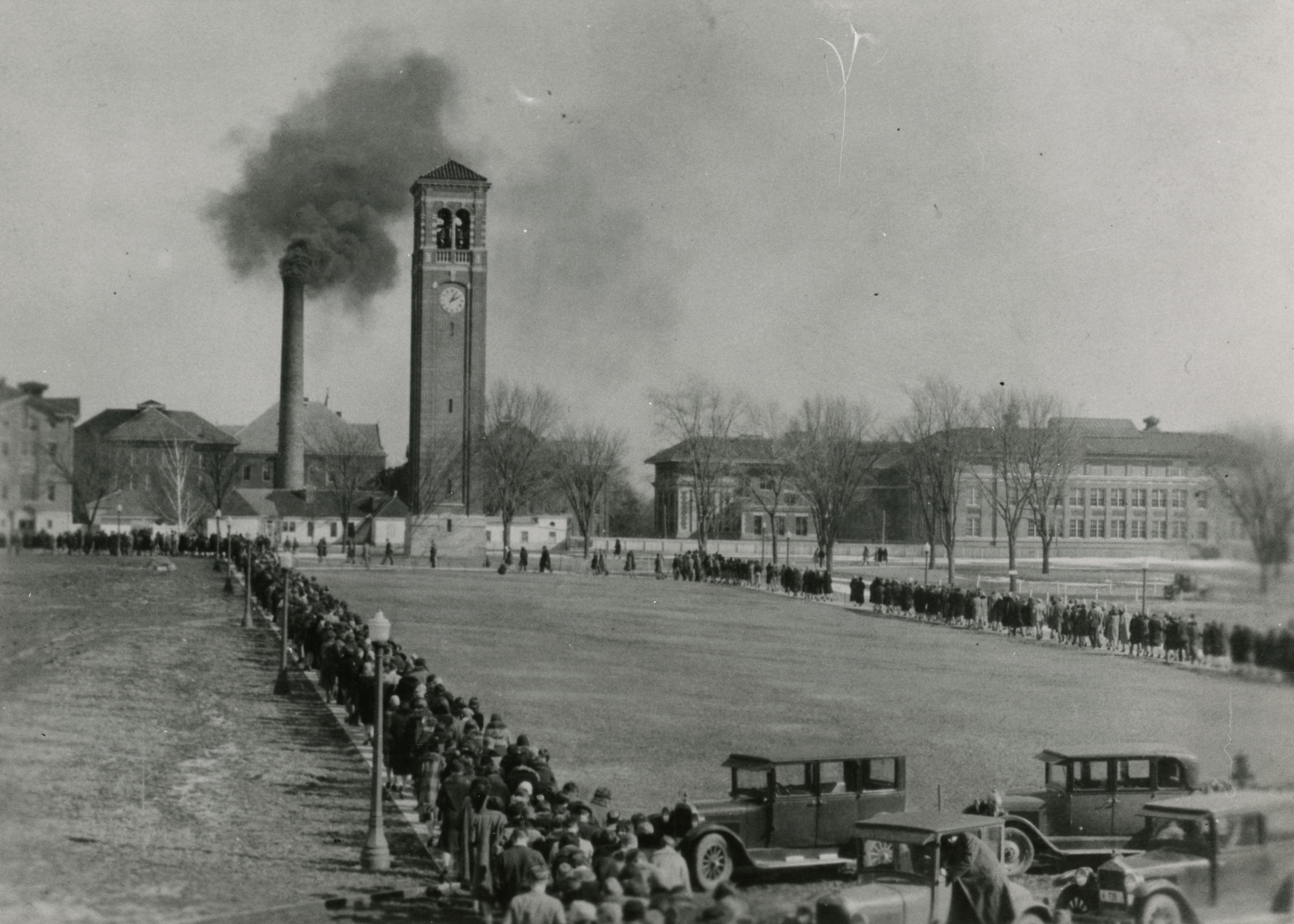

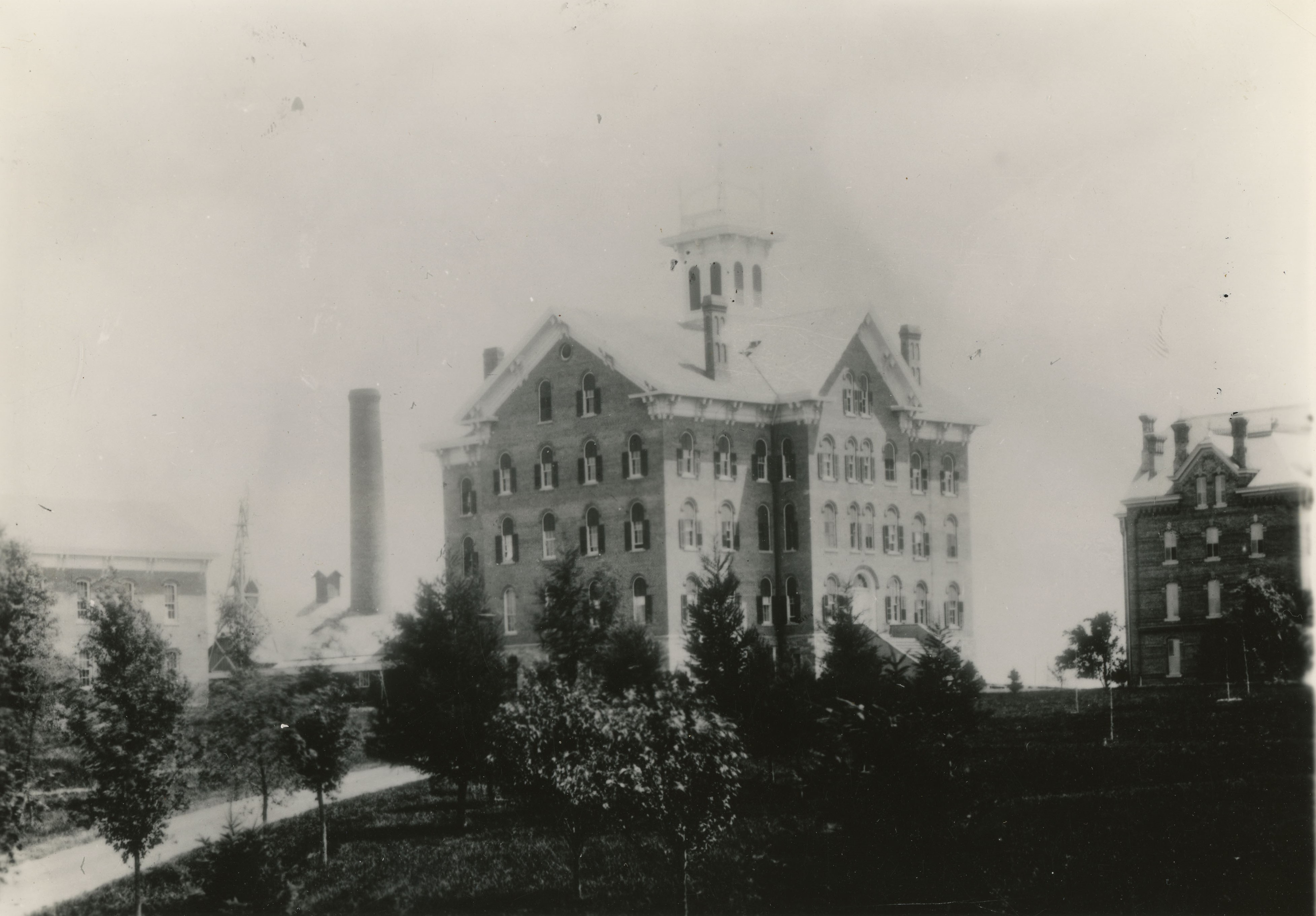
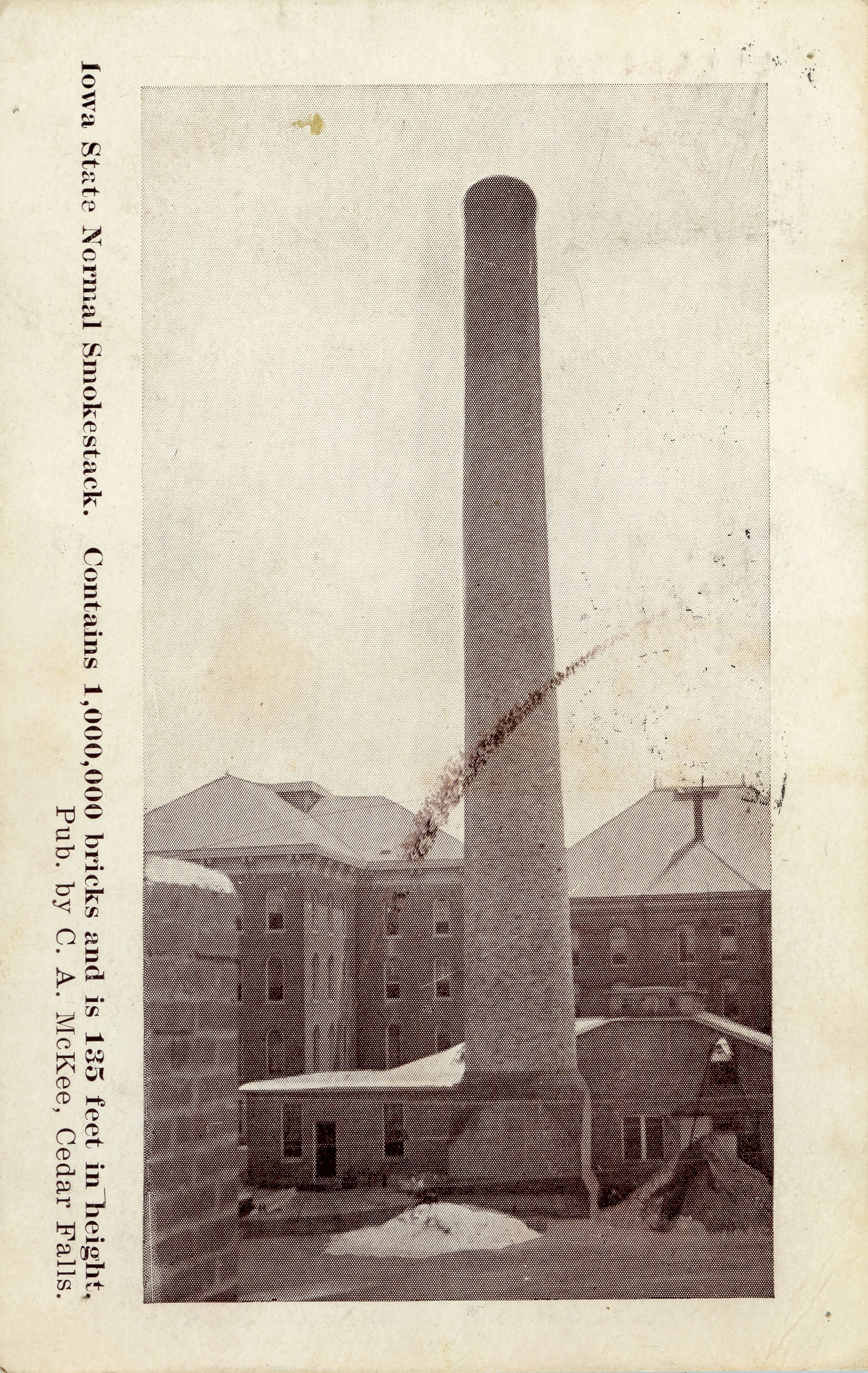
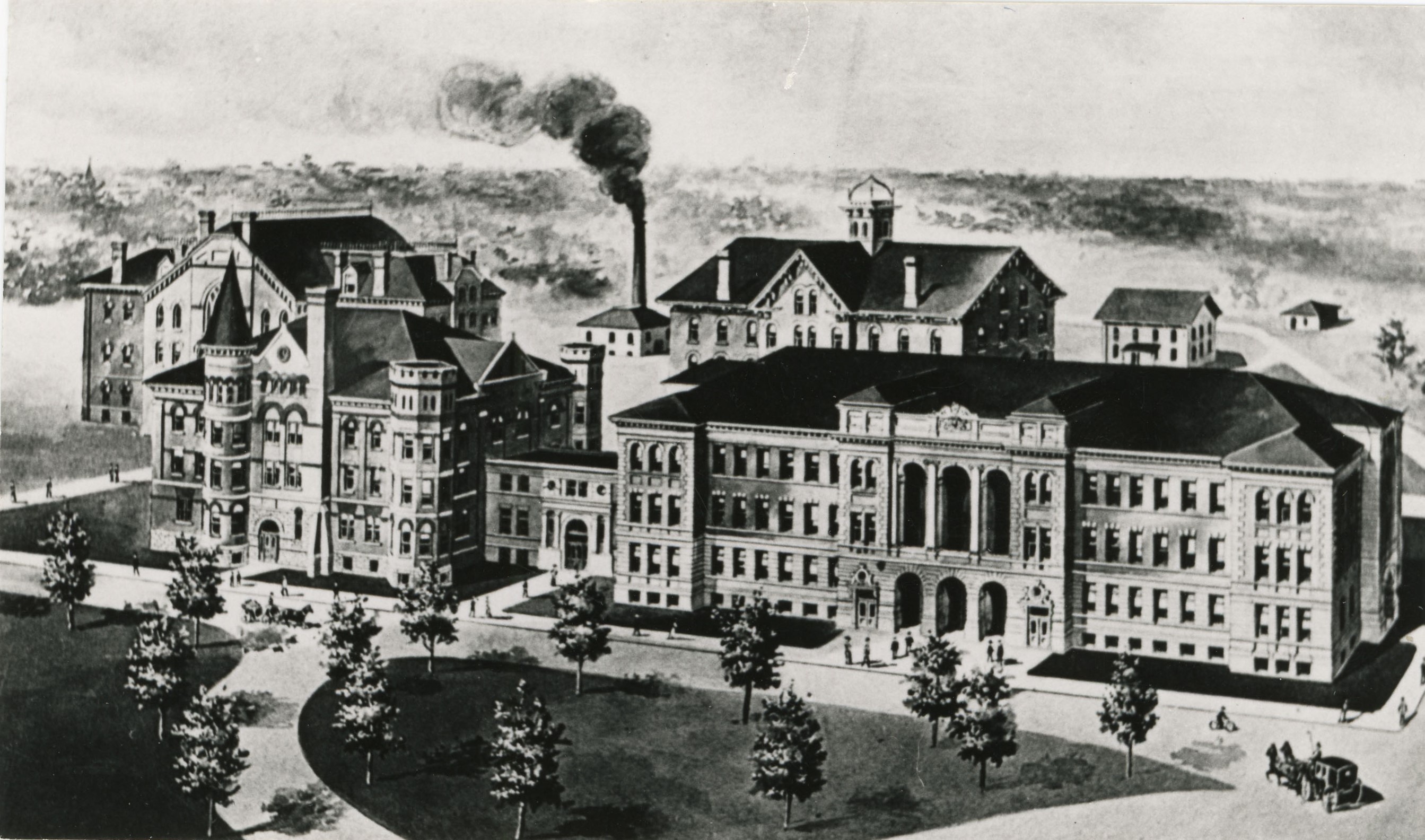
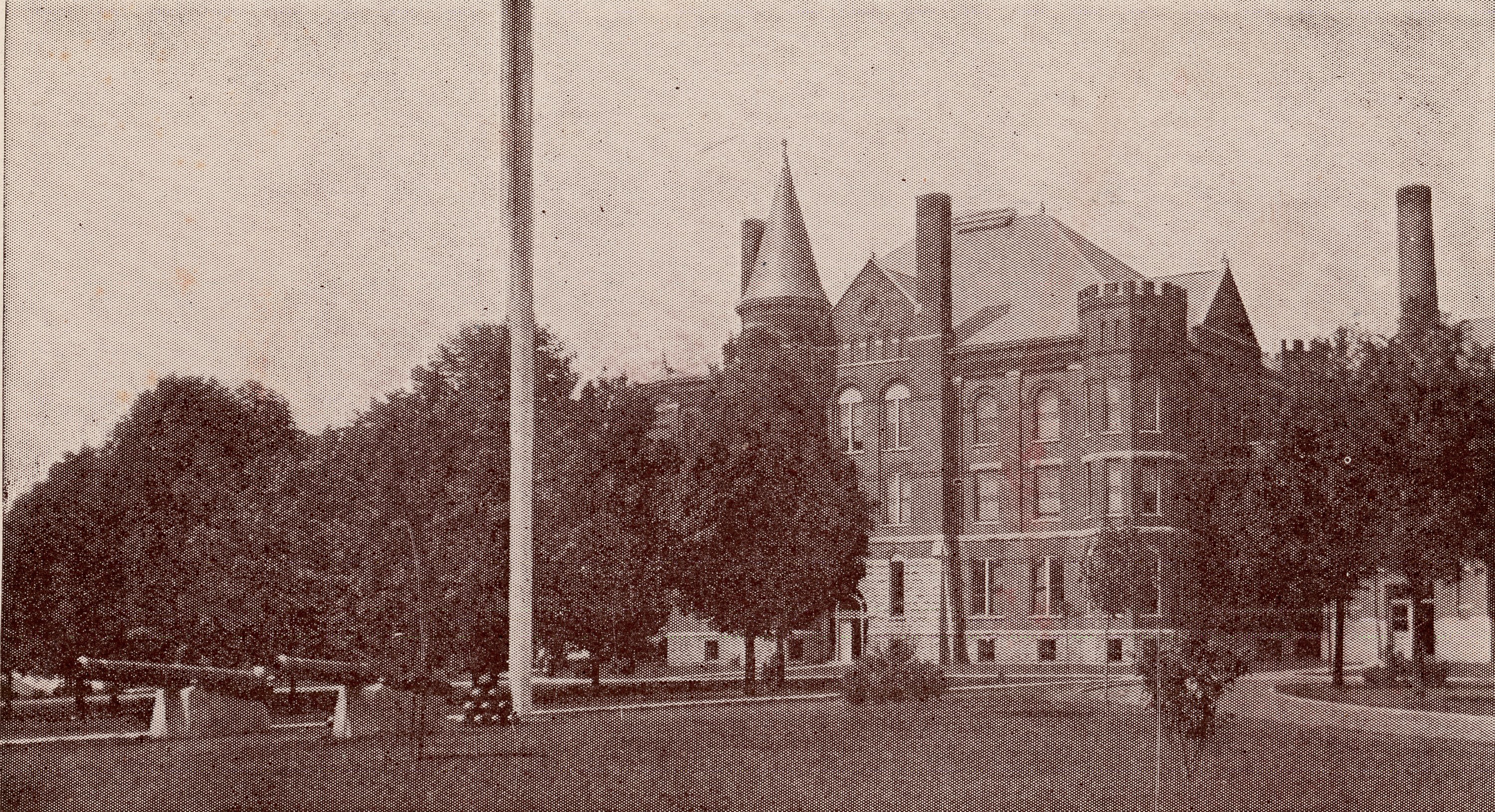
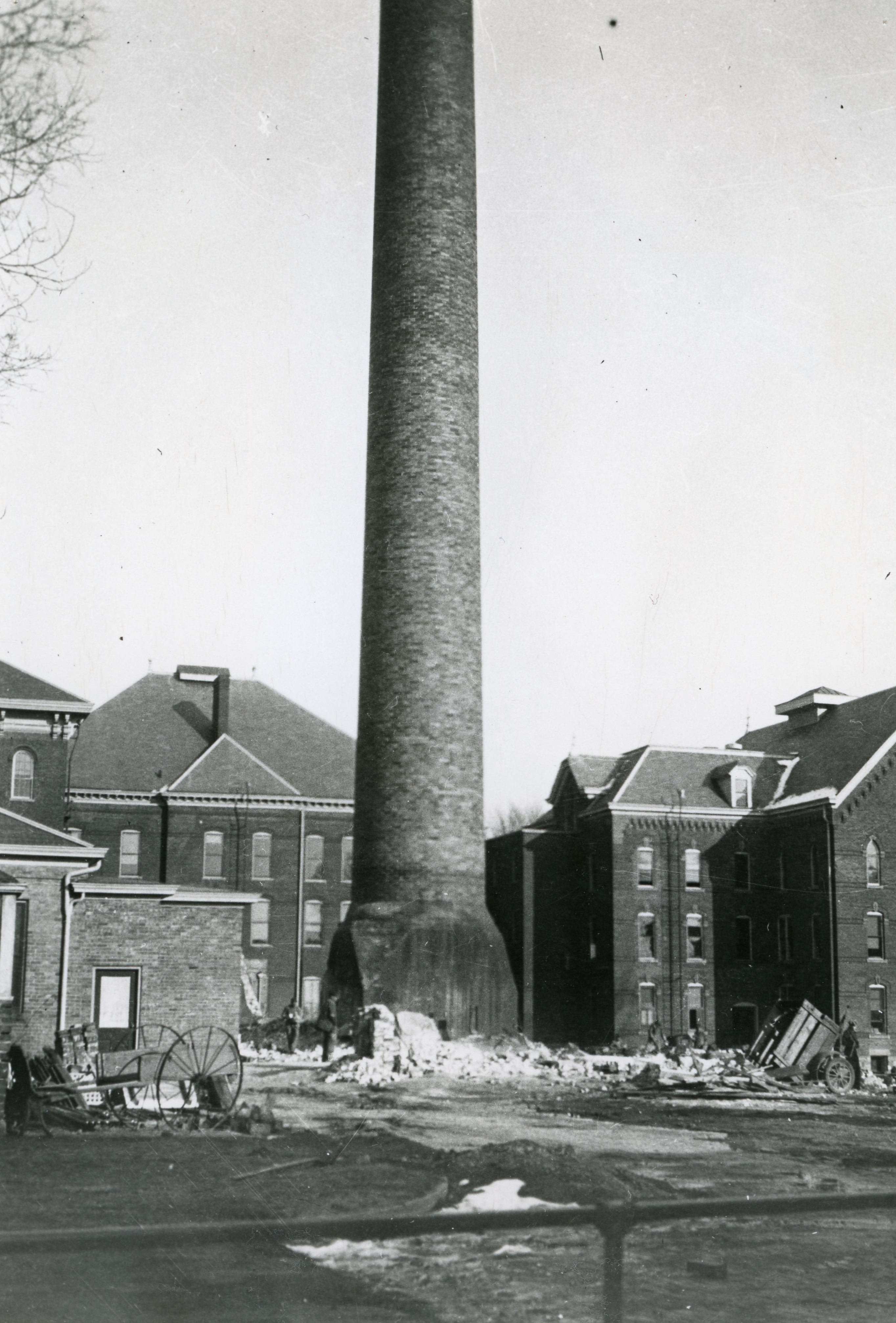

As he approached retirement in 1928, President Seerley expressed concern about the steam system’s adequacy for supporting an expanding physical plant. The school had just purchased 40 acres of land west of the original 40-acre campus. New buildings in this area west of the Campanile would require more steam and longer delivery lines. Seerley believed the system would be stretched too far and result in a school closure in the event of necessary repairs to the heating system.
When President Orval Latham took office in 1928, he renewed President Seerley's requests for a new heating and power plant. He mentioned the plant was hand-fired, which required special, more expensive coal and increasingly frequent repairs. In addition, the school could not build additional dormitories until it had boilers which could provide sufficient steam to heat more buildings. He also noted the problems associated with smoke and soot from the smokestack located in the middle of campus. President Latham used a consultant's report to persuade the General Assembly in 1930 to provide $180,000 for a new plant. Construction began in 1931 and was completed in 1933.
The new plant was constructed southeast of the site of the current Curris Business Building. In the 1930s, the area was on the edge of campus. The prevailing winter north and west winds tended to carry smoke and soot away from classrooms, dormitories and offices. In addition, 27th Street was then a through street and deliveries could be made directly to the plant with minimal disruption of campus activities. When the new plant was completed, most of the steam plant was demolished, although the Dynamo Room continued as a storage facility, craft shop, and anthropology lab until the 1988 Maucker Union Expansion replaced it.
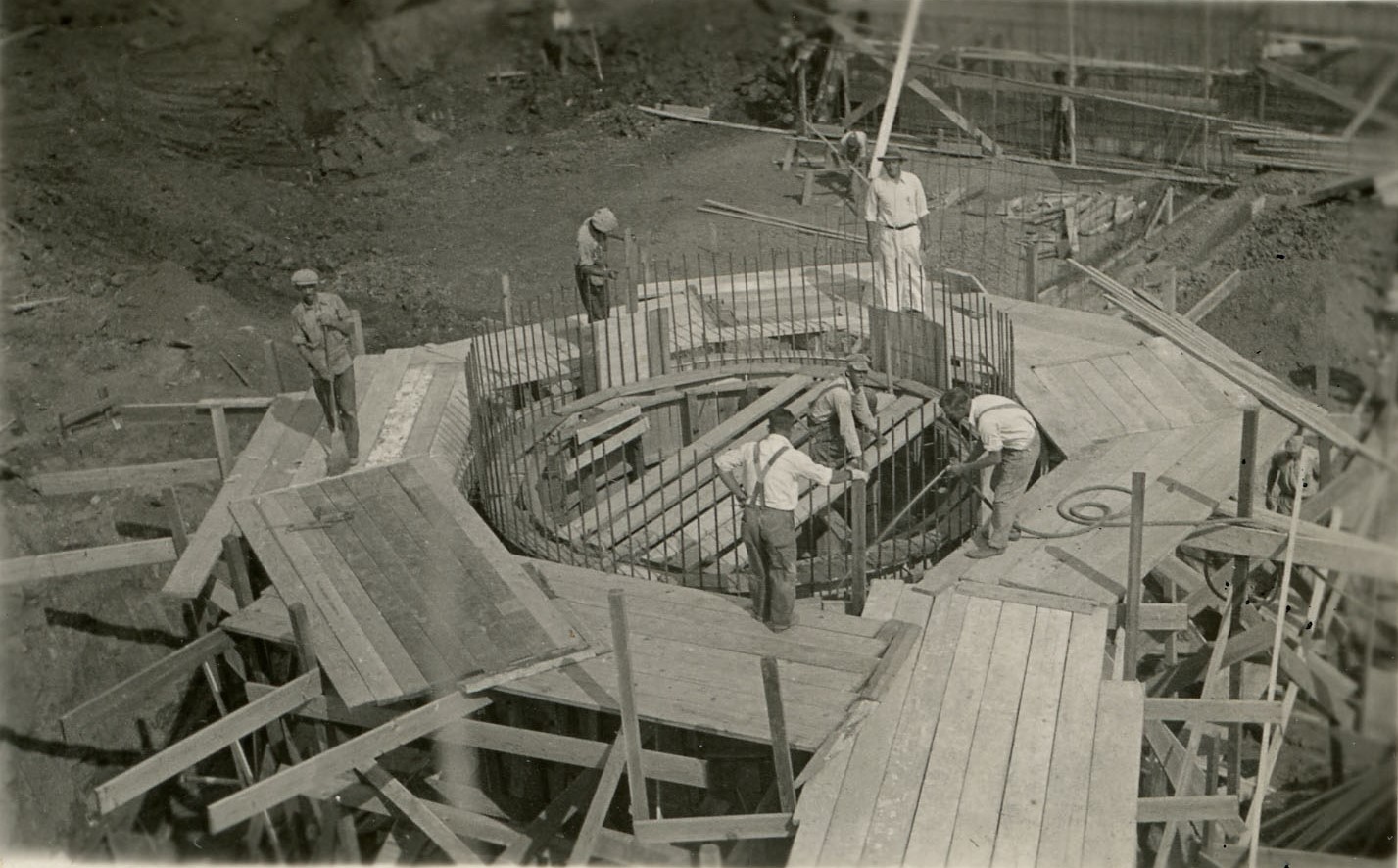
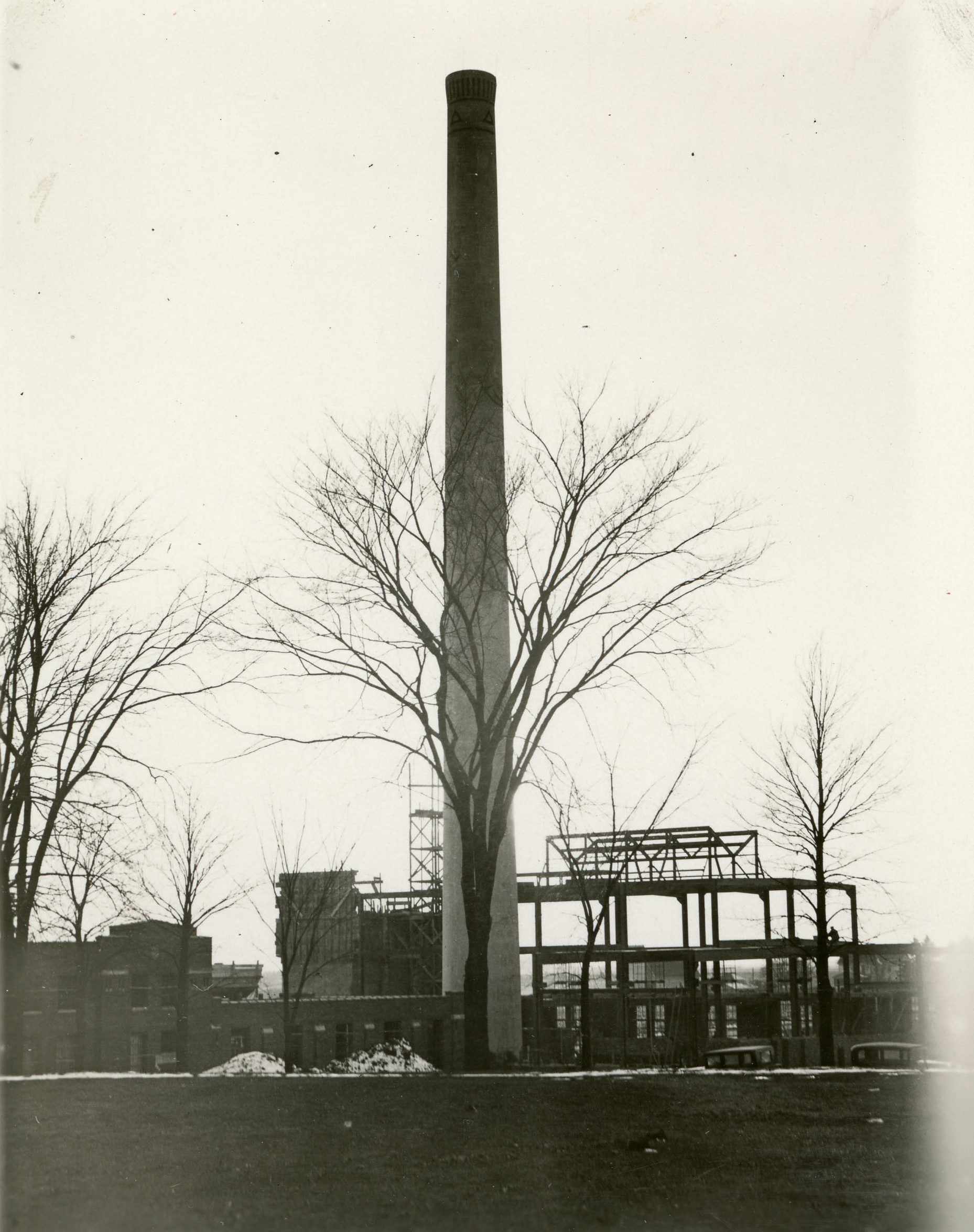
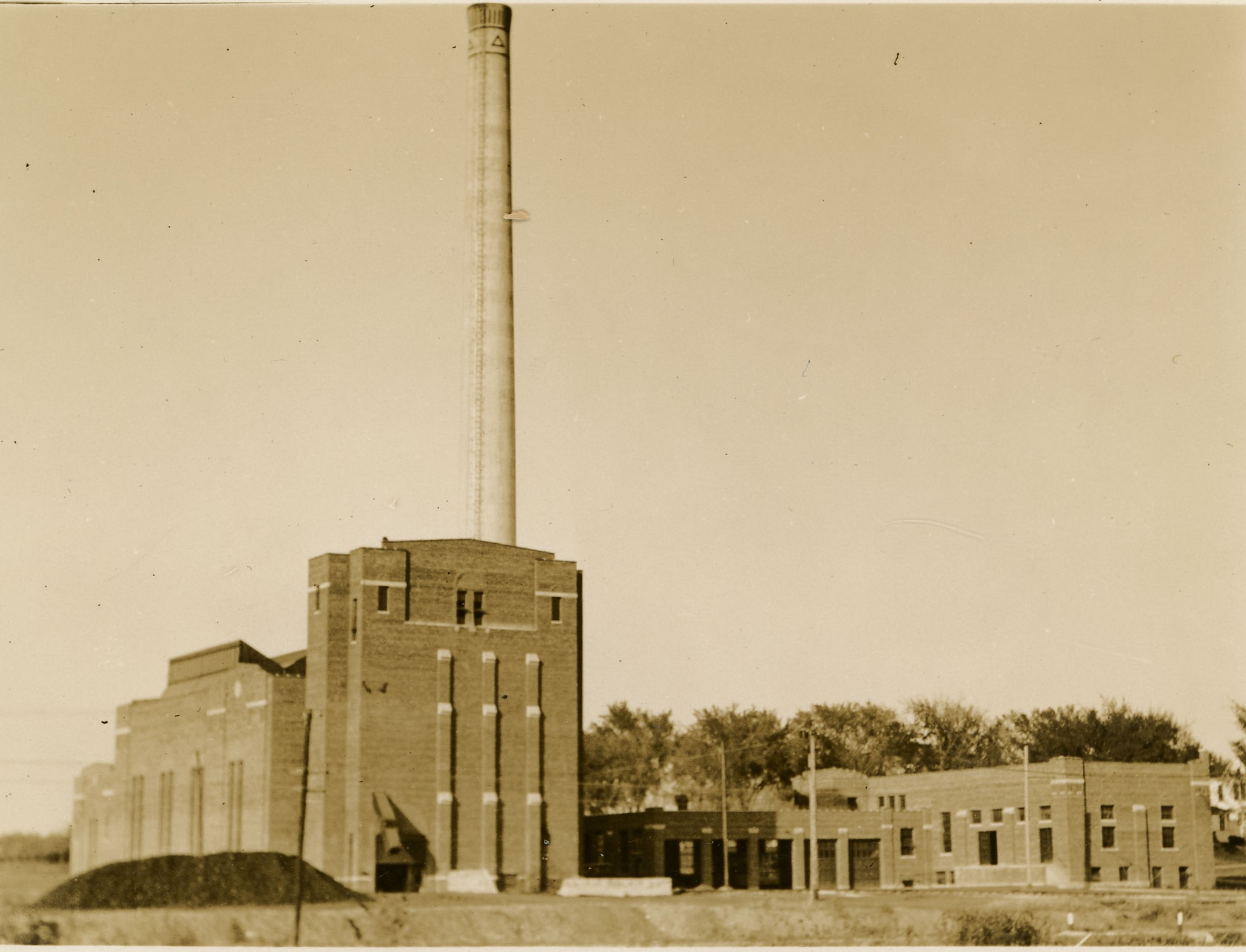
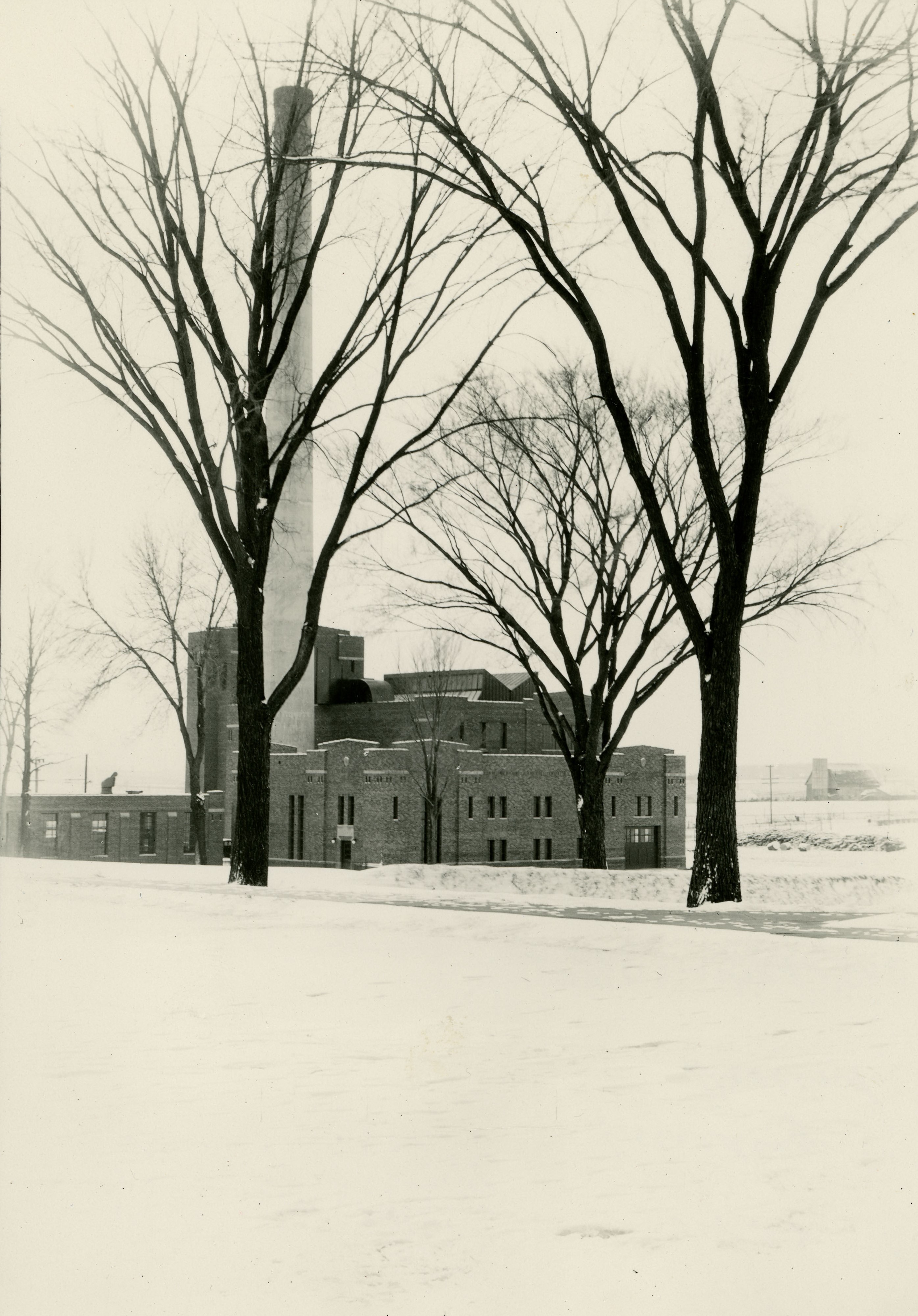
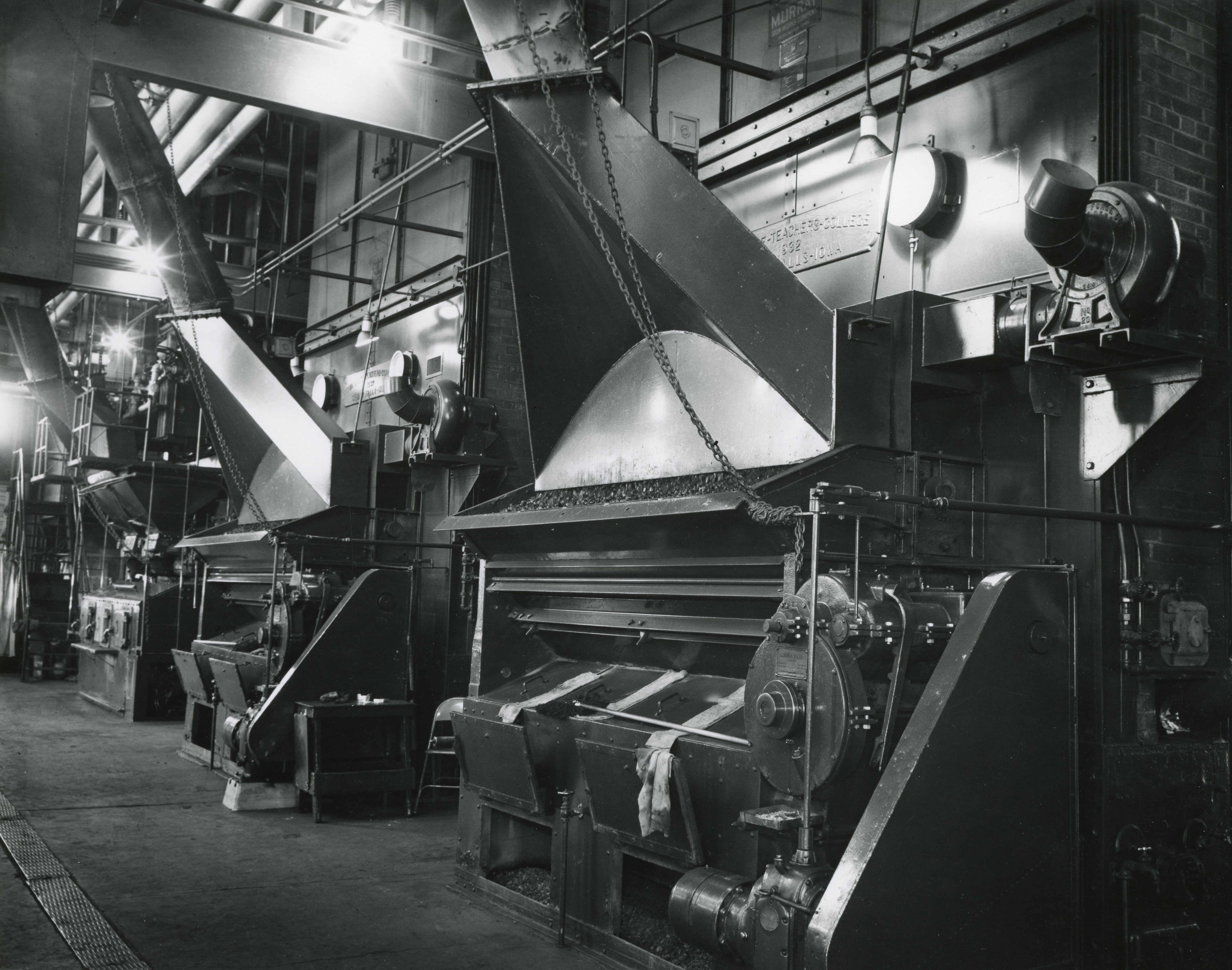
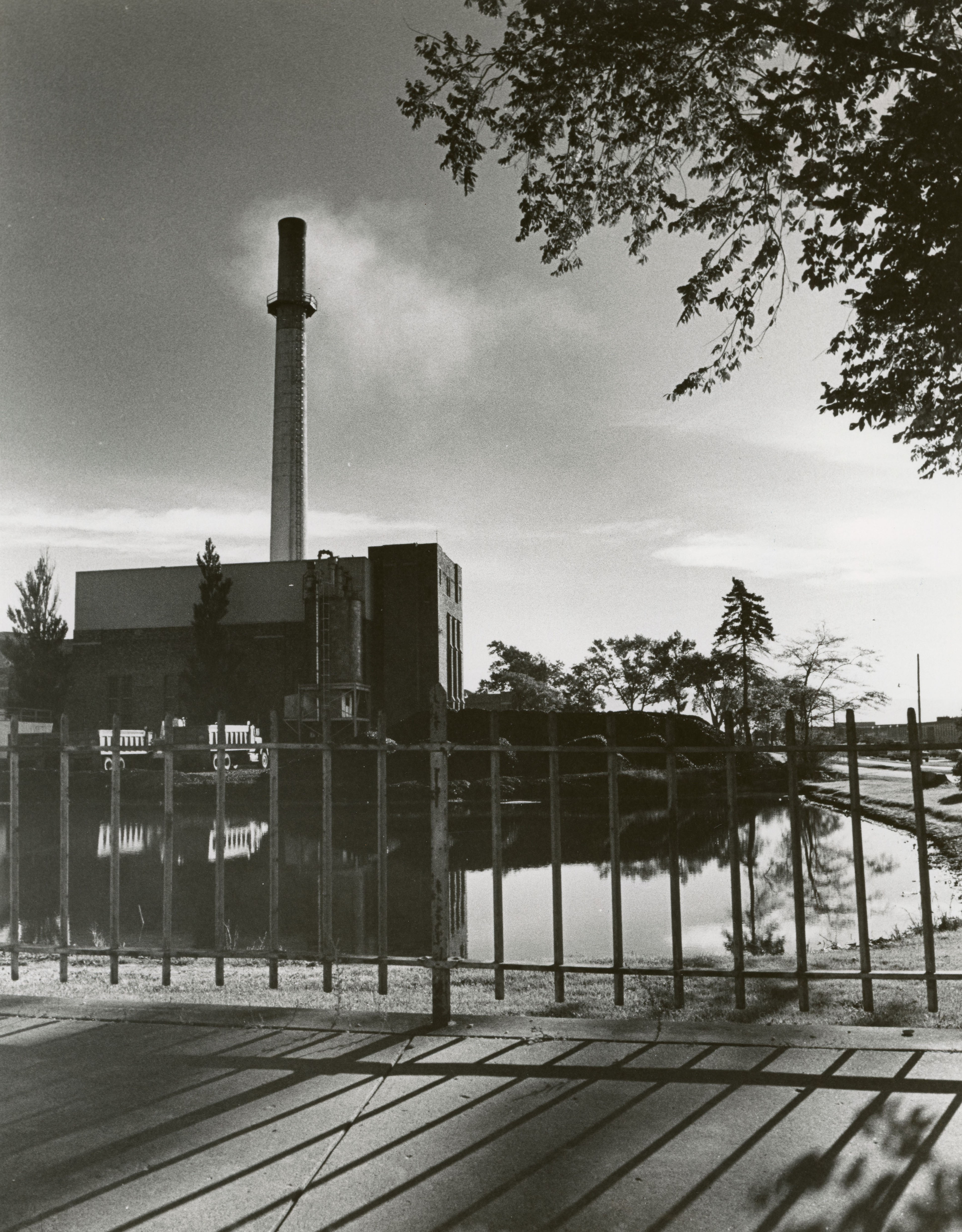
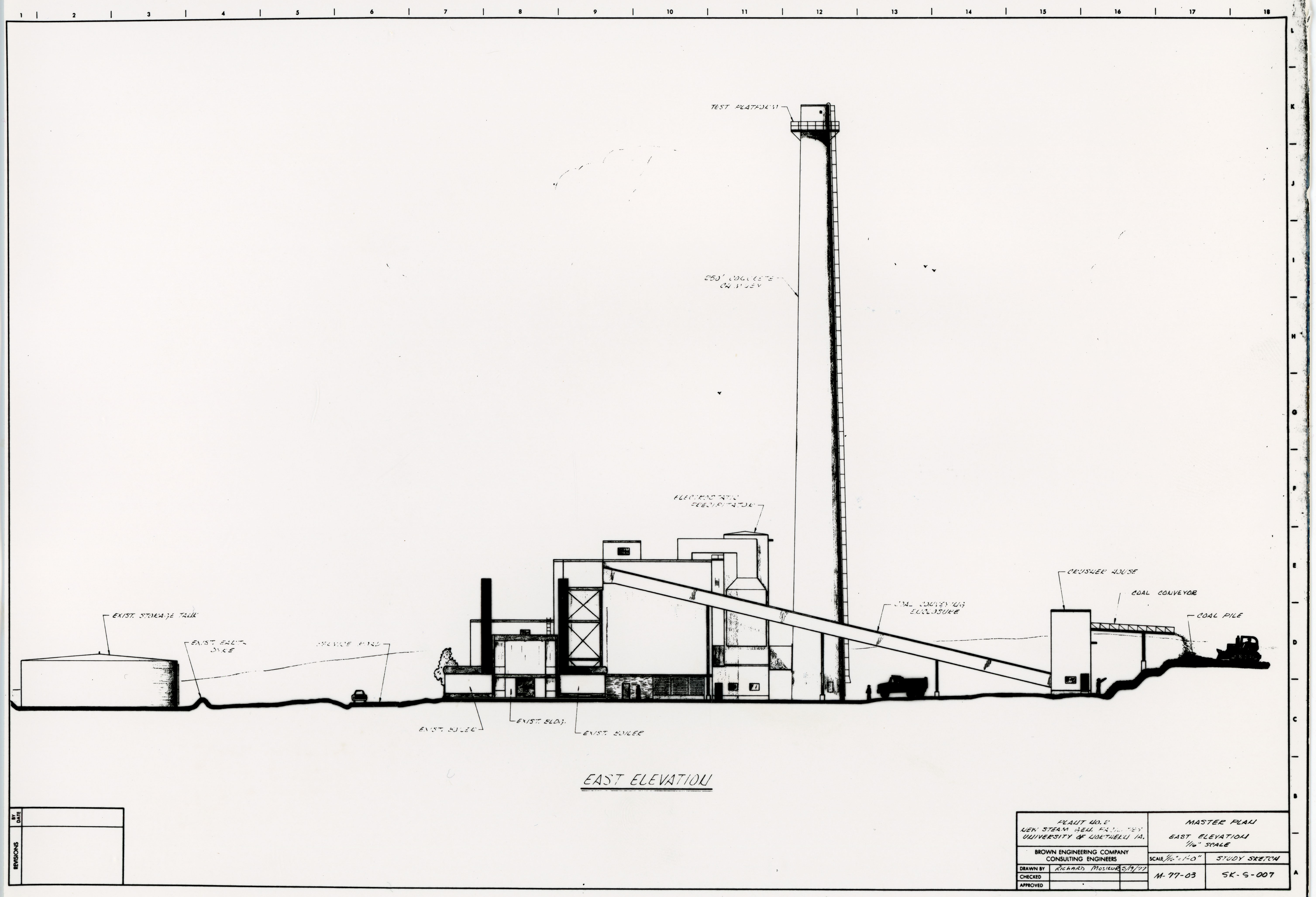
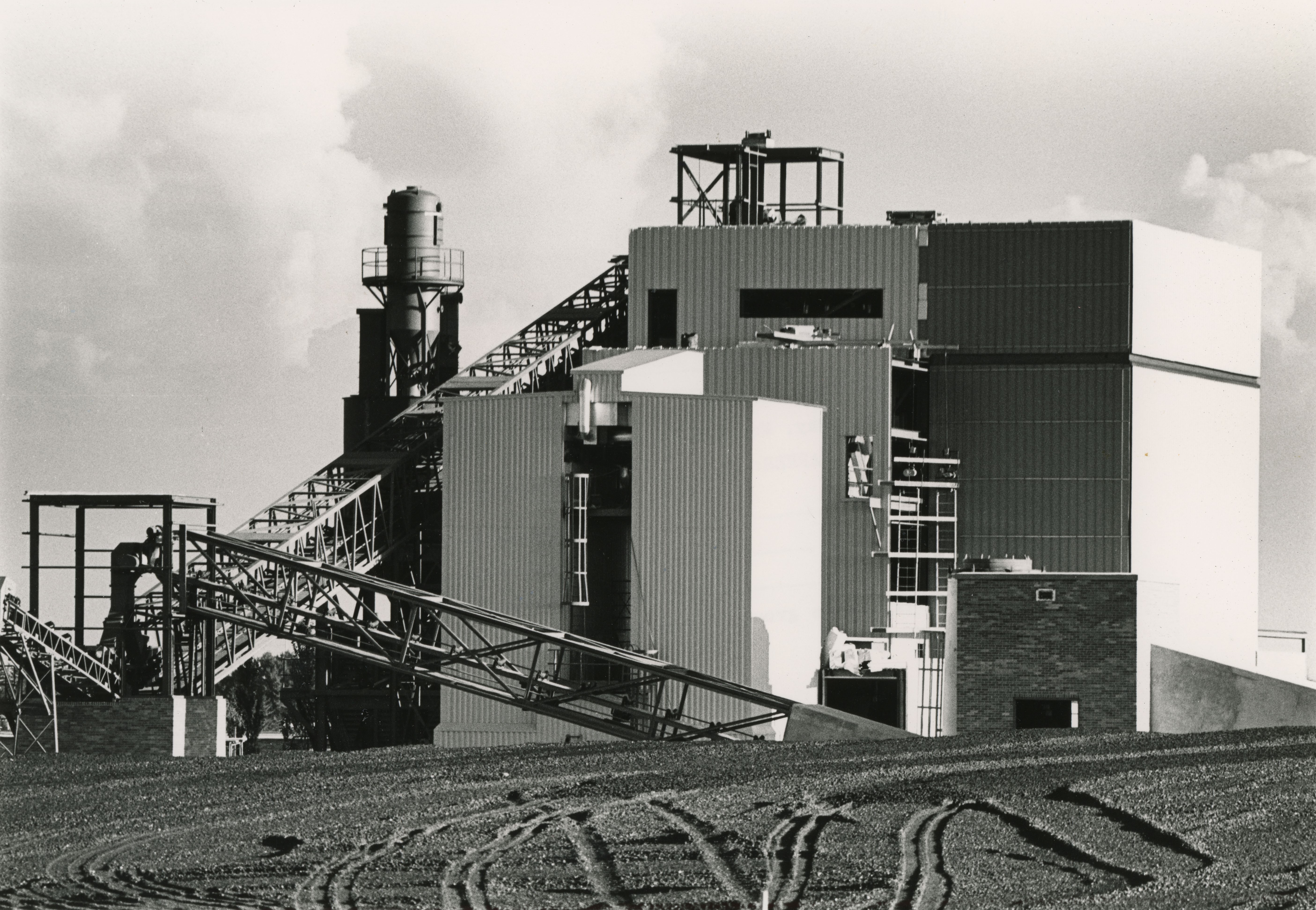
The 1933 Industrial Deco-style power plant provided campus with most of its heat and light for over 50 years. New boilers were added in 1951 and 1961. However, by the late 1960s, the need for heat and light was expanding beyond its capacity. In 1969, the Regents approved a $1.4 million contract for a new power plant building and steam tunnel extensions to a site west of Hudson Road and south of 27th Street. A $8.75 million coal-fired boiler began operation there in 1980, producing 120,000 pounds of steam per hour. It replaced two 1932 boilers, each rated at 30,000 pounds of steam per hour.
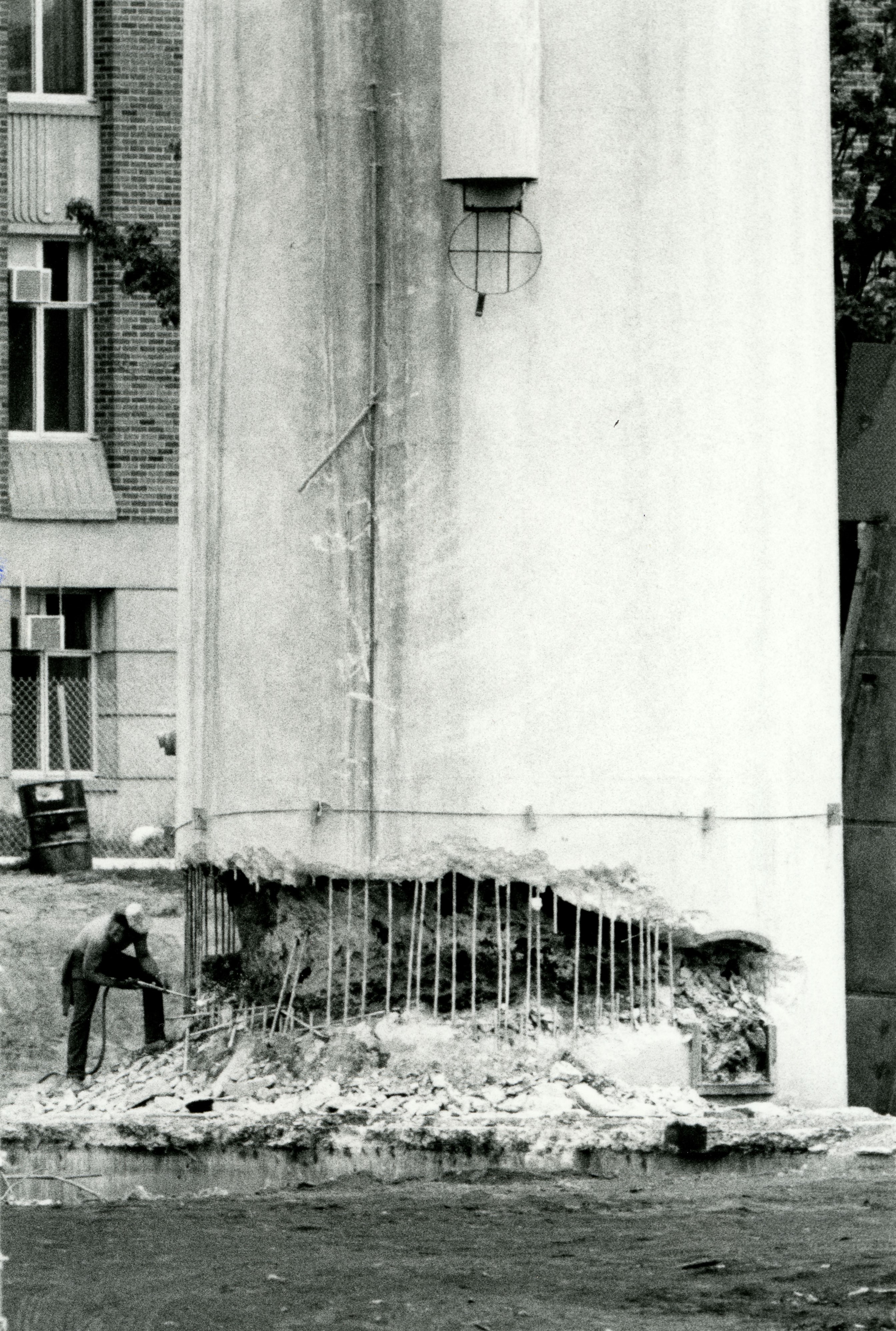
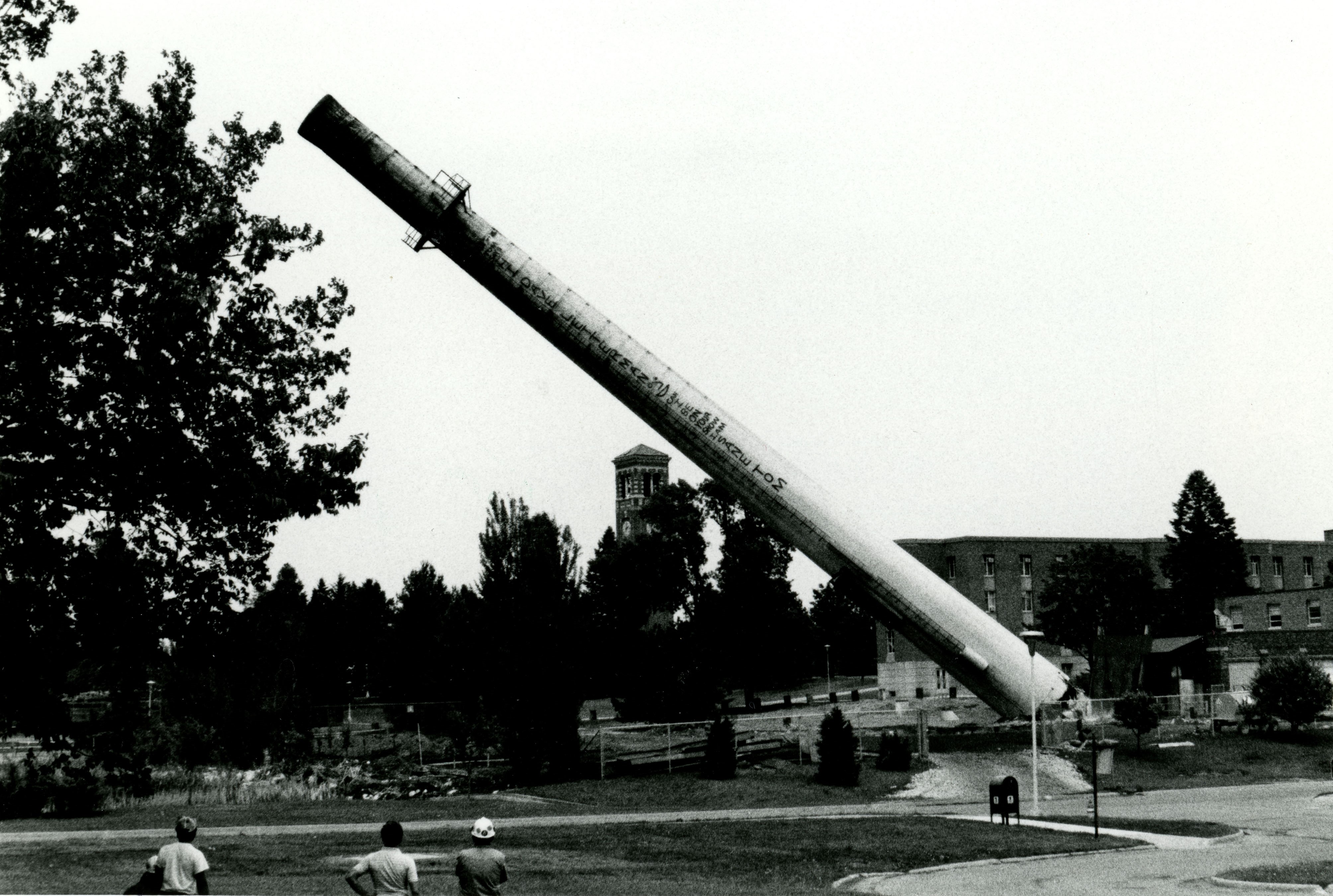
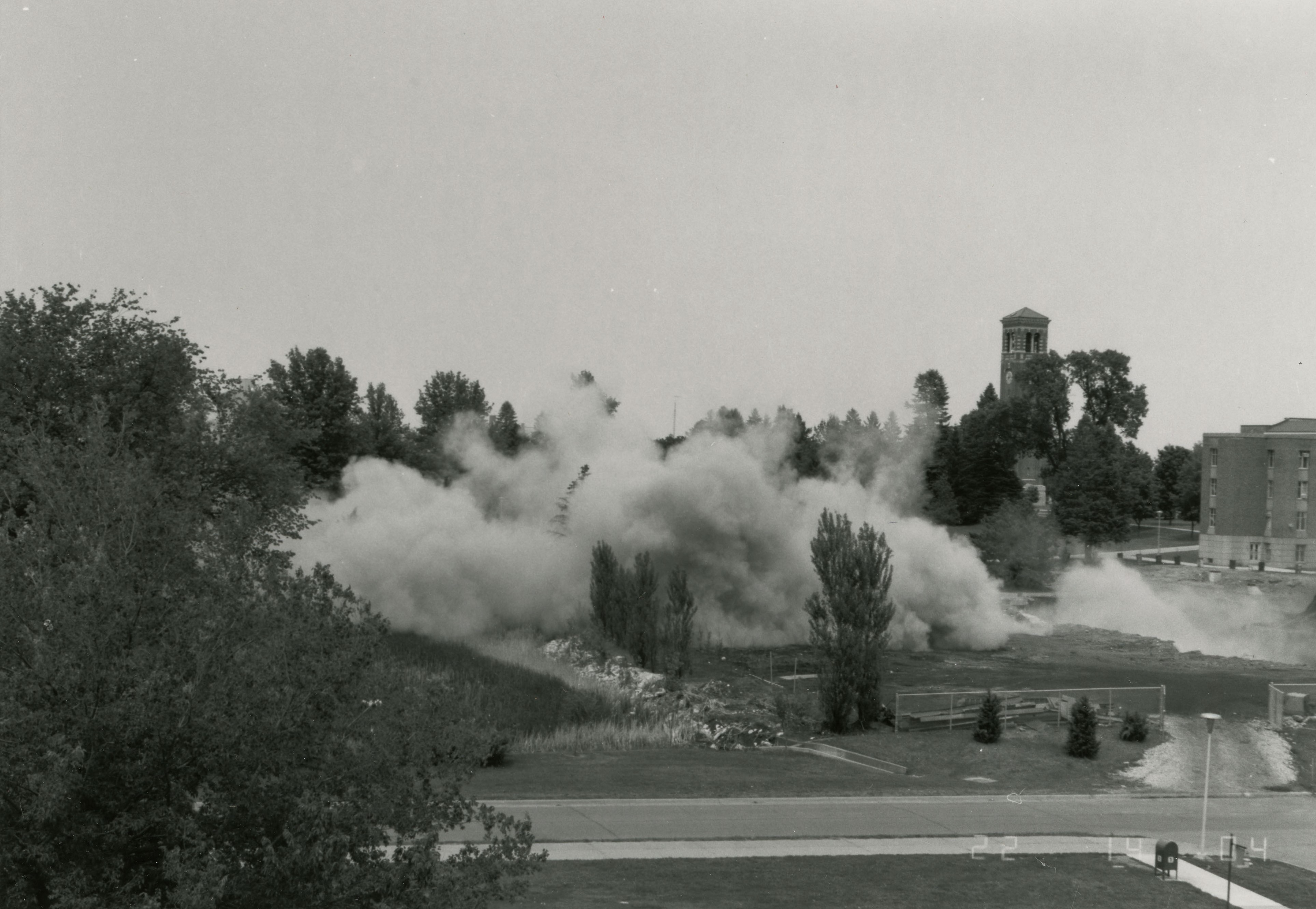
With plans in place for an additional $11.1 million boiler at the new site, the old plant was scheduled for demolition in 1988. Most of the plant was razed with a wrecking ball and bulldozers with the exception of the 195-foot tall smokestack. The Cleveland Wrecking Company, general contractors for the demolition project, called in the Gerard Chimney Company to deal with the smokestack. Explosives were ruled out because of the proximity of buildings such as Baker Hall. On May 20 and 21, 1988, the company chipped away the concrete base of the stack. By Sunday, May 22, the concrete on the western side of the base had been chipped away and only the reinforcing bars remained to hold up the stack on that side. News reports indicated the stack would be dropped around noon. As spectators gathered in the parking lot west of Gilchrist Hall, a worker began to cut the reinforcing bars one-by-one. A little after 2 p.m., the stack began to tip, then fell onto the designated area.
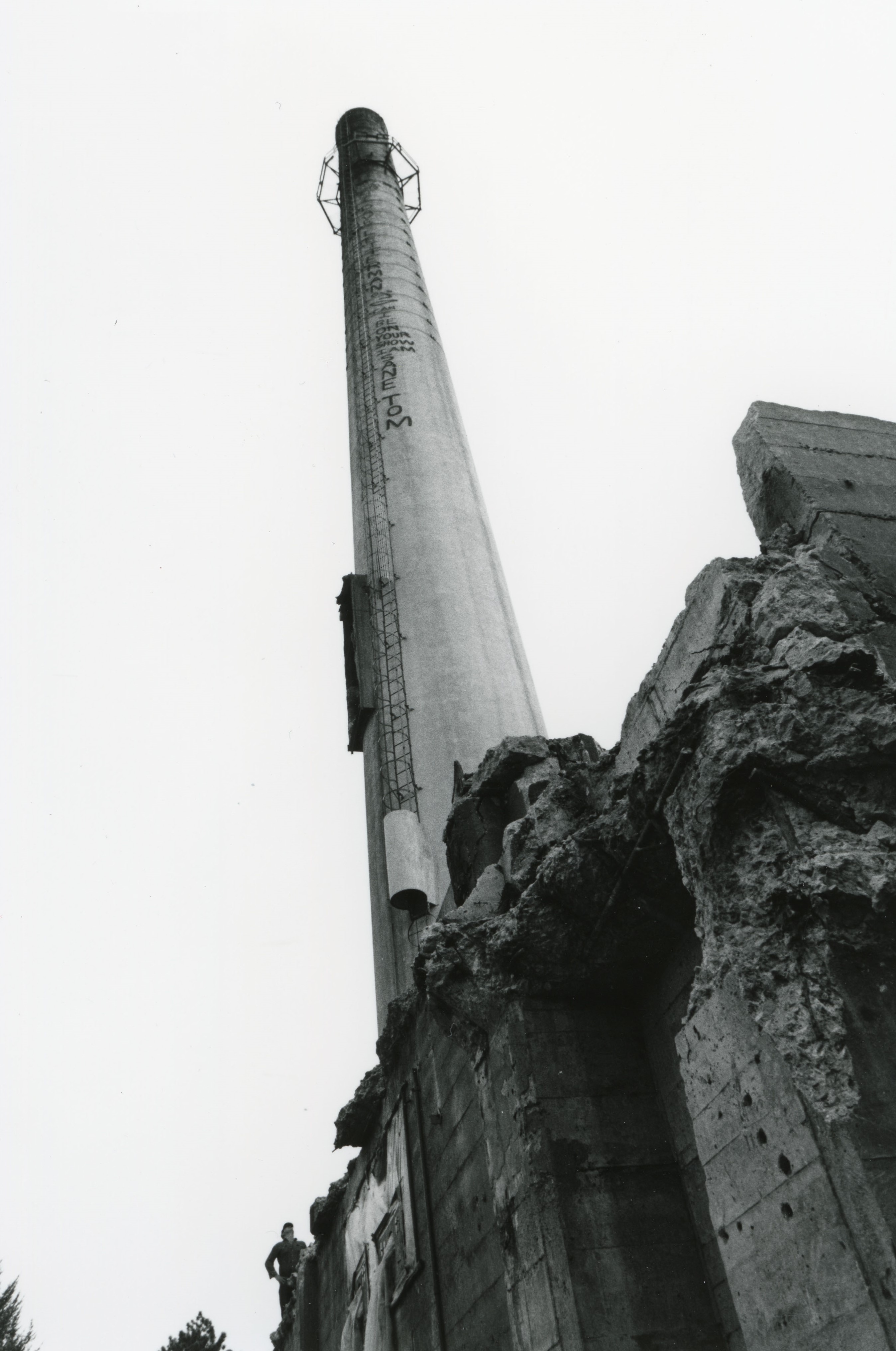
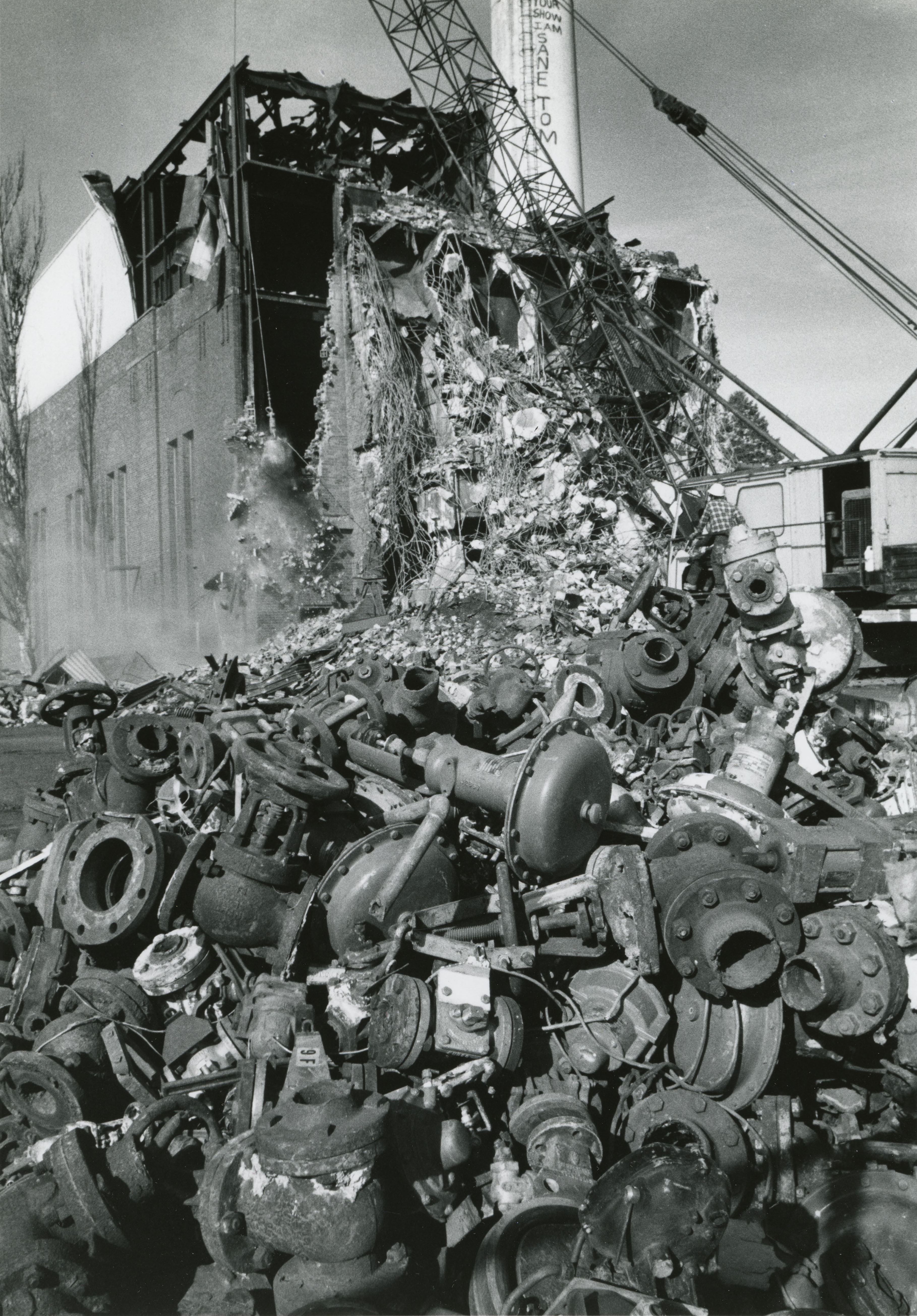
Information about the current power plant can be found on the Facilities Management website: https://fm.uni.edu/service-units/utilities.
Written and developed by Gerald L. Peterson and Susan Basye, Special Collections and University Archives, September-October 1997; photos and captions updated by Graduate Assistant Eliza Mussmann February 9, 2023; copyedited by Student Assistant Sara Shannon, December 2025; updated by Library Assistant Hannah Bernhard, February 2026.