
Old Administration Building (1894)
Note on the naming of this building: It was initially called Central Hall because it stood between North Hall (the original Orphans' Home, later also known as Central Hall) and South Hall (later known as Gilchrist Hall / Old Gilchrist Hall. By 1905, as other buildings appeared on campus and geographical names made less sense, the name was changed to the Administration Building. In the 1970s and early 1980s, it was commonly referred to as Old Ad to distinguish it from the new Administration Building, now called Gilchrist Hall.
By 1892, the Iowa State Normal School needed a new building to provide additional classrooms, offices, library facilities and literary society halls. The original building on campus, Central Hall, and the second building, Gilchrist Hall, were overcrowded. Some temporary solutions for the overcrowding issue included converting a Central Hall parlor into a classroom and using the library for classroom space. While the school hoped for a solution from the state, the General Assembly had other priorities and did not appropriate money in the 1892 session. The school discontinued its Boarding Department in fall 1892 as another solution. On-campus student housing was converted to classrooms, and the area around the Normal School, including College Hill, saw an increase in the availability of rooming and boarding houses.
At the Alumni Association meeting during commencement week June 1893, President Homer Seerley stated the General Assembly had been generous to the Normal School in the past, and he believed the next Alumni Association meeting could be held in a new building. Normal School Board of Directors member J.W. Jarnagin also urged alumni to contact their legislators about a new campus building.
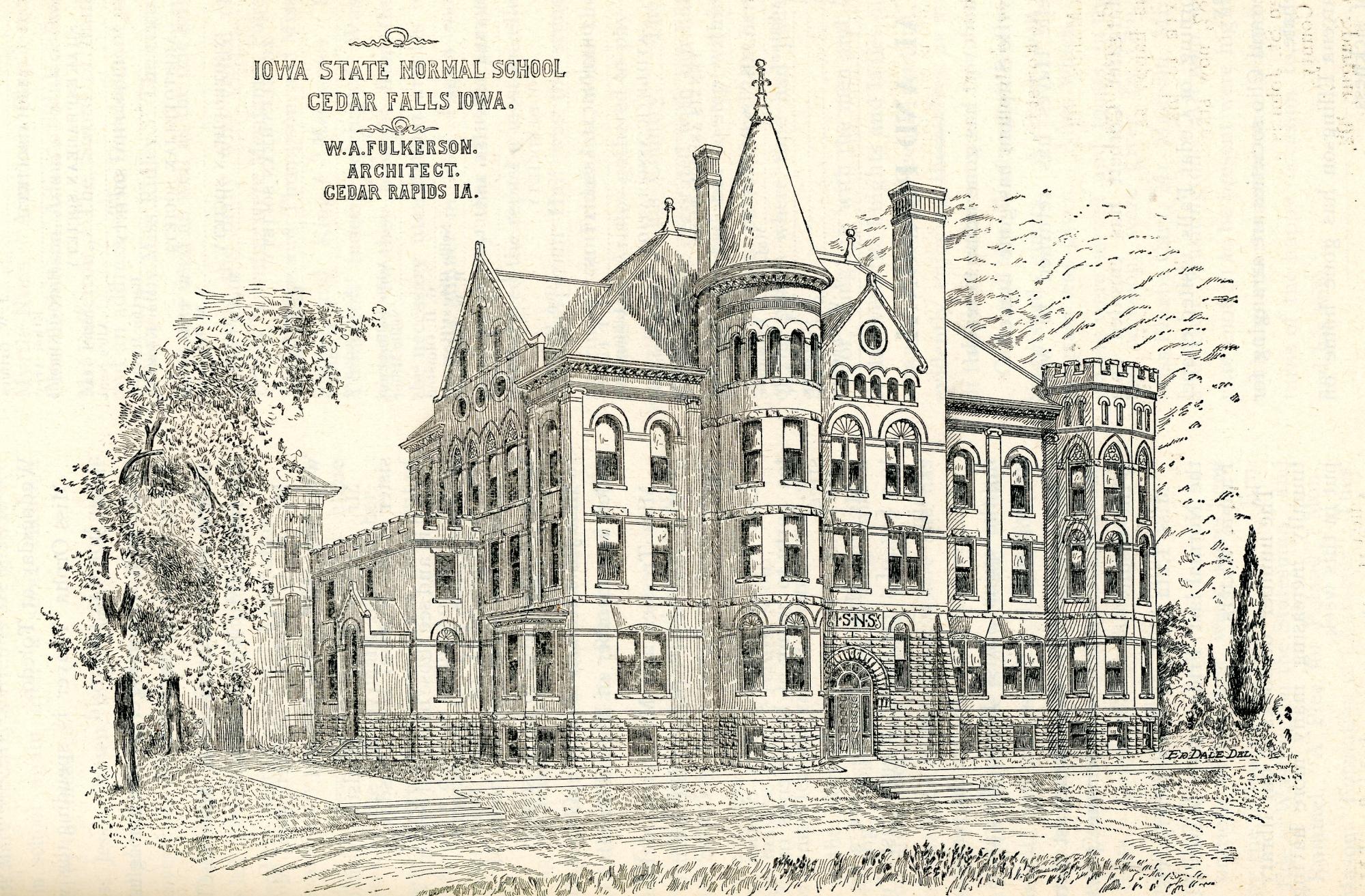
Early in 1894, a bill was introduced in the General Assembly to appropriate $75,000 for a "main building" at the Normal School. In mid-February, a Visiting Committee from the legislature recommended a reduction in the appropriation to $50,000. On March 2, 1894, the Appropriations Committees of both houses heard requests from the Normal School. The bill passed with a $30,000 appropriation for a new building and an additional $5,000 for equipment and furnishings. The General Assembly included a provision in the appropriation bill that no more than one half of the money could be drawn in any year, slowing progress. W.A. Fulkerson, an architect from Cedar Rapids, designed the building.
Student organizations began to advocate for their own "halls" in the new building. The Normal school was isolated from the community, so student organizations, especially the literary societies, provided educational and entertainment opportunities to supplement student education. These groups provided opportunities for students to participate in debate, public speaking and parliamentary procedure. The societies also fielded athletic teams, went on hikes and picnics, and established an environment for dating custom. The literary societies, as well as the YMCA and YWCA, asked for their own meeting rooms; the new building seemed like it could have space for society halls and maybe a large reception room. However, designated space for student organizations was not provided at the Iowa State Normal School until construction of the Auditorium Building in 1900.
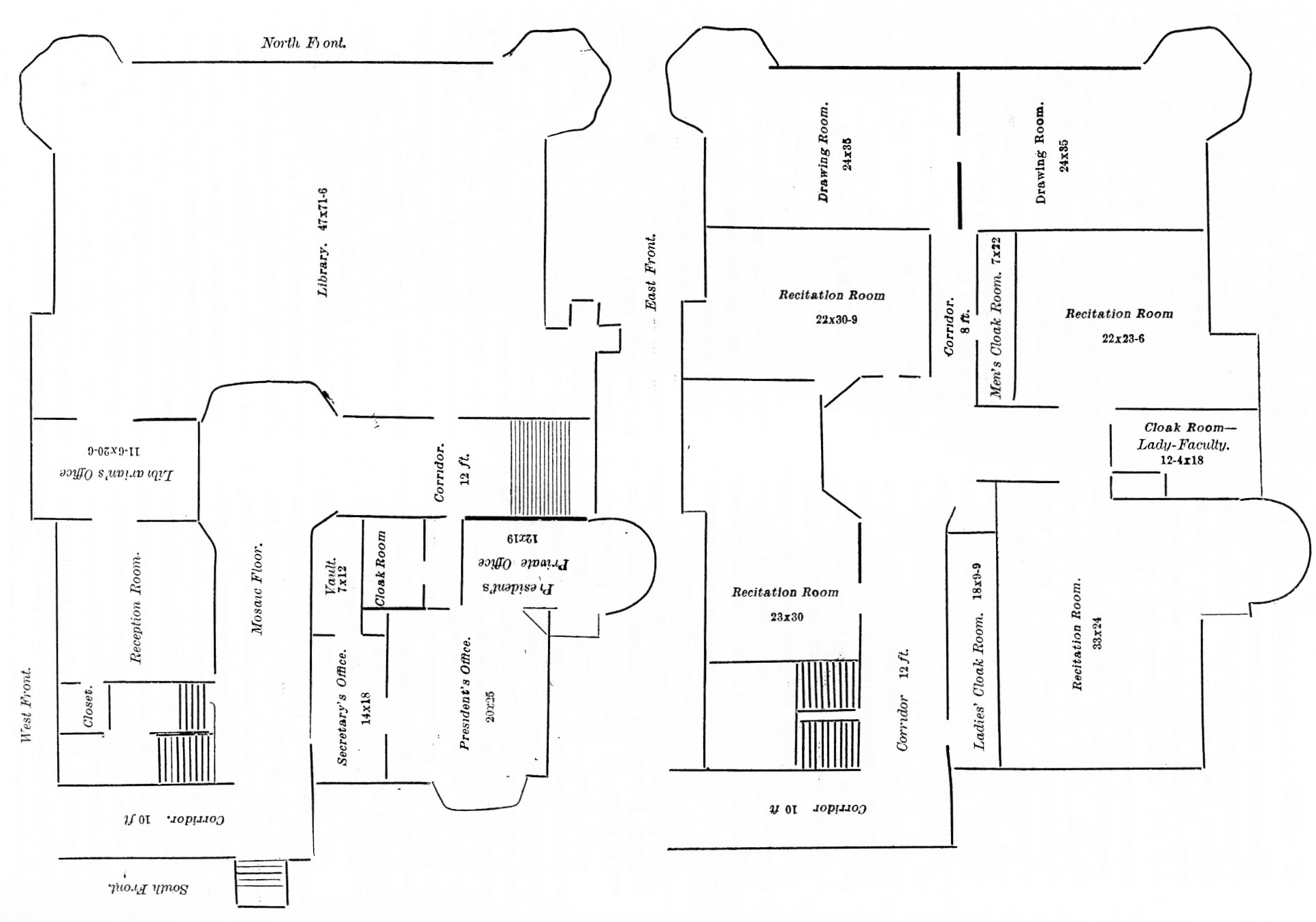
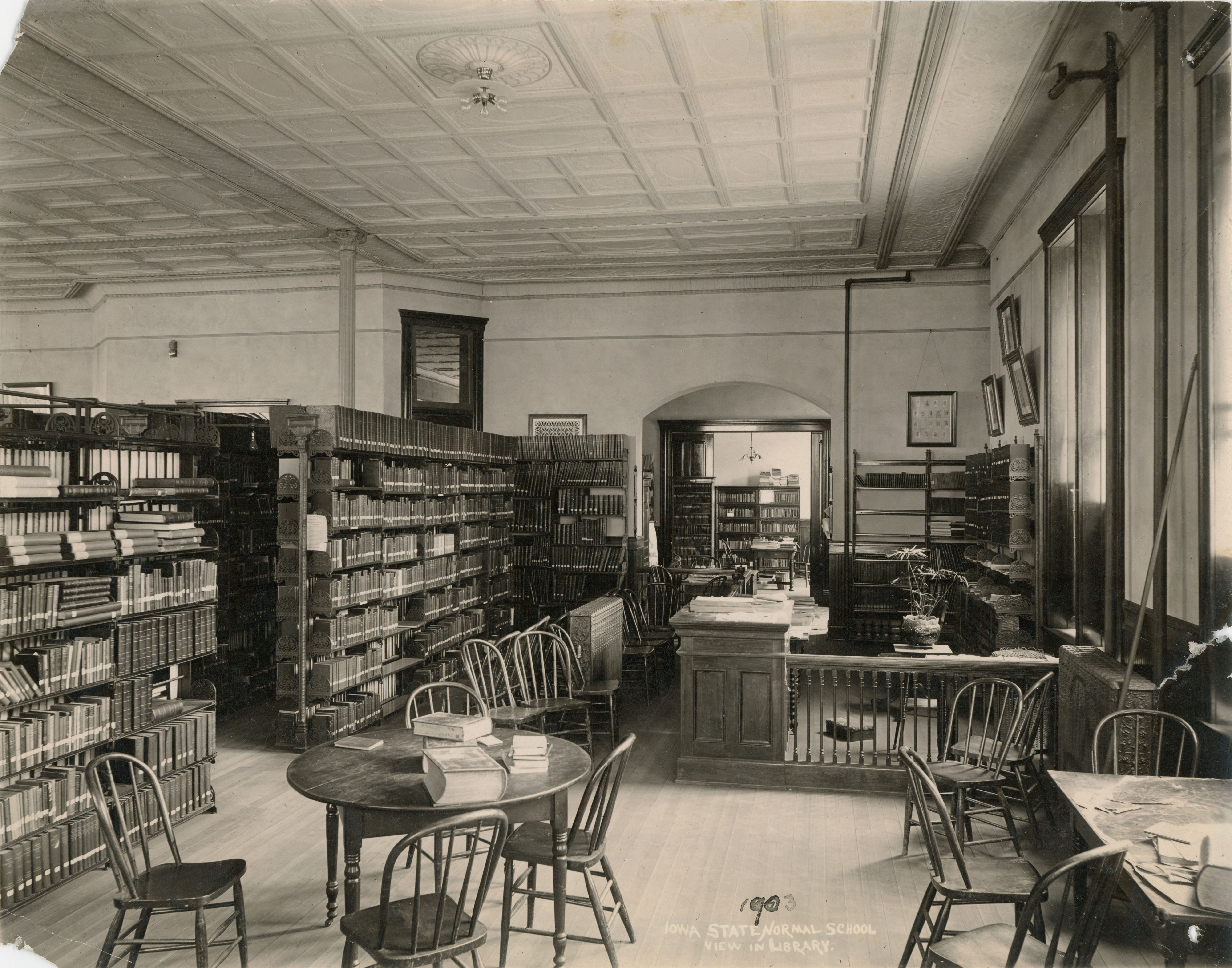
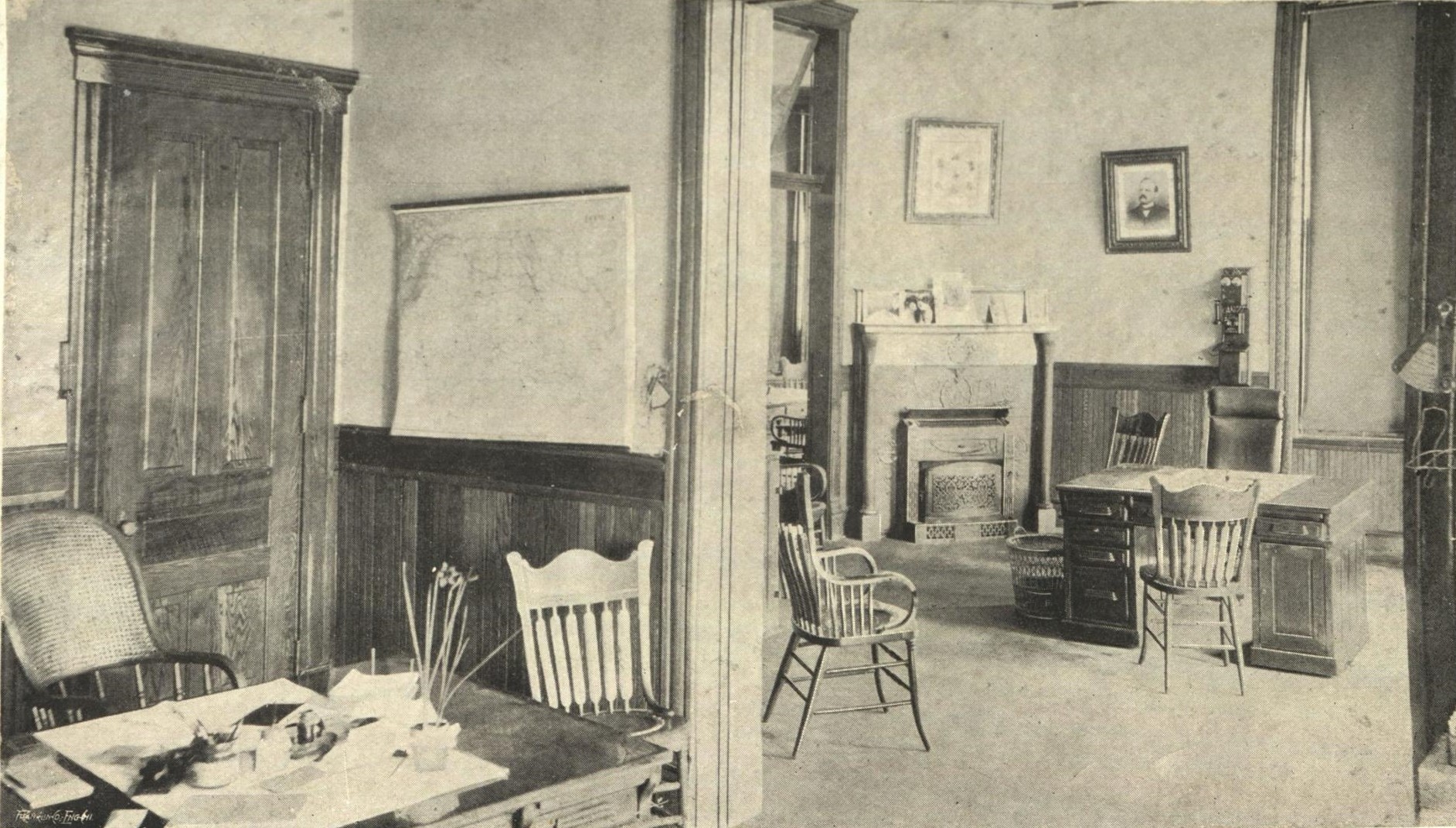
The October 13, 1894 issue of the Normal Eyte student newspaper reported excavation for the new building was progressing. Saturday activities were canceled while new water pipes were extended to the site. In January 1895, a Normal Eyte editorial predicted the new building would increase enrollment over 1,000 students once completed: "The new building will no sooner be up than we will need another.” The March 2, 1895, issue of the Normal Eyte included a description and engraving of the new building. The editorial writer noted construction would initially concentrate on the first and second stories; the basement and the third floor would not be completed in 1895. The first floor would contain the library, measuring 95 x 50 feet, as well as offices for the President, Secretary, and Board. The second floor would be used for classrooms. When it was complete, the basement would house a gymnasium and men's coat room. The third floor would be used for natural sciences and a museum. There would be three entrances to the new building: on the east, south, and north. A corridor would be built between Gilchrist Hall and the new building to provide efficient passage between the two buildings and shelter students during inclement weather. Building material, including Farley limestone and Gladbrook brick, was already at the building site. Work would begin in early spring.
Work had significantly progressed by early April 1895. Later that month, President Seerley and some of the Board met to discuss a ventilation and heating system for the building. By early June, brickwork on the first story was nearing completion, but there were also delays due to slow lumber deliveries. The state was eager to get the work done, and a Normal Eyte cartoonist humorously pretended even the faculty were involved with the building project.
In the wrap-up article in the last issue of the 1894-95 year, a Normal Eyte editorial claimed the new building as a single indication of the growth and prosperity of the Normal School and the neighborhood surrounding it. In 1890, there had been five houses on Normal (now College) Street. By 1895, the neighborhood had grown to the extent that 400 students could find lodging within a half mile of the school. Faculty were building houses on the Hill, and three stores had opened. The writer wrote the new building, with its improved library, laboratories, and classrooms, would spur further growth of the school and neighborhood.
Enrollment in fall 1895 reached nearly 1,000 students. However, the new building was not yet ready, with outside work nearly complete but much interior work remaining. The target date for completion was January 1896. As a temporary measure, President Seerley taught classes in the armory, Professor Arey taught in a laboratory, and other faculty members made similar accommodations. By mid-September, the first floor was plastered and there was a possibility the library and the offices could move there toward the end of October. By early October, the woodwork and mosaic flooring were being installed. Students were beginning to think about a name for the building, and some suggested it be named Seerley Hall after the president. Finishing touches continued through October 1895. The mosaic floor and woodwork installation were complete. A new vault, where cash and student records would be stored, was finished in the office area.
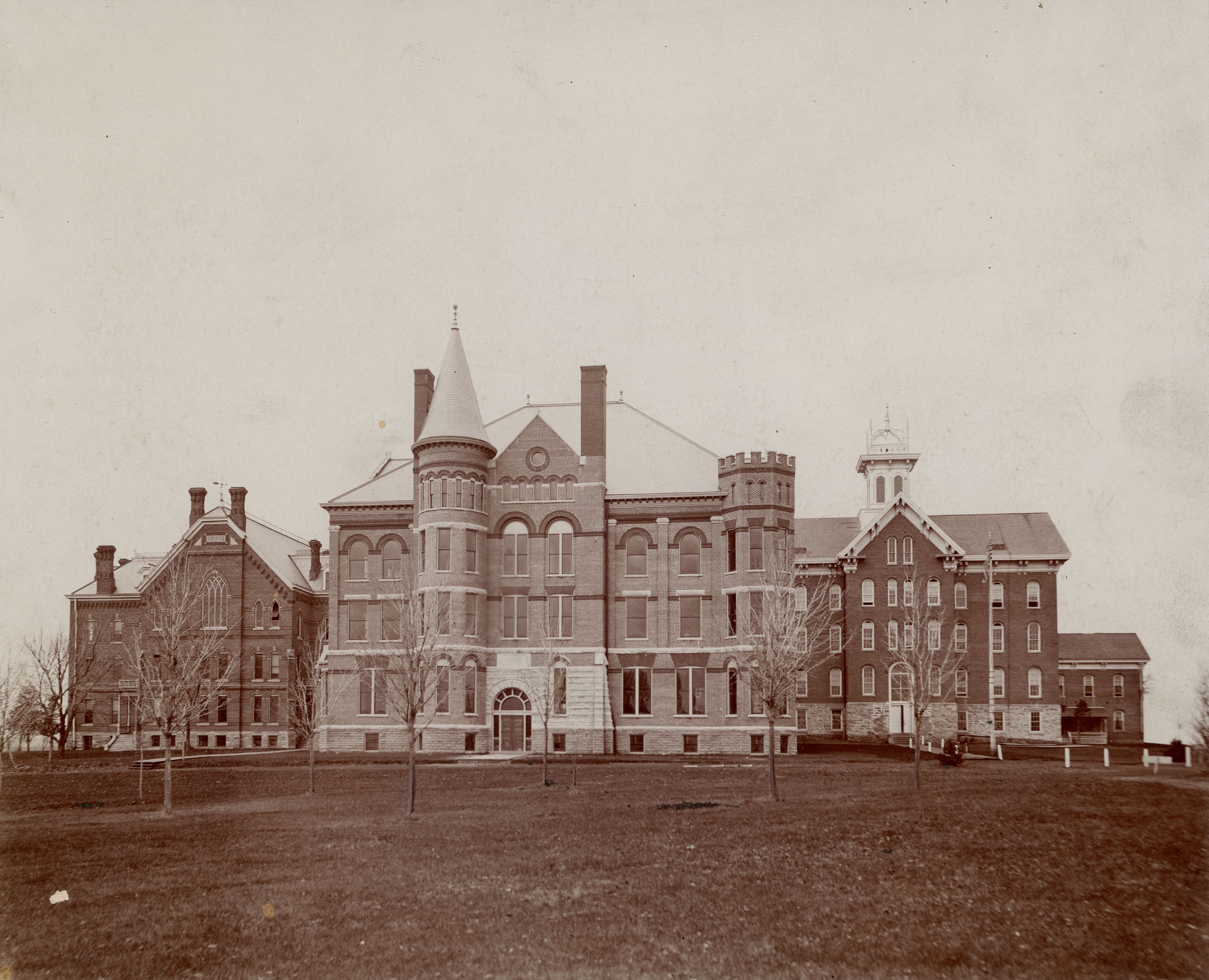
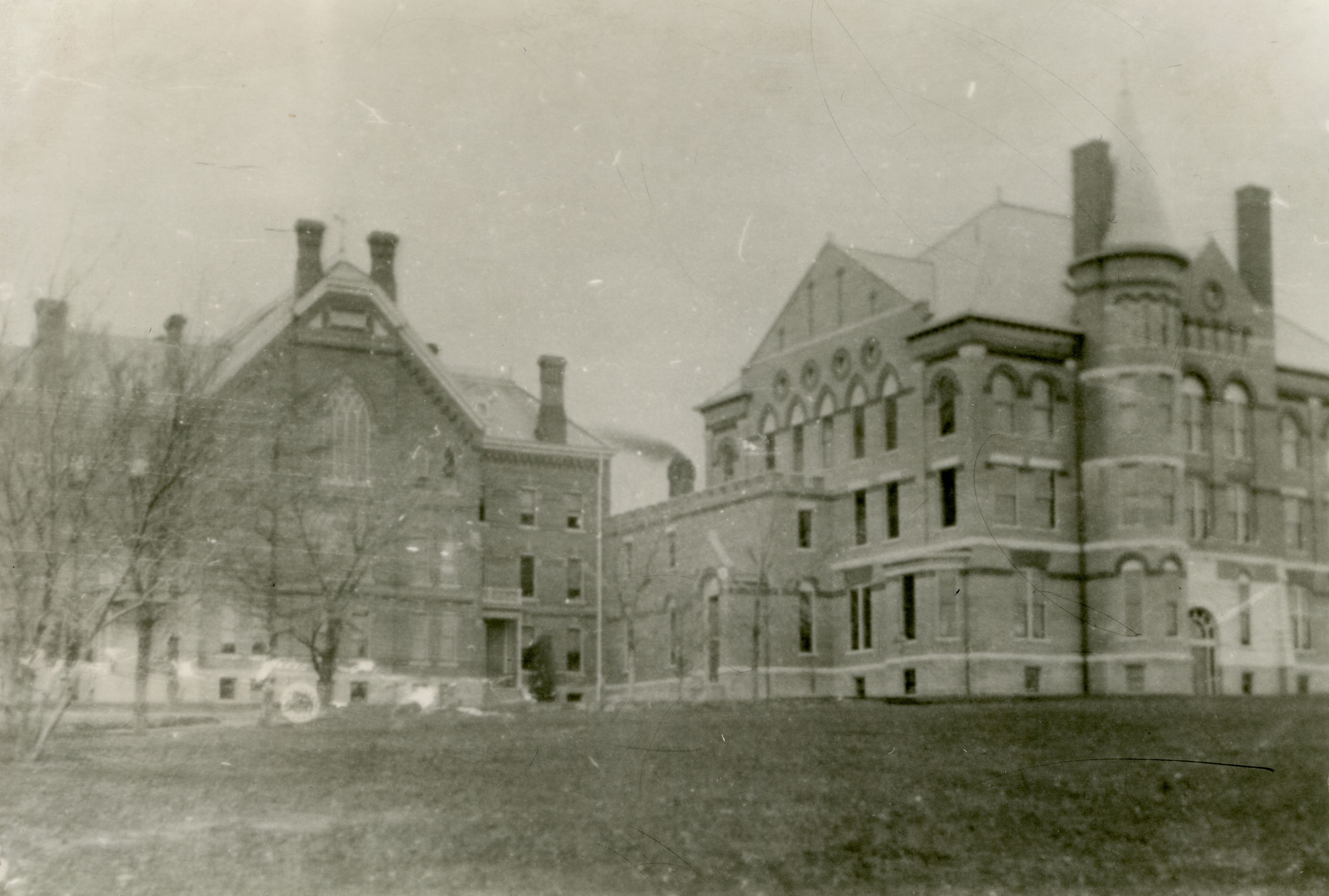
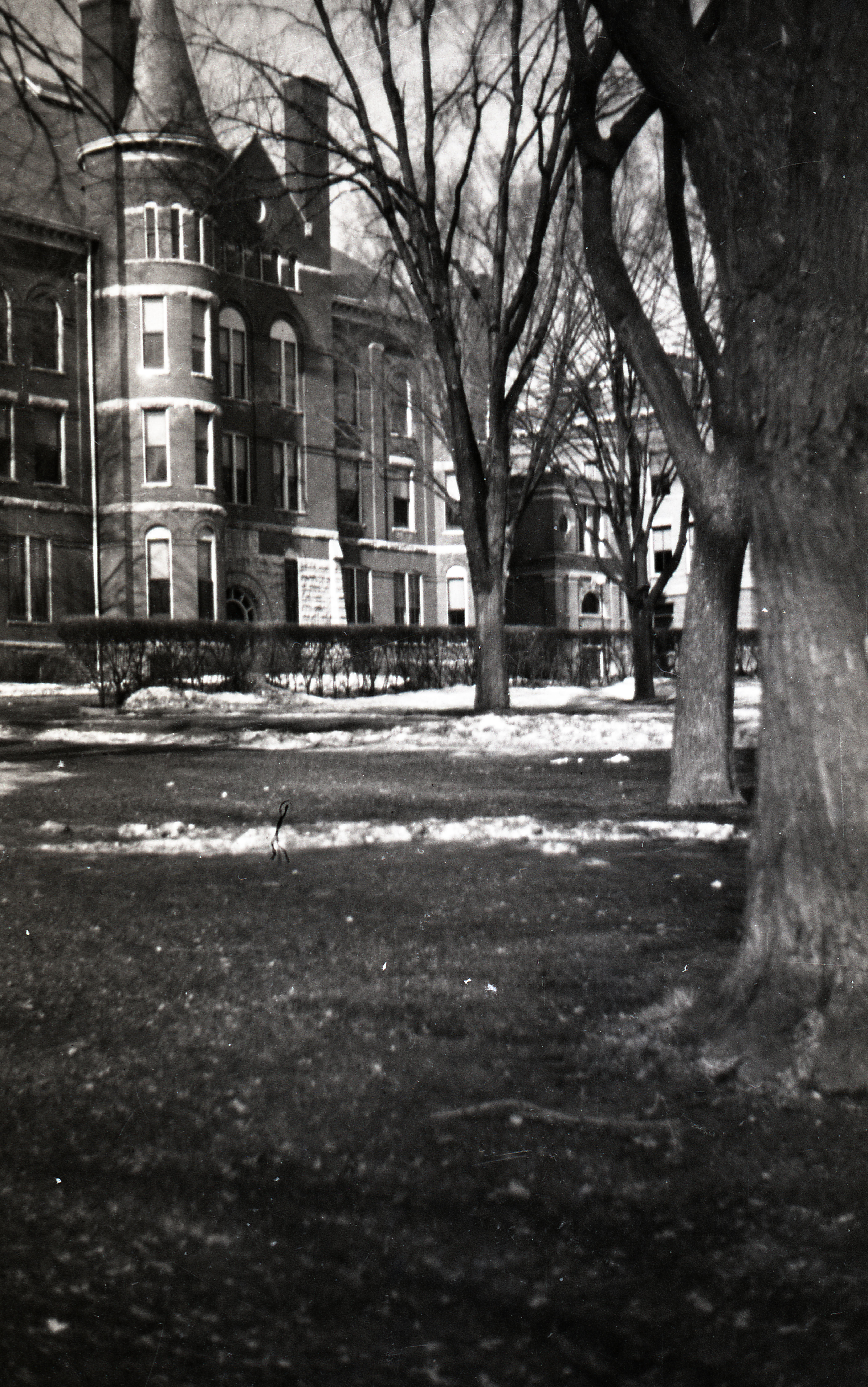
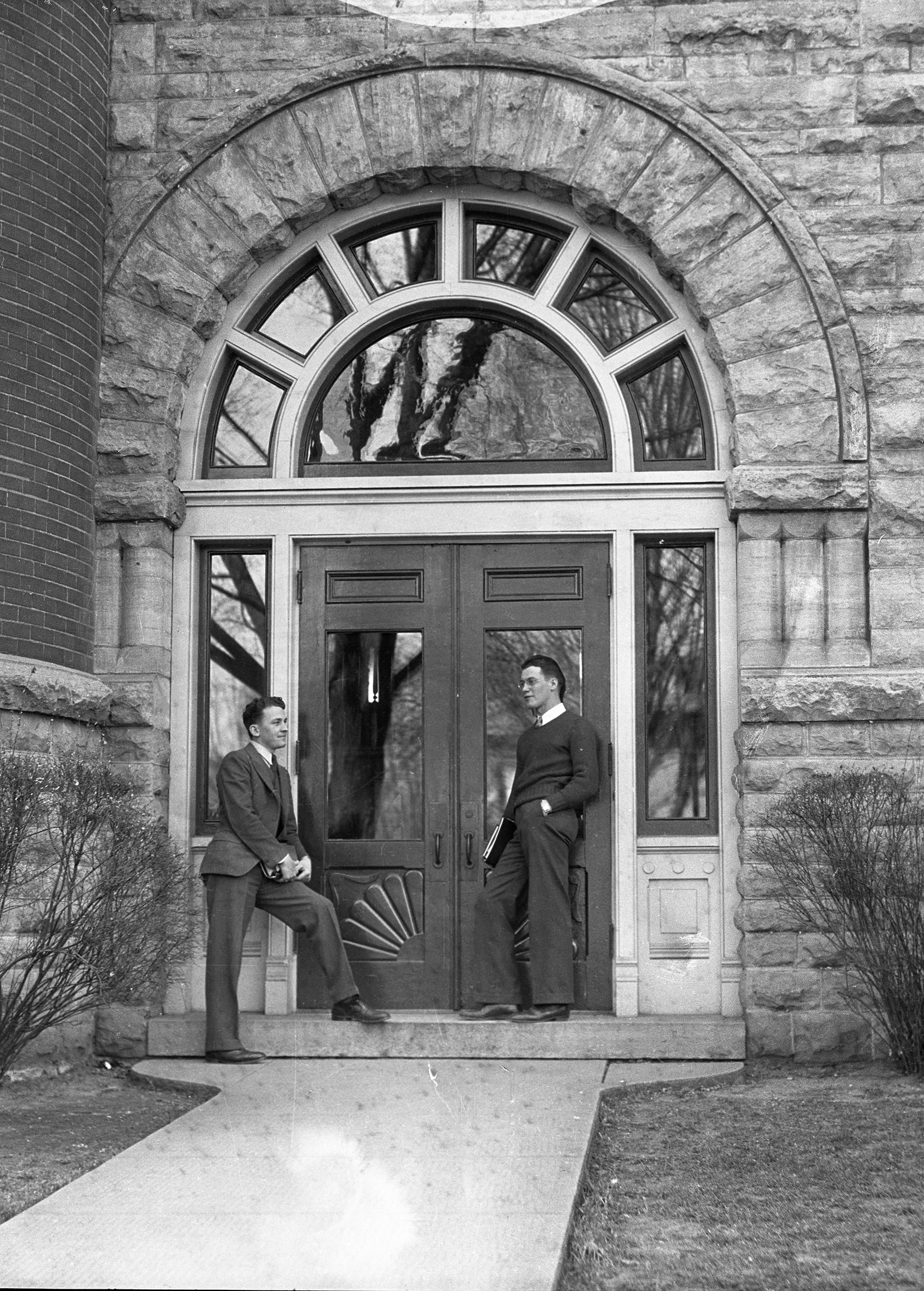
In the November 30, 1895, issue of the Normal Eyte, President Seerley wrote an article titled “The New Central Building” about the project, which included floor plans. He described the architecture as "of a mixed type," with Greek, Roman, and Renaissance forms and a late Victorian eclectic style. There were Gothic arches, classical stonework and turrets topped with conical pinnacles and crenelations. He stated the new 10-foot wide, two-story corridor between Gilchrist Hall and the new building would help students "avoid much stair climbing and exposure" and would relieve pressure on narrow stairways at class change times. The building was plastered with "Baker's patent plaster" over metal laths on the first and second stories. The ceilings were of "steel stamped with artistic patterns."
The first and second stories were done and awaiting furniture. The third story would be ready by the beginning of school in September 1896. The walls and ceilings were "frescoed in tints" by the George A. Smith Company: public offices in olive, private offices in lavender, the reception room in blue, the library in old pink, the halls in terra cotta, and the classrooms in a lighter terra cotta. The floor of the first story main hall was mosaic tile. Other halls were maple with pine floors in the classrooms. Casement and base woodwork was oak, with the exception of the library, which had cherry casement and base woodwork. This was the first time the Normal School had a space designed specifically for library purposes. President Seerley expressed praise for the natural lighting, space for bookstacks, and work area for library staff.
There were six classrooms on the second story for courses in drawing, penmanship, English, political science and didactics. The third story, when it was completed, would be devoted to natural science, geography, and a museum. President Seerley acknowledged the Board and Board Building Committee chair Edward Townsend for their work on the project. He also acknowledged James E. Robinson, who supervised the construction work. Robinson would later become the Superintendent of Buildings and Grounds at the school. The president also presented an itemized list of building expenditures, which were about $30,000 for the building with an additional $5,000 for a heating system and furnishings. Among these, excavation cost $300; painting and decorating, $865; plumbing, $579; and doors and windows, $900.
By December 1895, Professor Fullerton's music class and President Seerley's supervision class were meeting in the new building. Architect W.A. Fulkerson visited the building that month, and the Board also met there. By mid-January 1896, President Seerley had new furniture in his office. Students were using the library, and circulation and library use were higher than in any previous term. Students noted the convenience of a new clock in the library. Physical education students stated they liked the new gymnasium facilities in the basement of the building. Later, the school would install a ceiling over the gymnasium area so noise from classes there would not interfere with those studying in the library above it.
The third story was ready for students in September 1896. The chemistry laboratory included four tables, with sinks and bottle racks, and gas hoods. There was a physics laboratory with a demonstration table. The natural science laboratory included tables with microscopes and dissecting tools. The new museum room was equipped with cases and shelves. The corridor connecting Gilchrist Hall and the new building featured a collection of reproductions of classical works of art and architecture.
When the new Auditorium Building, now Lang Hall, was nearing completion in 1901, a similar two-story corridor link was built between the Administration building and the Auditorium Building and became known as the Crossroads. The Crossroads was a student gathering point for many years. Students could pick up the newspaper, vote in school elections, and hold conversations between classes. The Crossroads existed until the major renovation of Lang Hall in 1999-2001. During that project, the Crossroads was removed and a new structure, housing elevators and stairwells, was built in the same location.
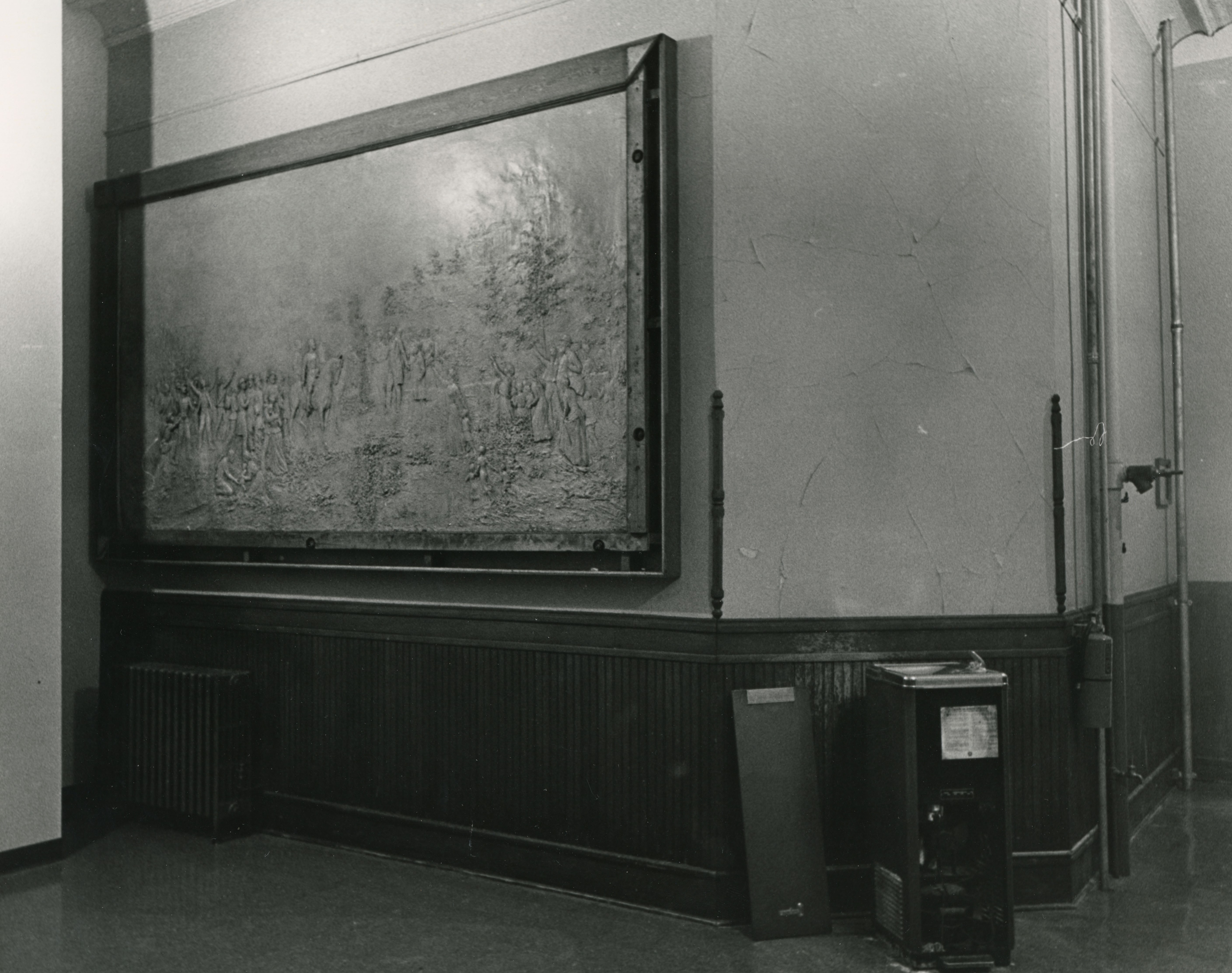
In 1901, the Normal School acquired plaster casts from some sculptures on the Soldiers' and Sailors' Monument in Des Moines. Two of the casts were mounted on the walls of the main hallway in the Administration Building. One of the casts, "The Return of the Soldiers," depicted Annie Wittenmyer, a woman holding hands with small children. Wittenmyer established Civil War orphans' homes in Iowa. Central Hall, on the Normal School campus, had been built in 1869 as one of these homes. After the orphanage closed, the building became the Normal School’s first building.
As new buildings appeared on campus over the years, many of the programs housed in the Administration Building moved to other facilities. When the Gymnasium, now the Innovative Teaching and Technology Center, was completed in 1905, most physical education activities moved there. When the new Library, now Seerley Hall, opened in 1911, the library collection and museum moved. As the size and extent of the college administration grew, administrative offices as well as other programs occupied more space in the building. The offices of the Dean of the Faculty, Business Office, Bureau of Research, Curriculum Laboratory, and Audio-Visual Center eventually were located in the Administration Building.
In 1923, there was a small fire in the ceiling of the Business Office. Benjamin Boardman, college secretary and head of the Business Office, pulled down a portion of the metal ceiling and extinguished the fire, caused by an electrical short. There was little damage.
In 1926, the south entrance to the building was enlarged to allow easier passage during class change time. Boardman's office was expanded so the President's Office could be partitioned for greater privacy. President Orval Latham made changes to the Administration Building to increase efficiency. Early in 1932, the Business Office moved into the south part of the main floor, and the President's Office was remodeled into a suite of rooms including a reception area, board meeting room, outer office, and private office. The Placement Bureau expanded its quarters on the second floor. Additionally, as part of President Latham's plan to centralize campus departments, in 1935 the commercial education faculty and classes were together on the third floor, and the mathematics faculty and classes occupied part of the second floor.
By the mid-1930s, the building needed to be renovated. Because of the economic situation during the Great Depression and World War II rationing, discussions about renovations began in 1947. When President Malcolm Price outlined his postwar plans for developing the campus, the Administration Building was among the expendable buildings. He proposed a single building, costing about $772,000, to replace Central Hall, Gilchrist Hall and the Administration Building, which would be demolished. Funding was not provided for the project at the time. Almost a decade later, Registrar Marshall Beard, who was beginning to take on the responsibilities of a campus planner, outlined a similar plan which included the removal of the three buildings.
In fall 1961, workers replaced pipes feeding heat to the Old Administration Building. Students were advised to wear warm clothes on cold days. When the new Music Building, now Russell Hall, opened in 1962, the music faculty who had been in the Old Administration Building moved there. The guidance and counseling faculty, from the Department of Education and Psychology, moved in the vacated quarters in the Old Administration Building. In spring 1965, the new Administration Building, now Gilchrist Hall, opened. Over the spring, the administrative offices in the Old Administration Building moved to the new building, including the Registrar, President, Business Office, and College Relations.
Due to the destruction of Central Hall and Old Gilchrist Hall, the Old Administration Building remained in service. On July 22, 1965, Central Hall, the original orphans' home and the school's first building, was destroyed by fire. On May 12, 1972, Old Gilchrist Hall was also destroyed by fire.
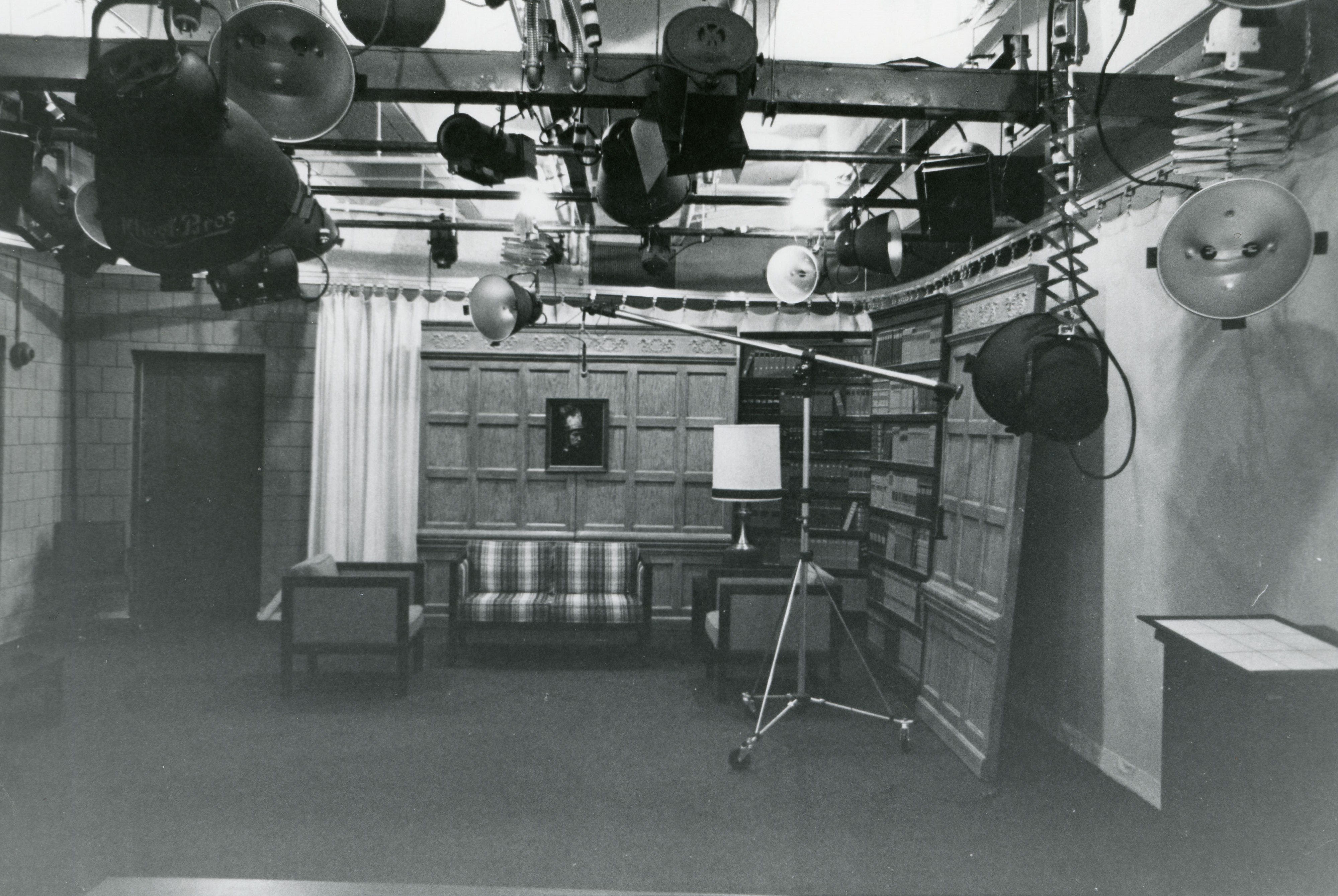
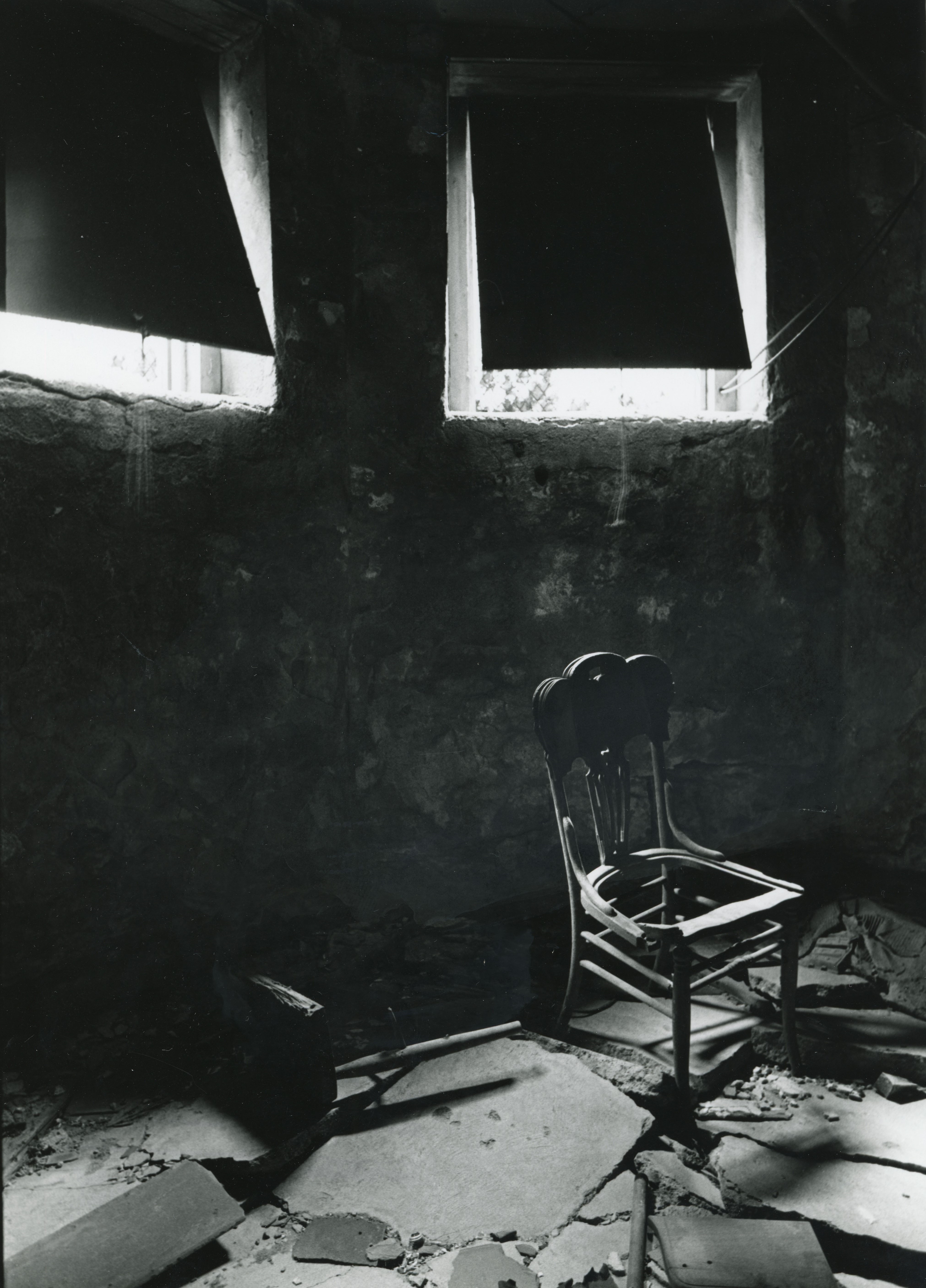
During the 1970s and 1980s, the Old Administration Building housed classrooms, offices for faculty in the Departments of Modern Language and Military Science, the campus radio station, print services, and an animal laboratory. The Curriculum Laboratory was there until January 1973, when it moved to the new Education Center. At that same time, a 2,500 square foot space on the second floor was remodeled for $26,000 into studios, control rooms, and offices for radio and television. With two major building fires in the recent past, those who worked on the third story of the building occasionally voiced concern for their safety. In 1979, the State Fire Marshall cited the Old Administration Building, as well as the Auditorium Building (now Lang Hall), for numerous violations and recommended phasing out the two buildings in the near future.
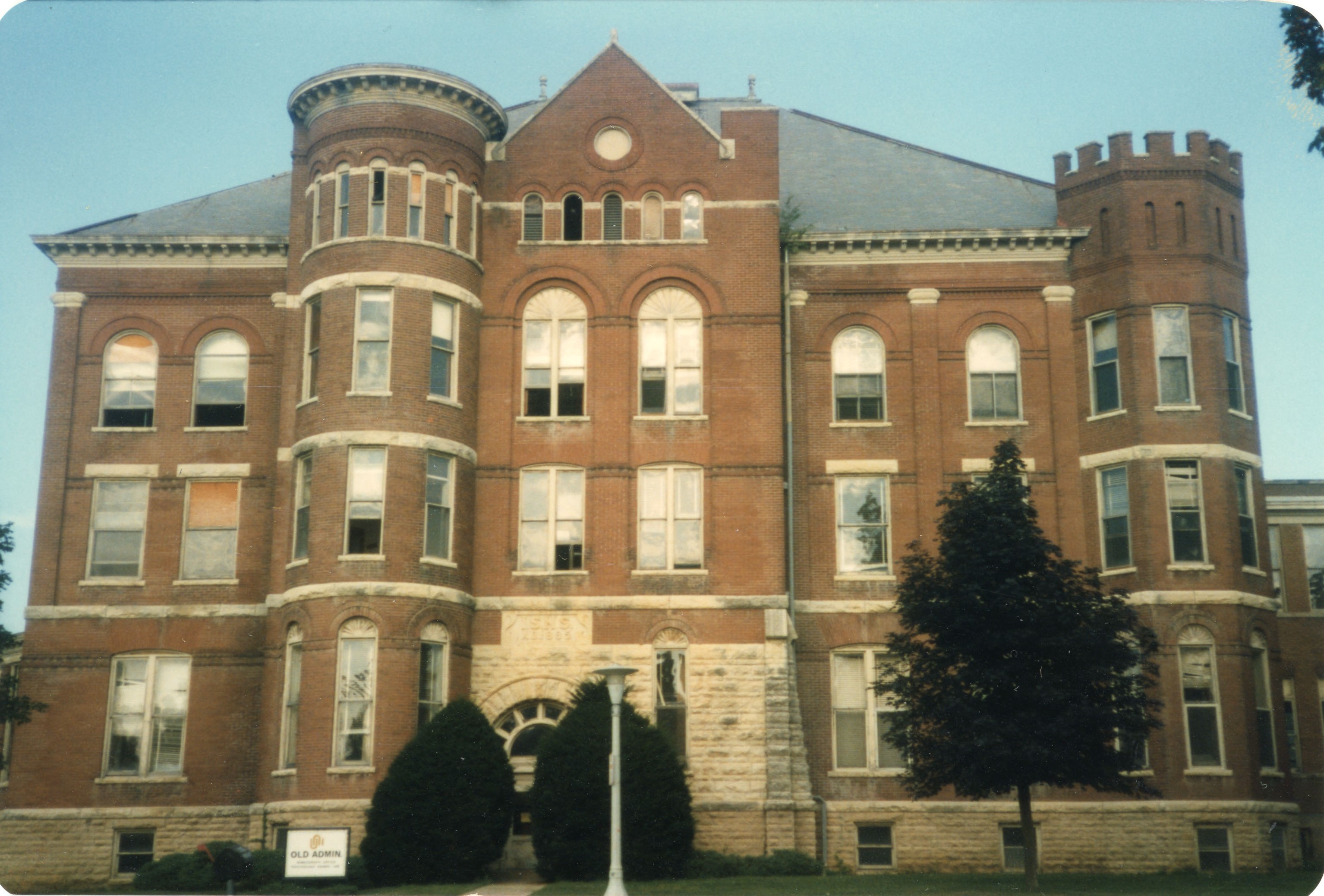
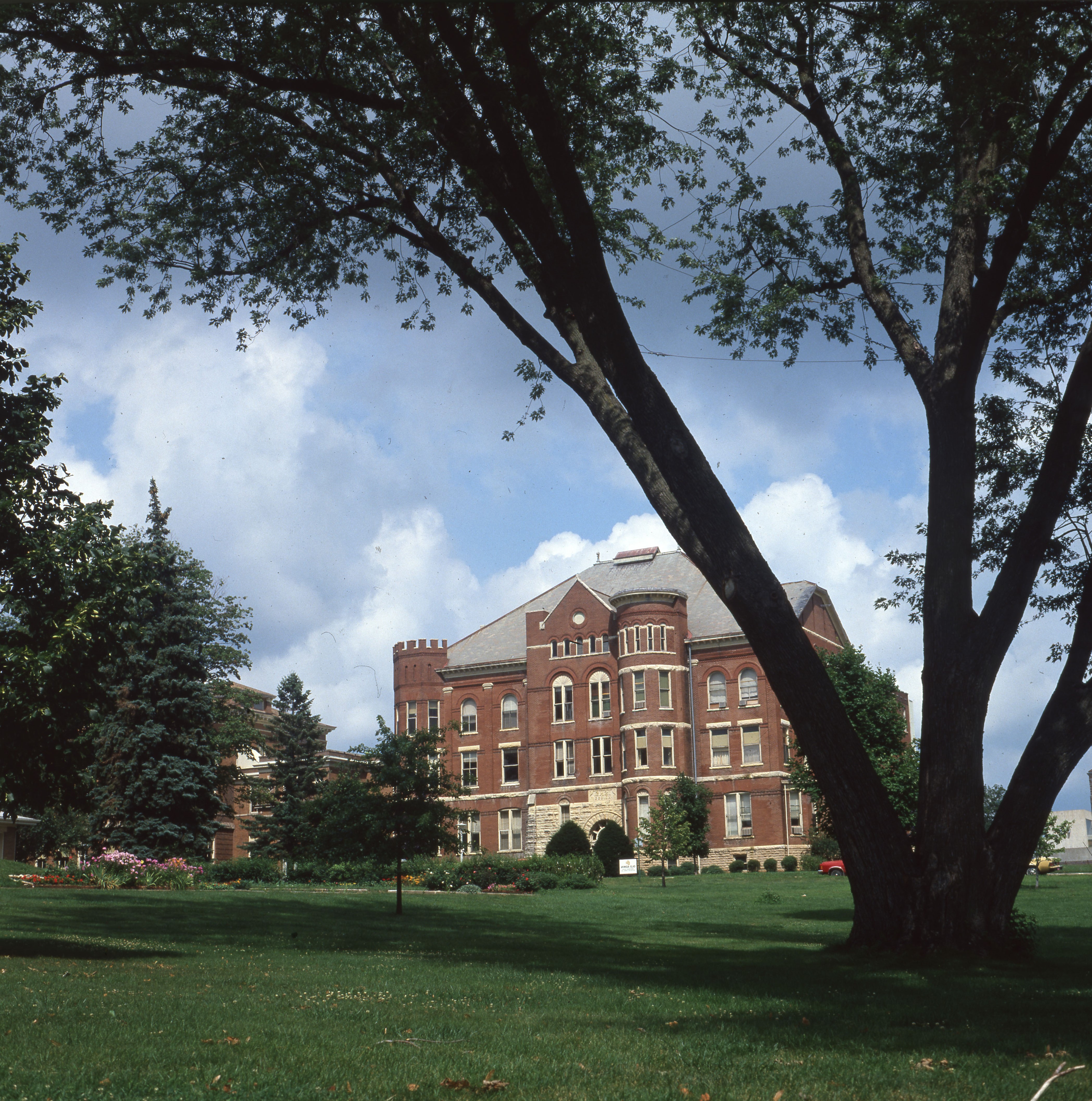
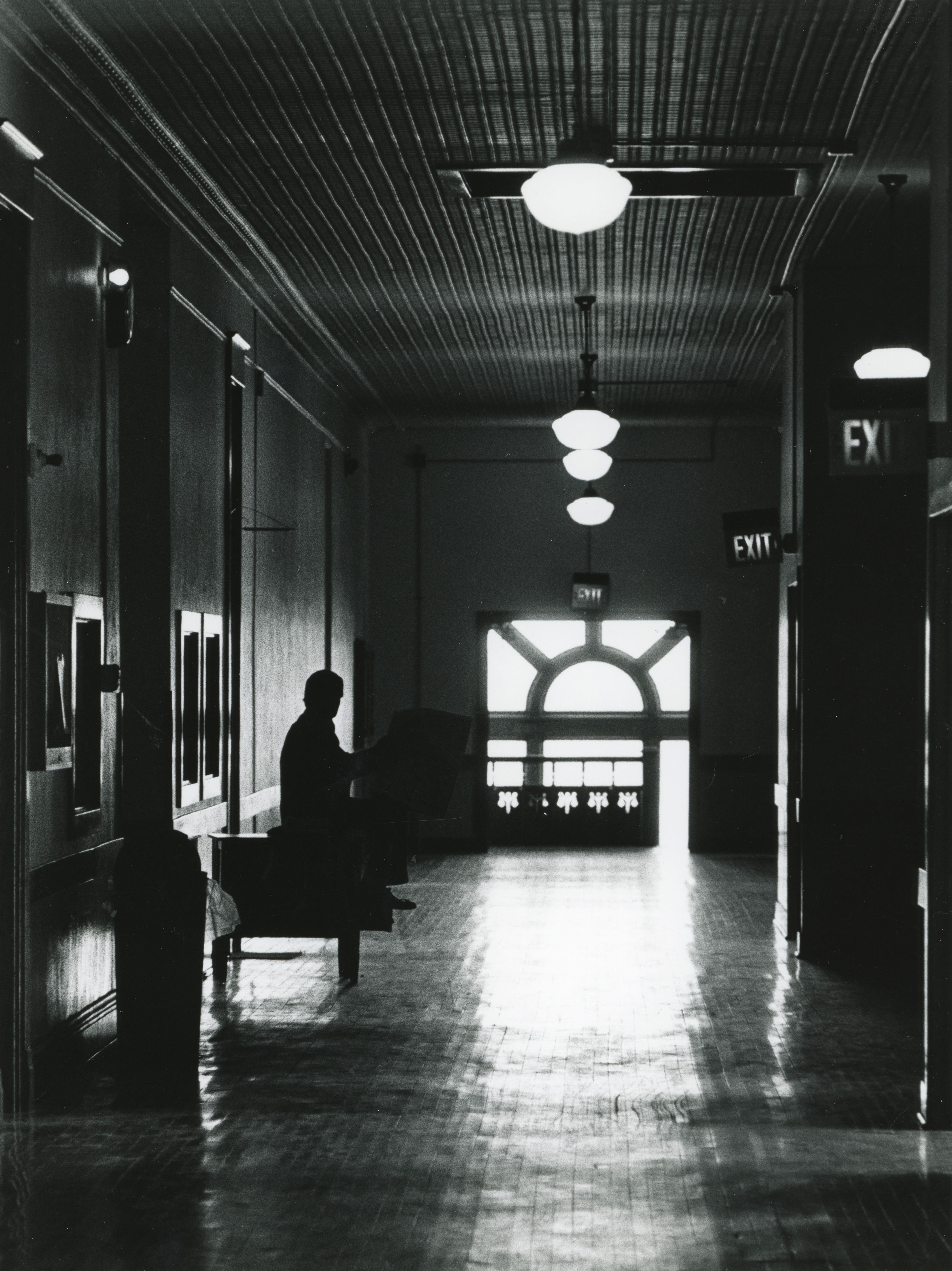
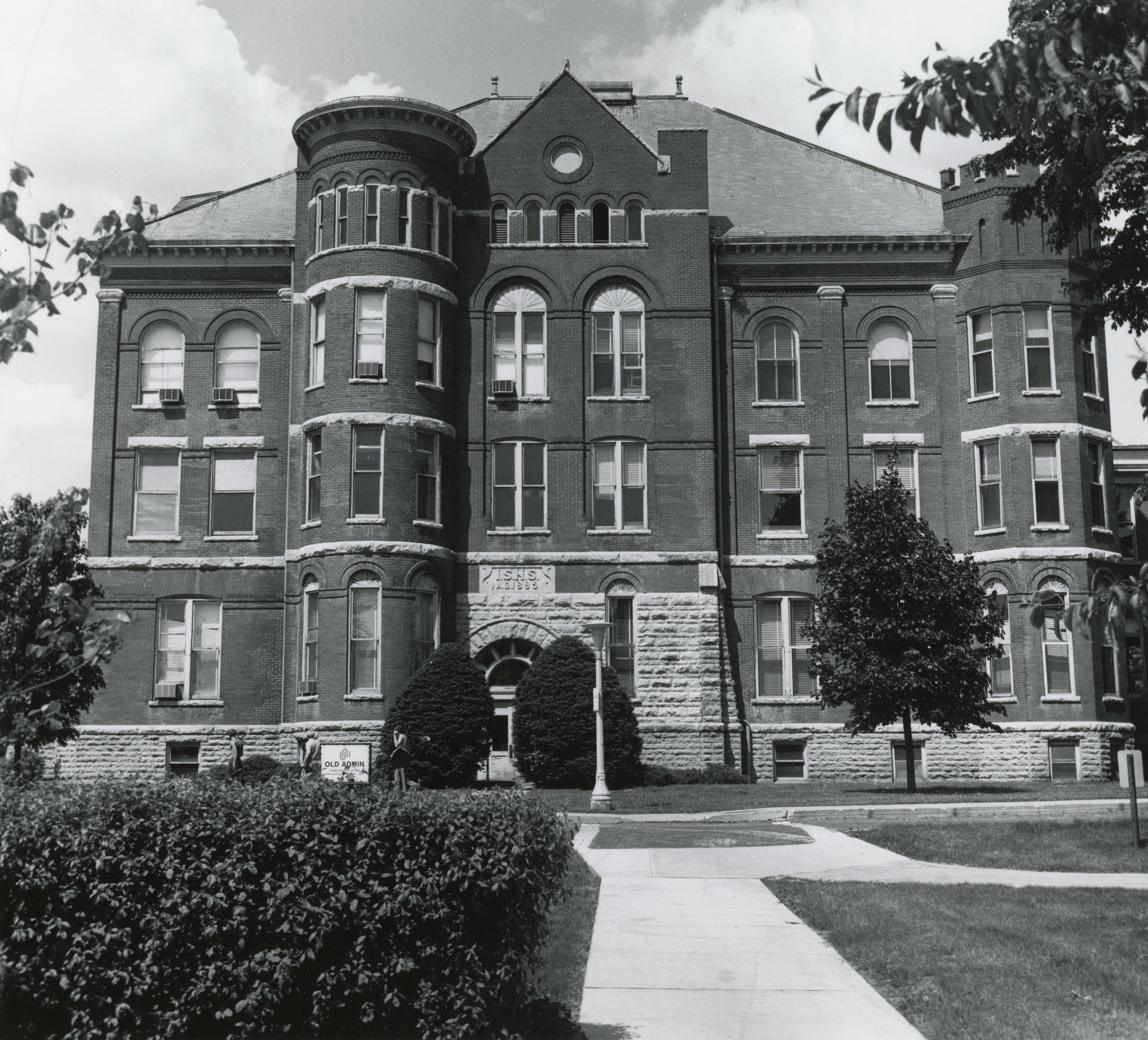
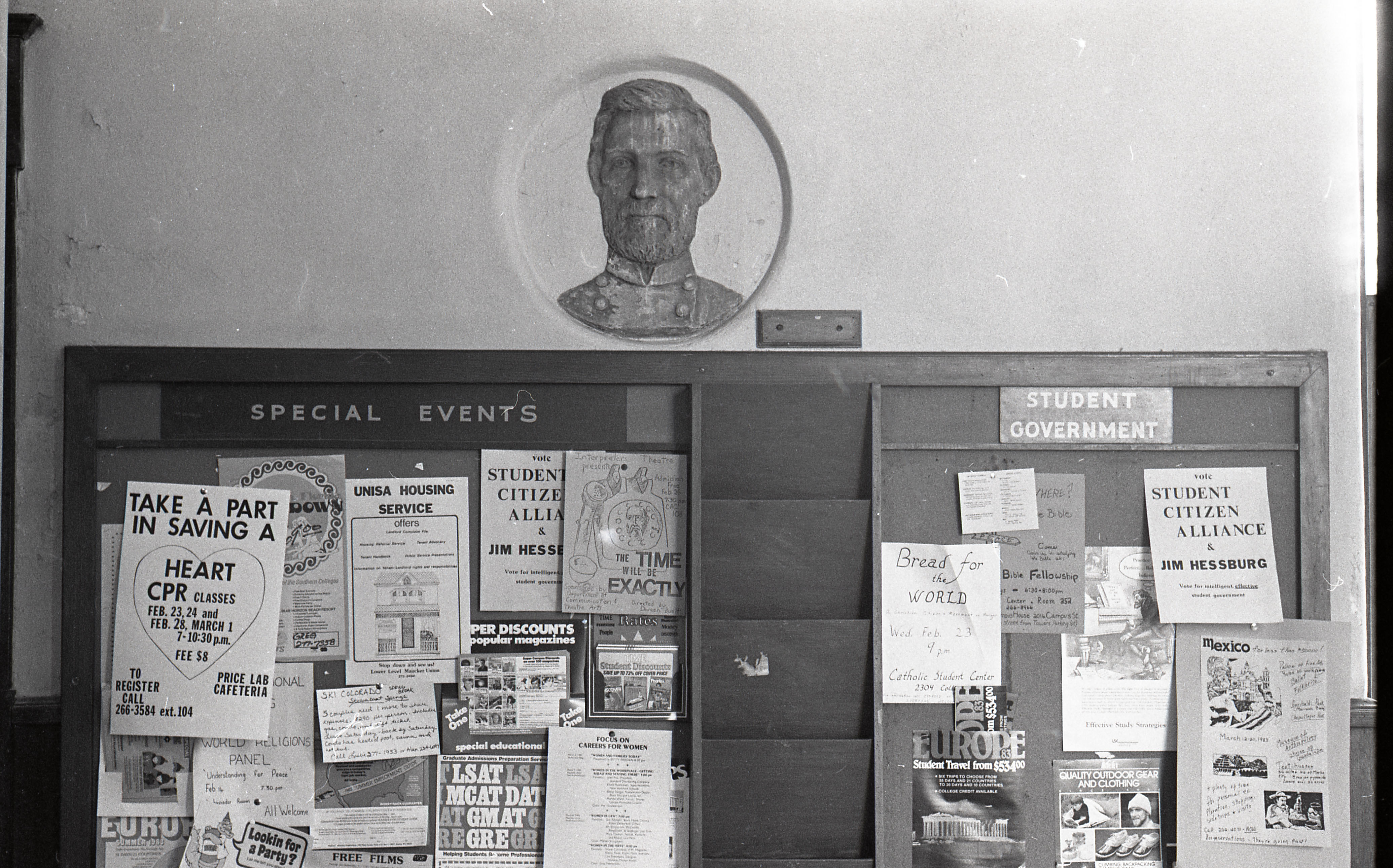
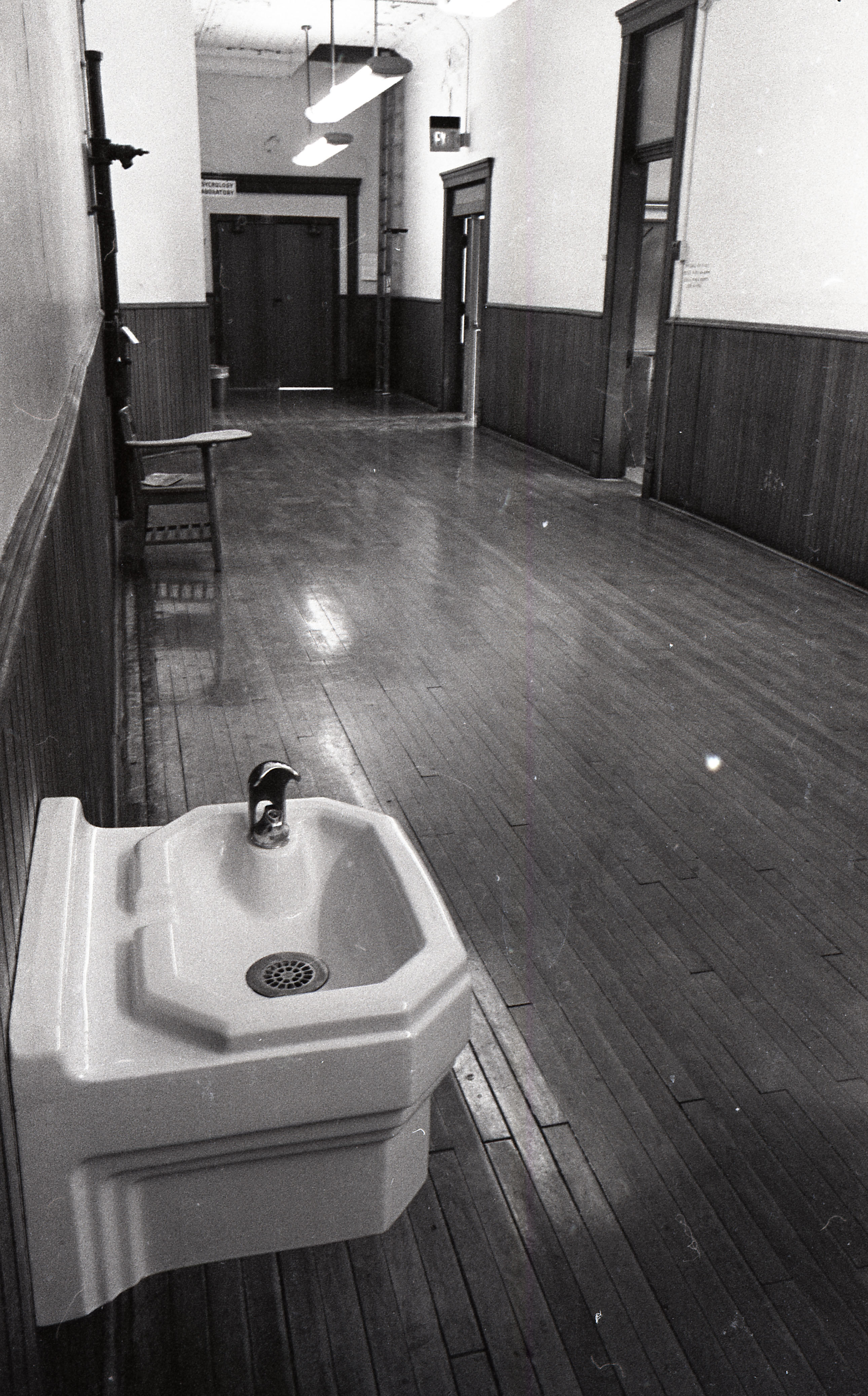
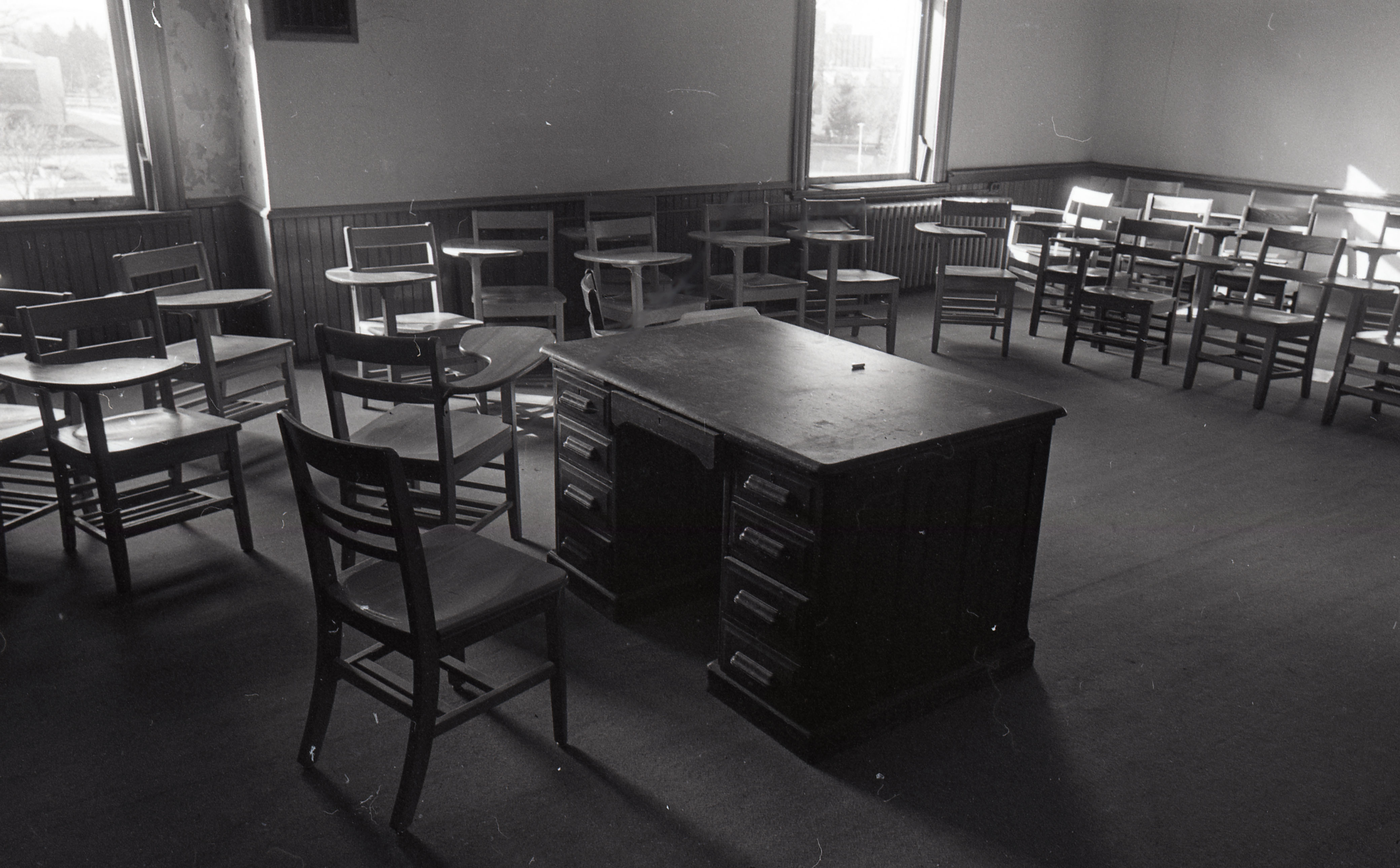
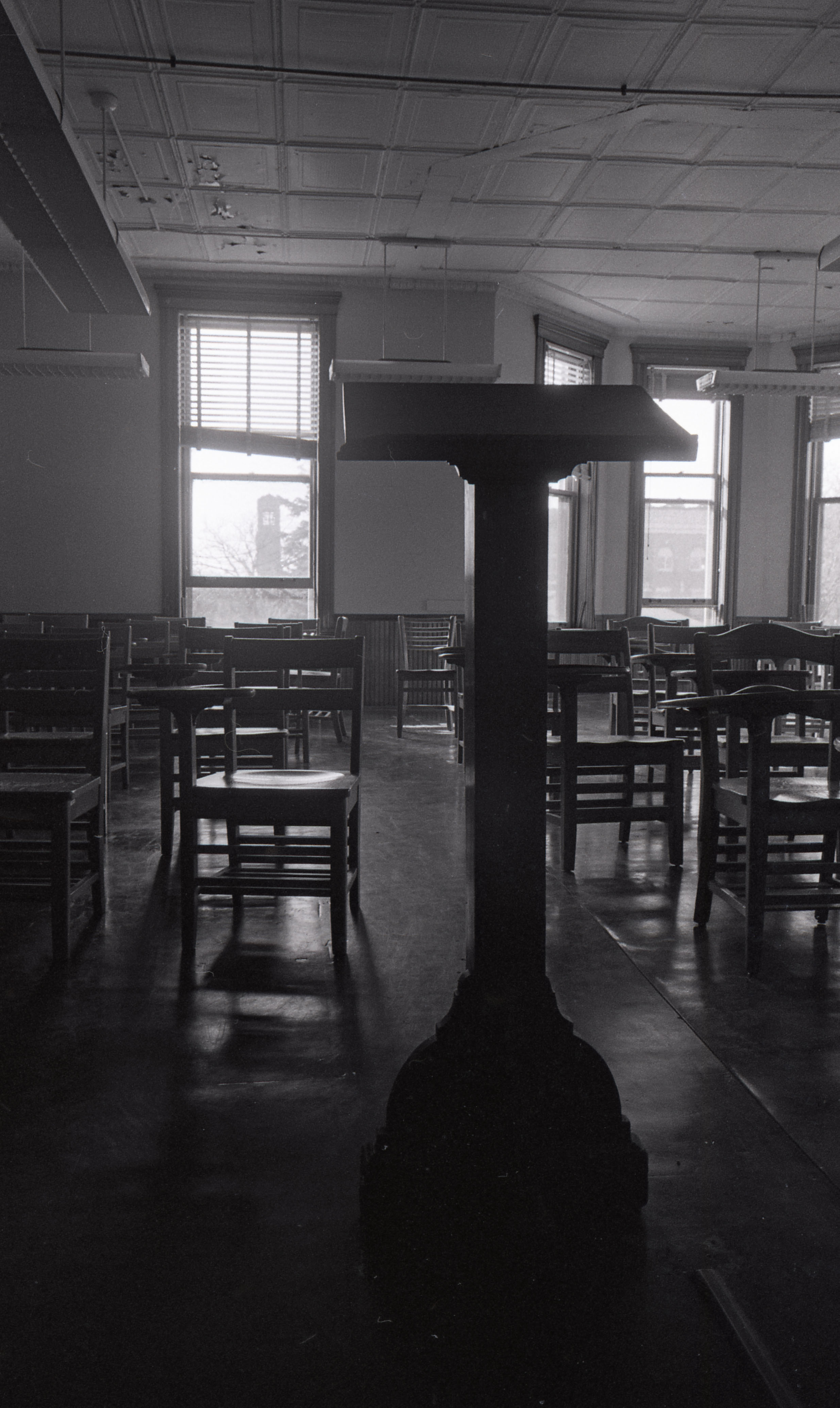
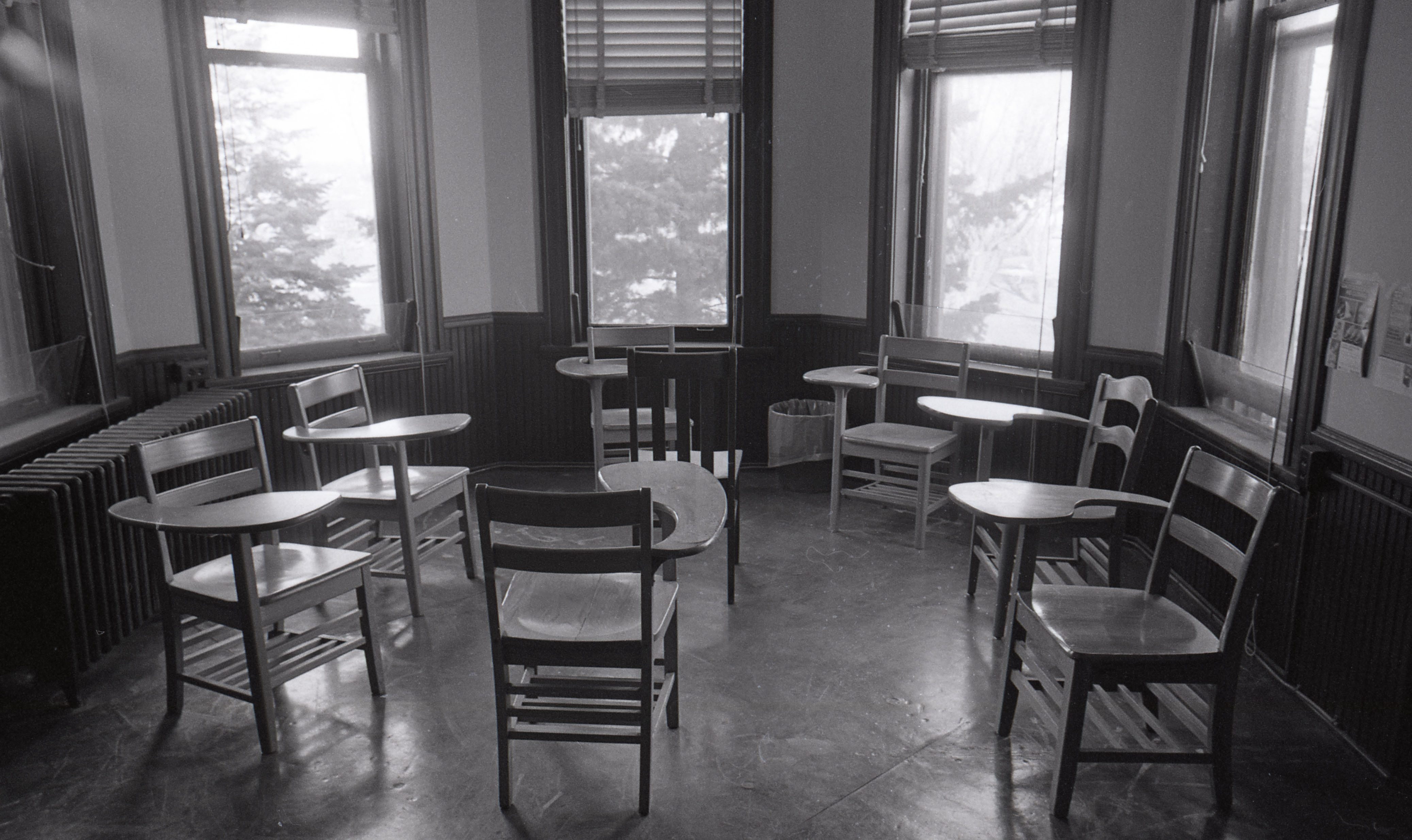
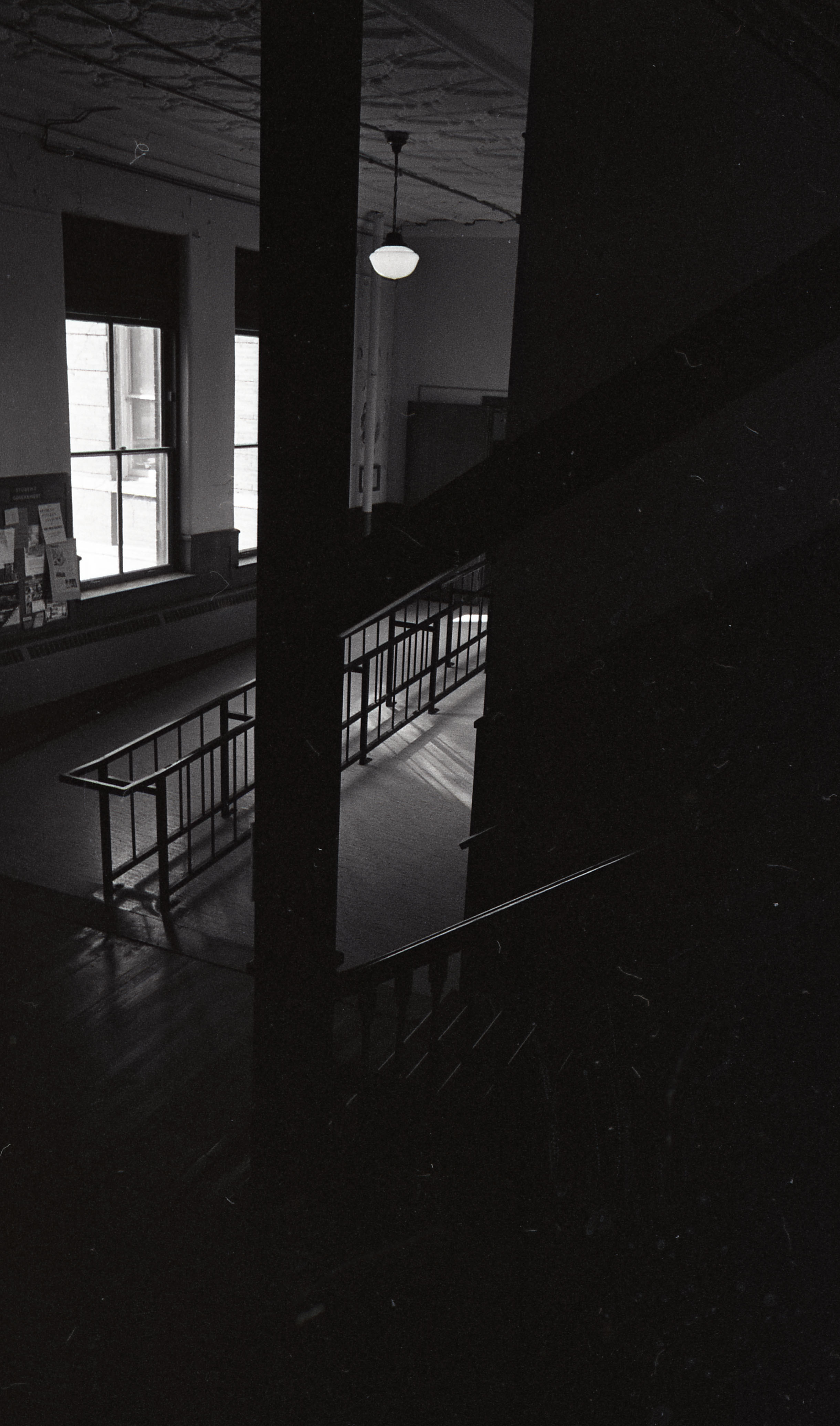
Leland Thomson, director of facilities planning, stated renovation of the Old Administration Building would cost "hundreds of thousands of dollars." Later estimates showed it would take $700,000 to bring the building up to minimal safety standards and $1.7 million to restore it completely. Thomson said the building was scheduled for demolition, but no firm date had been set. Every summer, it would be inspected to determine the repairs necessary for the next year. The decision to demolish the building would be based on economics and safety.
Over the years the university administration gradually reduced the numbers of occupants of the building, which continued to deteriorate. In January 1983, Thomson stated the Old Administration Building was scheduled for demolition in summer of 1983, which had been approved by the Board of Regents in October 1982. The announcement drew criticism from some students, faculty and community members. Throughout spring 1983, protest letters appeared in the Northern Iowan. In February 1983, the Department of Earth Science needed more space and petitioned the University Faculty Senate to remodel the building. In March 1983, the Campus Planning Advisory Committee heard from Earth Science Professor Kenneth DeNault in favor of restoring the building. However, they voted unanimously in favor of demolition. Shortly after, the Faculty Senate endorsed the committee recommendation.
At its April 1983 meeting, the Board of Regents approved a $130,000 demolition budget. Regents Executive Secretary Wayne Richey stated in a memorandum: "We urge the university to proceed immediately to bring the demolition plans to fruition so that the building can be removed from the campus prior to the start of school this fall." The Board also specified "the preservation of selected items of historical value and storage or display thereof." Preserving historical material and relocating Psychology’s Rat Laboratory took longer than expected, and demolition was delayed until early 1984. In January 1984, the Regents delayed demolition for another six months in order to give students, faculty and community members who wanted to preserve the building some time to raise the $2 million needed for renovation. Local historic preservationists completed paperwork so on January 18, 1984, the Old Administration Building could be placed on the National Register of Historic Places. However, students narrowly defeated a referendum which would have required them to pay an extra $10 per semester for five years to finance a restoration project. An appeal to the UNI Foundation was also rejected. Nancy Redfern of the Cedar Falls Historical Society unsuccessfully appealed directly to the Regents to "mothball" the building for a year to allow more time to raise money for restoration.
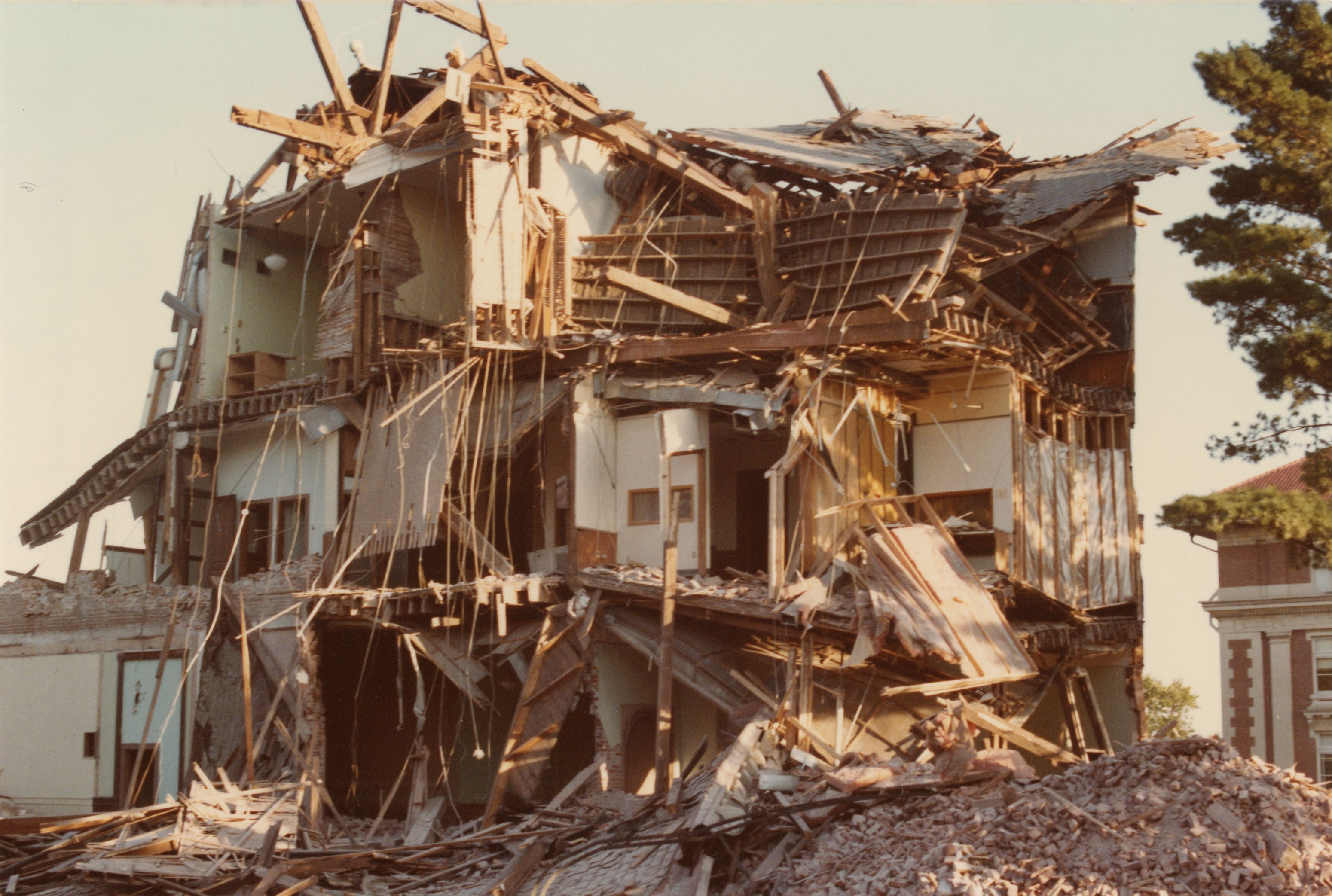
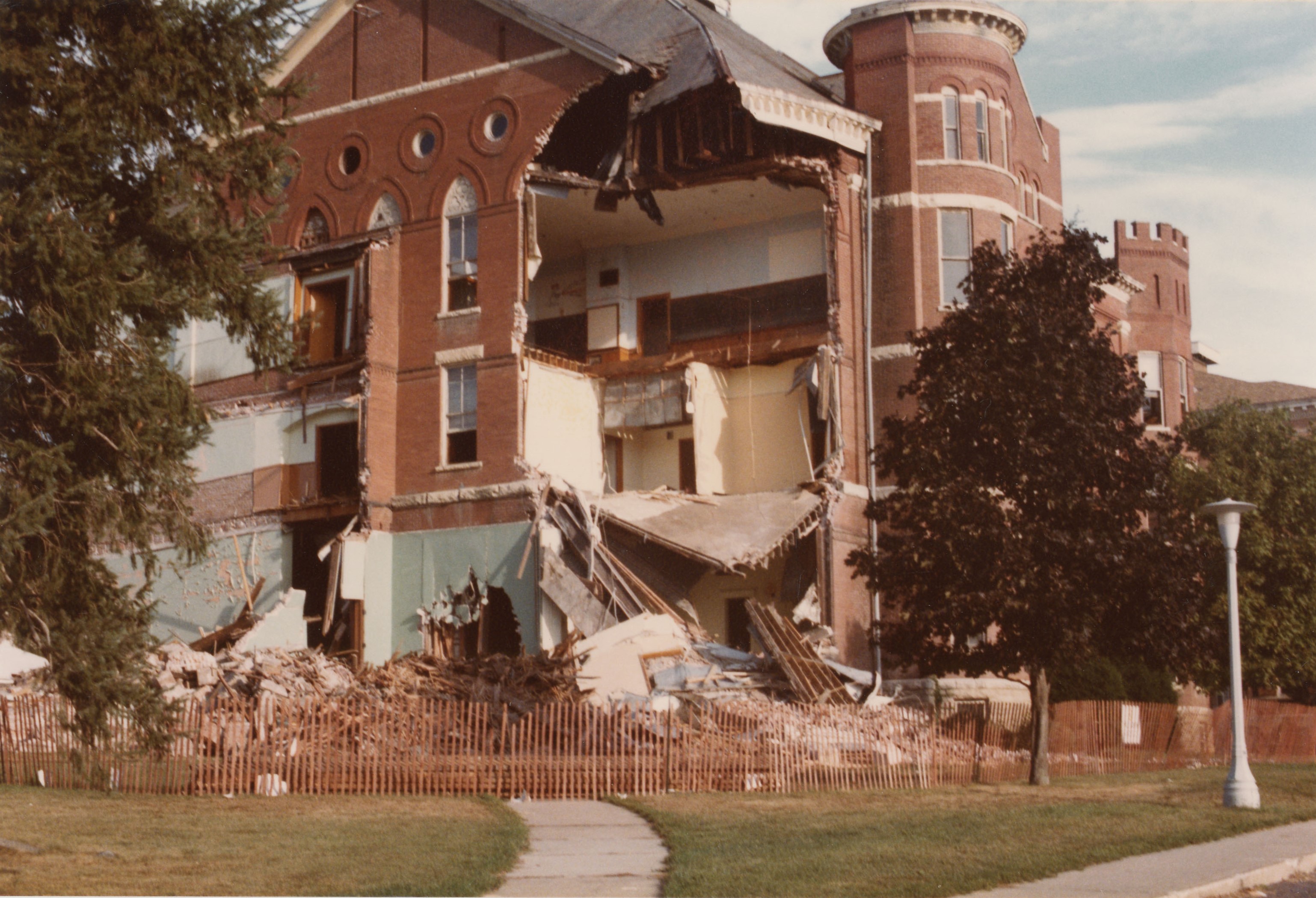
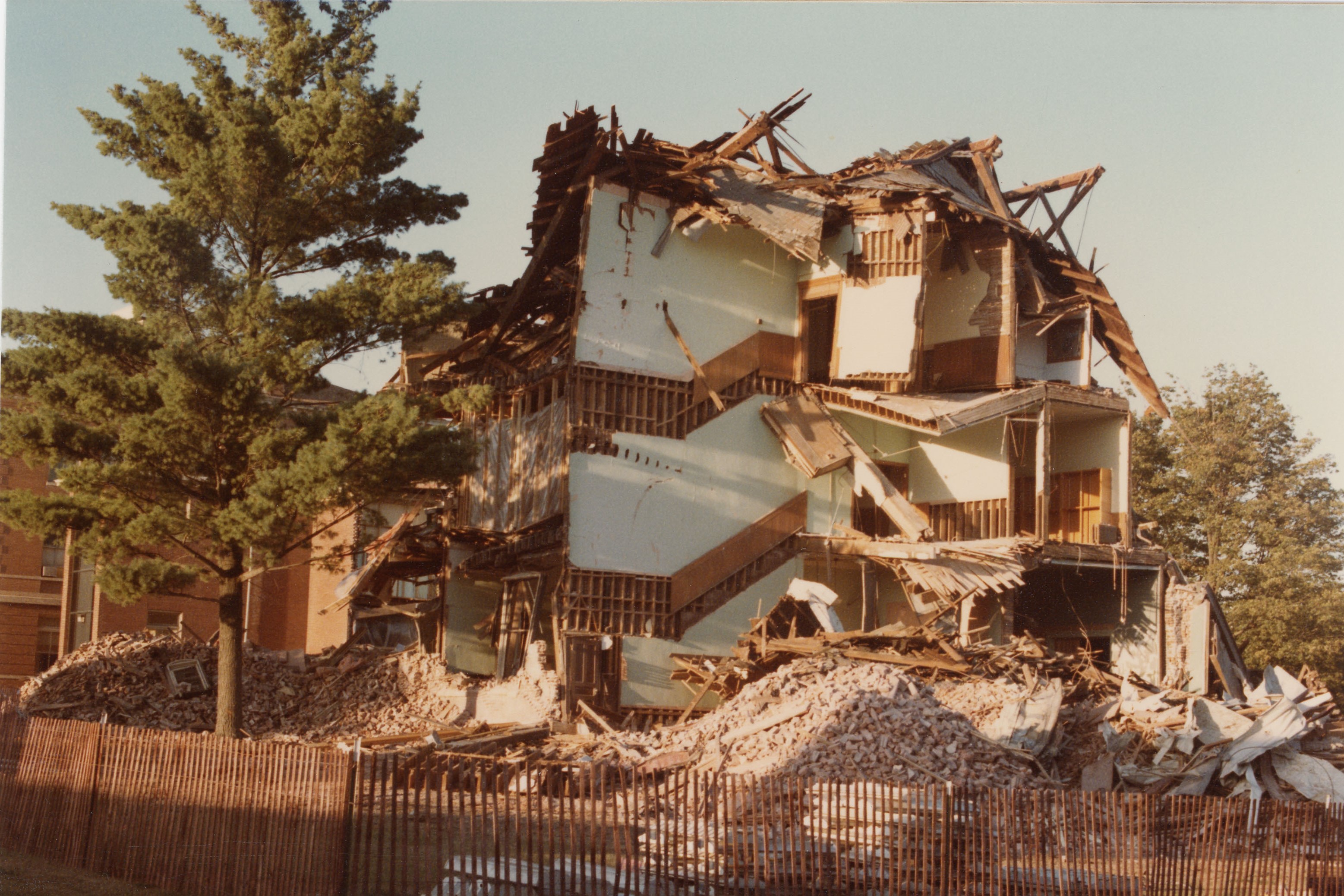
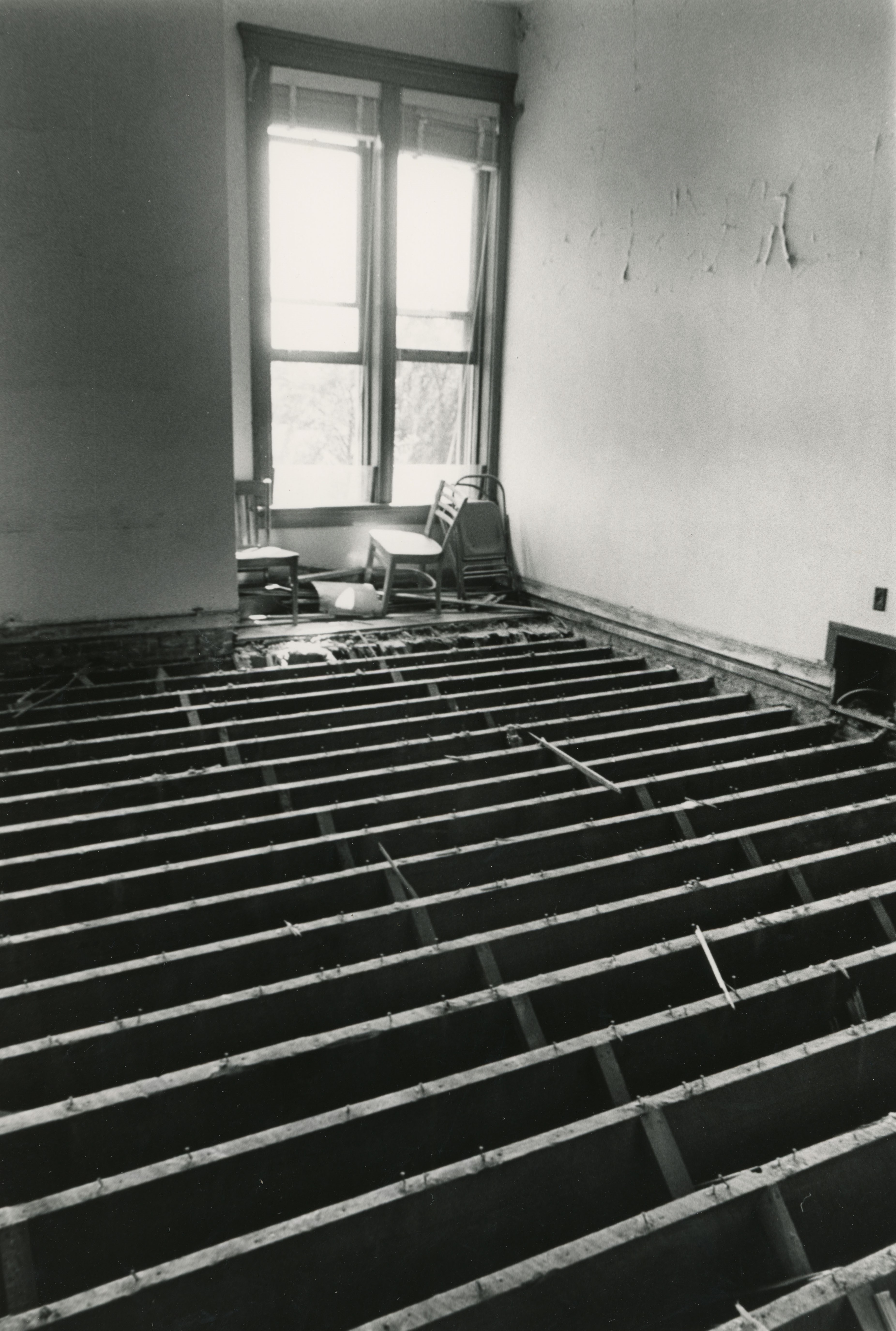
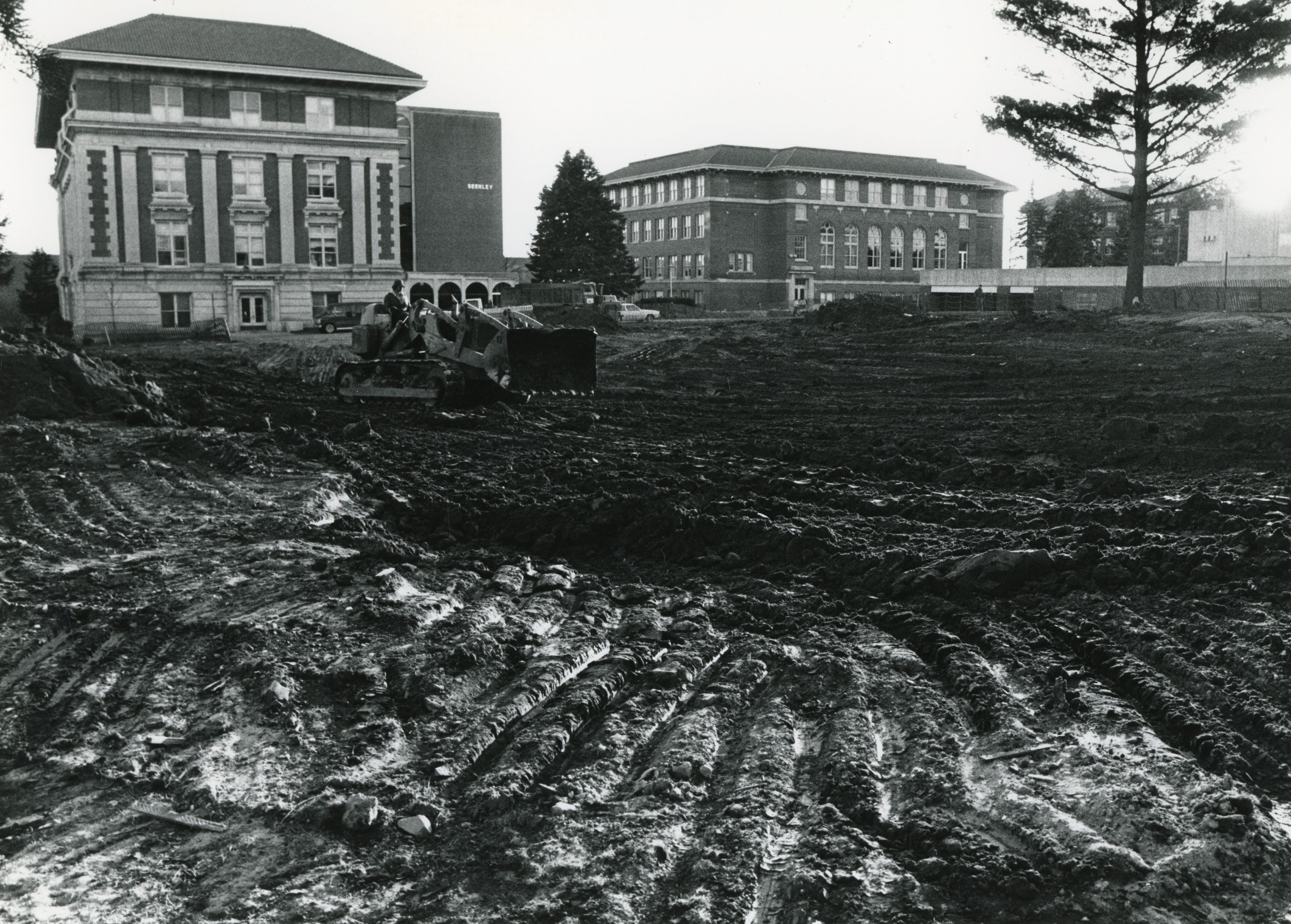
In July 1984, the Board of Regents approved the building's demolition. Work began to salvage the fireplace screen, clocks, doors, wainscoting and other artifacts. Exterior demolition by Associated Wrecking Company of Omaha began shortly after. The building was razed in September 1984.

Compiled by Library Assistant Susan Witthoft; edited by University Archivist Gerald L. Peterson, June 1996; substantially revised by Gerald L. Peterson, with scanning by Library Assistant David Glime, August 2006; updated February 10, 2015 (GP); photos and captions updated by Graduate Assistant Eliza Mussmann February 1, 2023; copyedited by Student Assistant Sara Shannon, January 2026; updated by Library Assistant Hannah Bernhard, February 2026.