
Regents Complex (1960)
Rider Hall, Shull Hall, Hagemann Hall, Noehren Hall, Redeker Center
During the late 1940s and early 1950s, officials of the Iowa State Teachers College (now the University of Northern Iowa) attempted to meet demand for housing traditional students and those returning from military service. Additions to Lawther Hall and Baker Hall, the renovation of the O. R. Latham Stadium mezzanine level into Stadium Hall, and the new construction of Campbell Hall met the needs of traditional students. Sunset Village and College Courts accommodated married students. By the late 1950s, administrators began preparing for the upcoming enrollment surge caused by the post-World War II baby boom, focusing particularly on housing for men. The college initially built more dormitory facilities for women than men.
During the late 1940s and early 1950s, officials of the Iowa State Teachers College (now the University of Northern Iowa) attempted to meet demand for housing traditional students and those returning from military service. Additions to Lawther Hall and Baker Hall, the renovation of the O. R. Latham Stadium mezzanine level into Stadium Hall, and the new construction of Campbell Hall met the needs of traditional students. Sunset Village and College Courts accommodated married students. By the late 1950s, administrators began preparing for the upcoming enrollment surge caused by the post-World War II baby boom, focusing particularly on housing for men. The college initially built more dormitory facilities for women than men.
In 1957, Governor Herschel Loveless vetoed funds earmarked by the General Assembly for a new men's dormitory. Two years later, in summer 1959, Assistant to the President Daryl Pendergraft announced dormitory funding had been approved. Initially the new facility would house only 150-200 men, but later additions would house as many as 1,000 men. The tentative location would be the southwest part of campus.
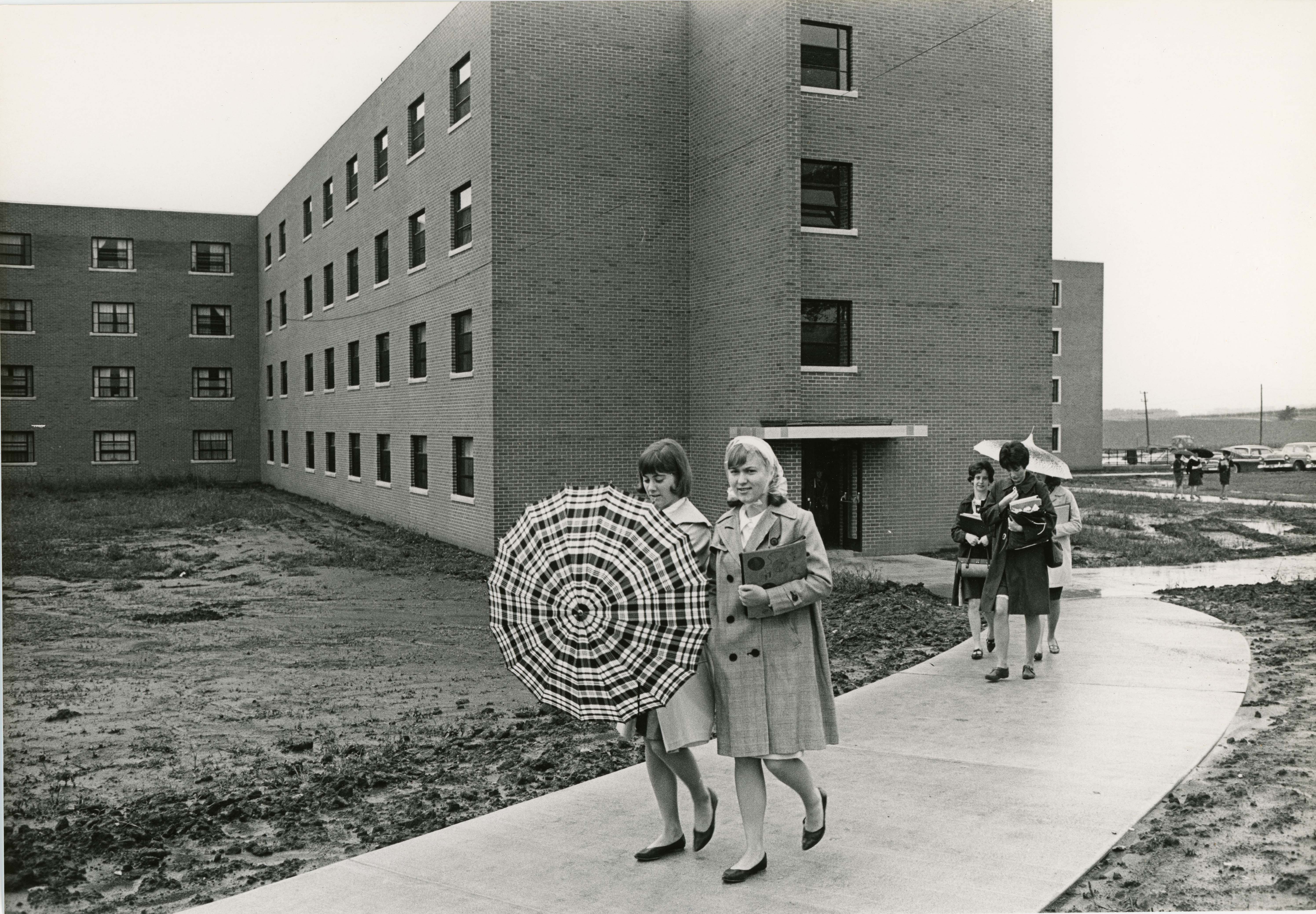
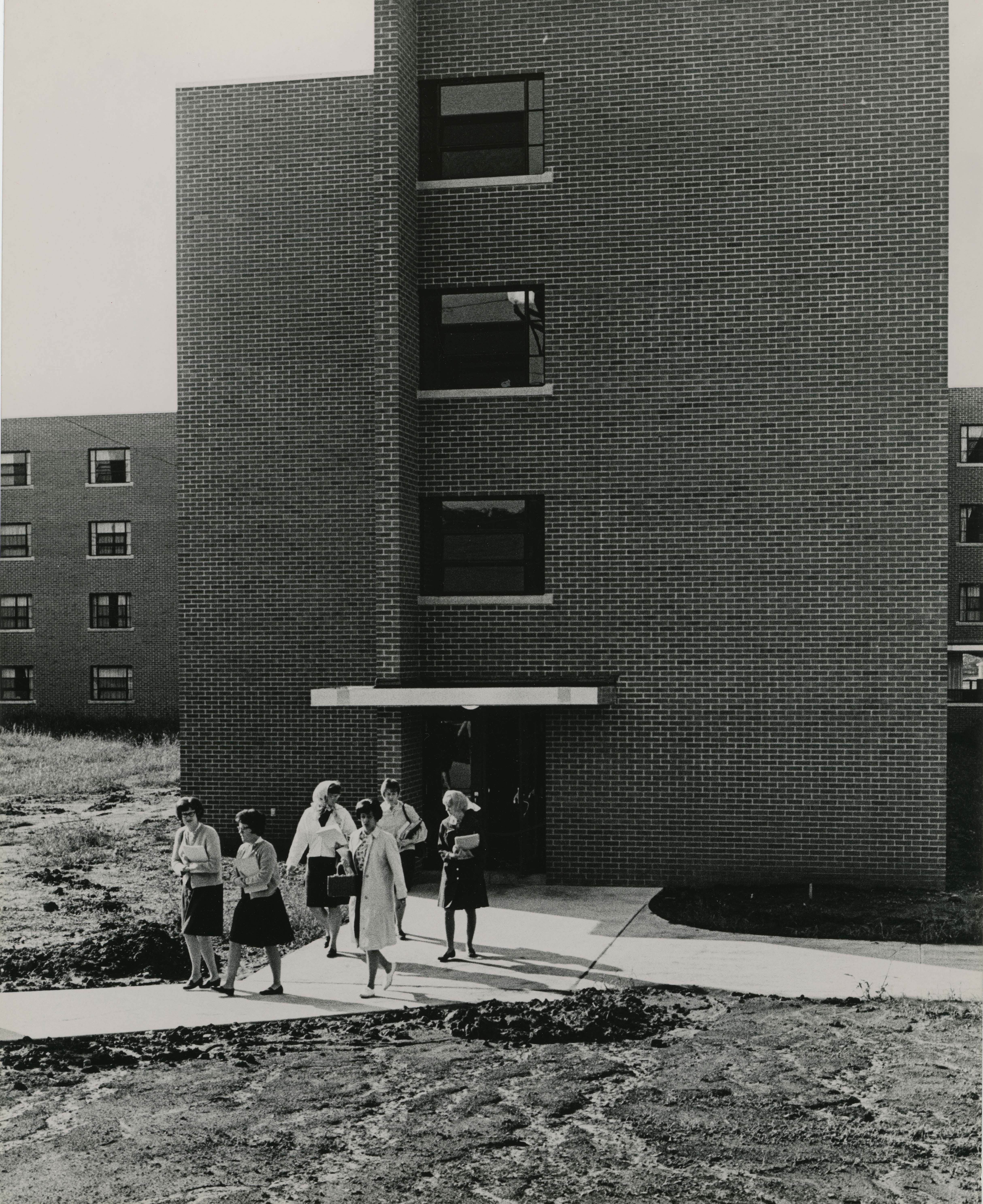
By summer 1960, plans had evolved to include a structure located south of 27th Street near Prexy’s Pond which would house 400 students, organized into eight 50-person units. Construction was underway by general contractor W. A. Klinger Company of Sioux City, Iowa. The budget of $1.3 million, which included both construction and equipment costs, was financed by bonding against future dormitory revenues. The college would save money on architectural design costs by following plans developed for Helser Hall, a dormitory on the Iowa State University campus. The completion date was set for August 1961.
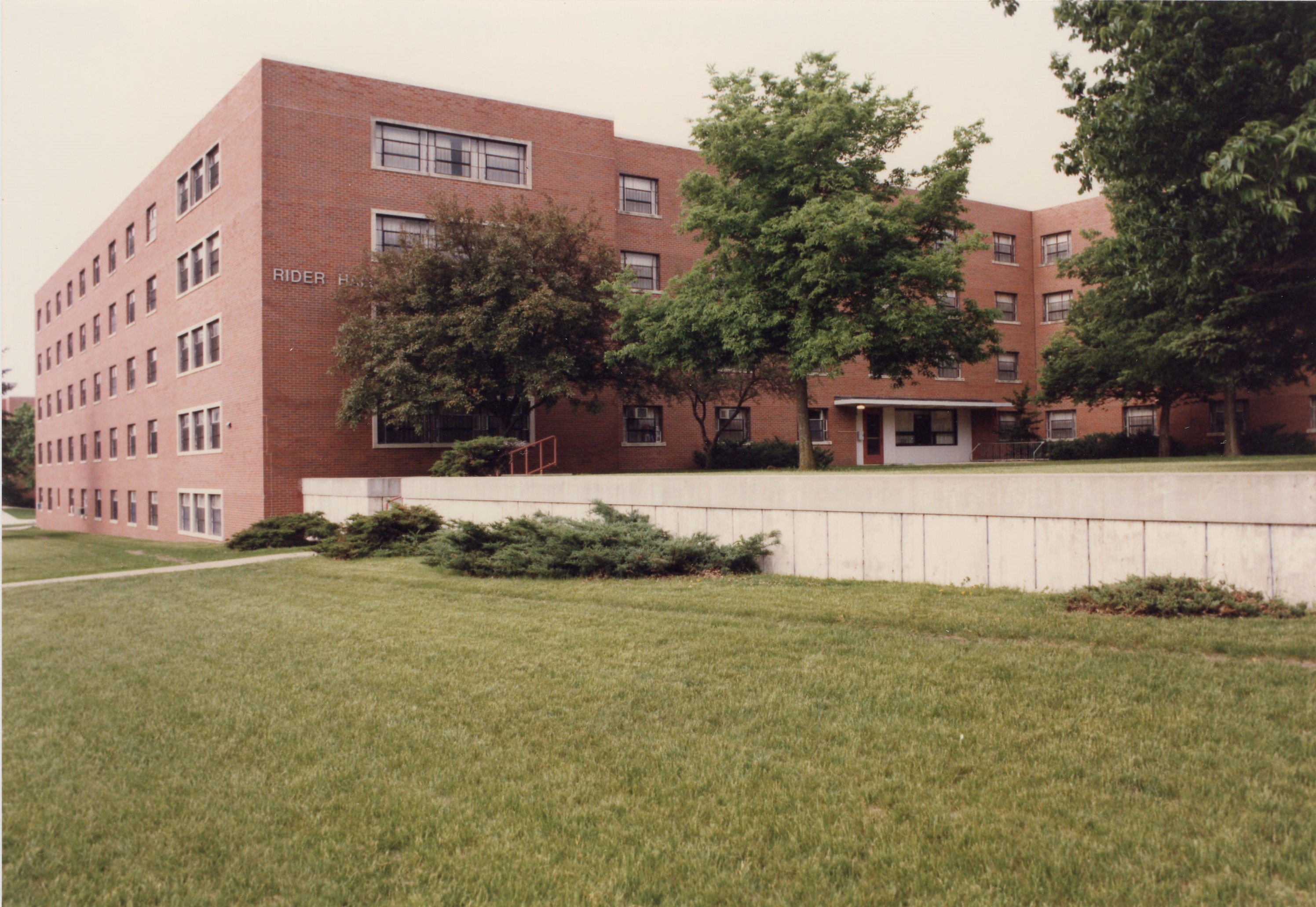
By January 1961, the steel framework for the building was in place and equipment was being purchased. September 1, 1961, was the new target completion date. A utility tunnel from the old Power Plant and under 27th Street to the new dormitory was also under construction. The new building (now Rider Hall) was initially called the New Men’s Dormitory. In summer 1961, the Board of Regents formally named it Regents Hall for Men, to honor all who had served on the state board governing the college. Reference Librarian Mary Dieterich is credited with suggesting the Regents name.
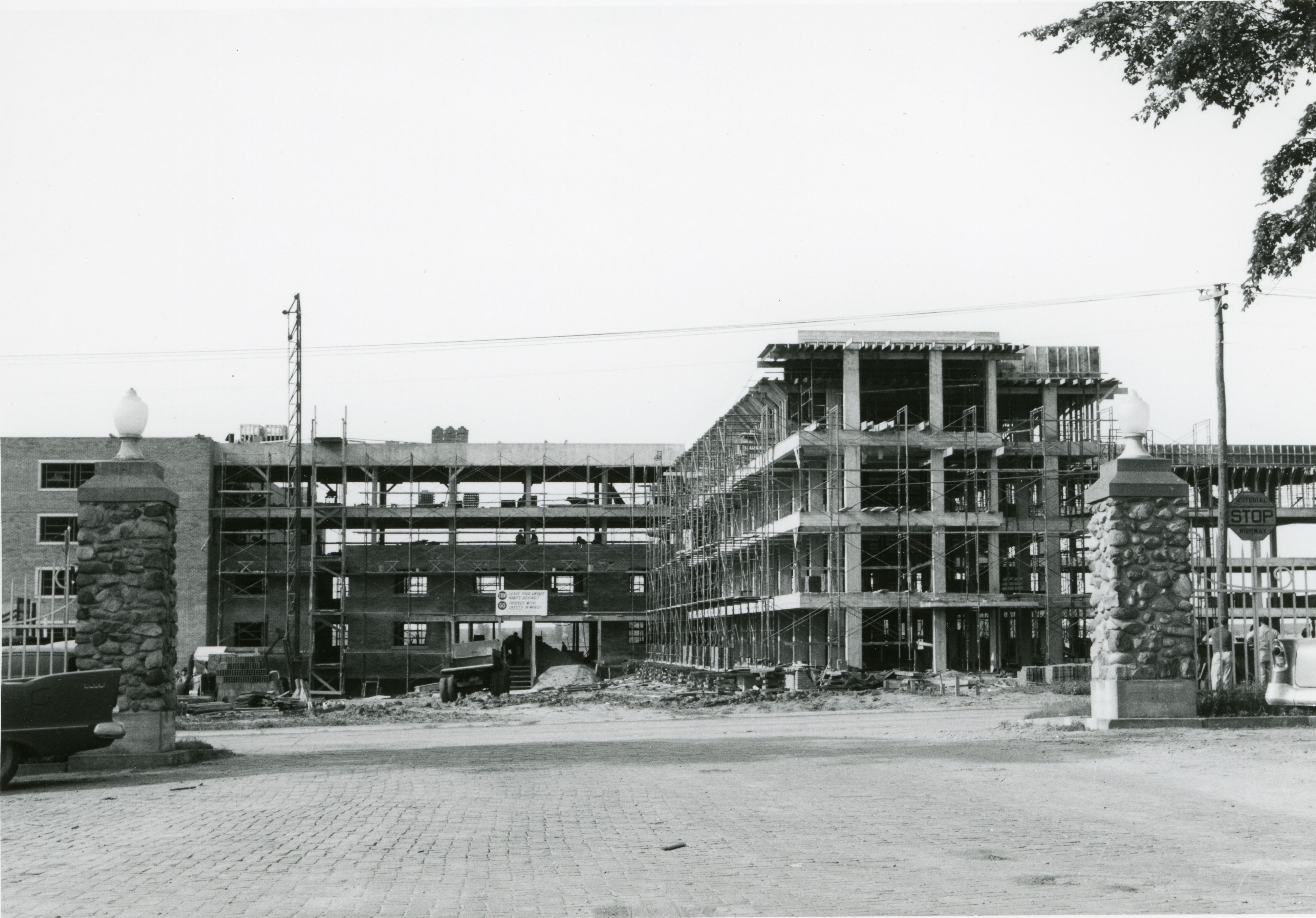
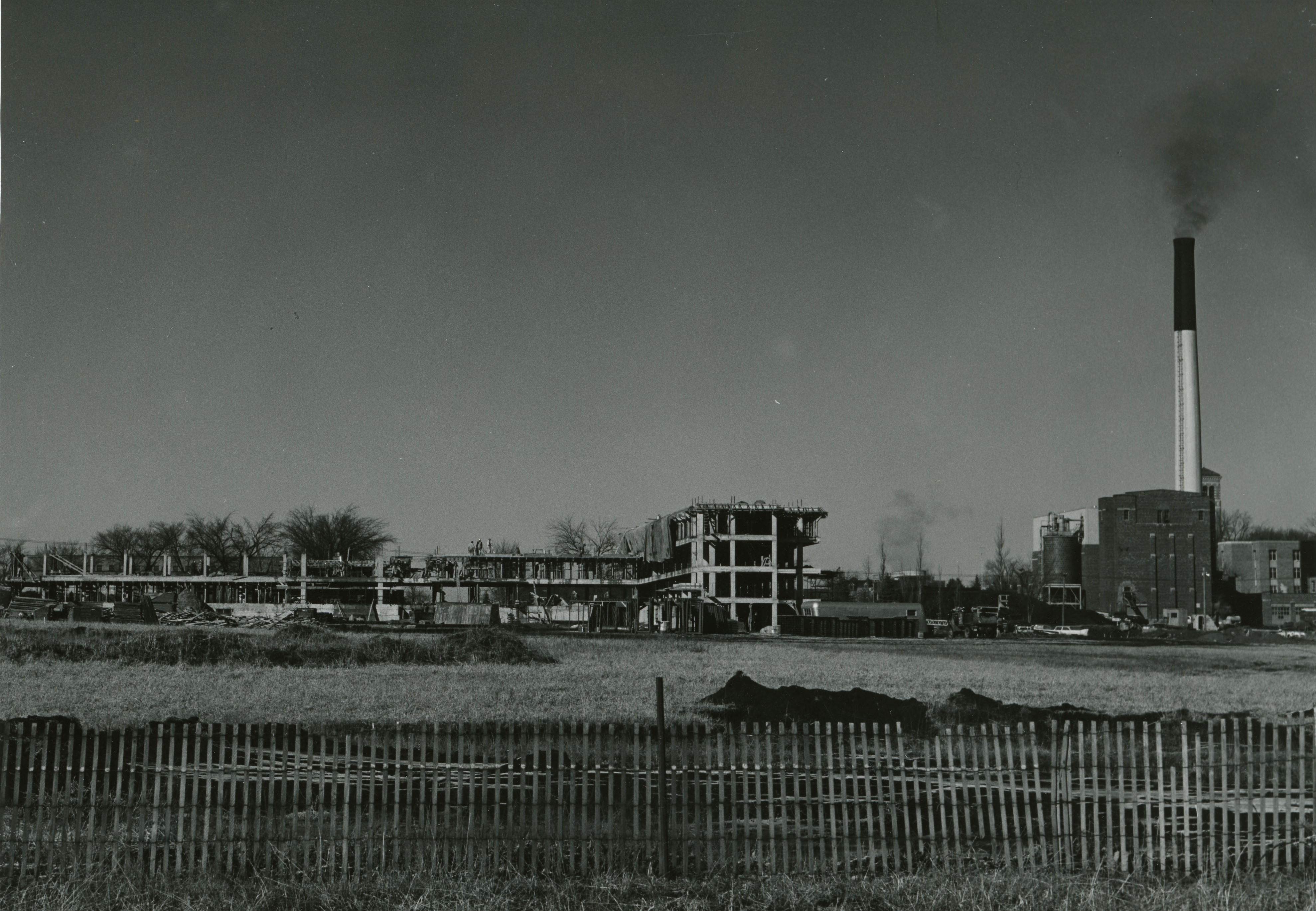
Regents Hall was not completed in time for the start of fall semester 1961. However, by mid-September 175 men occupied the completed portion of the hall. An additional 50 men lived in a large open area in the basement. The College Eye student newspaper awarded this latter group an honorary "medal for bravery beyond the call of duty" for paying full room and board charges and then living in such conditions. Baker Hall and Stadium Hall were both at capacity. By December 1961, the men of Stadium Hall moved into Regents Hall, and college officials refunded $4.44 apiece to the men who had been living in the crowded basement.
On February 15, 1963, the Board of Regents approved a $3.4 million project budget for two new dormitories: one for women and one for men. Each would house about 400 students. The project would be financed again by bonding against future room and board fees. Brooks-Borg of Des Moines was selected as the project architect, and the new buildings would again be patterned after Helser Hall in Ames. The project, built near Regents Hall, would include kitchen and dining facilities. Construction was scheduled to begin in spring 1963.
Additional plans emerged by April 1963 and included four halls linked by dining facilities. The next building would be an additional men's dormitory, then two units for women. The second men's dormitory was scheduled to be completed within a year or so, and the dining and lounge facilities would follow a year later. Dean of Students Paul Bender called this arrangement "co-educational living,” although men and women would live in separate buildings and share only dining and recreational facilities.
In June 1963, the Regents approved a $1.264 million budget for Unit II (eventually known as Shull Hall) of the new dormitory complex. Henkel Construction Company of Mason City received the general contract for the building, which was intended to house 426 men. Construction costs would be $12.21 per square foot. Excavation for the building was underway by July 1963, with a completion date set for fall 1964.
In December 1963, the Regents approved preliminary plans for Unit III (eventually known as Hagemann Hall) and for a dining facility. Acting upon advice of a bonding consultant, the Regents also approved an increase in room and board fees to cover the cost of the dormitory bonds: yearly rates for room and board increased from $640 to $660. President J.W. Maucker hoped overcrowding in the dormitories would be somewhat alleviated by 1966, when all four dormitories and the dining facilities, with a combined capacity of about 1200 students, would be completed.
By January 1964, exterior work on Unit II was nearly done and the foundation and floors had been laid in the south wing. The Association of Men's Residence Halls announced it would conduct a vote on naming the first two of the Regents Complex halls. By that time it seemed the complex as a whole would be known as the Regents Complex, but individual halls would carry the names of past presidents of the Board of Regents. The names of Dwight G. Rider and Henry C. Shull would appear on the ballot. The building known as Regents Hall would receive the name of the man who received the higher vote tally. Unit II, sometimes called the Regents Annex, would carry the name of the other man. Late in February 1964, President Maucker announced Regents Hall would become Dwight G. Rider Hall and Unit II would become Henry C. Shull Hall. Rider served as president of the Board from 1951 through 1956. Shull headed the Board from 1940 through 1951. On May 24, 1964, the college held a dedication ceremony for Rider and Shull Halls. Both Rider and Shull attended the ceremony.
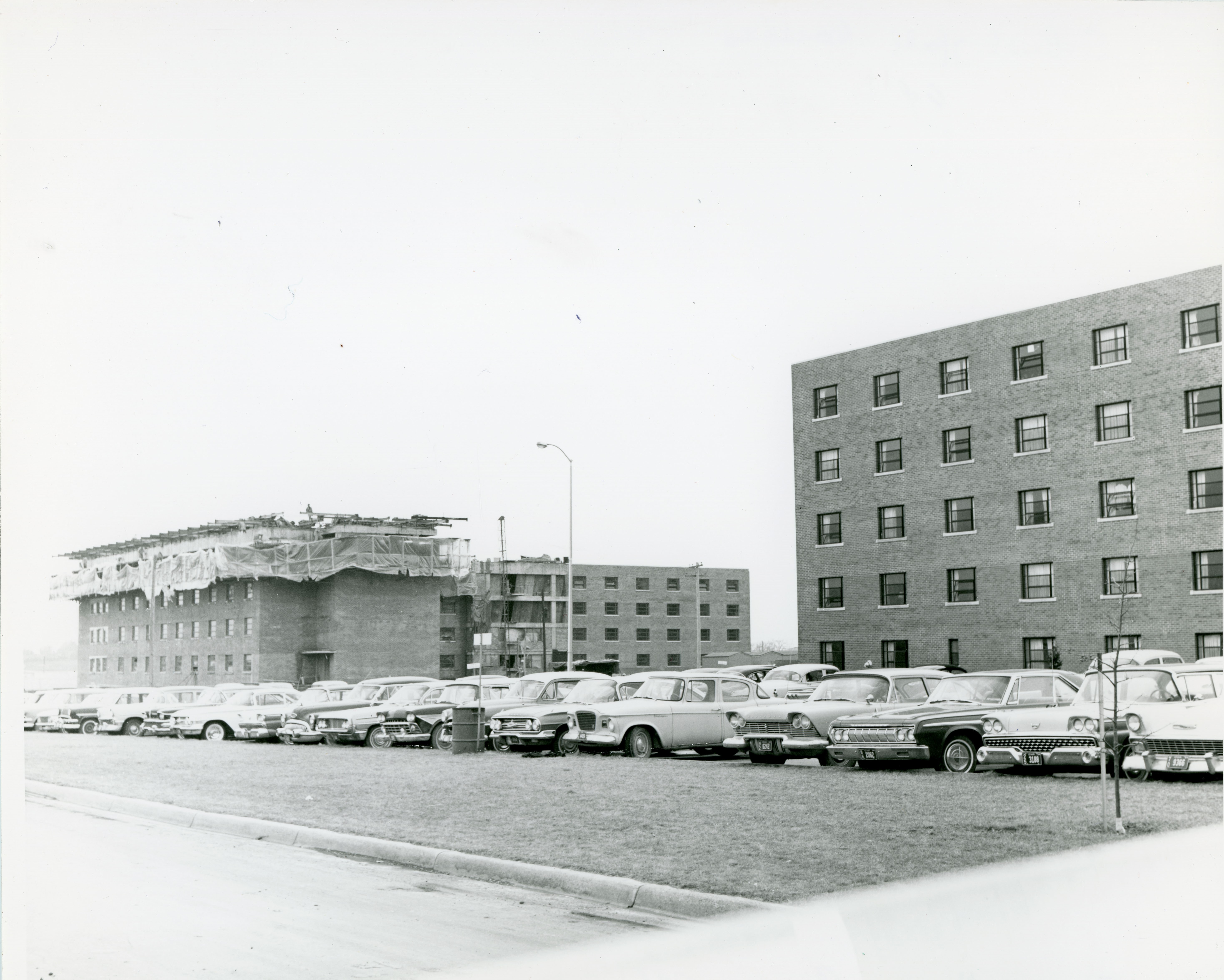
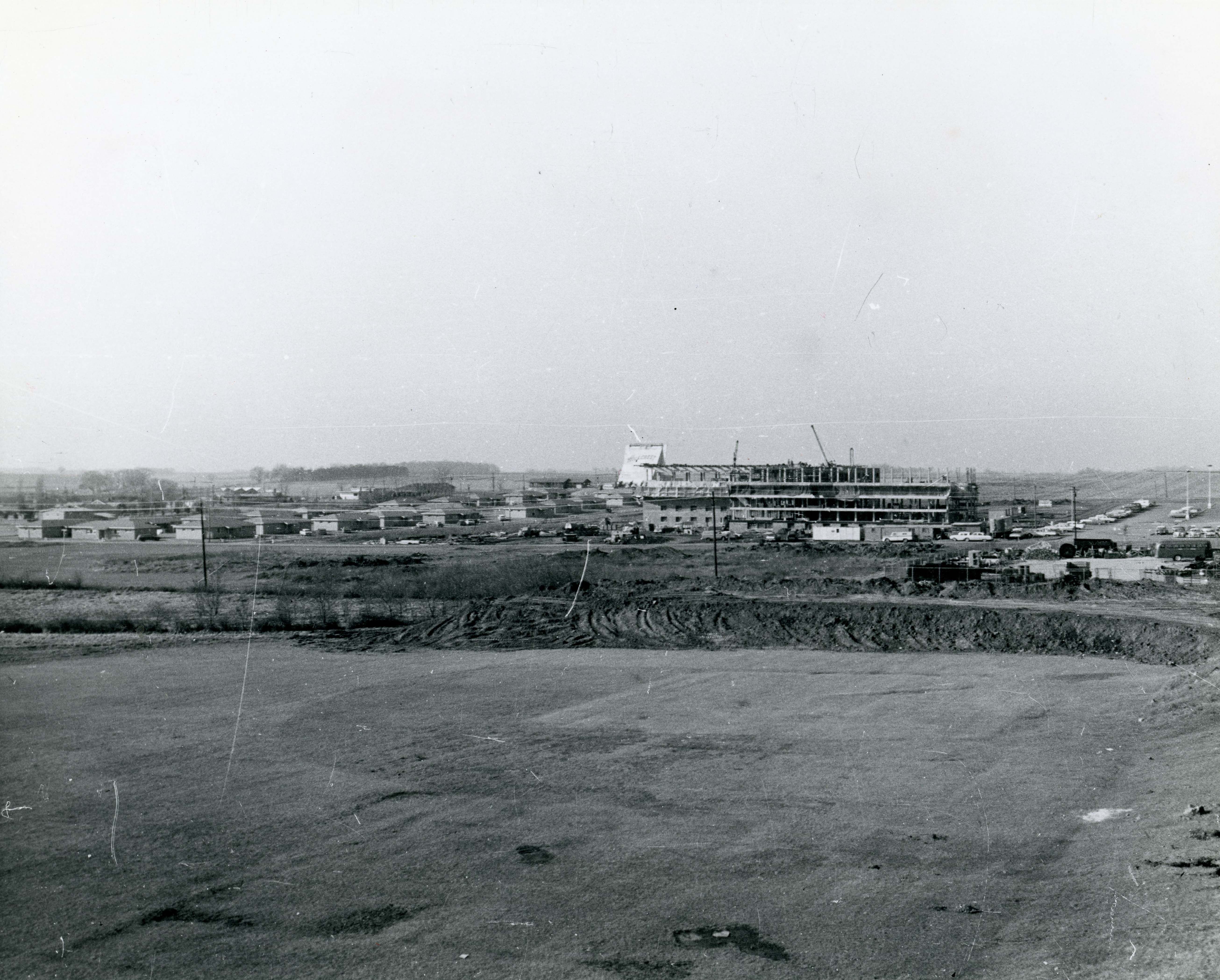
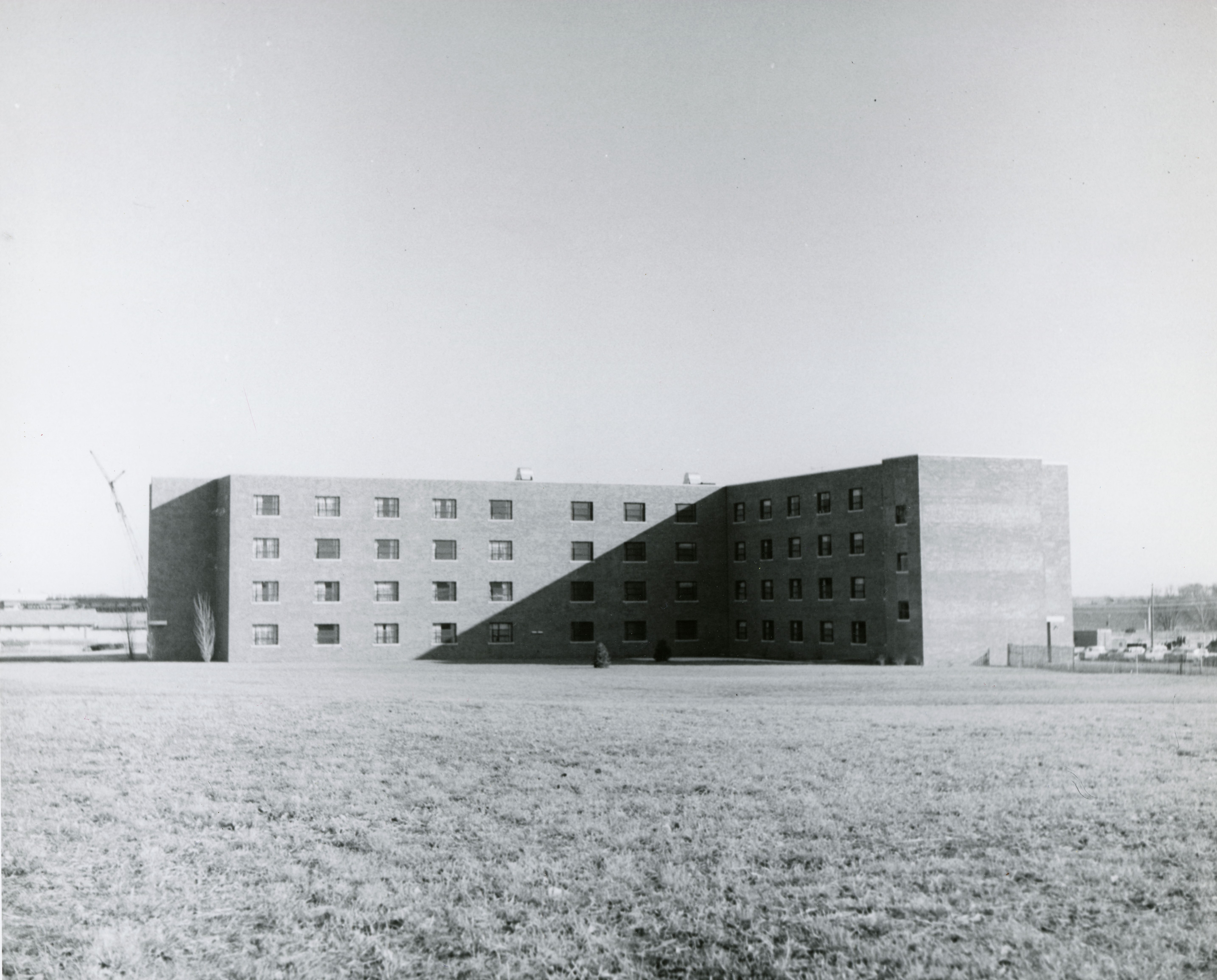
In April 1964, the Regents approved revenue bonds of $6.25 million to refinance and expand dormitory projects. The Board awarded contracts of over $2 million for the construction of Unit III and the dining facility of the Regents Complex. The John G. Miller Company of Waterloo was the general contractor. Plans called for construction to begin as early as May for the new dormitory, which was intended to house 414 women. The completion date was set for September 1965. Officials hoped Shull Hall, now meant to house 427 men, would be ready for fall 1964.
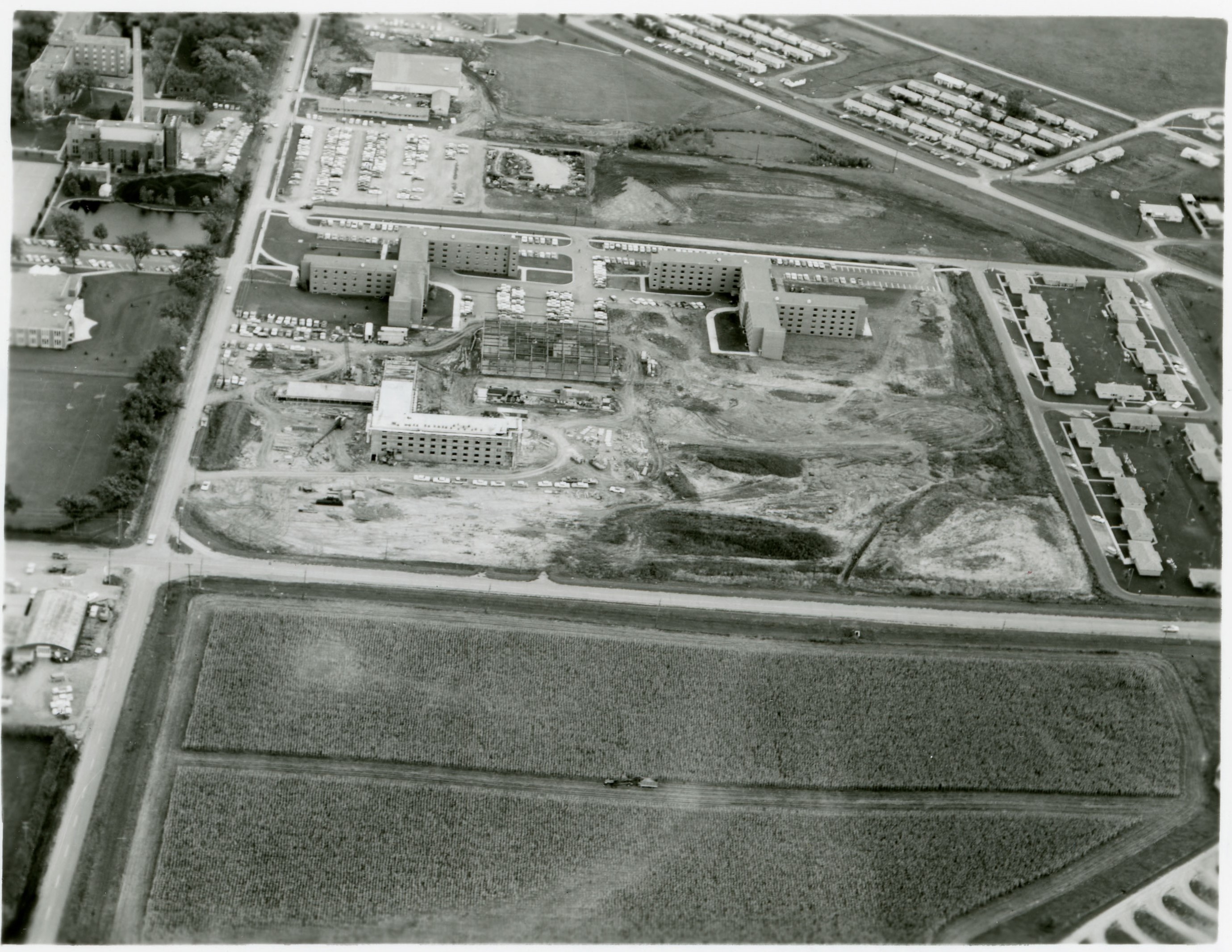
Construction on Unit III began in May 1964. Work on the hall and dining facility went well. Women looked forward to the completion of the new complex, even though it was perceived to be a long way from central campus. Student Jean Marker was quoted in the College Eye as saying, "So many of the buildings we use are getting old. We need some modern buildings to add sparkle." Others looked forward to being in closer proximity to men. One woman said, "On the other side of the campus, we never even see any guys."
Shull Hall was ready for the 1964 semester and almost 500 residents moved in. Initially, there were plans for two separate dining facilities: one for Rider and Unit III (Hagemann Hall) and a second for Shull Hall and the proposed Unit IV (Noehren Hall). Consequently, Shull Hall was not connected to the dining room by an enclosed walkway. However, plans were adjusted and in January 1965, the Regents approved a $3.05 million budget for the construction of Unit IV, a dormitory to house 700 women, and a dining facility addition. Originally planned for 1,200 residents, the Regents Dining Hall would now accommodate a projected 1900 students living in the complex.
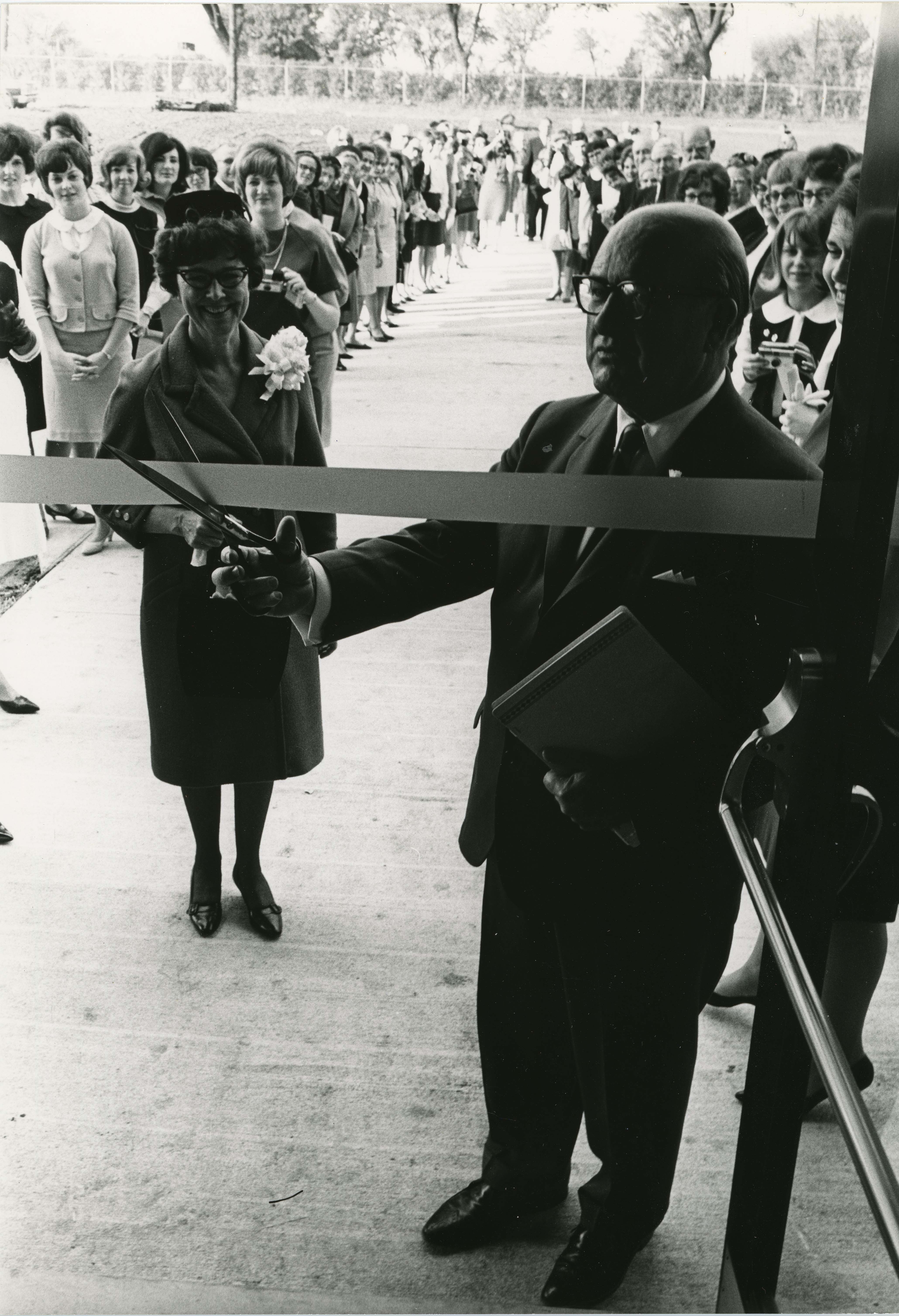
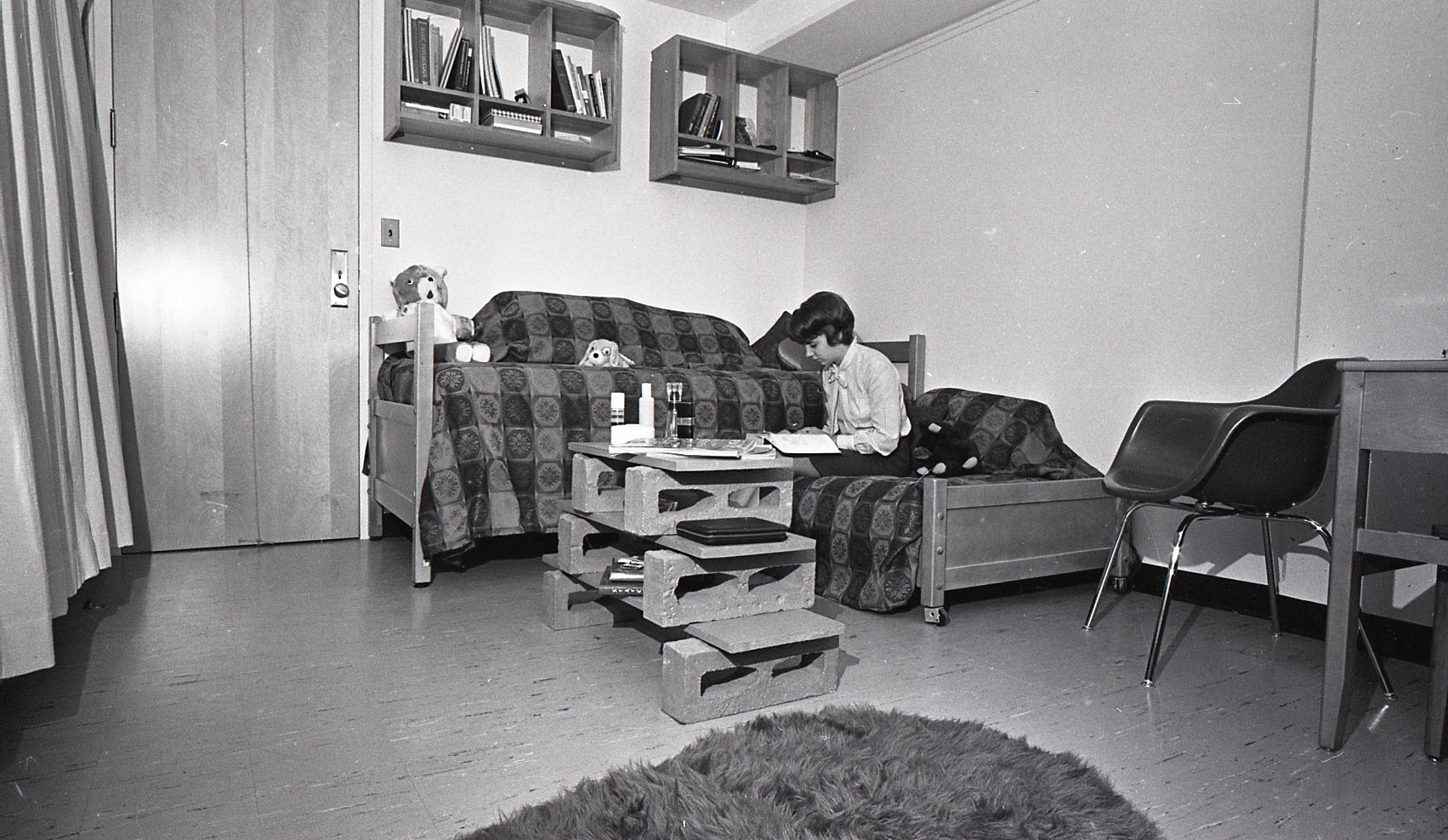
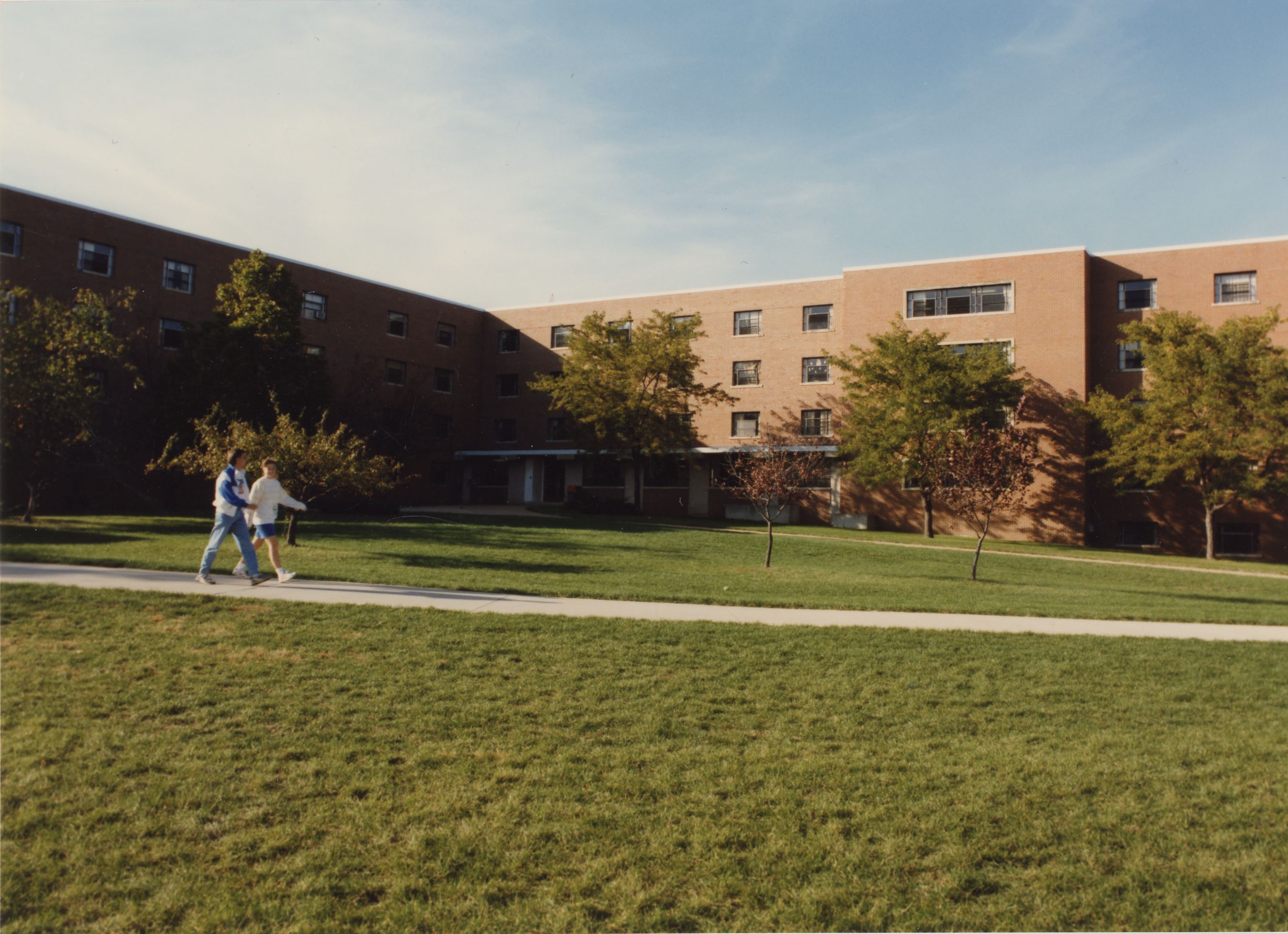
In March 1965, the Regents approved the naming of Unit III to honor Henry H. Hagemann, president of the Board from 1957 through 1963. Hagemann Hall opened for the fall 1965 semester. The building had five levels, four for residence and one for recreation and service. Each residence floor had a study lounge and two kitchenettes. The 204 double rooms had built-in wardrobes, sinks, and bookcases. The trundle style beds saved valuable floor space in the rooms. Hagemann Hall was dedicated October 10, 1965, during a campus open house featuring other new facilities including Regents Dining Hall, the Administration Building, and the Library.
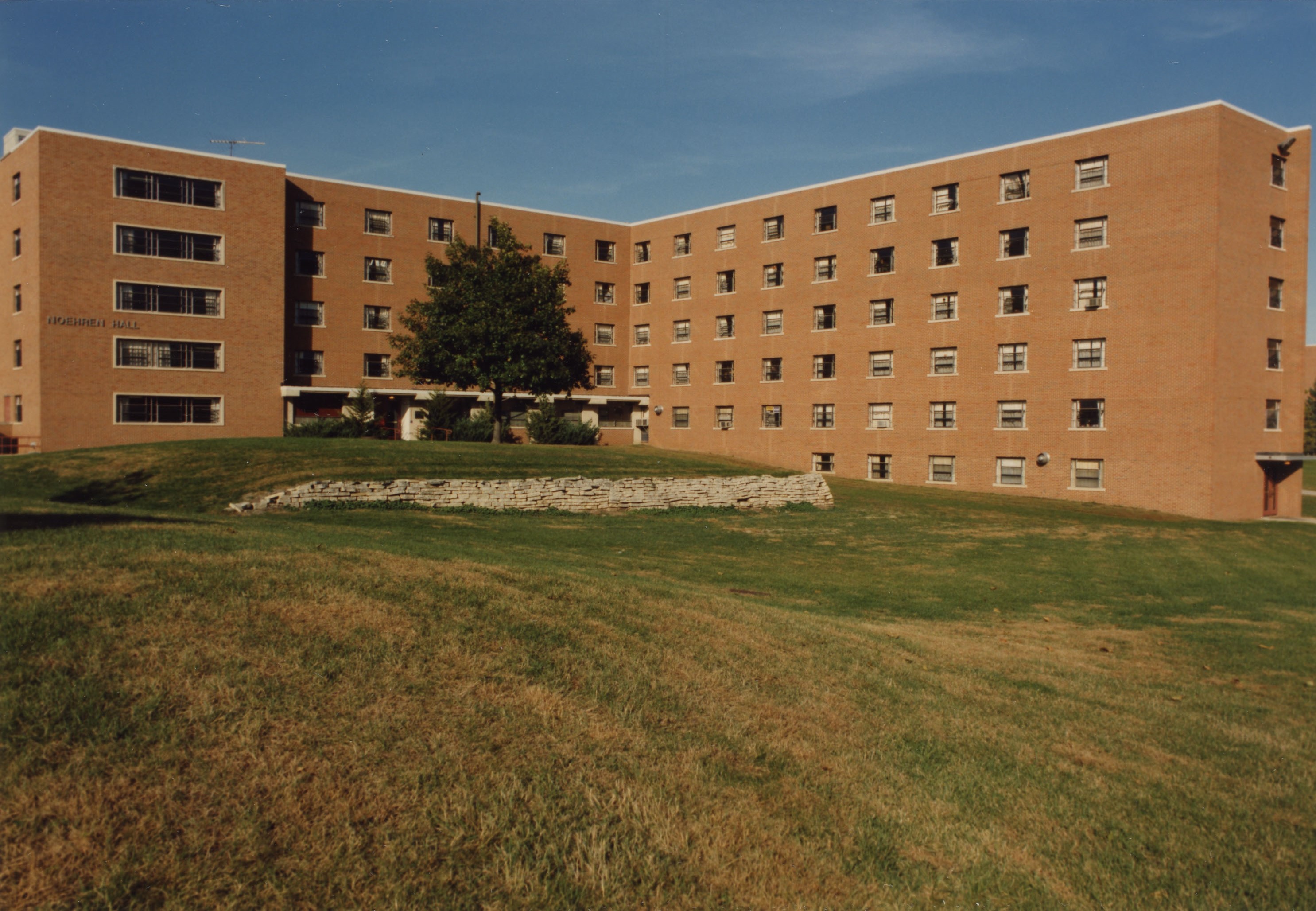
The Jens Oleson Construction Company of Waterloo received the general contract for Unit IV, with a target completion date of January 1967. In February 1966, the Regents approved naming it in honor of Alfred W. Noehren, who served as president of the Board from 1963 through 1965. Officials hoped at least two-thirds of Noehren Hall would be ready for occupancy by fall 1966.
In March 1966, College Eye feature writer Sherri Fuller wrote about life in the Regents Complex, including comments on the ratio of men to women, food and dining facilities, and lounge areas. In September 1966, an additional ten telephone lines were installed in Hagemann Hall. However, even with this improvement, there was still just one telephone for every 15 residents. Campbell Hall remained the only dormitory with telephones in each room.
Noehren Hall’s composition remained unclear. It was designed for men, women, or a combination; initial plans had it as a women’s dormitory, and later, for men. By spring 1967 women occupied the part of Noehren Hall which had been completed, with the remainder of the building to be completed shortly. Noehren Hall was officially dedicated on October 1, 1967. At that time, 518 men and 206 women were housed in separate units of the hall.
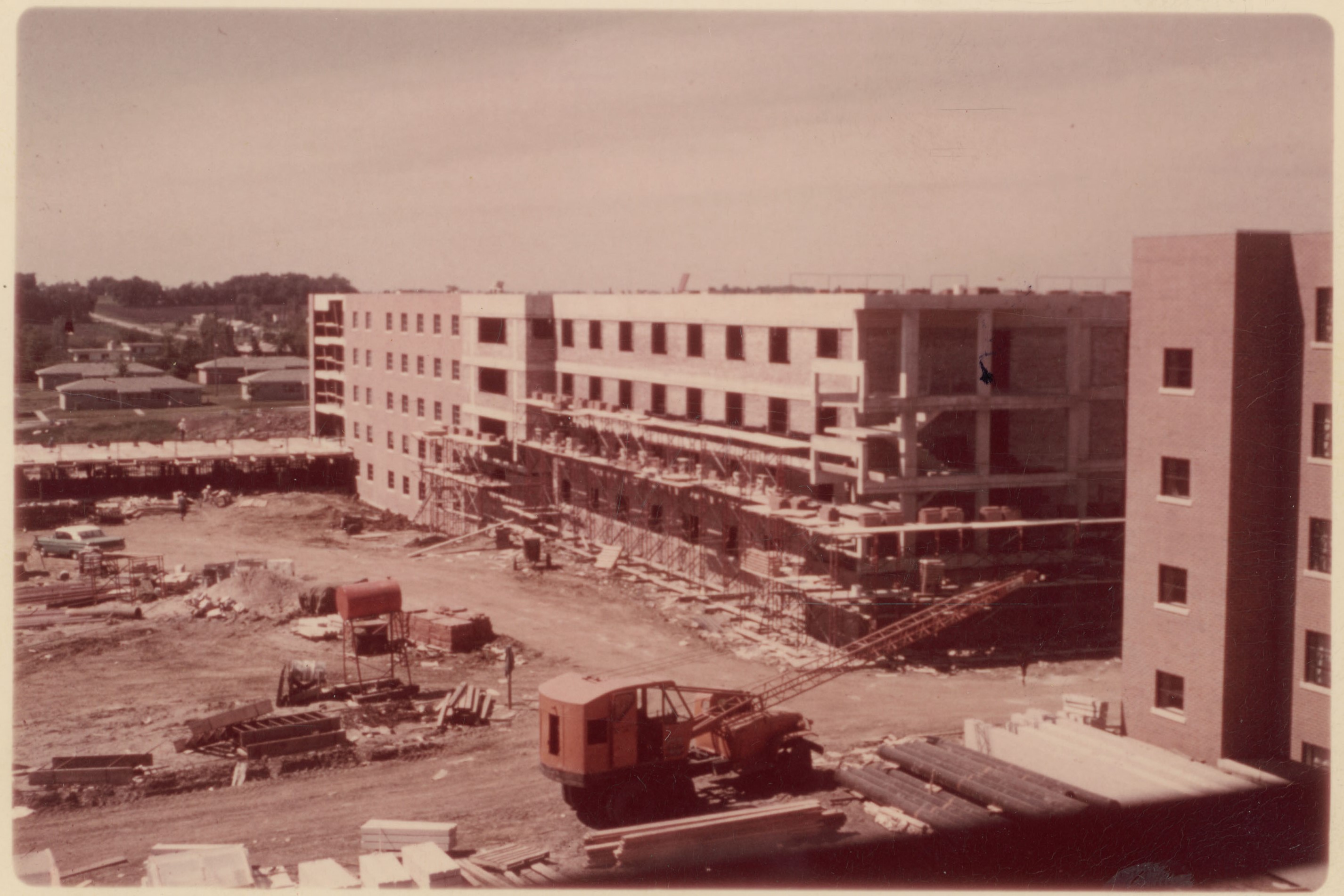
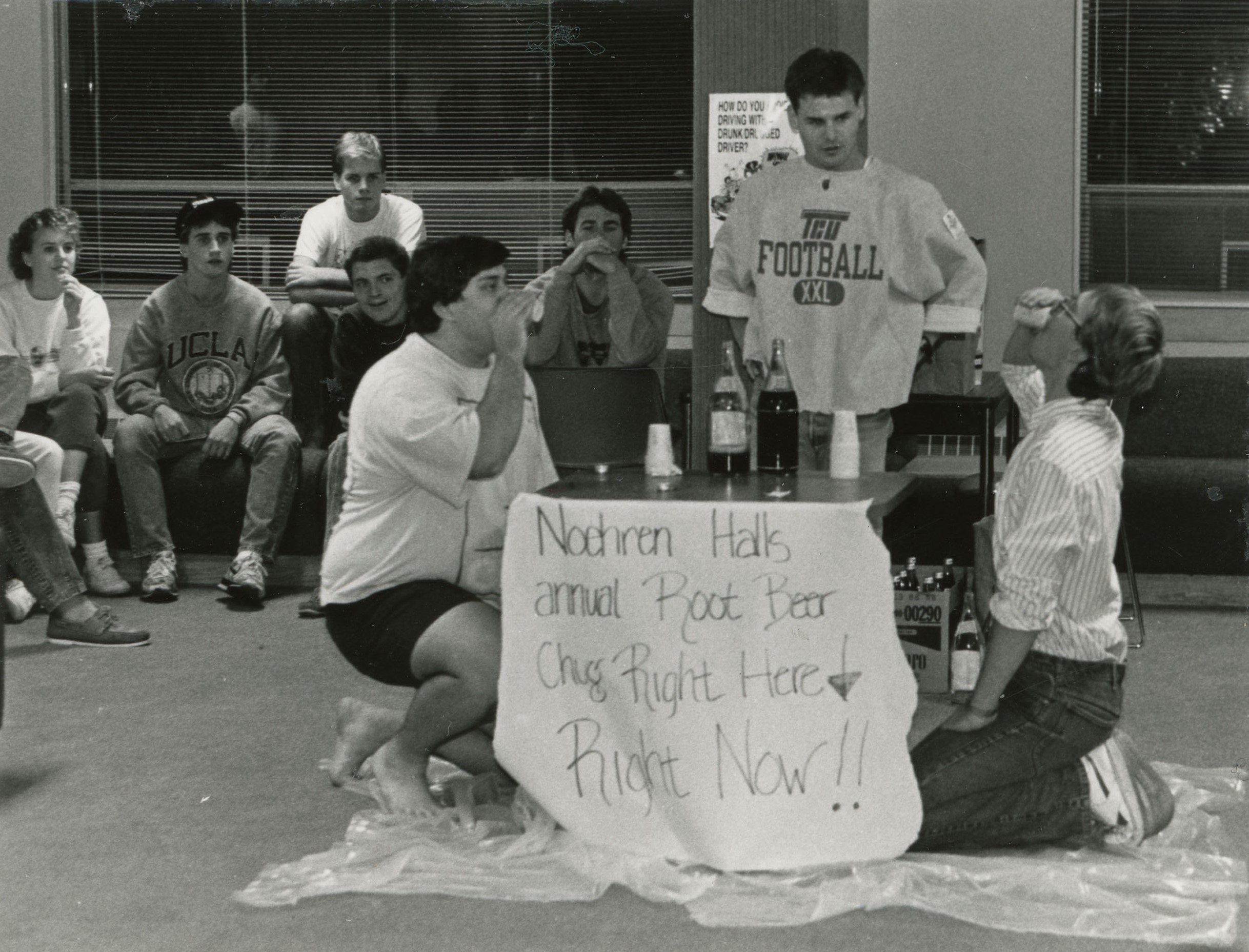
The halls in the Regents Complex became involved in a number of activities and programs. In 1968, Clark House of Shull Hall had a house advisor, Delroy Johnson of the biology faculty, and a mascot, a rescued puppy adopted by Johnson. In 1970, the women of Hagemann Hall took part in traditional campus activities, such as Homecoming, Dad's Day and Mother's Day, as well as service projects involving the elderly and families in need. In fall 1970, Noehren Hall tried a closed door visitation policy. During limited and specifically stated hours, women could entertain men in their rooms with their doors closed. The sign-in policy included the following rules:
- Guest shall sign in at the main desk
- Hostess shall sign her name
- Room number of guest and hostess is registered with the arrival time
- Token is picked up to hang outside the registered room
- Hostess sees male guest back to desk for sign-out
Some facilities in Noehren hall, such as laundry, were limited to either men or women at certain times. Regents Complex residents also gathered together for activities such as the 1972 casino party, which featured mock gambling and attracted a crowd of over 1,000. The event was so popular it was repeated in later years.
In 1973, the Governor ordered the university to save energy during the Energy Crisis by setting thermostats to 68 degrees. Residents in parts of the Regents Complex, notably Noehren Hall, suffered. The zoned heating system did not respond well to localized conditions. The Noehren Hall director claimed setting the thermostat at 68 degrees meant temperatures dropped to 60 degrees in some parts of the building. By summer of that year, students were complaining about temperatures reaching 88 degrees in Noehren Hall.
In March 1974, the Board of Regents named the Regents Dining Center in honor of Stanley F. Redeker, president of the Board from 1965 through 1973. Redeker responded by saying “...it is great to be remembered after all the battles are over." The university held a formal dedication ceremony for Redeker Dining Center on October 20, 1974.
The coed housing arrangement in Noehren Hall, including its 24-hour visitation policy, was threatened in April 1974. Vice President for Student Affairs Thomas Hansmeier, in a meeting with students, said men and women living in the same building would not continue because it had never been specifically authorized by the Board of Regents. Shortly afterward, however, Hansmeier reported the administration had decided the arrangement would continue for at least the 1974-1975 year. During that time, the policy would be evaluated and then reported to the Board for consideration. Rider Hall was selected for an experimental 24-hour visitation arrangement for the 1976-1977 and 1977-1978 years. Hagemann Hall residents voted to ask for a similar policy for 1978-1979. Most residents believed these programs worked well.
Some Regents Complex residents took part in a campus Halloween tradition: food fights. Food fights could be relatively mild, with popcorn balls flying around the dining center. Other years they were much more destructive, with potatoes, jello, carrots and taffy apples, as well as dishes and glasses, hurled at those entering the room. In a letter to the editor of the Northern Iowan, one Regents Complex resident wrote, "Congratulations, all of you who helped to make Halloween supper such a success at Redeker. We, and all the clean-up committee are forever grateful. But next time, could you think of something more grown up?" Residents also had other traditions, such as Hagemann Hall’s annual Olympics, which included an egg toss, a scavenger hunt, and a picnic in 1975.


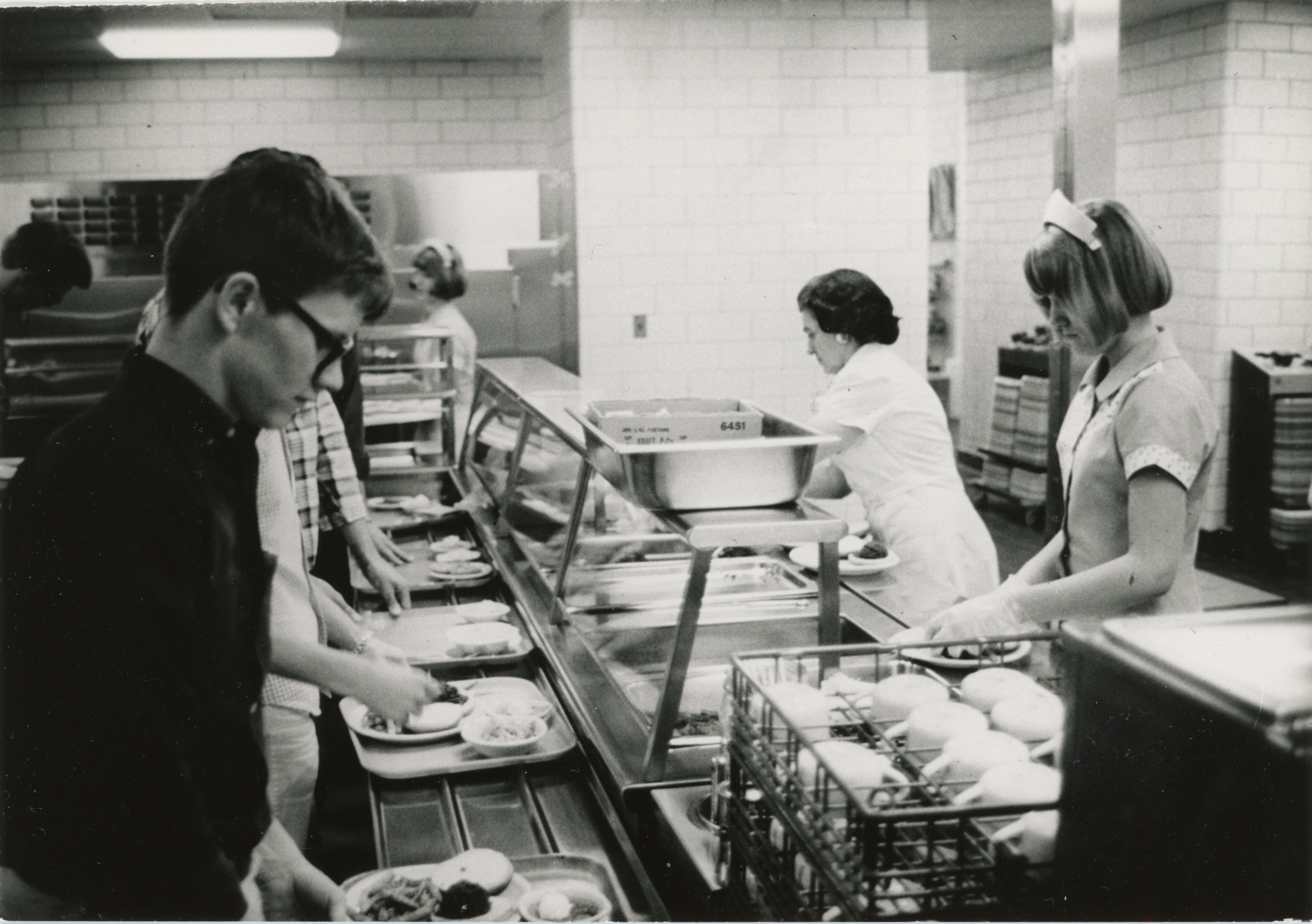
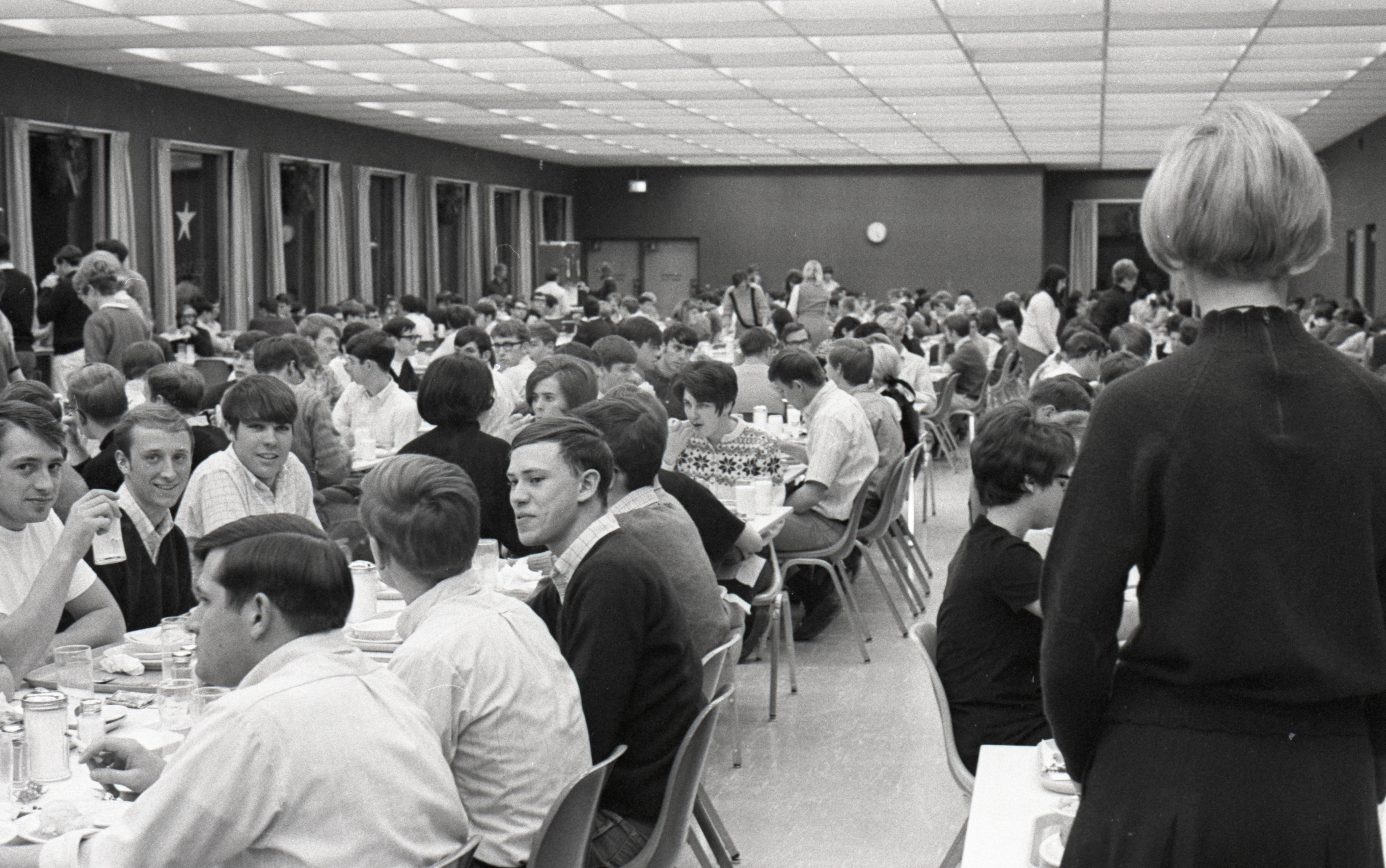
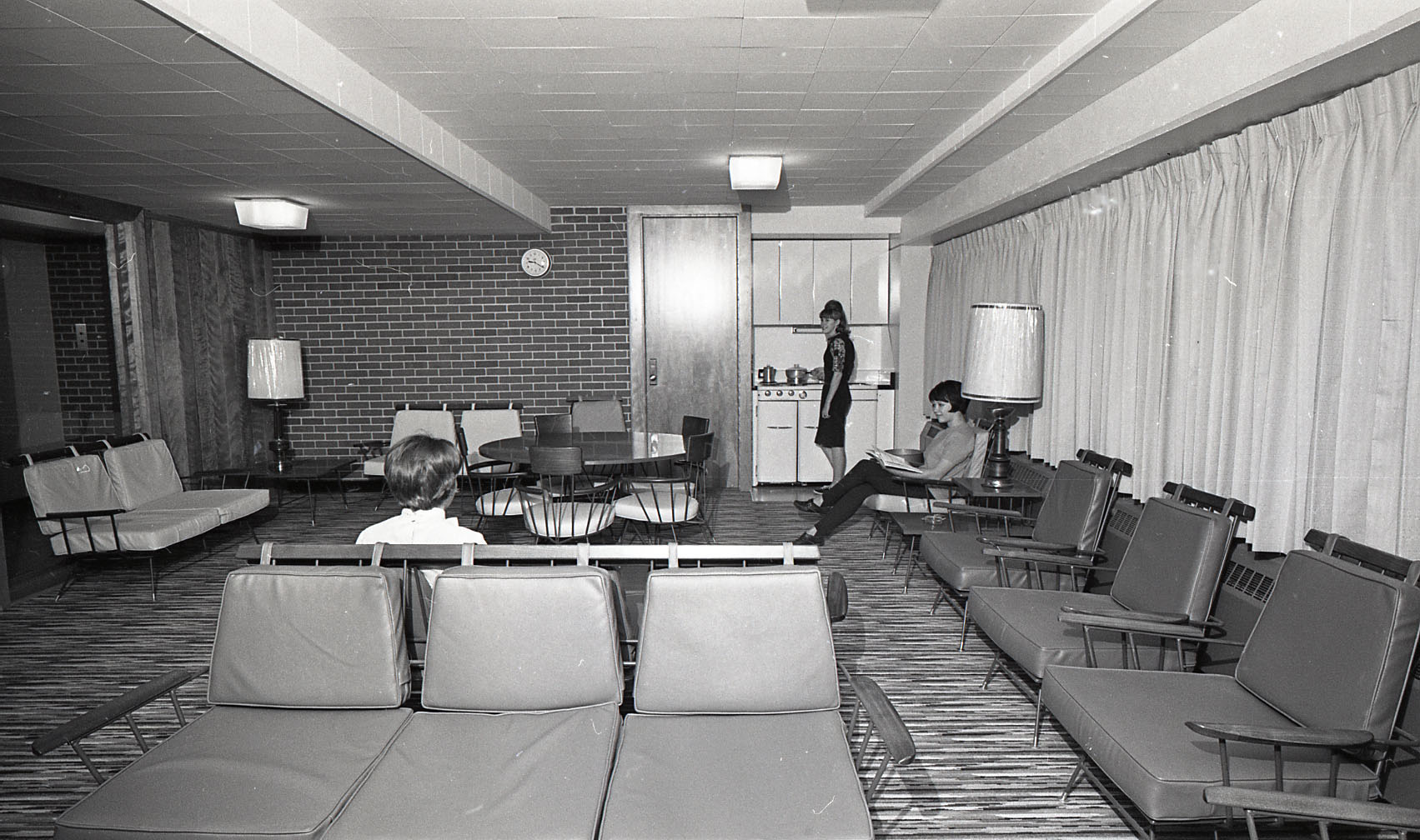
In summer 1977, large dividers were installed in the dining center to break up the "mess hall atmosphere" of the very large room, according to Dining Services Director John Zahari. In May 1980, the Board of Regents approved $61,000 to replace panels in the Regents Complex skyways with safety glass or insulated panels. Following major fires in other residence halls and one small fire in Noehren Hall in 1981, officials initiated several programs to help residents avoid fire risks. Also in 1981, the Shull Hall Senate started the Shull Hall Escort Service to escort students safely from one part of campus to another. Rider Hall instituted a Night Patrol service about the same time to patrol dark areas of campus.
A remodeling project for Redeker Center began during spring semester 1983. The catwalks, stairwells and corridors were painted. The dining room was re-painted and re-carpeted, and moveable refrigerated food dispensing units were installed. In addition, several of the specialized rooms underwent renovation. A new cooling system, using well water rather than a cooling tower, was installed in the Center in 1985. And, despite a small fire which destroyed some construction materials, Shull Hall received a new roof in 1986. In 1987, the Regents approved a $175,000 project to renovate the Redeker Center Plaza. The project would involve new steps, curbs, drainage, sodding and landscaping.
The installation of a computer laboratory in Redeker Center proved so popular with residents that in spring semester 1992 the lab was available 24 hours a day. The Noehren Hall Senate also operated a small convenience store.
Shull Hall, which had housed only men, went co-ed for the 1996-1997 school year, reflecting a stronger demand for women’s housing. Each of Shull Hall's four floors would have a men's house and a women's house. In fall 1997, Noehren and Hagemann halls went smoke-free. In 1998, the Redeker Center offered Della Suprema - students could prepare their own pizza until 10 p.m. In summer 1999, Rider Hall’s windows were replaced. Hagemann Hall windows were replaced in summer 2000. In fall 1999, Rider Hall designated "substance-free floors" on which residents agreed to abstain from illegal drugs, alcohol and tobacco. In celebration of its last year as an all-male hall, the men of Rider Hall dedicated themselves to community service and donated $738 to Cedar Valley Hospice in fall 1999.
The Redeker Dining Center closed for extensive renovation for the 2000-2001 school year. Small dining centers, Baggins and Henry's, were established in the basements of Hagemann and Shull Halls. Students could also use other campus dining centers during the renovation. Director of the Department of Residence Robert Hartman said the renovated facilities would be worth the temporary inconvenience. The Center would offer more food choices and greater freshness. There would be computer connections as well as lighting and audio technology to allow for small performances. Hartman said, "The new Redeker experience will be very different from anything currently available on campus." The $8.3 million project was funded by student room and board charges. As the project neared completion, the Department of Residence offered tours of the facility. The renovated center held a grand opening for the Redeker Center Piazza in September 2001. The project won an award for architectural and design excellence from American School and University magazine. The work was designed by Lotti Krishan & Short of Tulsa, Oklahoma, in conjunction with Rietz Consultants of Ames. The Baker Group of Grand Rapids, Michigan, was the food service consultant.
Shull Hall was closed for the 2004-2005 school year for improvements and renovation. Shull Hall, which was initially designed almost completely with double occupancy rooms, was remodeled into single occupancy rooms. Director of Residence Michael Hager cited a high demand for single rooms, despite the $1000+ room and board rate premium charged for them. The cost for the renovation project was about $1.95 million. It included installation of energy efficient windows and more home-like cabinets and sinks in each room, as well as improvements in bathrooms. Following the renovation, there were 42 showers for the 211 students in Shull Hall.
The top four floors of Bender and Dancer Halls, closed for 2003-2004 because of a decline in enrollment and expansion of off-campus housing, were re-opened to compensate for the Shull Hall closure. Shull Hall will return to double occupancy in fall 2012.
More information is available on Housing & Dining’s website at https://uhd.uni.edu/.
Compiled by University Archivist Gerald L. Peterson, with research assistance by Student Assistant Anthony Boggs; scanning by Library Assistant Gail Briddle, November 2003; updated January 9, 2012 (GP); photos and citations updated by Graduate Assistant Eliza Mussmann March 29, 2023; content revised and updated by Library Assistant Hannah Bernhard, February 2026.