
Commons (1932)
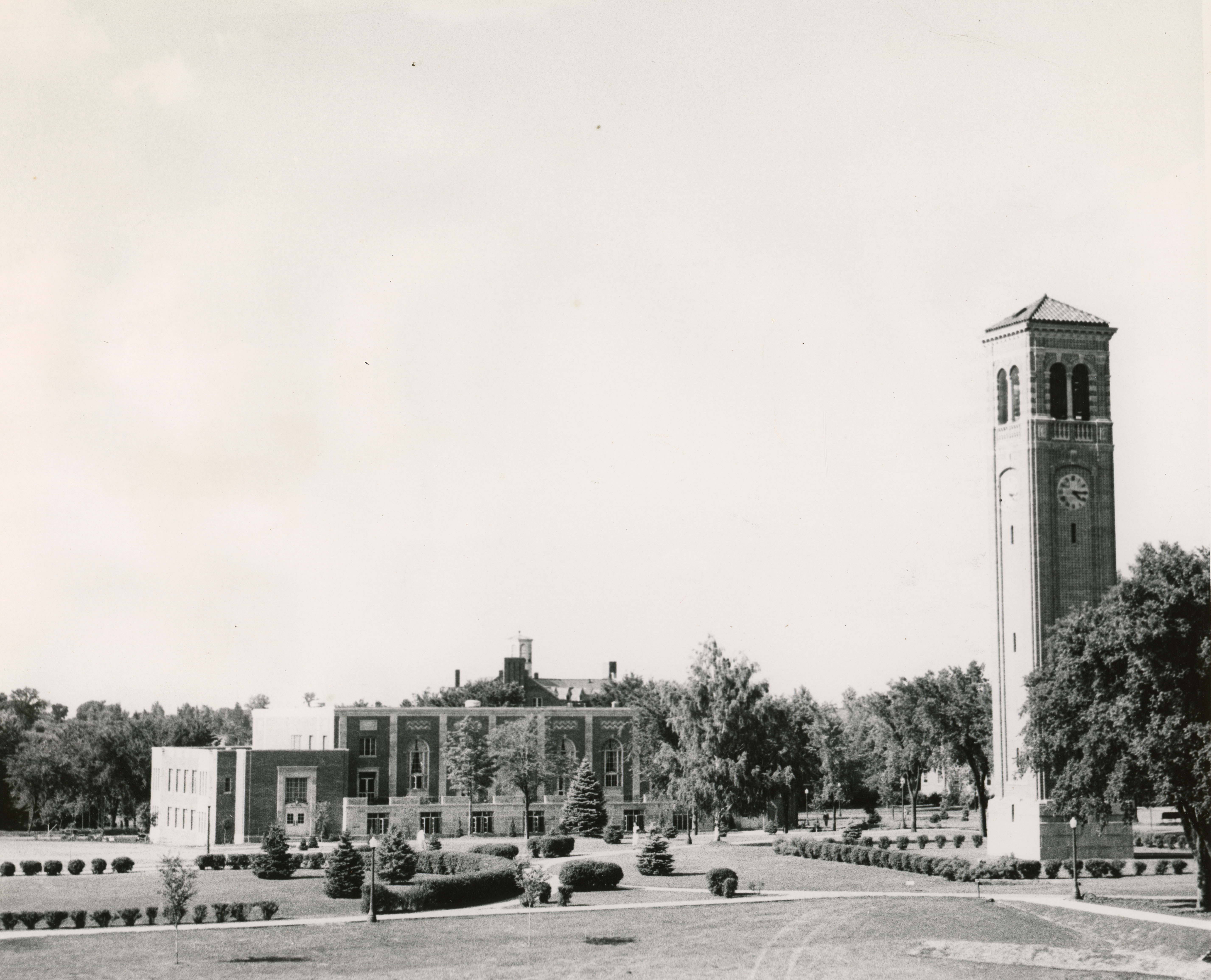
College officials first discussed a campus recreation center in the early 1920s. Partial consideration had to do with keeping students on campus for social activities, rather than allowing them to hold parties off campus where they would be less subject to college supervision. However, a shortage of funds and an inadequate heating plant caused the Board of Education to defer action. During Christmas vacation 1931-1932, officials including President Orval Latham, Dean of Women Sadie Campbell, and Dean of Men Leslie Reed formulated preliminary floor sketches and educational specifications for a campus recreation and dining center. They were submitted to the Board early in 1932.
The Board approved the preliminary ideas, and in February 1932, President Latham announced plans for a College Commons to provide recreational facilities for all students and dining service for the women who lived in Bartlett Hall, at that time the only dormitory on campus. The new Commons would be attached to the west wing of Bartlett Hall. President Latham said, "The Commons here will be to this campus what the memorial unions are to most colleges and universities." In a collegiate context, “commons” usually refers to a shared dining area. Campbell described the project as an intentional endeavor in "social education." She saw the Commons as a setting where students could broaden their education to include learning to live with other people. Campbell's influence on the development of the Commons and its programs was substantial.
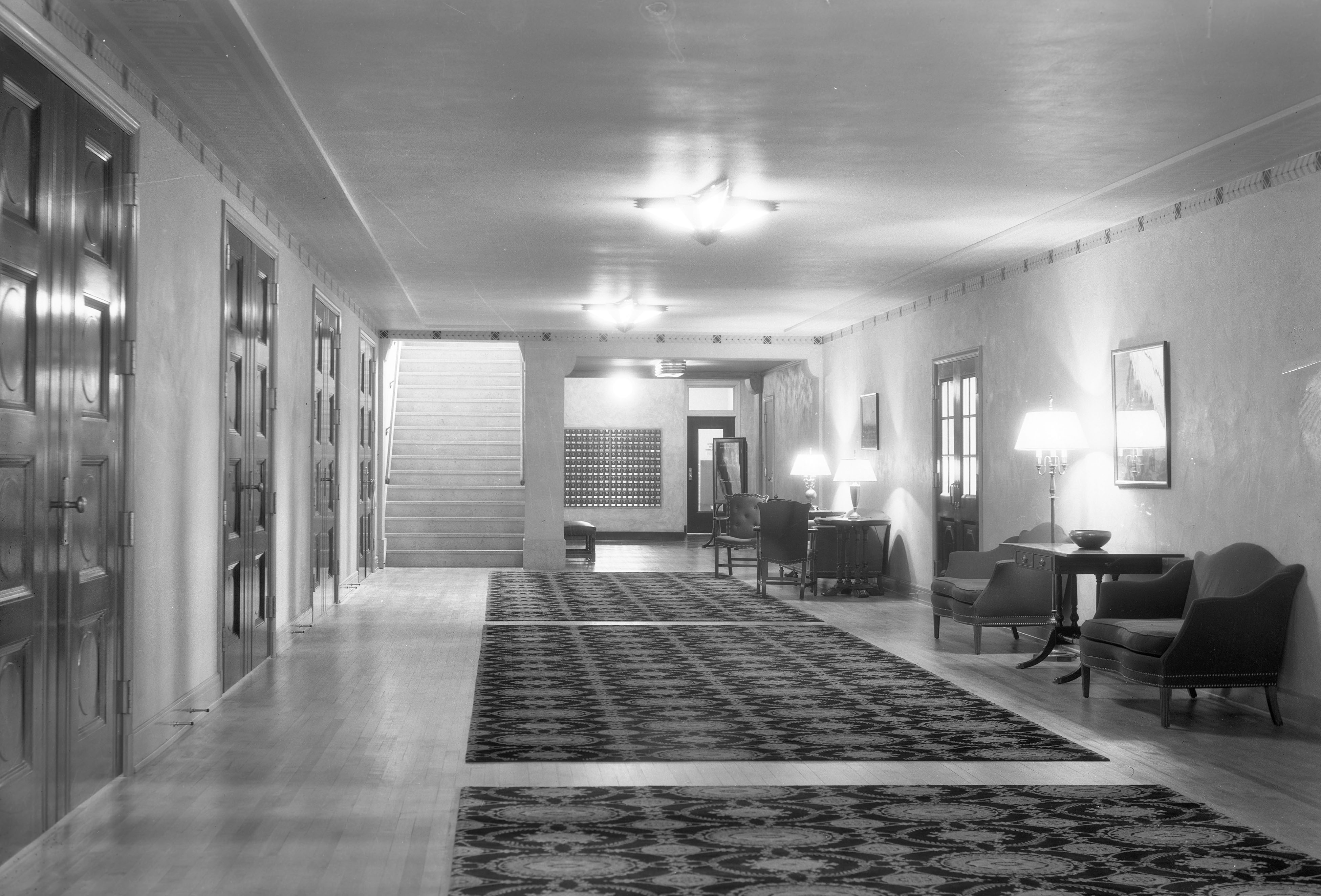
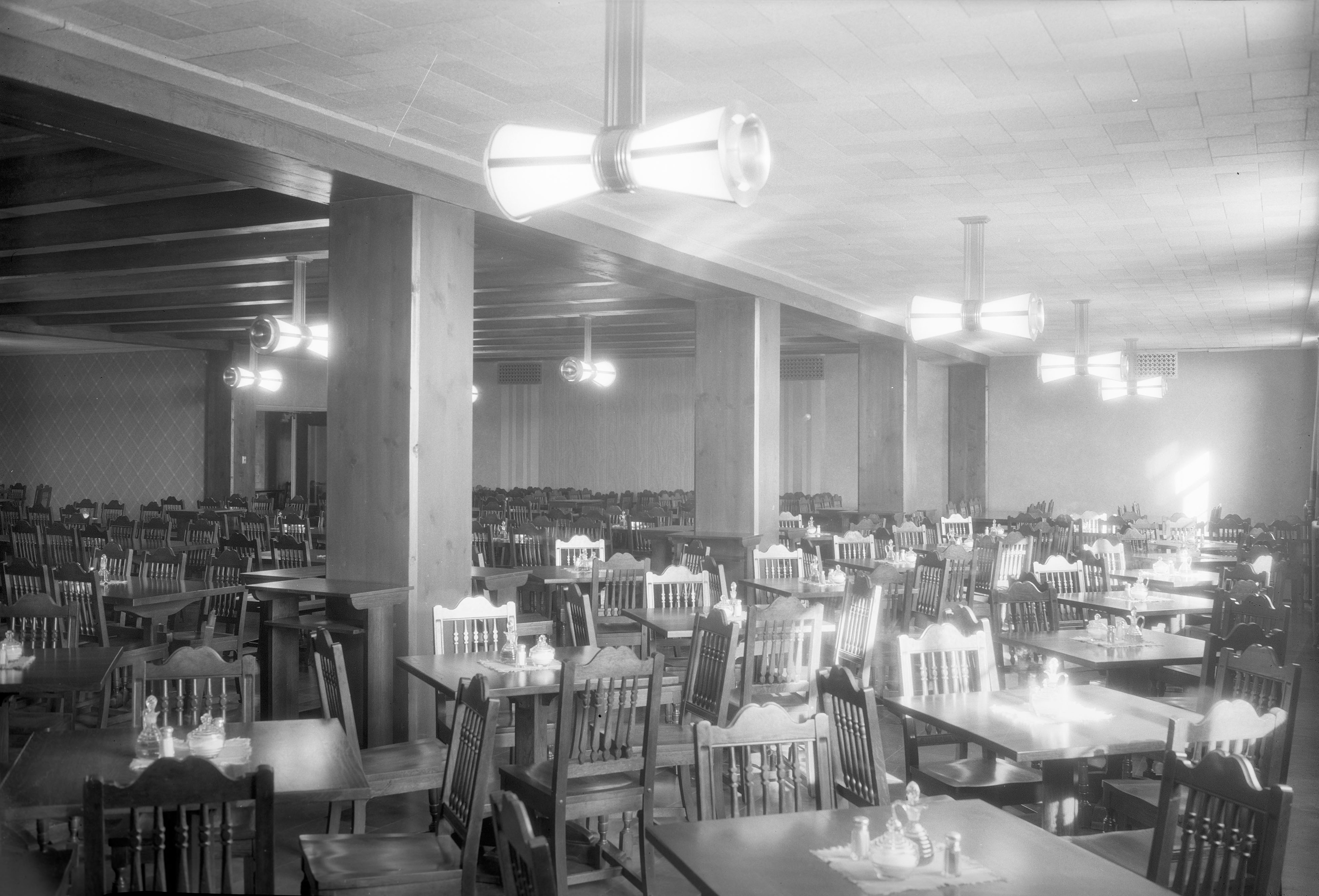
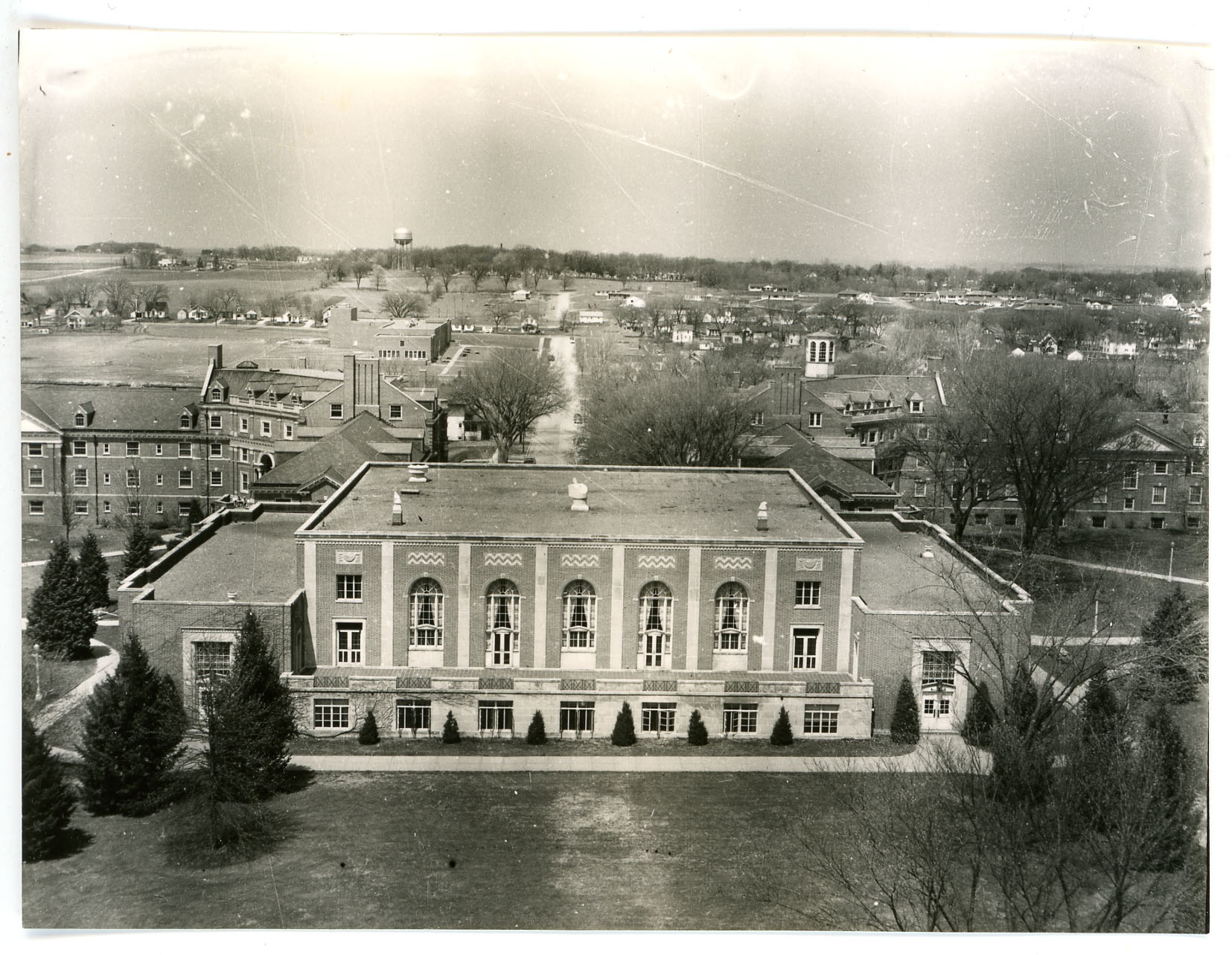
Architects Proudfoot, Rawson, Souers, and Thomas of Des Moines drew up preliminary sketches. The projected cost was between $100,000 and $200,000. Funding would be provided through money accumulated from the operation of Bartlett Hall. The first level of the Commons would include two large dining rooms, a kitchen, offices, a post office, a telephone switchboard and an information booth. On the second level, a ballroom, lounge and promenade, check rooms, restrooms and smaller lounge areas would provide more formal recreation spaces. The south side of the building would feature an open terrace connected to a fountain room.
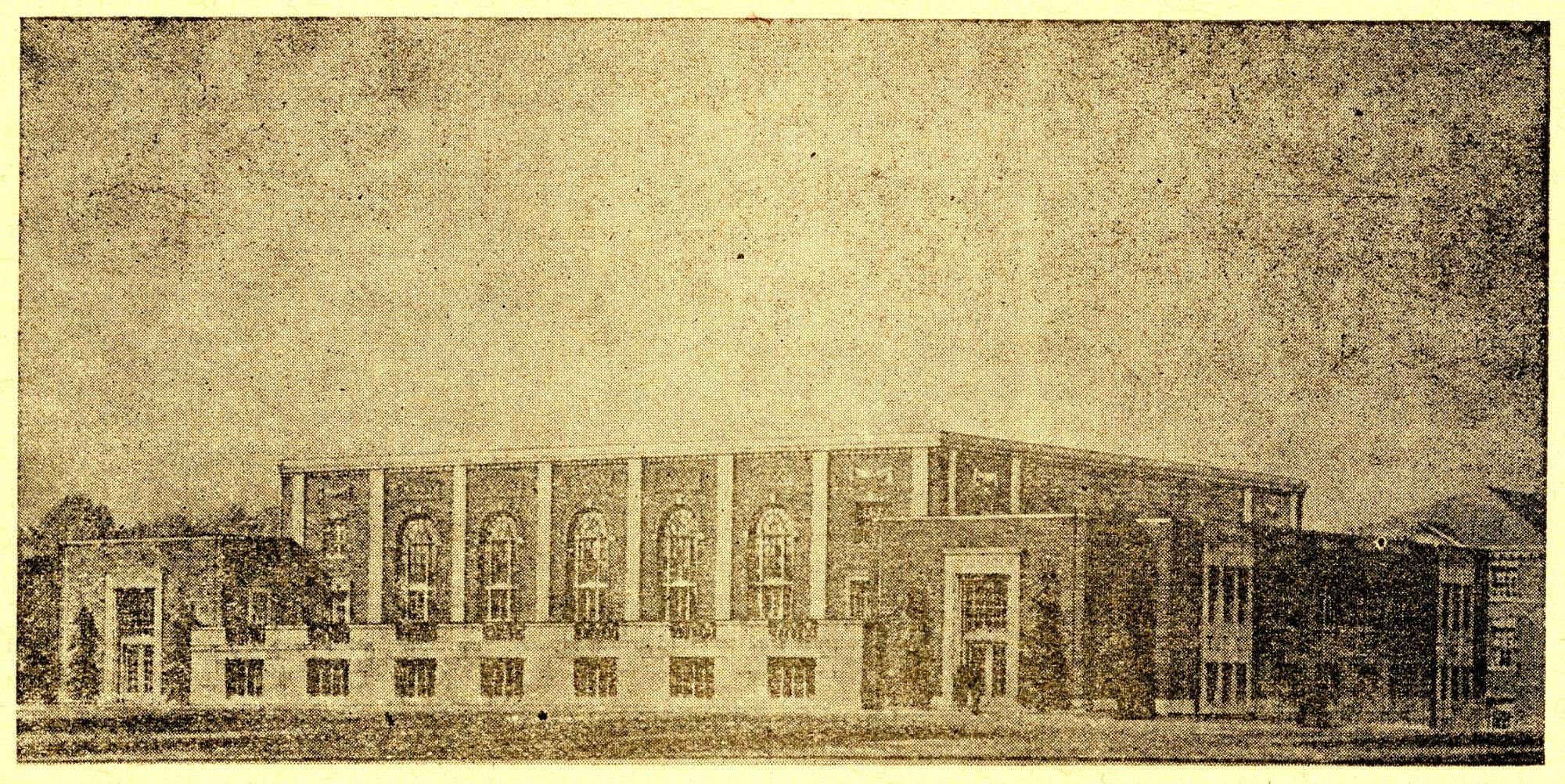
The Board of Education approved the architectural plans in April 1932. President Latham hoped construction would begin by July 1, 1932 and the building would be completed in time for spring 1933 commencement. In July 1932, the College Eye student newspaper made its first editorial comment on the new building when it asked smoking be permitted. The editorial stated smoking was a normal part of life, at least for most college men, and should be allowed inside the building.
The Board of Education opened bids on July 27, 1932. The $118,284 general contract went to Anderson Construction Company of Council Bluffs; the $19,545 plumbing contract to Carstens Brothers Company of Ackley; and the $3,997 electrical contract to Cedar Rapids Electrical Supply Company. The contracts called for work to be completed by May 10, 1933.
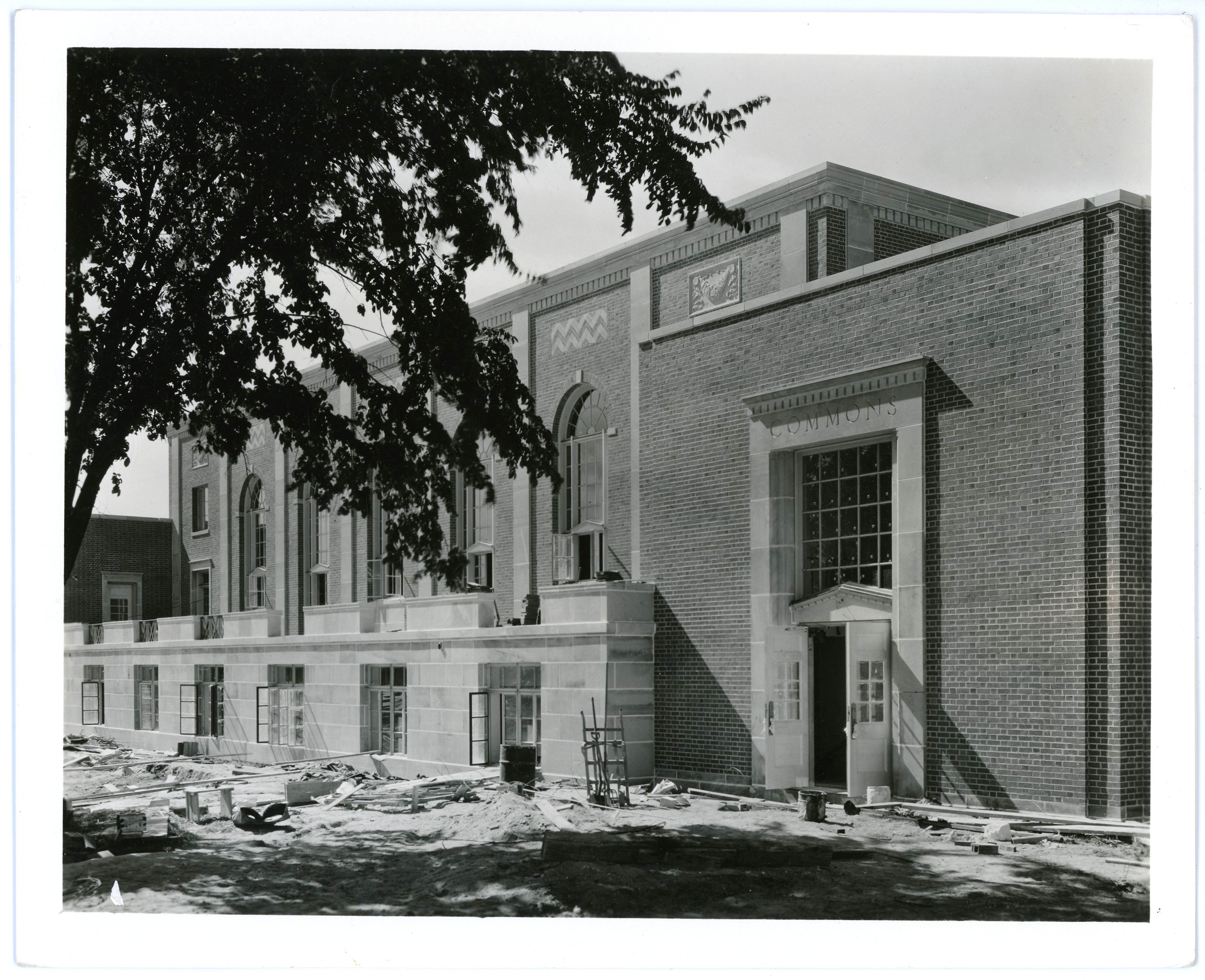
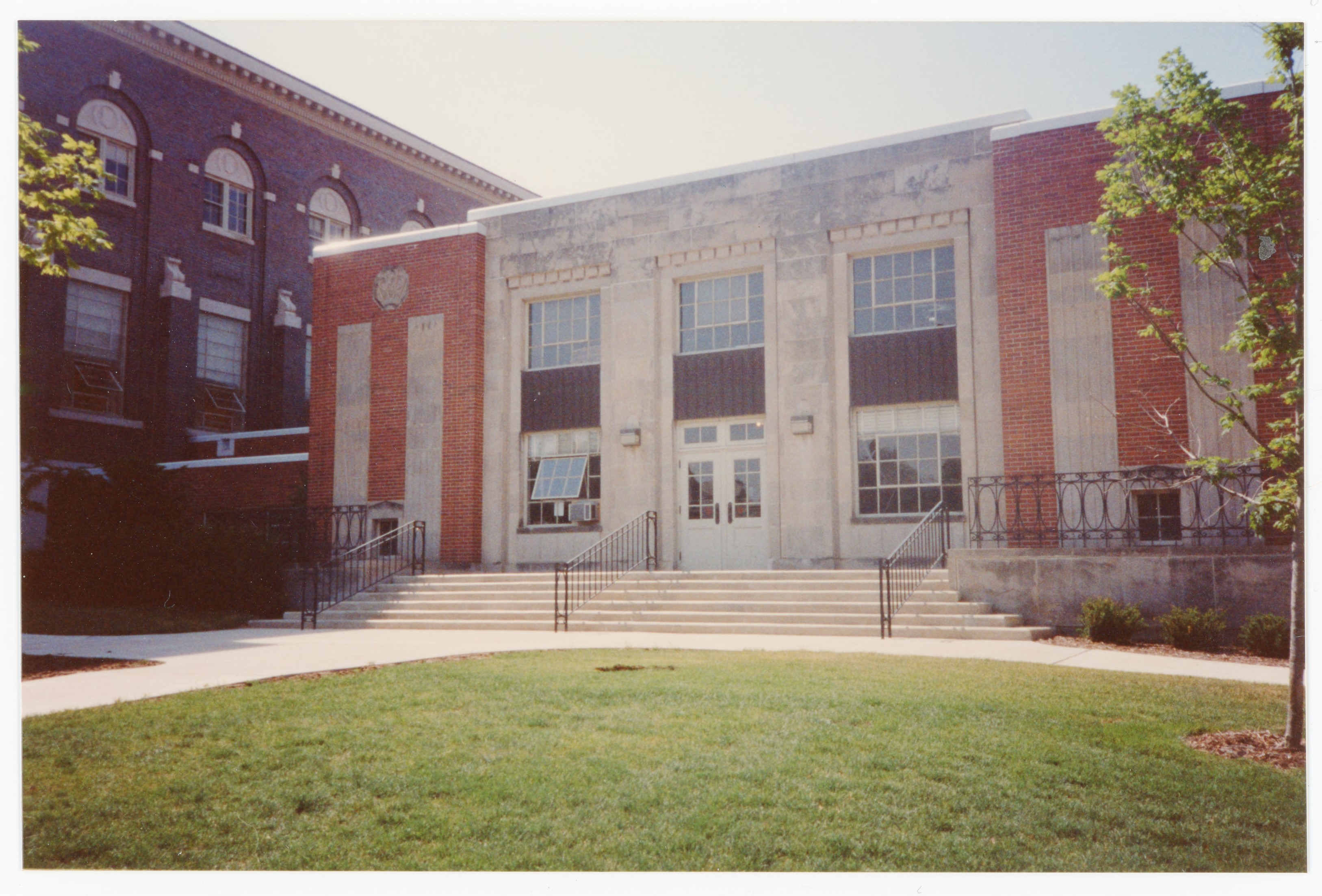
Construction began August 10, 1932. By mid-October, the excavation and basement masonry were done and work on the brick walls began. The project used about 90,000 bricks matching Bartlett Hall.
Inclement winter weather slowed the project and stopped work in mid-February 1933, pushing the projected completion date to July. By late June, plaster work had been completed, but flooring, doors, some woodwork, plumbing fixtures, lighting equipment, kitchen fixtures, ceiling tile and a freight elevator still needed to be installed. Officials hoped the building would be ready for use by the fall 1933 term.
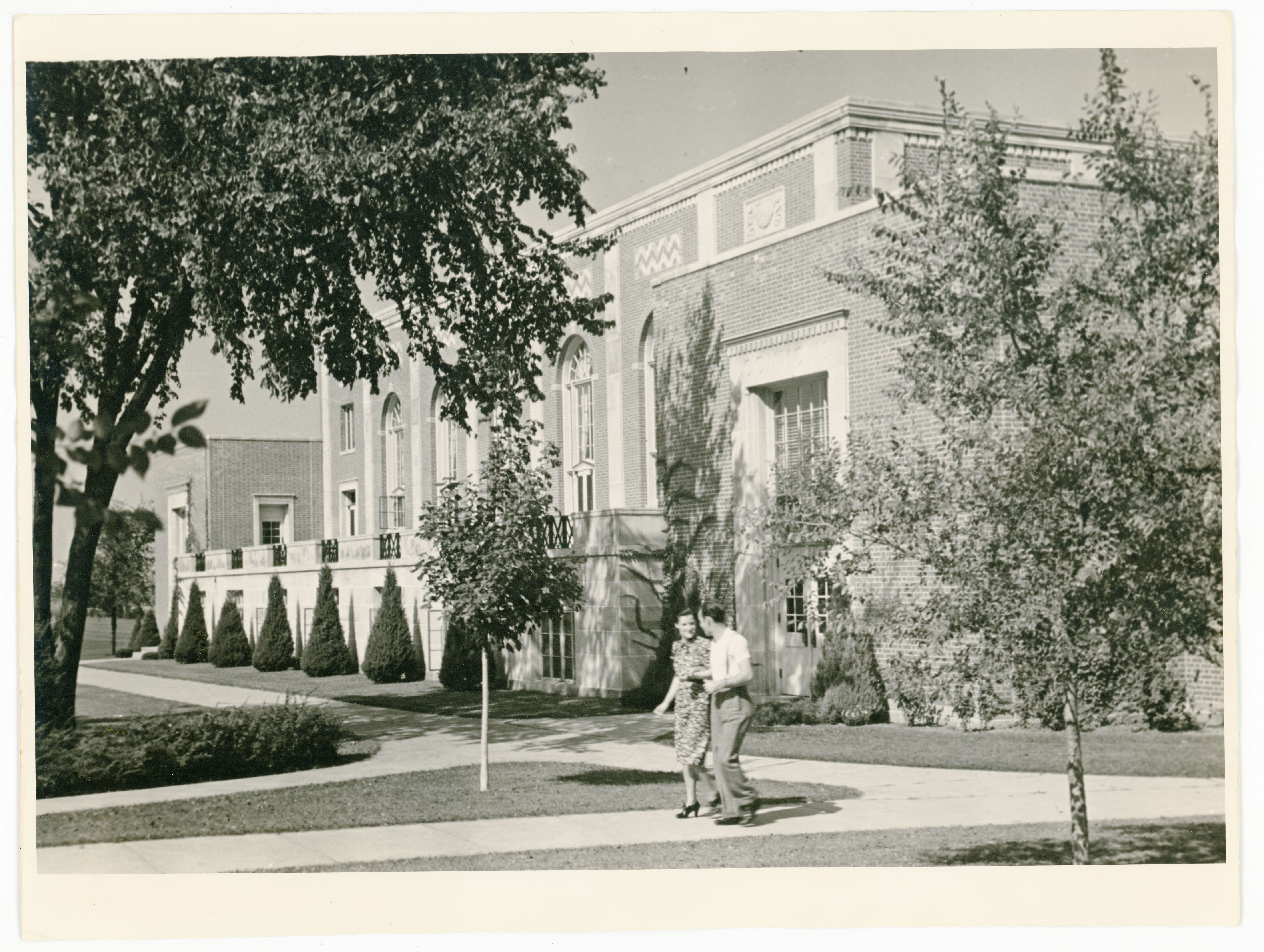
A writer in an August 1933 issue of the College Eye addressed the new facility’s decorating scheme. Walls were ivory, with "an antique effect, modernistic silver scroll effects overhead, and doors and woodwork of graduated colors from blue to old rose to deep mahogany red are the characteristics… green damask draperies simply hung against the ivory of the woodwork…wall hangings, floor screens, and Georgian mirrors over the two fireplaces…." The building also had Art Deco elements.
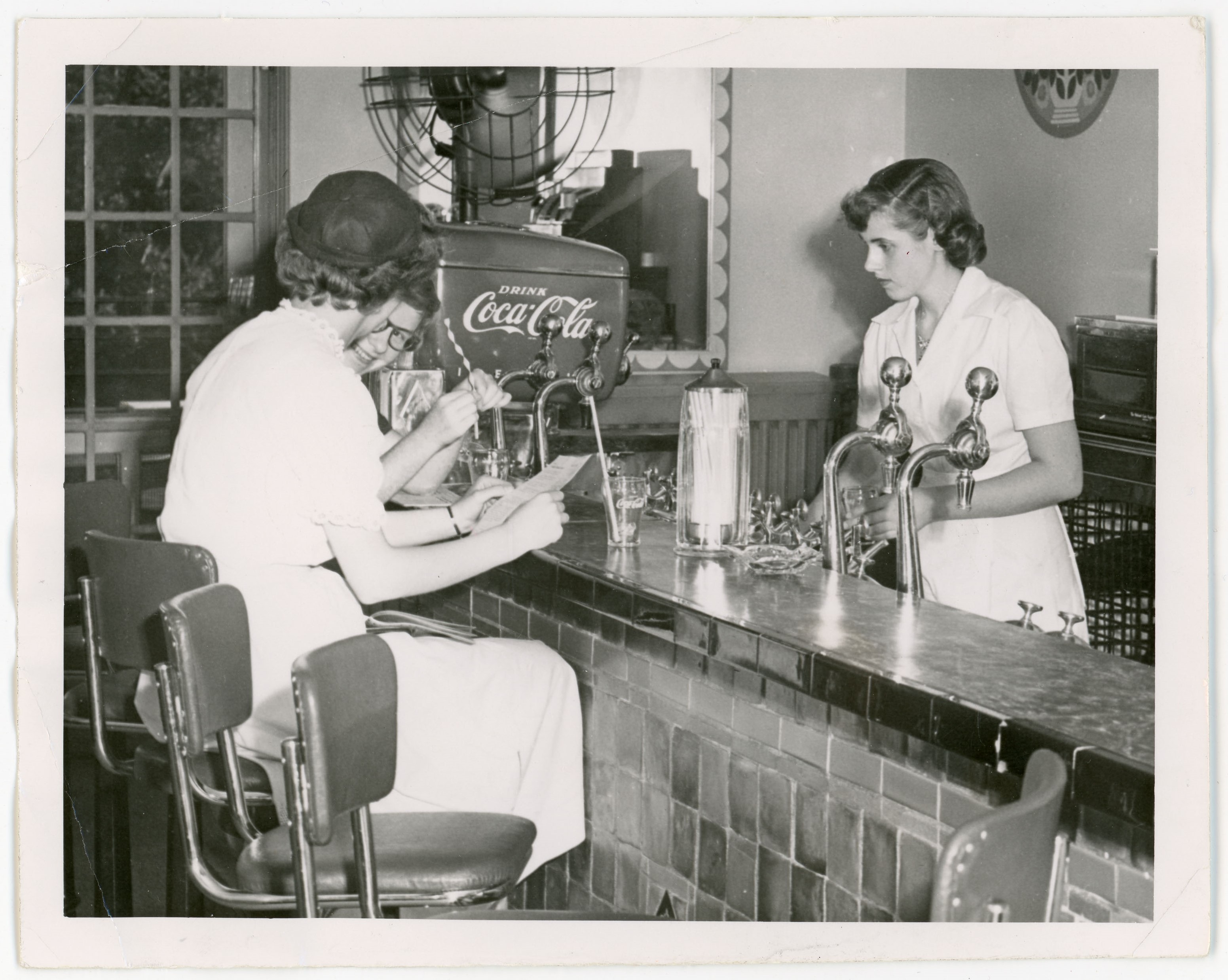
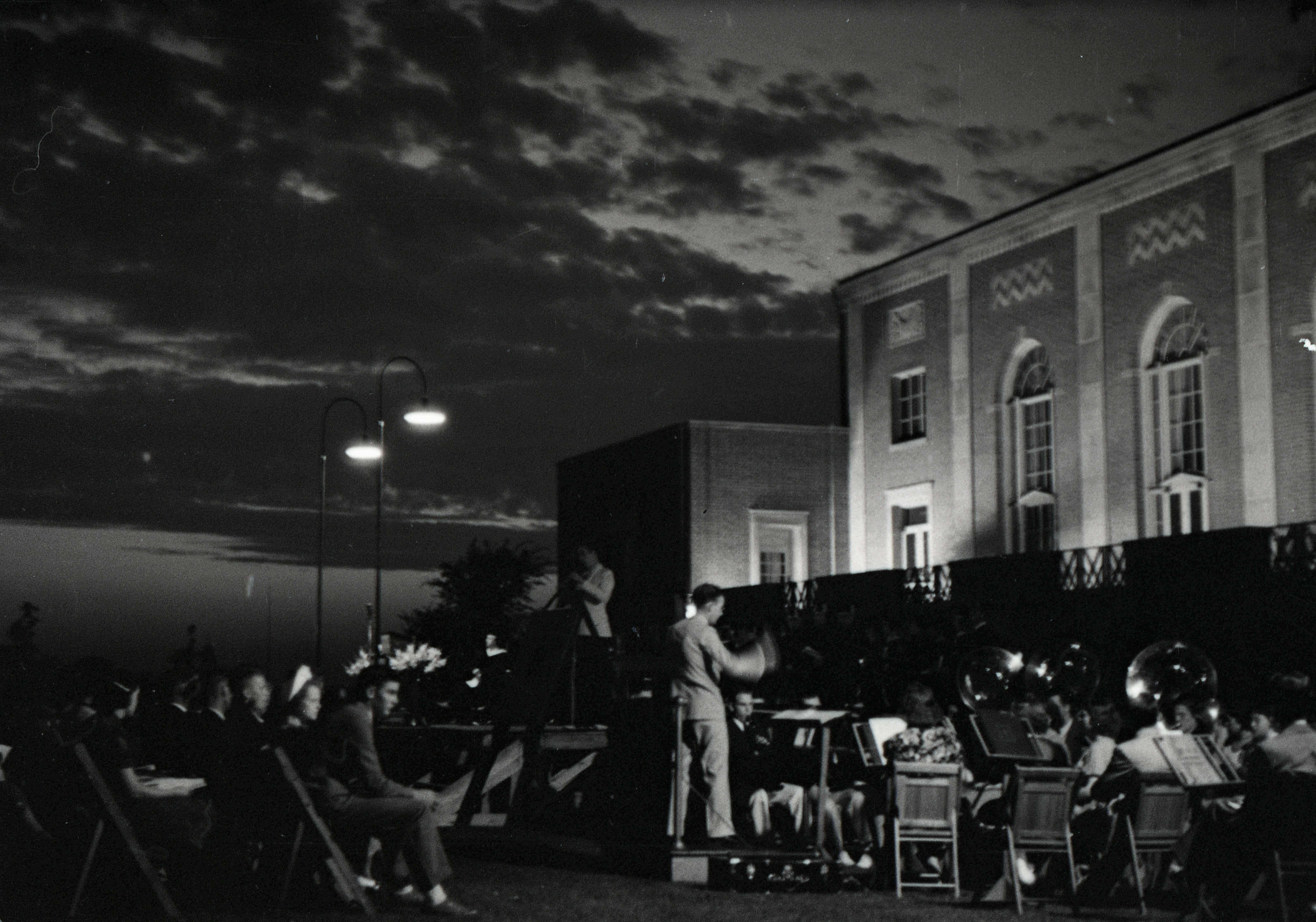
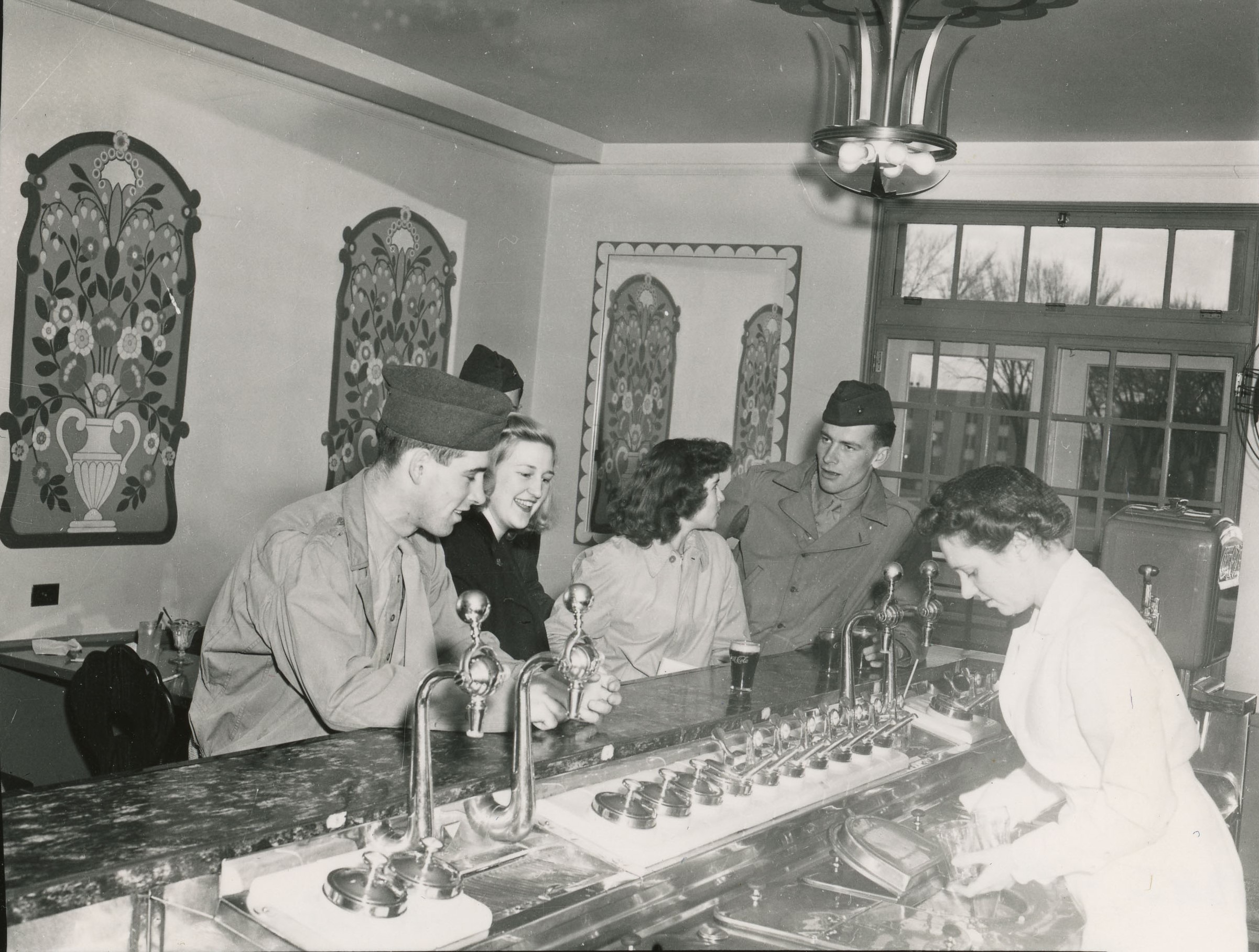
The Commons opened for student use on September 10, 1933 and the cafeteria opened the next day. The Fountain Room, which featured a soda fountain and snacks, opened onto the south terrace. A second floor series of balconies overlooked the recreation room, where dances were often held. The total cost of the project was about $215,000. A College Eye editorial writer praised the college administration for its work in planning, developing and building the new facility. The writer then put the responsibility for its use and success in the hands of the students.
The Commons quickly became the center of many activities, including Homecoming 1933. Previously, visitors relied on chance campus encounters to meet friends, but the Commons offered a location for alumni to register and meet old classmates. It also accommodated students’ daily interactions. They could take advantage of many recreational activities at the Commons such as cards, books, radios and phonographs to play records for dancing.
The Commons had specific rules about the use and scheduling of certain rooms. In a 1937 issue College Eye editorial writer Ruth Eddy,wondered why more rooms could not be open for dancing and recreation in the afternoon, especially Fridays. She asked, "…why have a place where surplus energy may be utilized shut up--and instead, try to keep all the energy shut up in the library?" Students often contrasted the roles of the Commons and Library, seeking more opportunities for social interaction. Later that year, student Eugene Enderlein complained the Commons was in heavy use during mealtimes but underutilized at other times. He also criticized the theoretical basis of the facility, writing, "True, the Commons was to aid in social education. Its administration has, however, dwelt more on the theoretical improvement than that to be gained through actual experience." He went on to say the Commons administration should spend less time on teaching manners and more time on informal recreation. Within a couple years, the administration responded by adding recreational dancing hours every day of the week except Sunday, and by 1940, the Commons was promoting itself as the better alternative to a trip back home for the weekend.
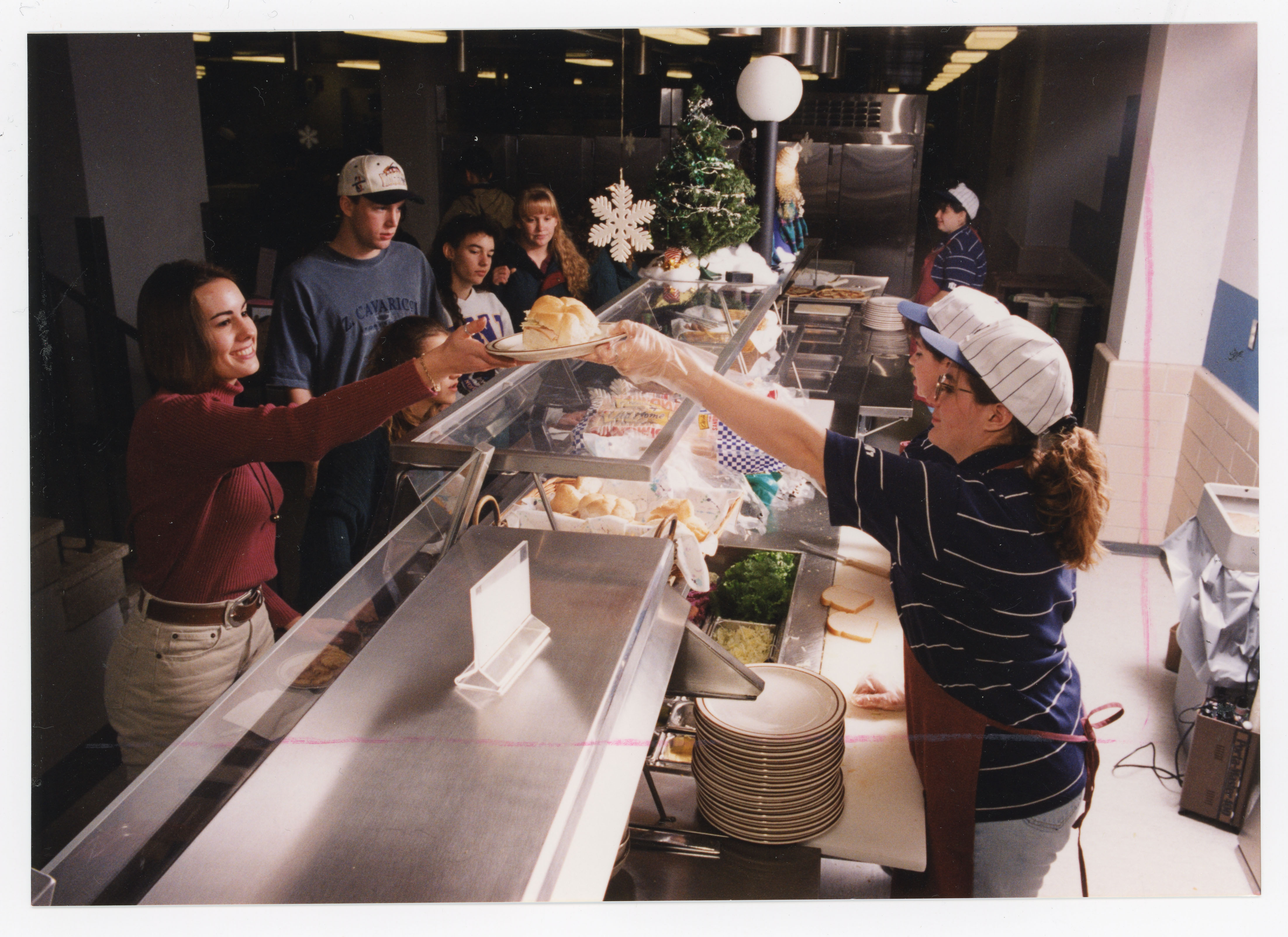
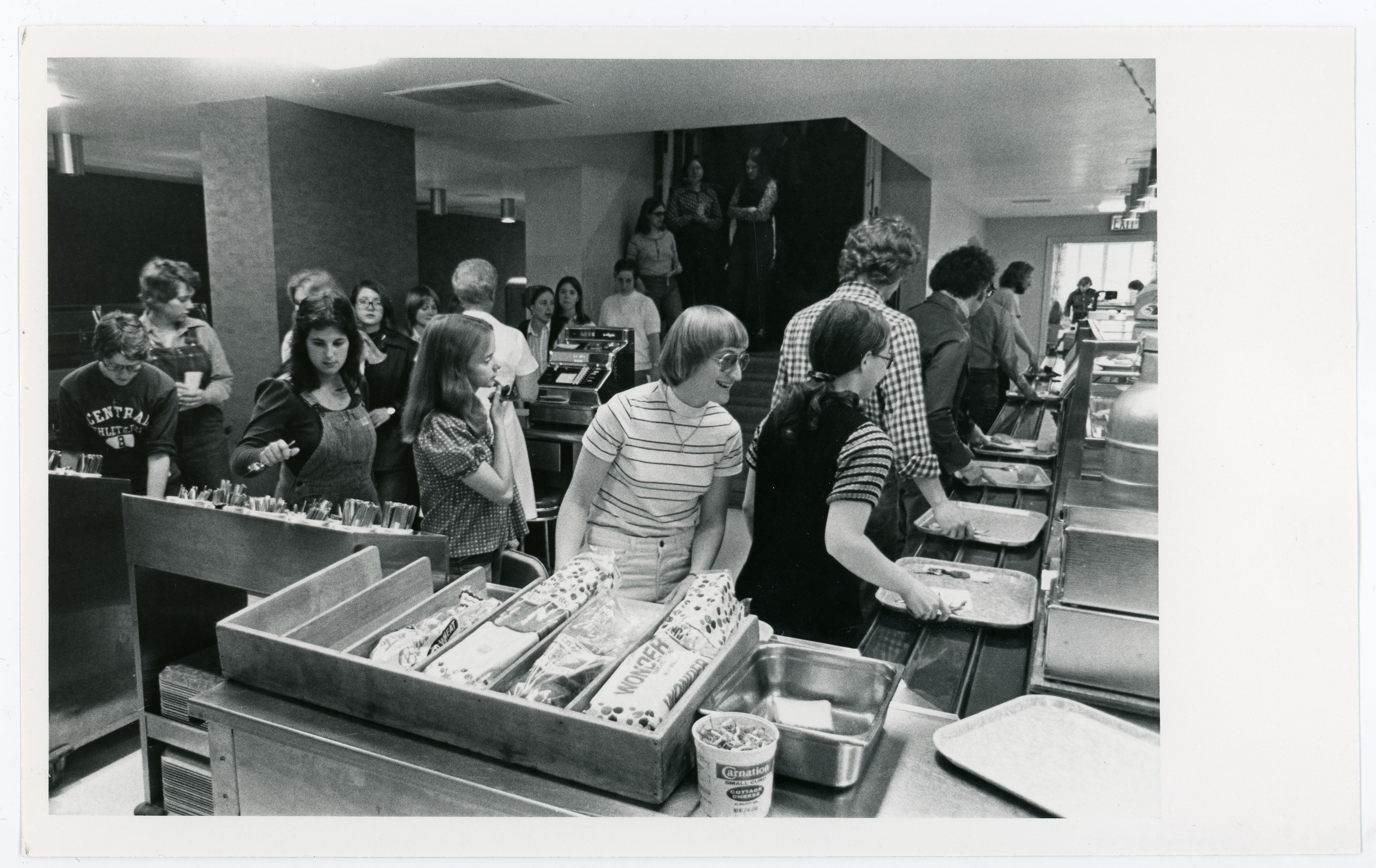
By summer 1938, the Commons dance floor needed to be refinished. Another well-used feature was the cafeteria line, with its uniformed staff. In September 1938, the line served over five thousand meals a week, going through five quarters of beef, 25 gallons of mayonnaise, and lots of freshly baked cakes and pies.
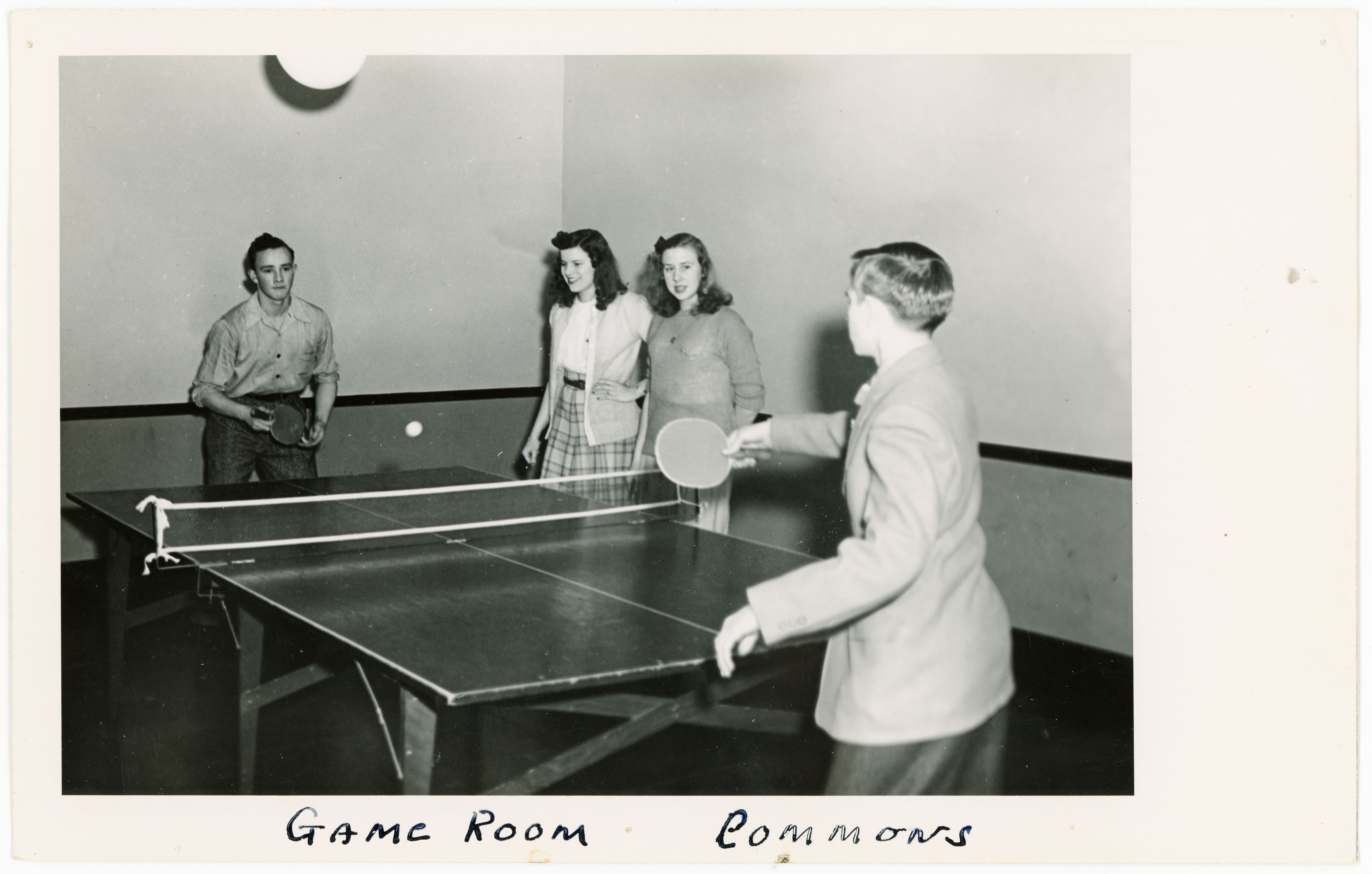
In 1940, Commons director Catherine Peck asked librarian Jessie Ferguson to supplement the Commons lending library, which contained about two hundred books. Also that year, two new radio-phonographs were installed "with a collection of popular, semi-classical, and classical records available for the use of any student who wishes to play them at almost any time in the day." A game room opened with ping-pong tables, checkers, parcheesi, backgammon, chess, bingo, dominos, cribbage, Monopoly, pick-up sticks, Chinese checkers and cards.
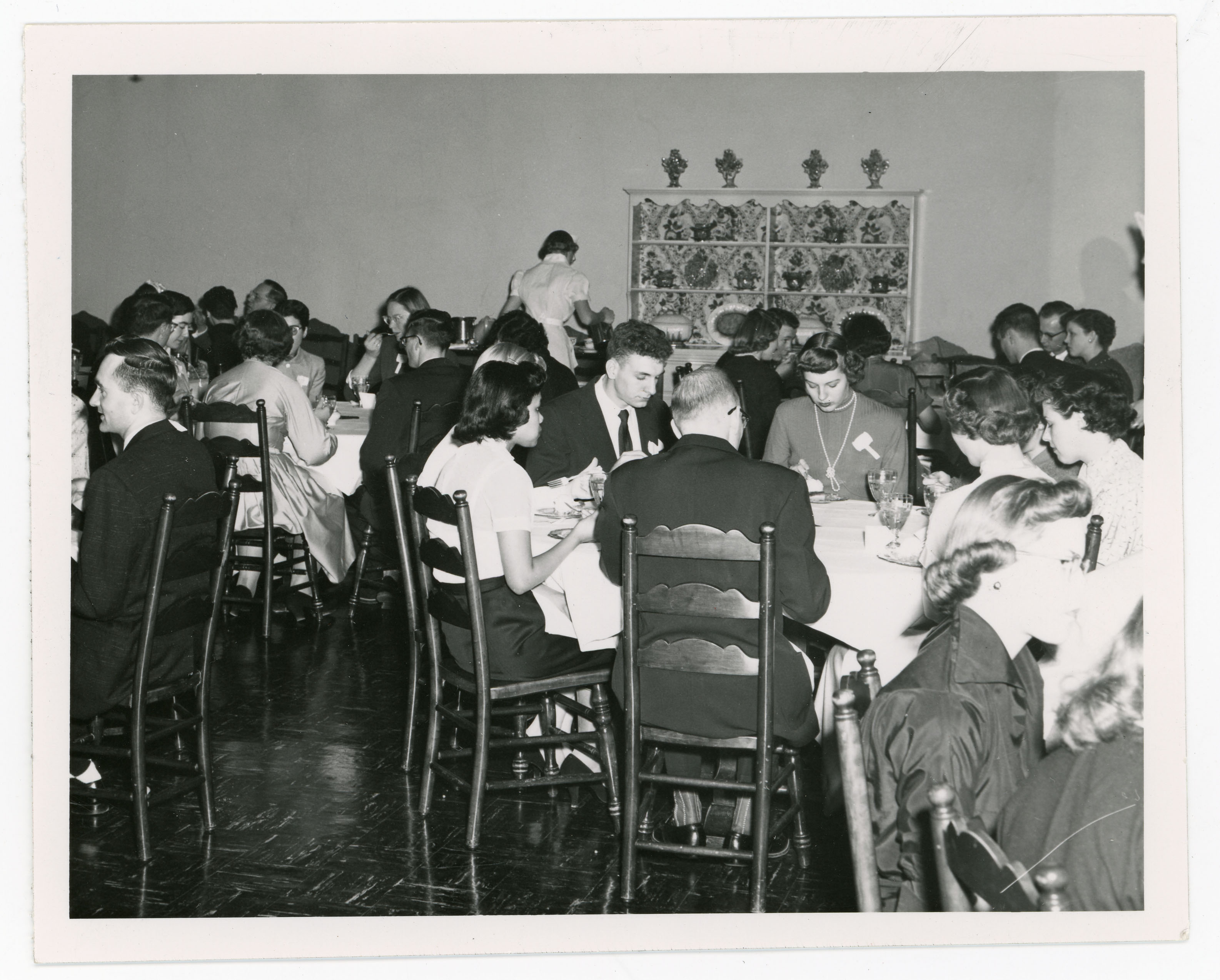
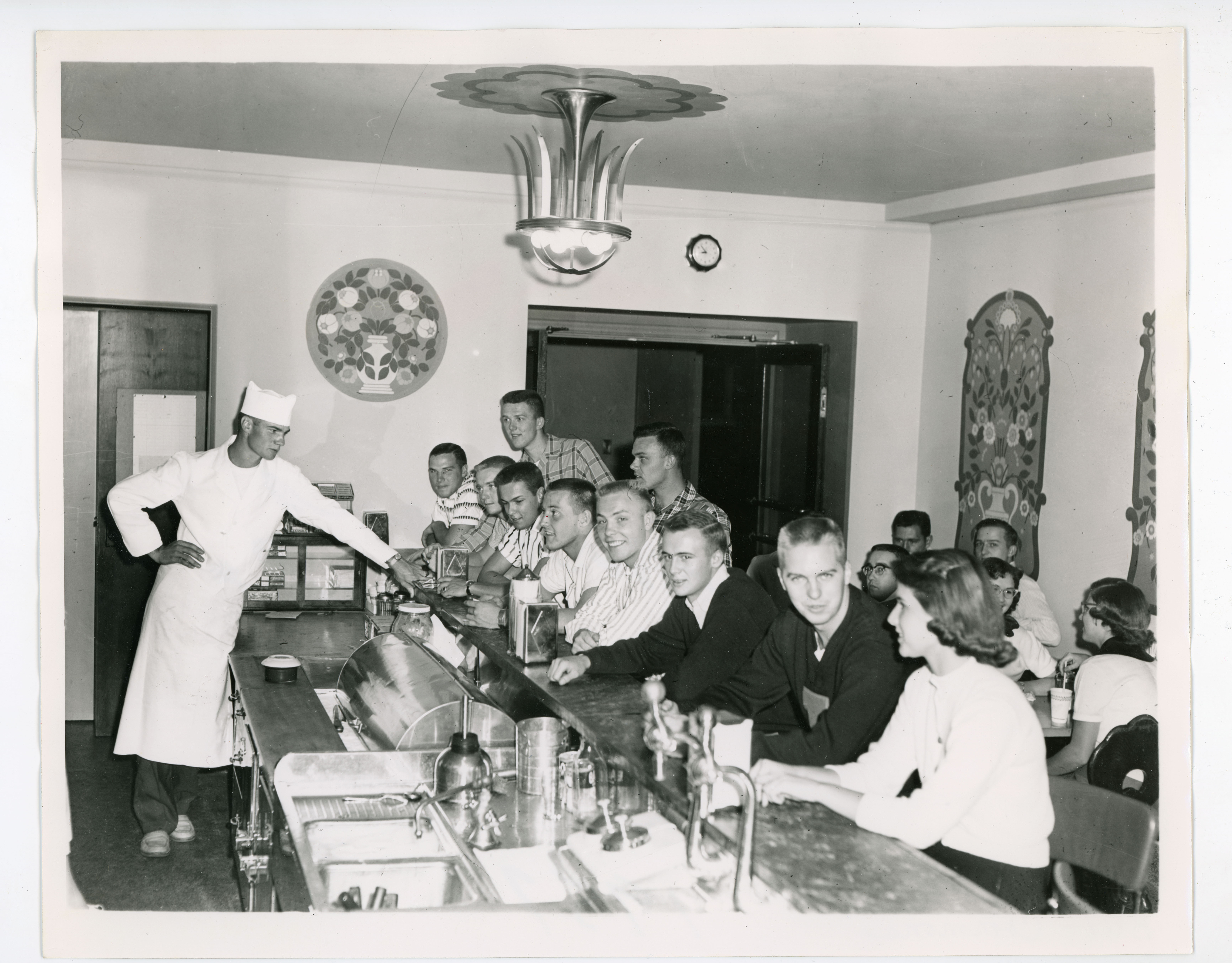
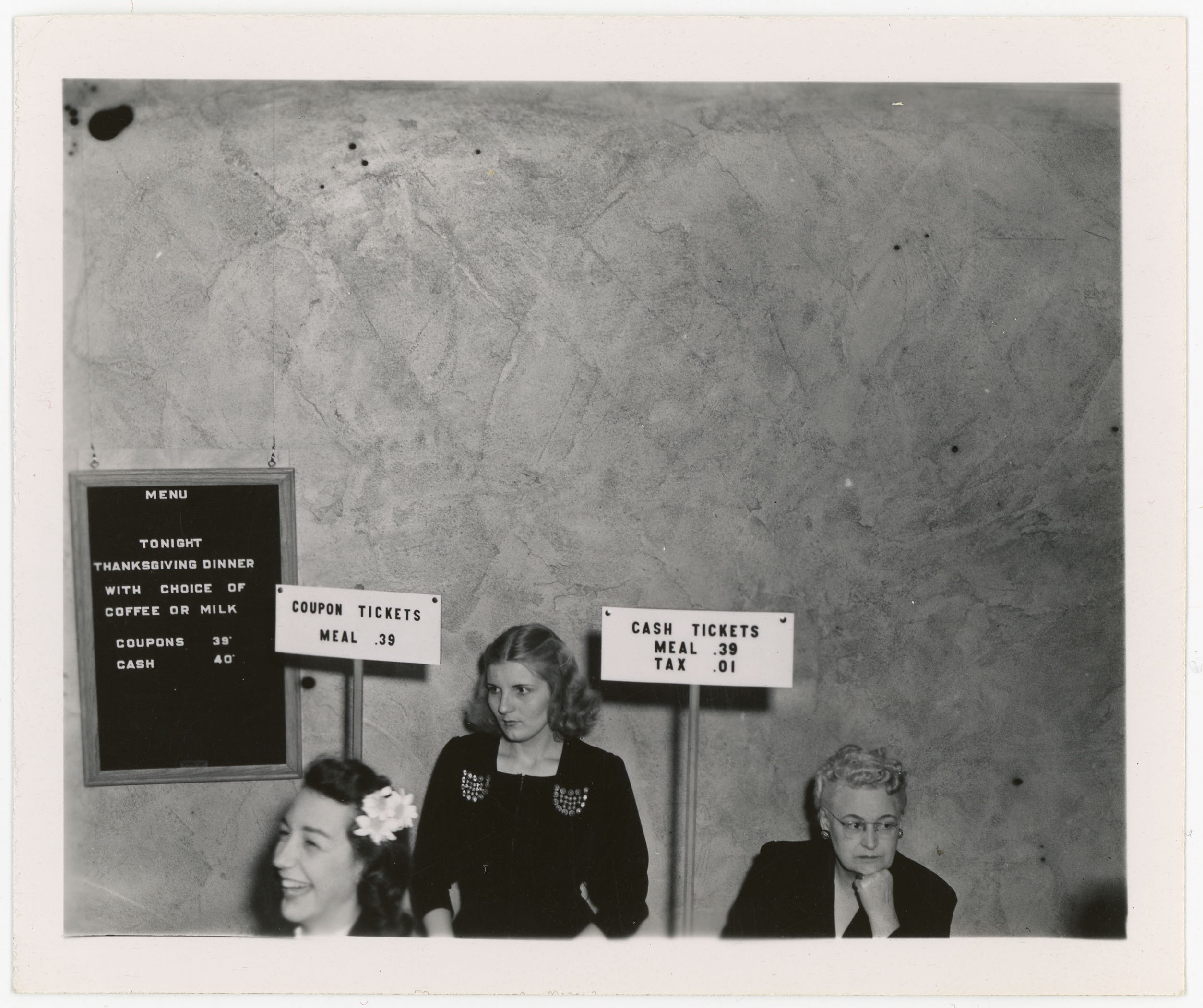
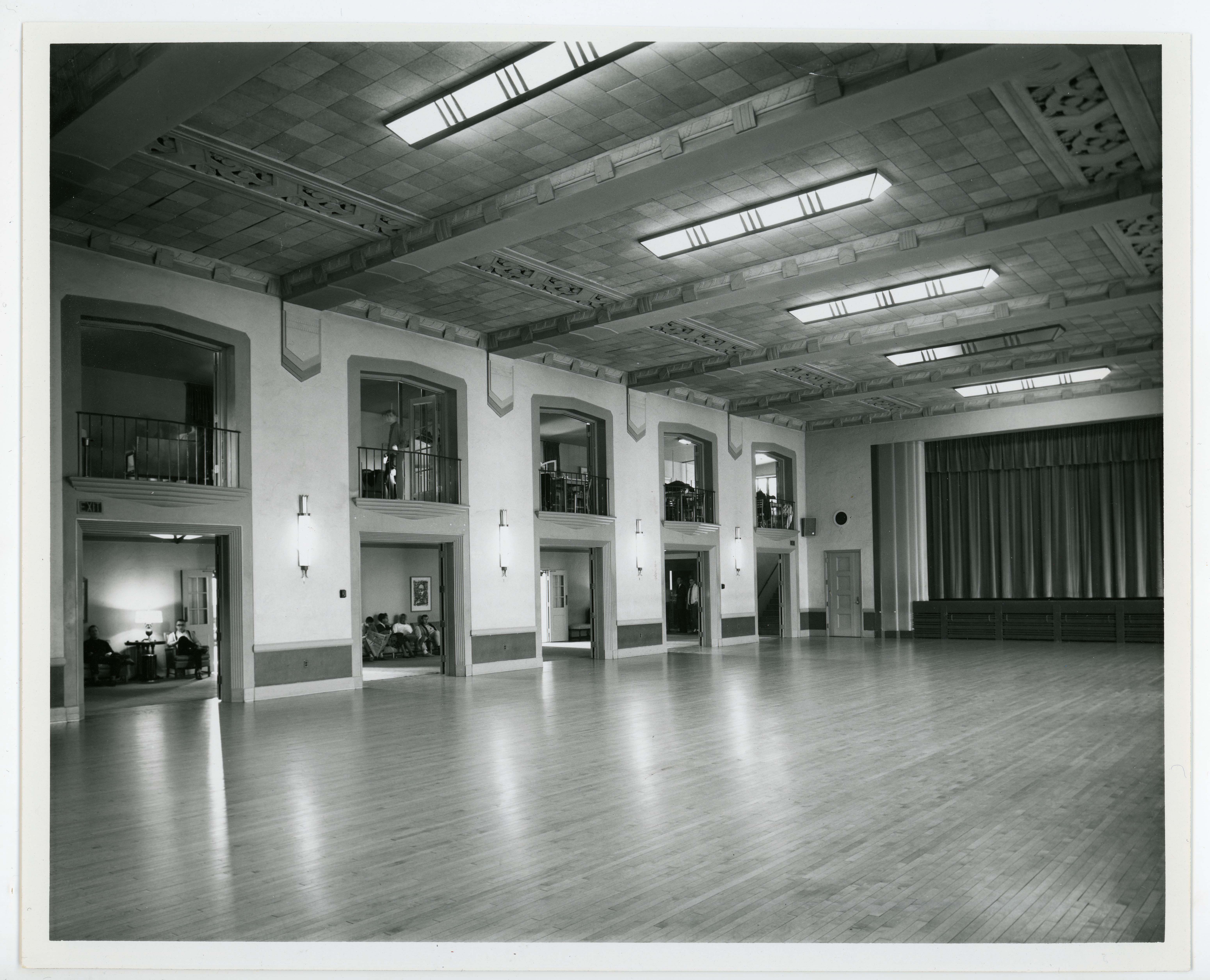
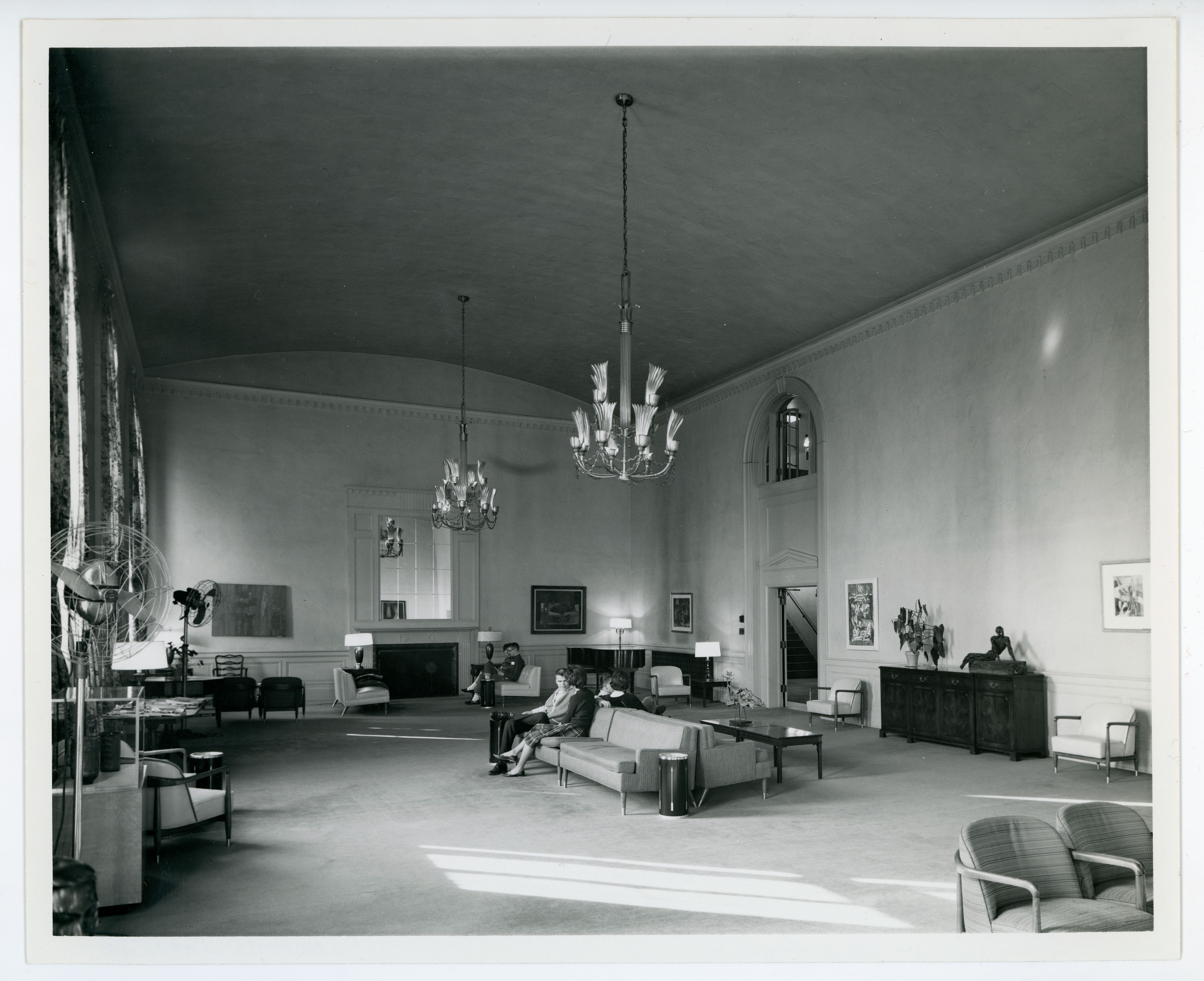
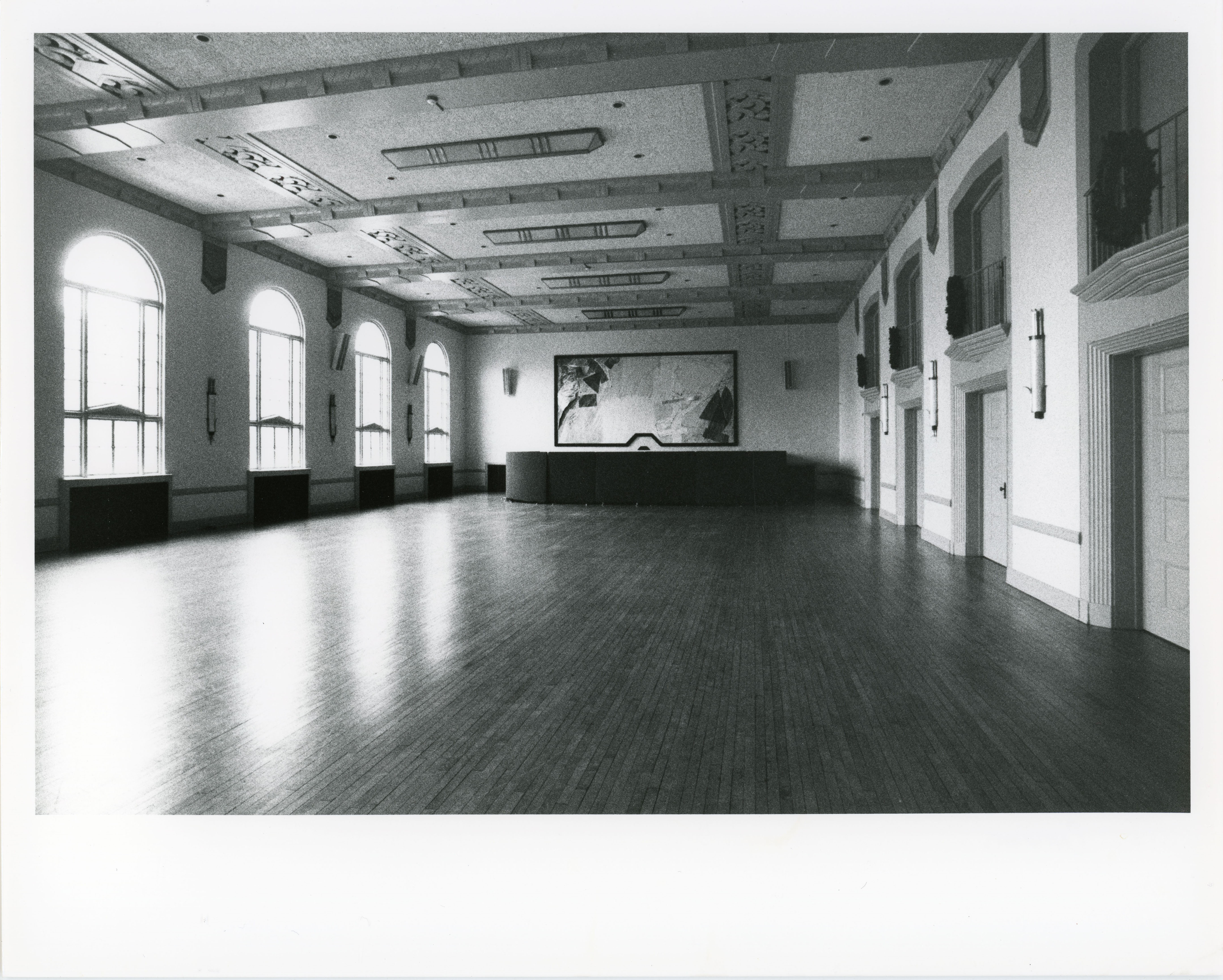
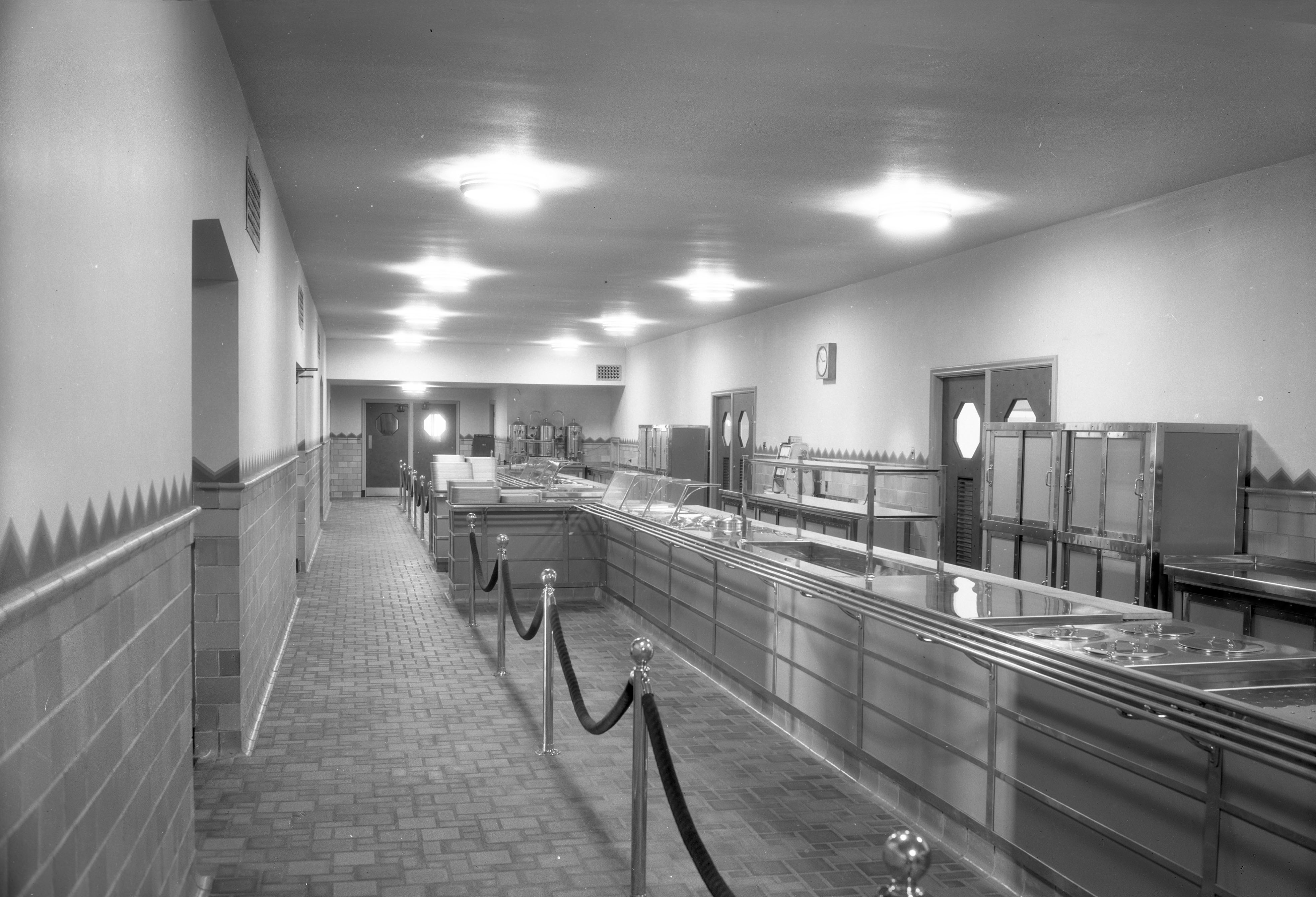
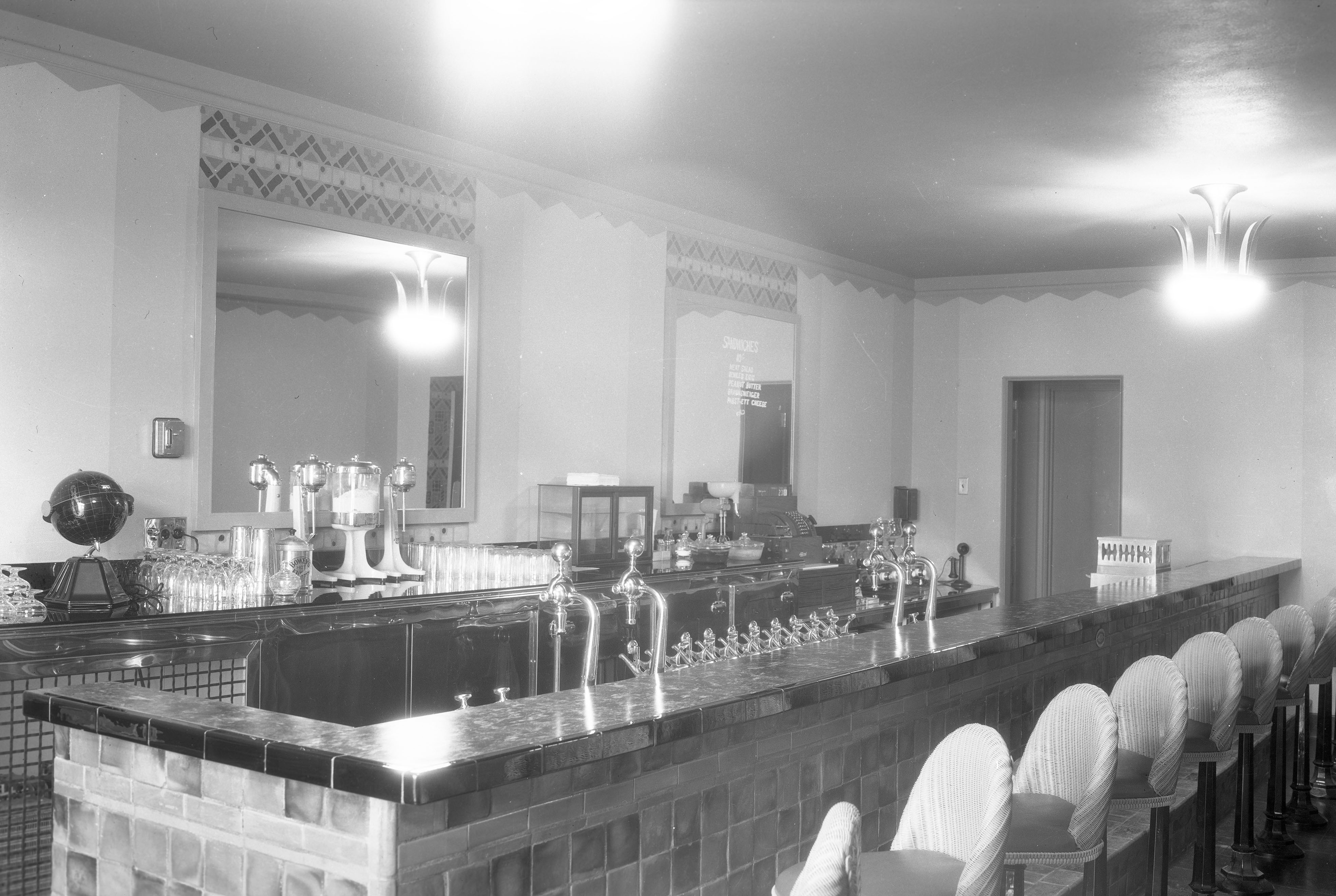
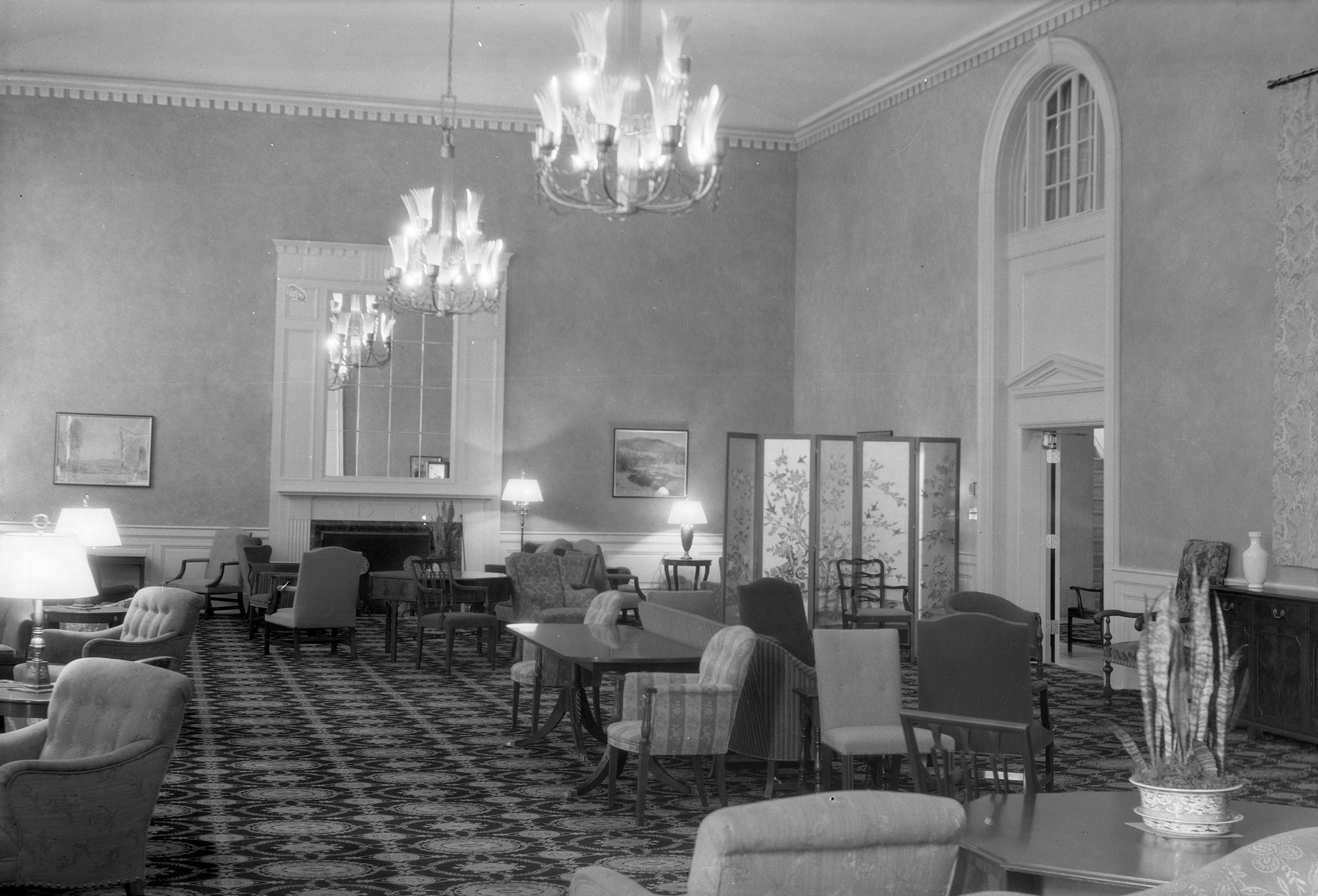
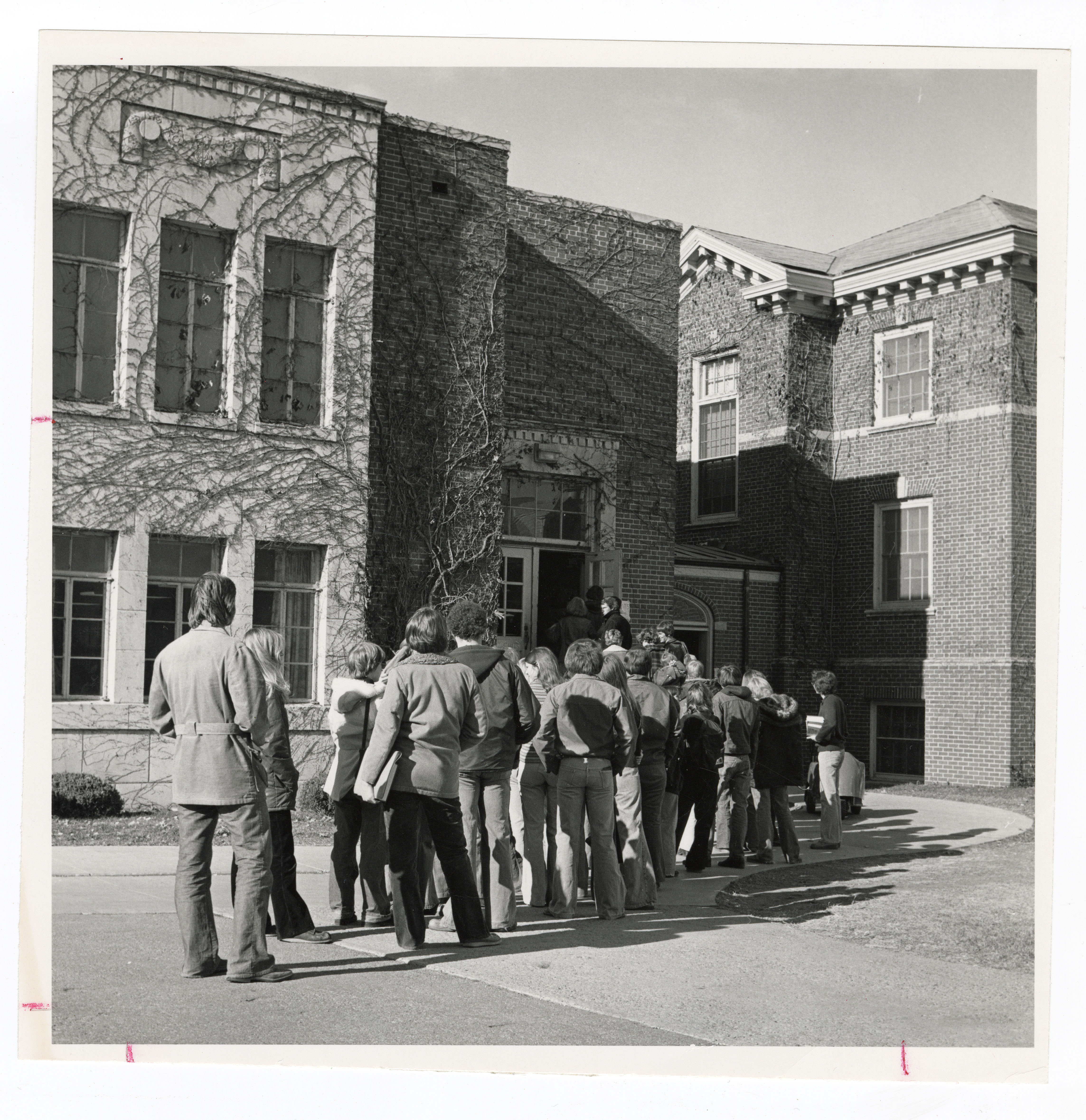
Tensions continued over the perceived formality and expected standards of behavior in the building. In fall 1940, students met with new Commons director Catherine Spooner, who had graduated from the college in 1939. They asked the dance floor and Fountain Room be open Monday through Saturday from noon until 7 p.m. They wanted couples attending dances to be able to leave and return during the course of the dance, and smoking permitted in more areas of the building. As a College Eye writer phrased it, students wanted to see the Commons transformed into a "center of social life."
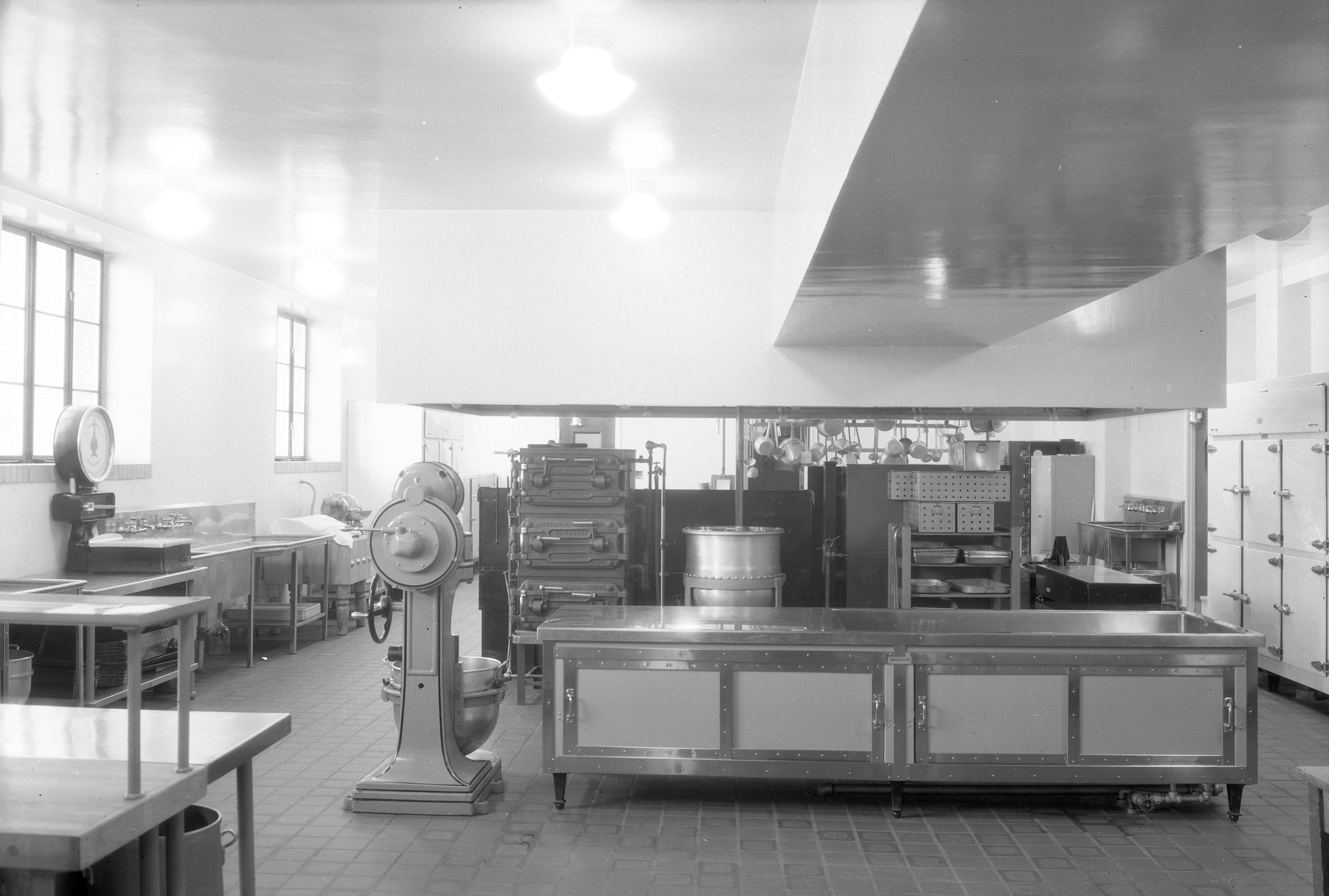
Dining and food service facilities continued to receive heavy use. The floor in the Fountain Room, a popular spot in which to get a Coke or a milkshake, was worn out after seven years. In the cafeteria kitchen, a dishwashing machine and a corps of student workers washed three million pieces of tableware annually. To enhance students’ dining experiences, an ice cream making machine was installed in March 1942. It could make 60 gallons per batch.
In summer 1942, the recreation hall, main lounge and mezzanine were redecorated and fitted with new drapes. The recreation hall featured chartreuse walls with blue and turquoise borders. The new draperies were shades of blue. Romolo Roberti, an artist associated with the Art Institute in Chicago, directed the work.
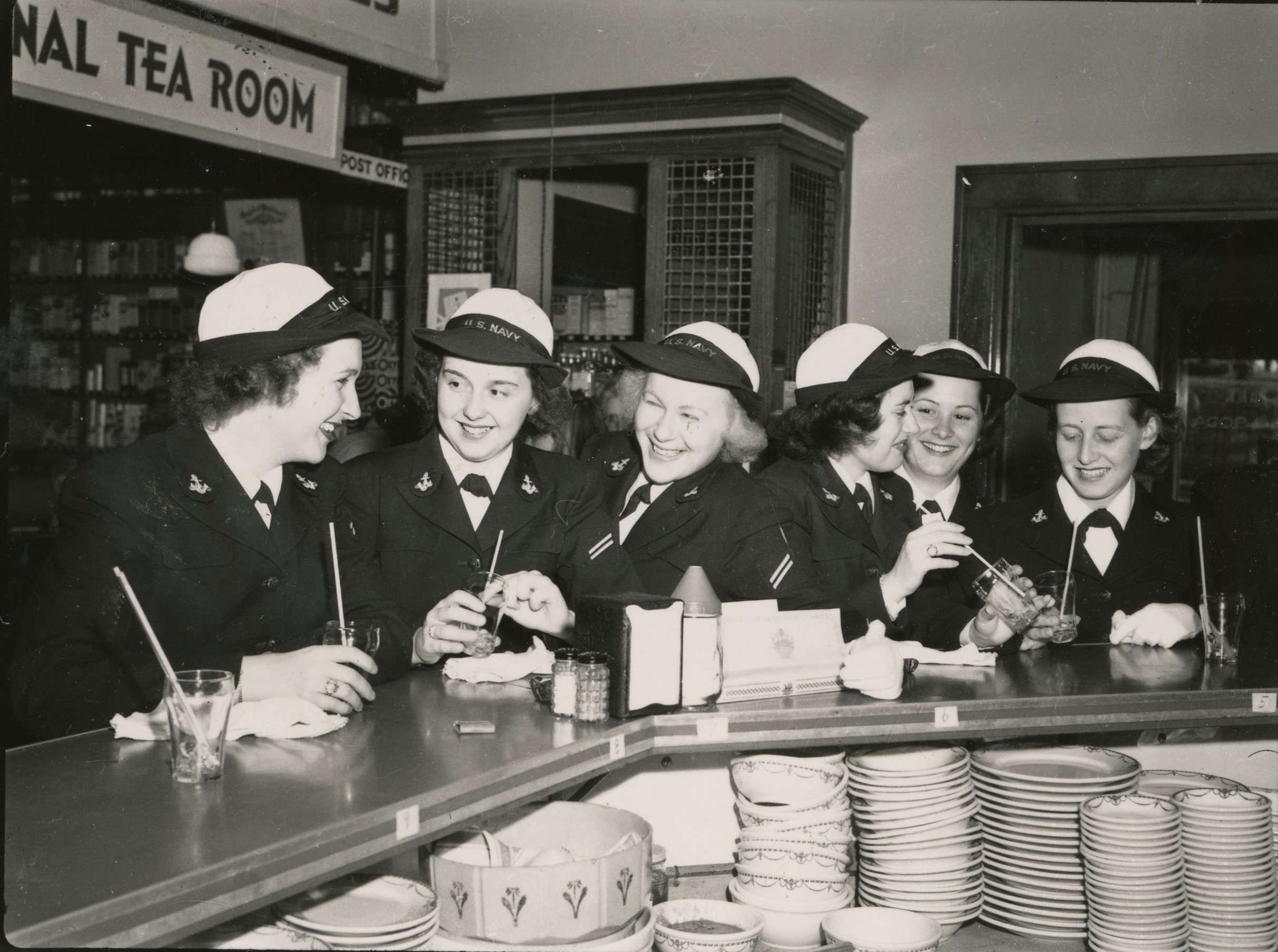
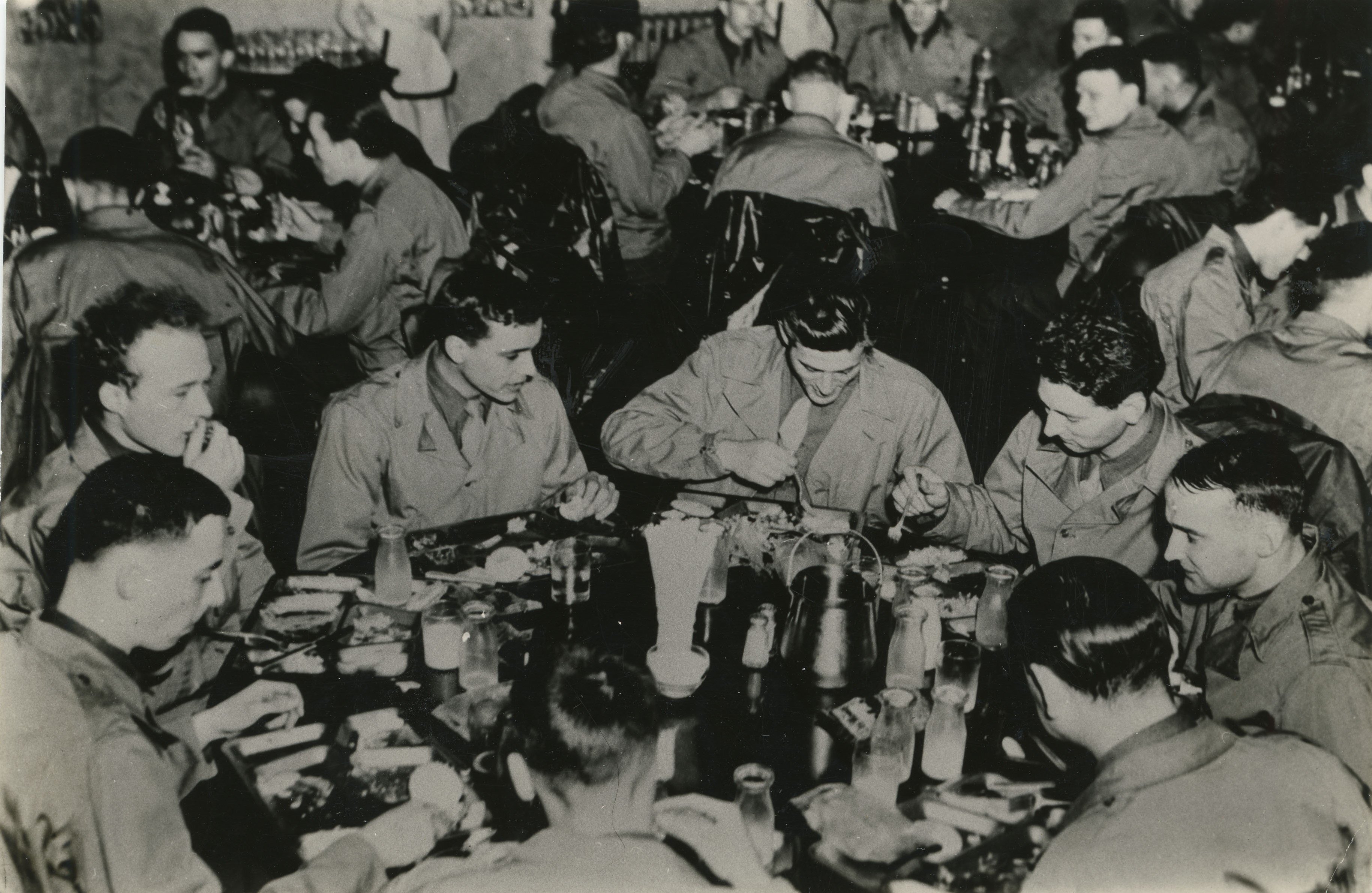
During World War II, there were large contingents of WAVES (Women Accepted for Volunteer Emergency Service) and Army Air Corps trainees on campus, which strained the Commons recreational and dining facilities. In winter 1943, a new refrigeration unit was installed in the basement to accommodate the numbers of trainees who would need to be fed during the summer. The cafeteria, which served about 1,000 meals a day before the war, served over 5,000 meals a day during it. A single meal might require 700 pounds of chicken, 600 pounds of mashed potatoes, 140 dozen rolls, 220 pies and 325 gallons of milk. One dairy truck did nothing other than deliver milk to the Commons all day. Vivain Barkhurst supervised a staff of 79 full-time kitchen employees. The military trainees enjoyed the wide array of fresh fruits and vegetables. While food for the trainees came from federal government allotments, college dietitians had to watch their ration points in order to feed the students who were enrolled during the war. Serving Swiss steak, for example, used up meat ration points for three days. Most sources of protein, such as meat, eggs, cheese and fish, were scarce.
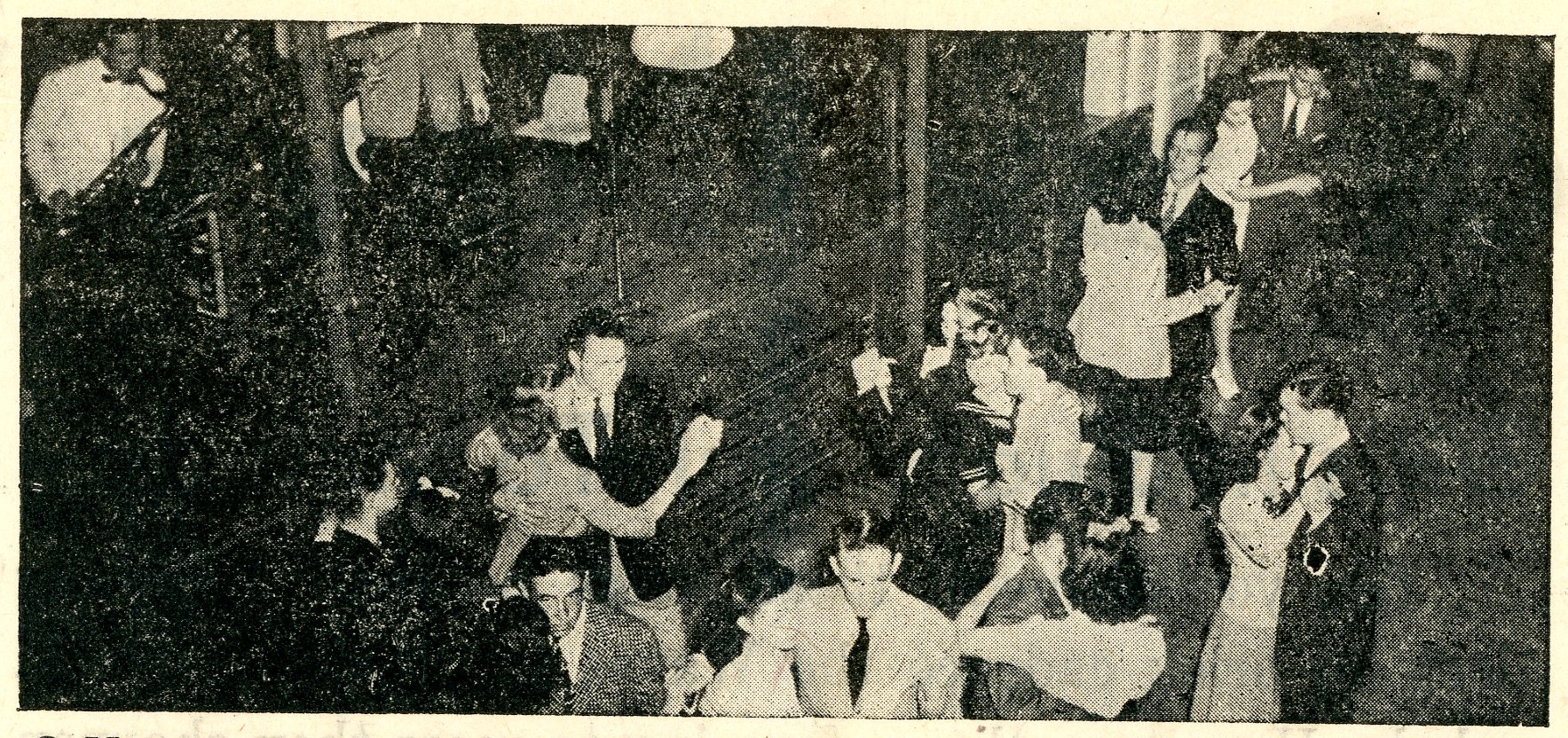
Military personnel and students also enjoyed frequent dances and mixers in the Commons ballroom. Visiting servicemen or former students could look at the Commons guest book to learn where someone was stationed, their rank, and if they were married.
With the end of the military training programs on campus in 1944, the college began to prepare for post-war changes. The Commons east dining room was redecorated in red, green, and gardenia white. President Malcolm Price entertained faculty in the redecorated surroundings.
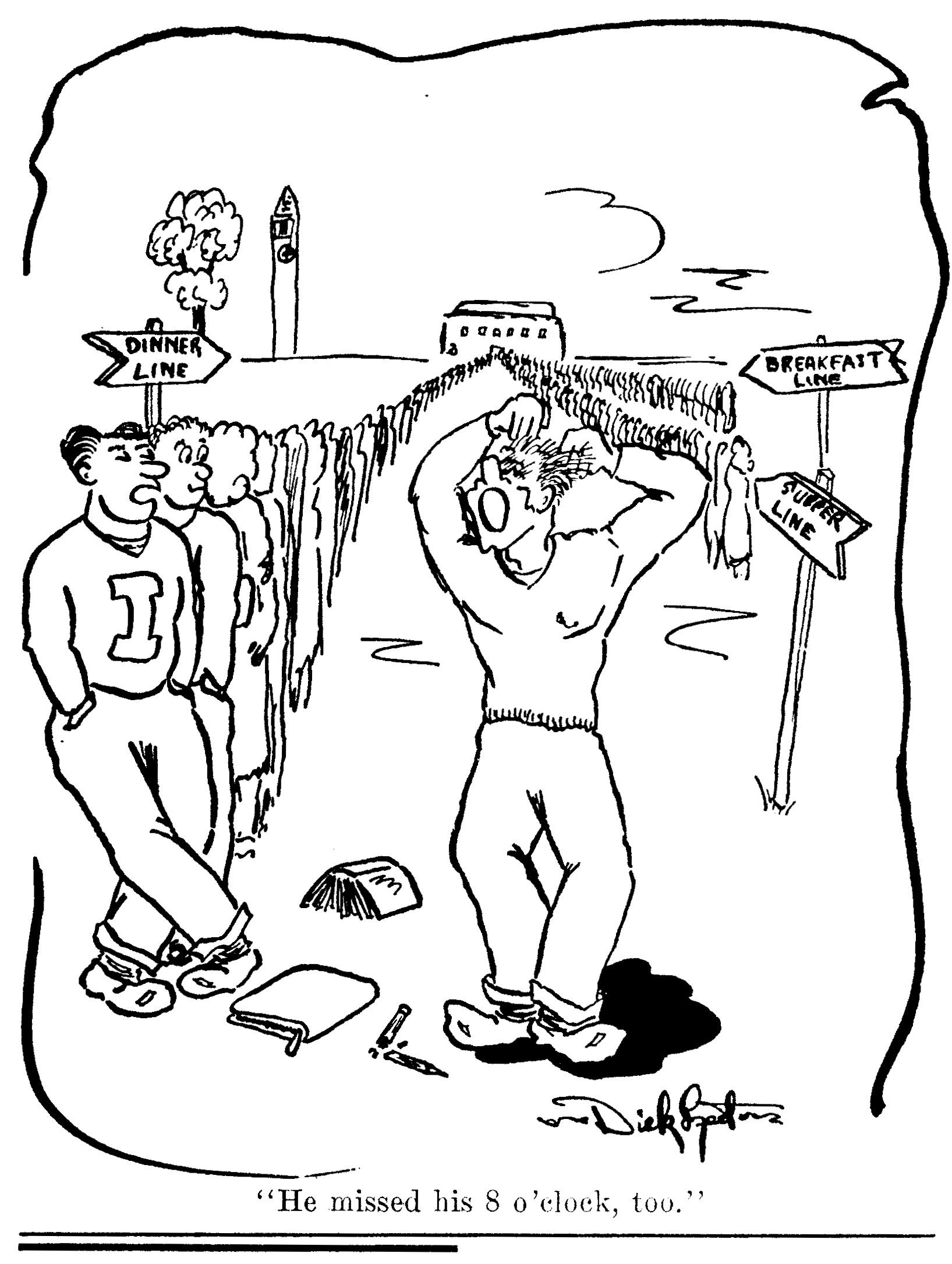
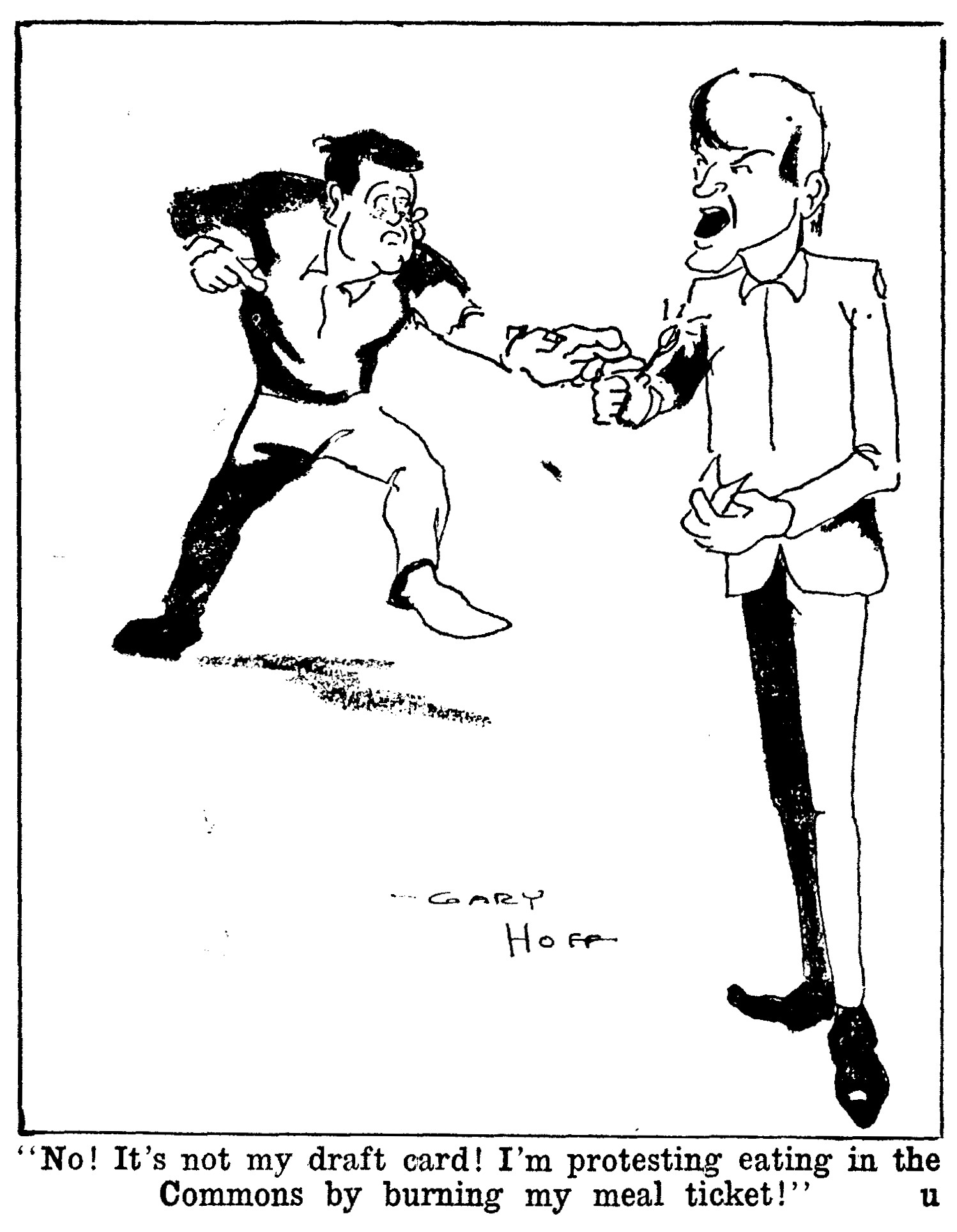
At the end of the war, the college received an influx of students, resulting in challenges of long food service lines and higher prices. As a result, the college tried "standardized" meal service in order to speed up lines. Each person received exactly the same food and portions. When students claimed meals in restaurants were less expensive than Commons meals, the administration pointed to the higher quality of nutrition offered by the college. Students also protested a proposed rule requiring those living in the dormitories to have a meal contract. However, a November 1946 student survey showed most students believed they got their money’s worth at the Commons, received sufficient quantities of food, and spent less than eating off-campus.
Students often spent the noon hour in the Commons. Playing bridge was the most common activity, but many danced to records, and veterans found old friends and swapped war stories. The College Eye reported from September through December 1947, the Commons hosted two picnics, six teas, 15 dances, seven musicals, five student-faculty functions, and 10 miscellaneous activities.
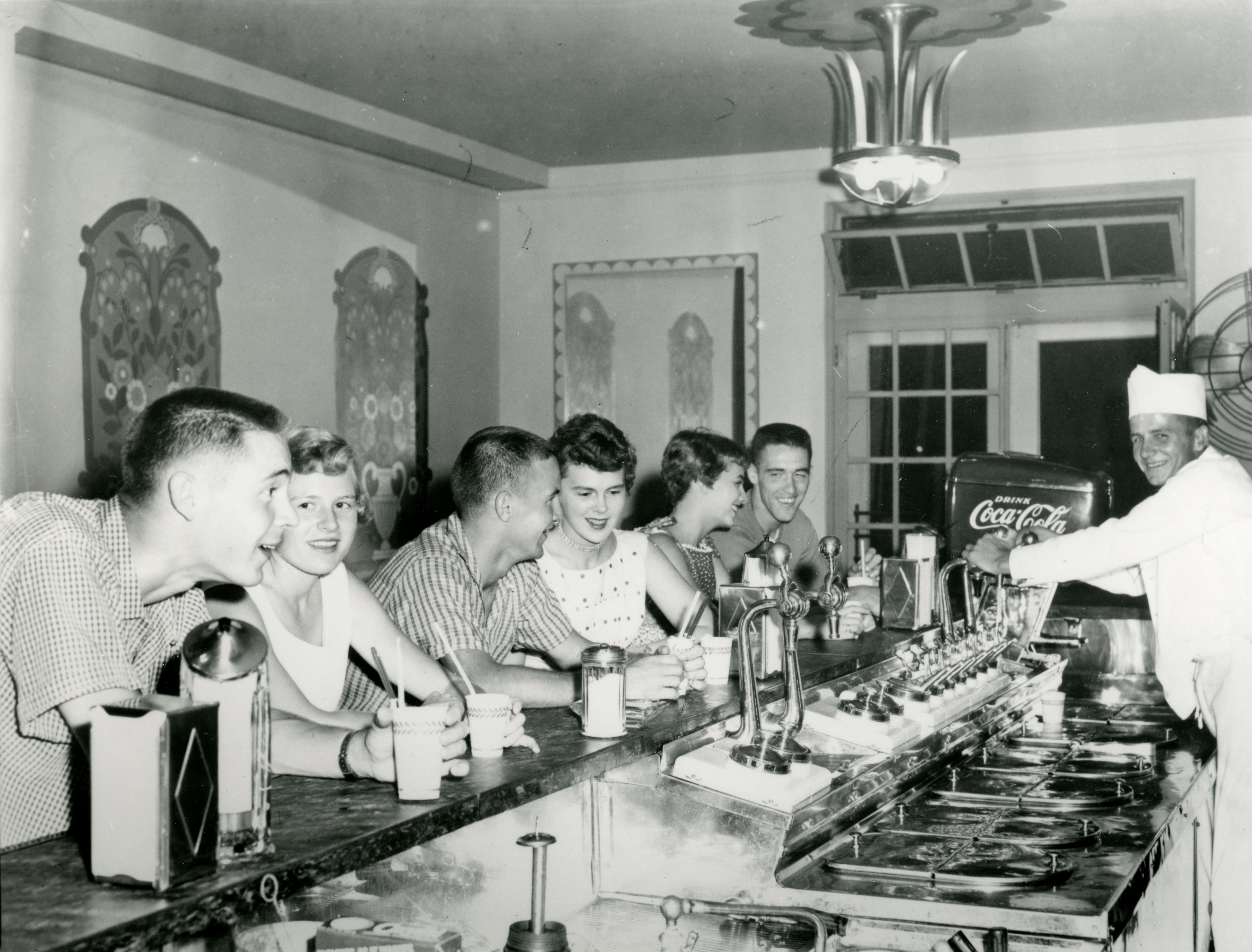
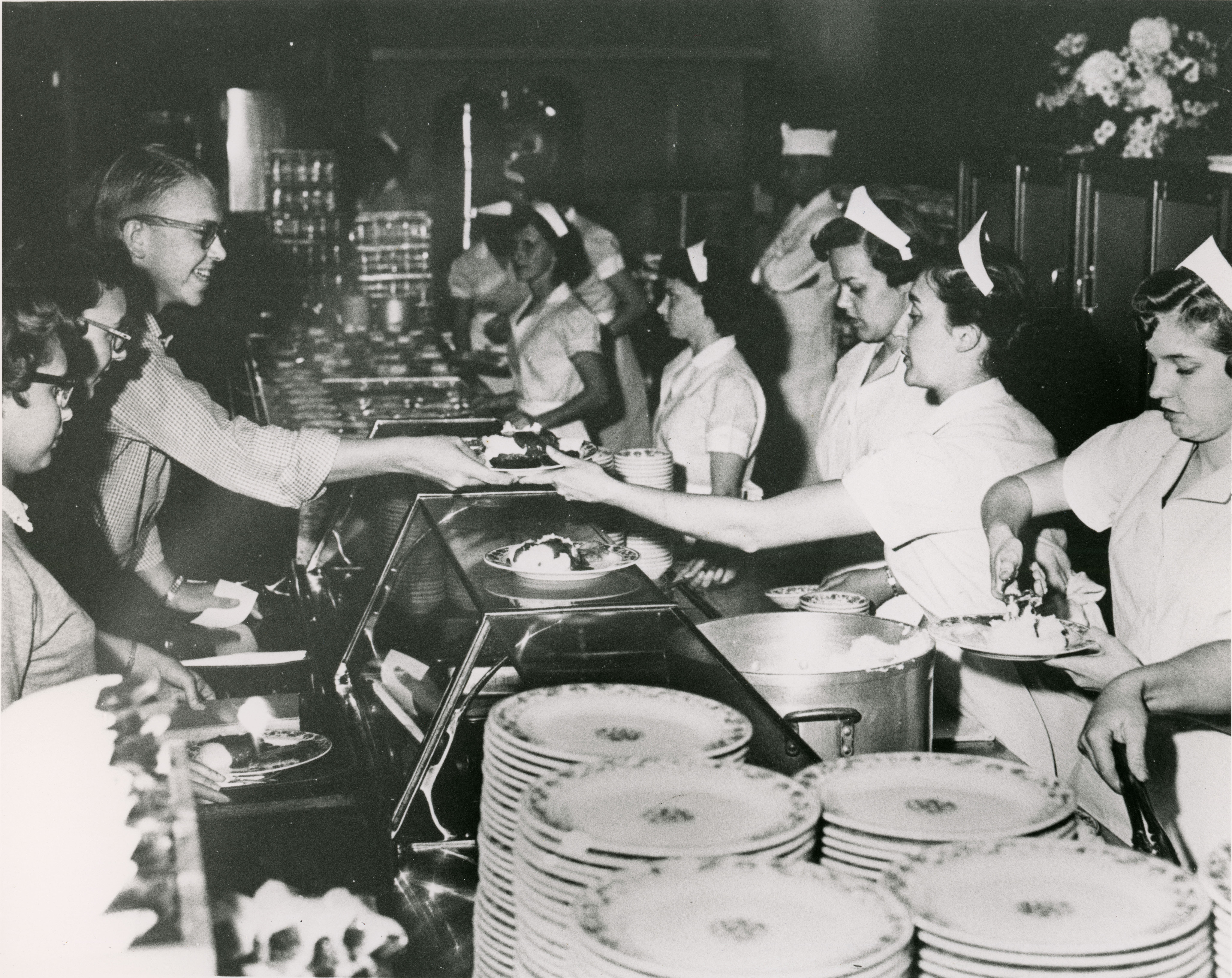
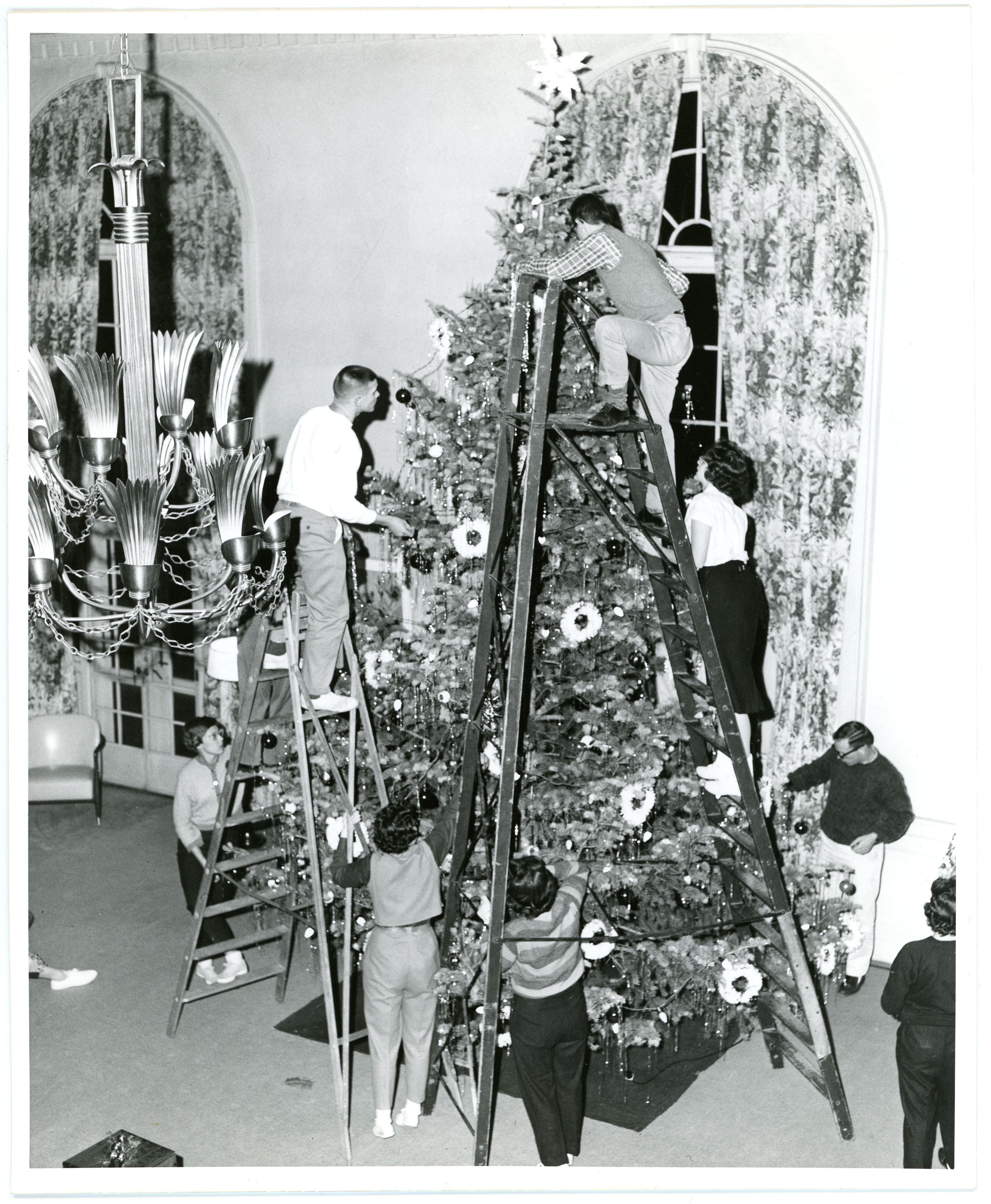
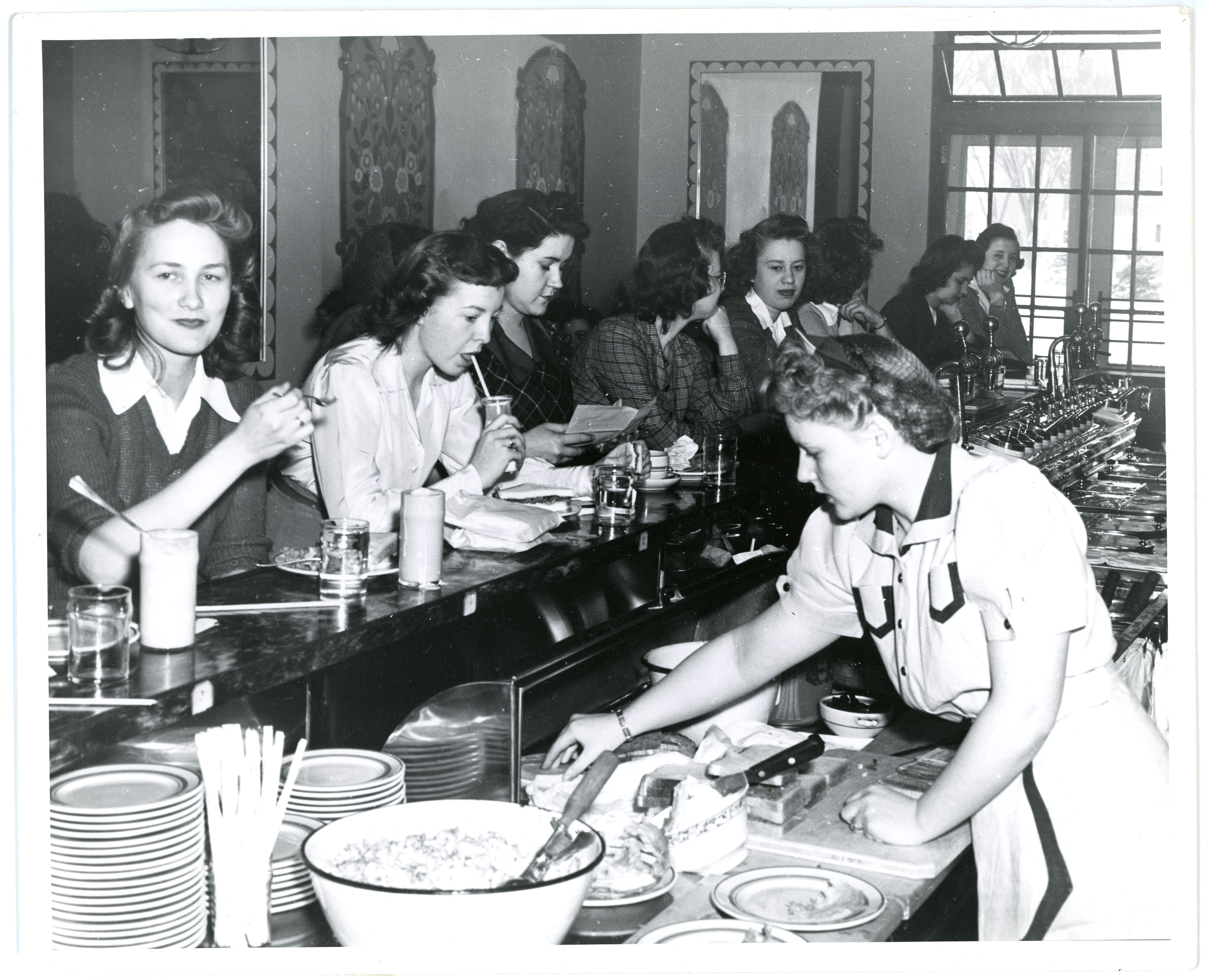
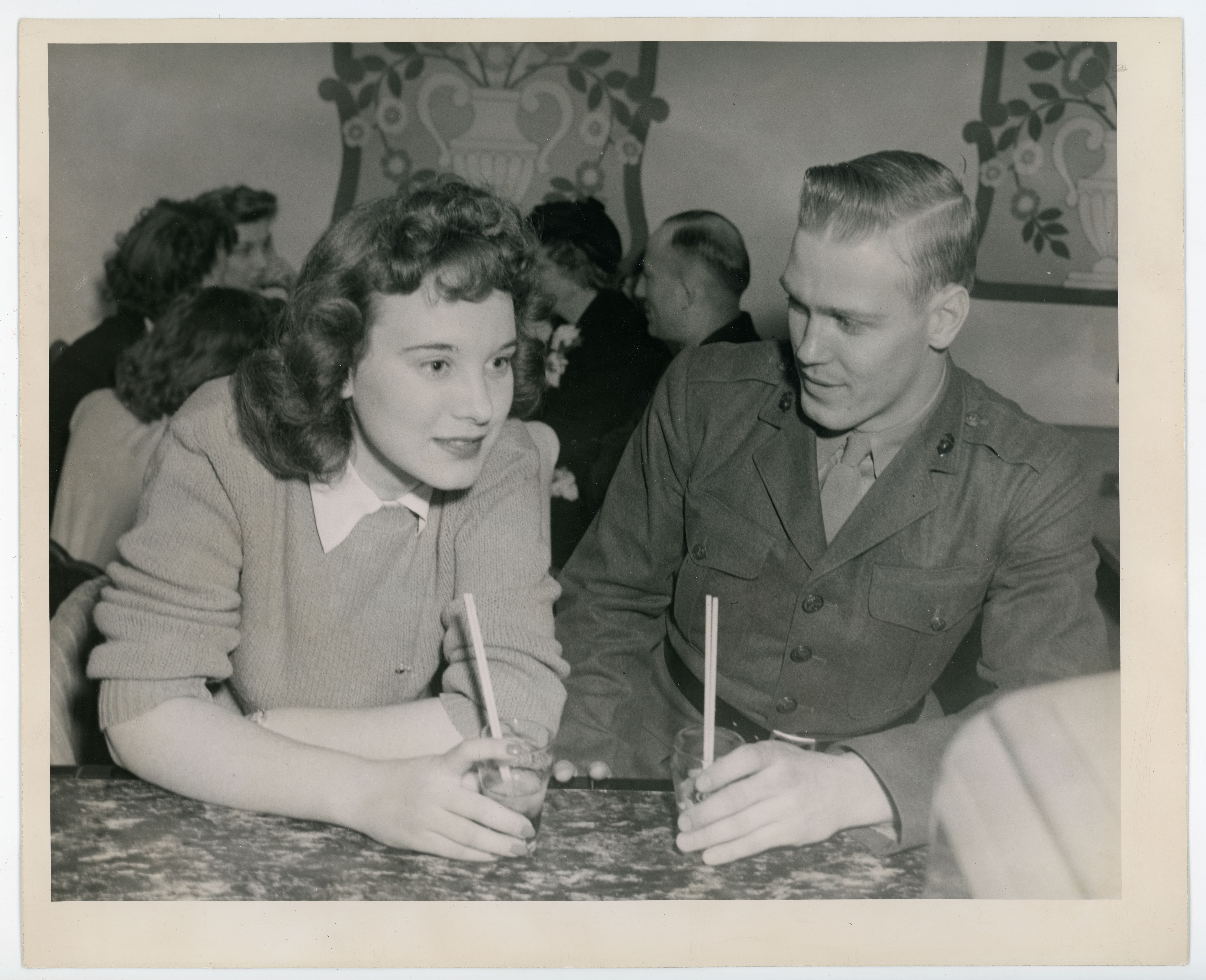
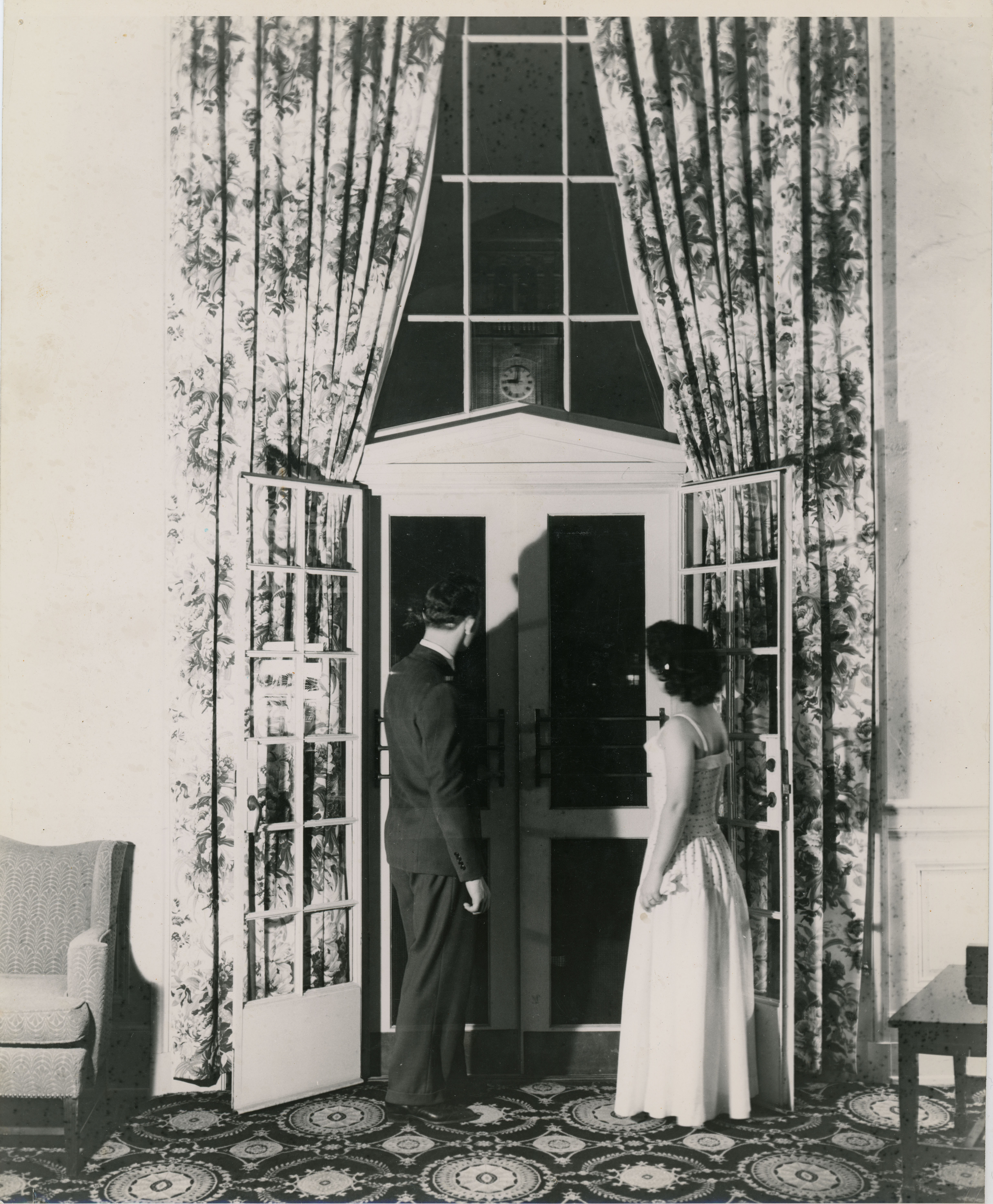
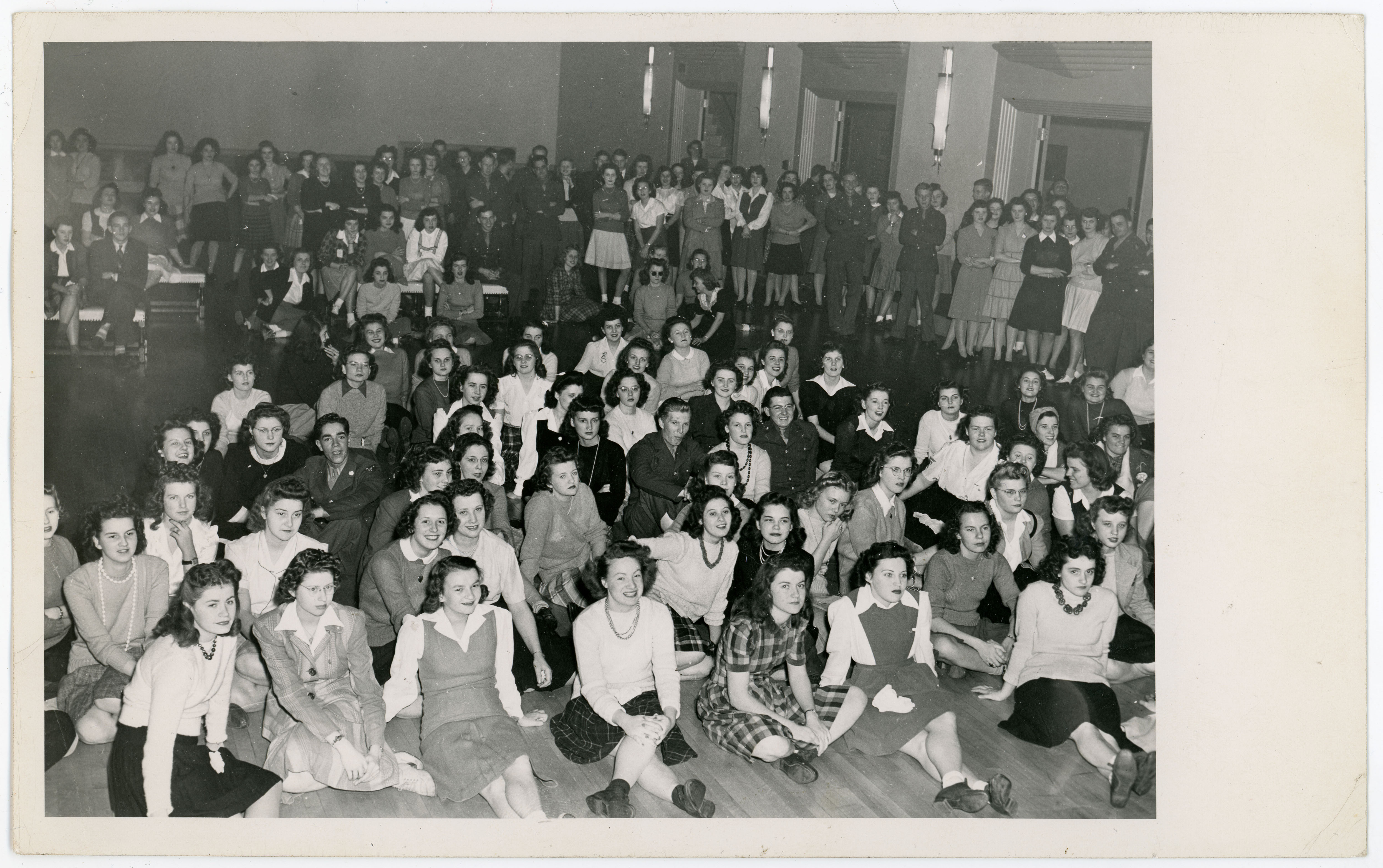
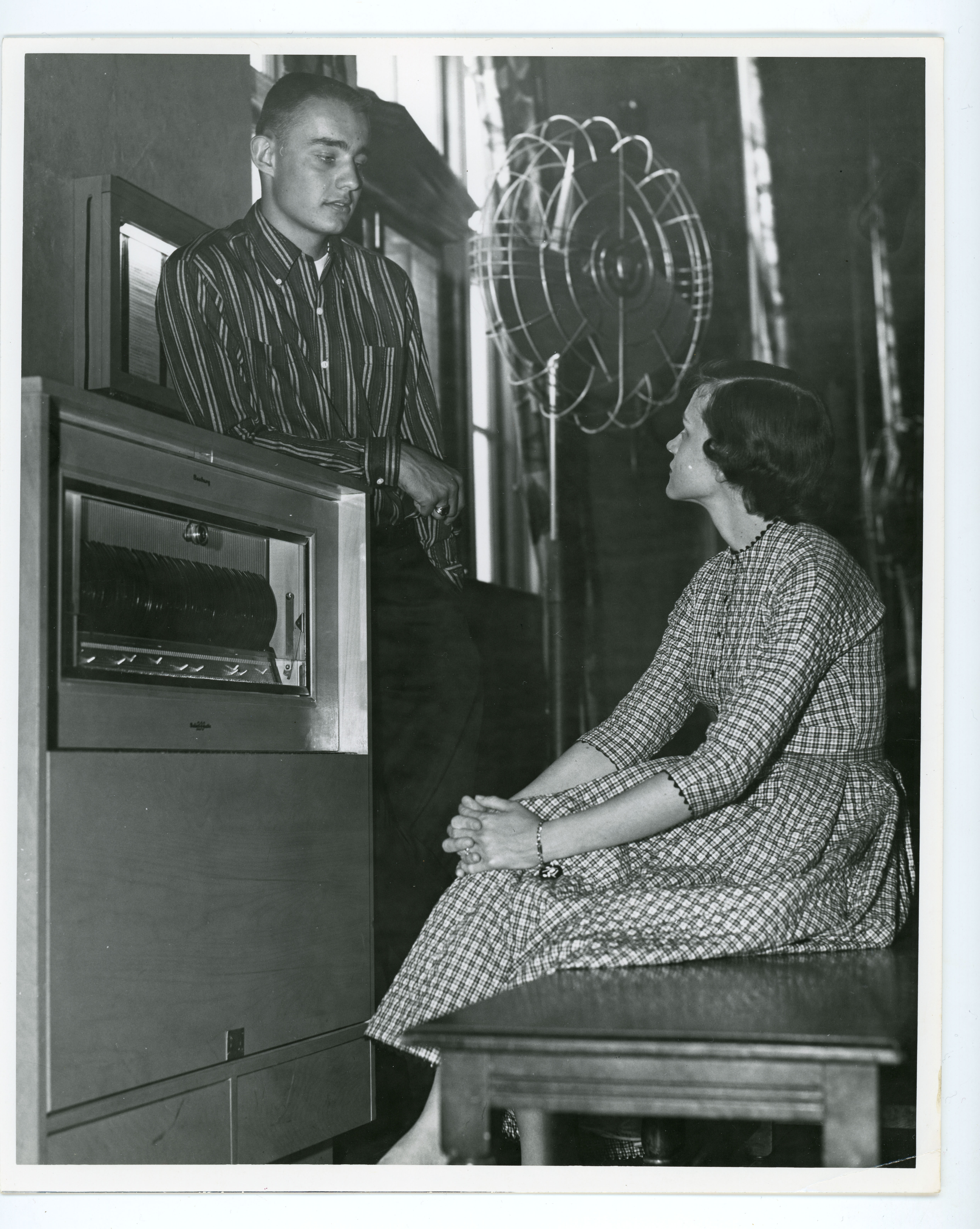
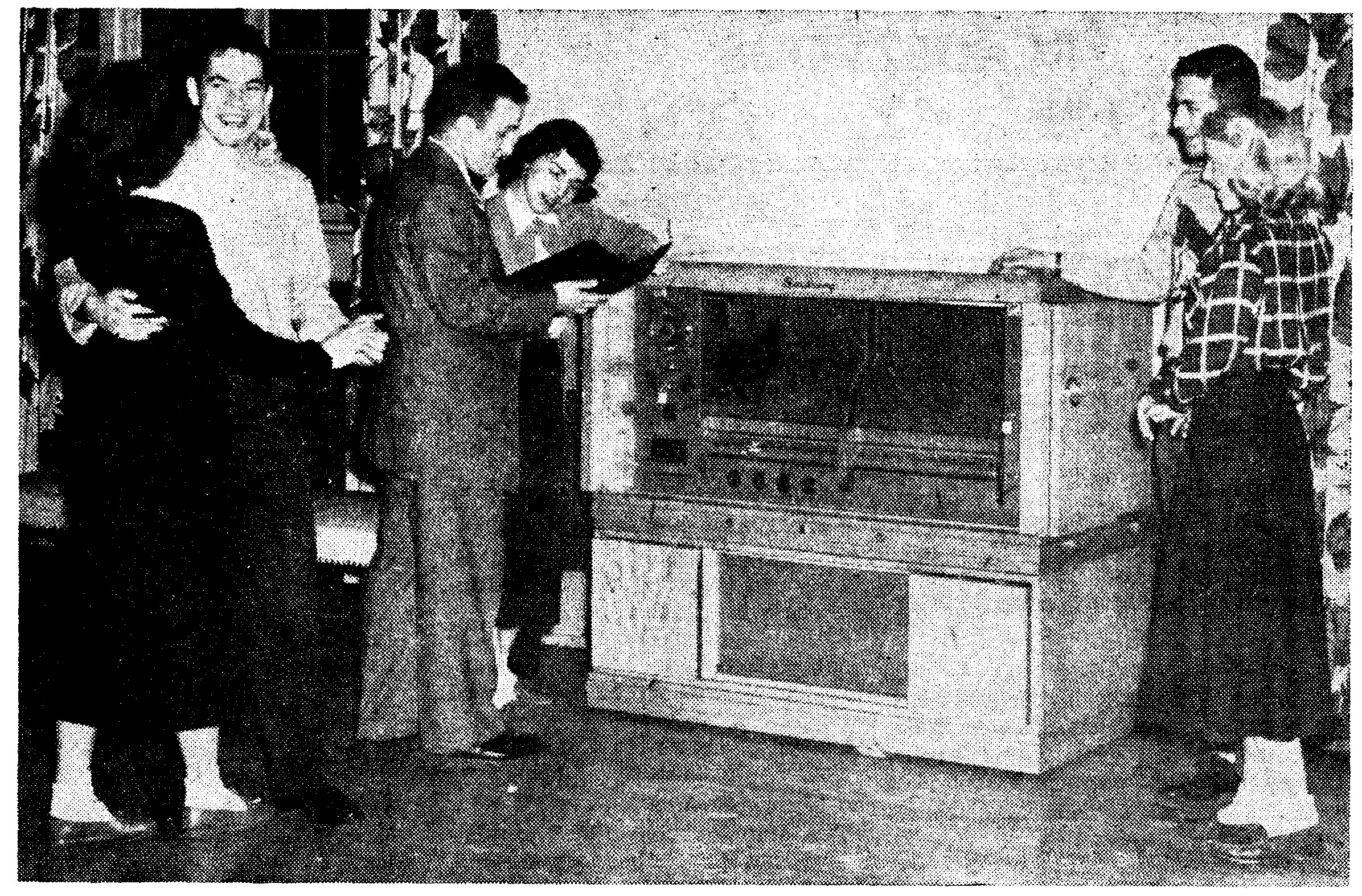
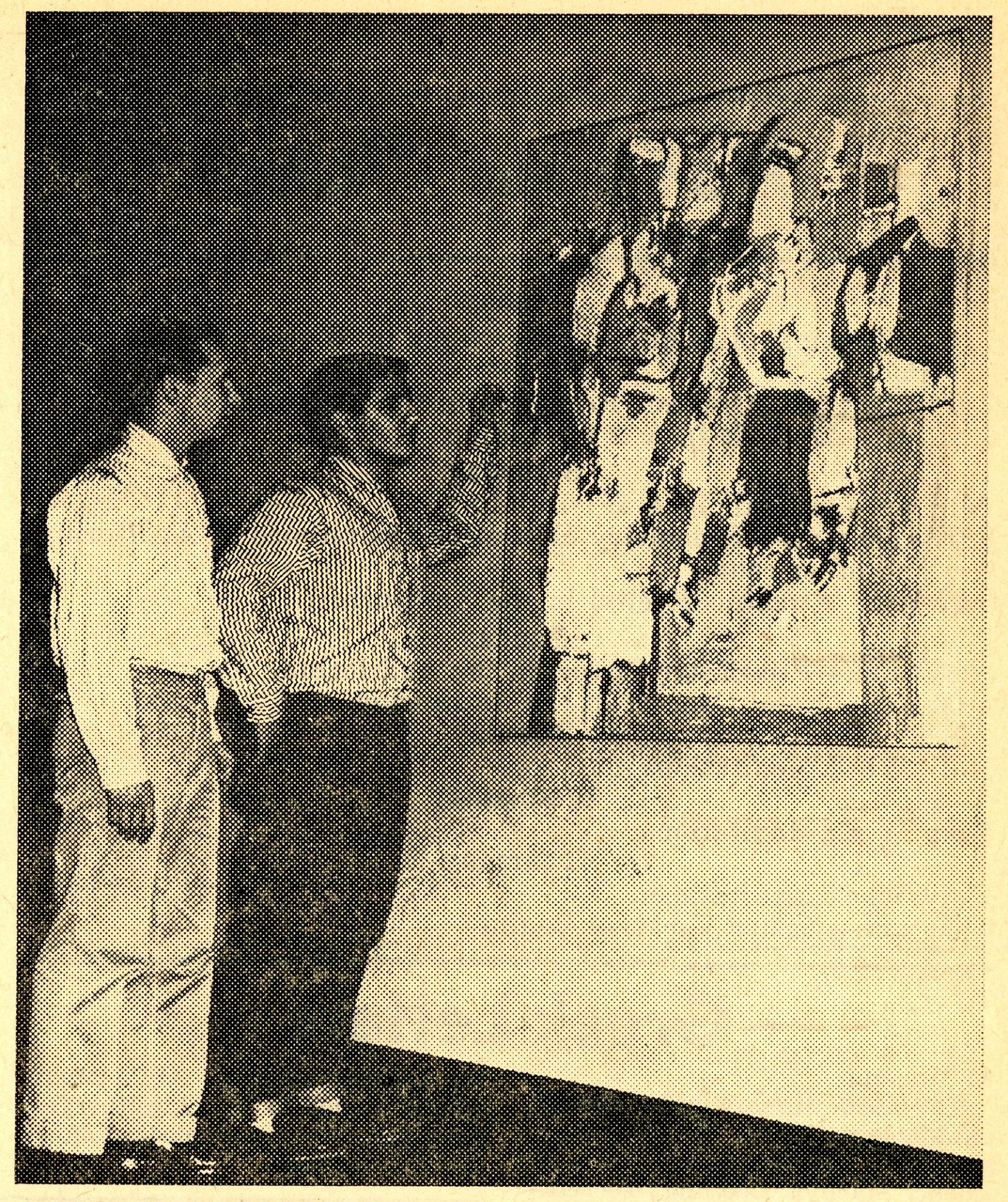
The Commons continued to receive updates to enhance student experiences. In 1949, artist George Rackelman of Des Moines painted a series of murals which were mounted behind the Commons serving line. The series depicted historical scenes from campus. In 1951, a Seeburg 200 jukebox was installed in the Commons ballroom. The machine held 100 records. Students were invited to donate records to fill it. Keeping the machine supplied with donated records became a consistent problem over the following years. When a new machine was installed in 1955, the Commons still relied on student and organization donations to keep it stocked.
In 1952, women were allowed to smoke in the Commons for the first time. Students also began calling for a greater voice in determining Commons programming, which had been under the control of the Dean of Women. In fall 1953, a television set was installed in the Commons just in time for the World Series. The year 1955 saw a major controversy over a ruling by Associated Women Students, the women's governance unit, that women were prohibited from wearing jeans in the Commons. Editorials and letters were published in the College Eye until the group rescinded its ruling.
Early in 1956, a group of students began raising money to purchase artwork for the Commons. Their original selection was a piece called "Transaction" by Charles Cajori, which was available for sale for $250. Over 300 students and faculty contributed to the fund. On March 5, 1953, President J.W. Maucker accepted the work, which was later hung in the west corridor of the Commons. As a result of this fundraising effort, a fund for the purchase of original artwork was established in the Business Office.
By the mid-1950s, there was discussion about a new or expanded Commons. One College Eye writer suggested it made better sense to expand the Library, since in the author’s opinion, students were using the Library for socializing rather than studying. The writer suggested converting the Library stacks into a combination snack bar and lounge and making the reading room a dance hall.
Other students complained about lengthy waiting lines for food, especially at noon. Commons and college officials knew this issue was caused primarily by lack of space. Commons food service director Margaret Fitzgerald said, "It's not that we can't buy more equipment for the preparation of food, but there isn't anywhere to put it."
During this time period, campus began discussing a student union. Students proposed the Commons be converted to recreational services only and dining services be placed in dormitories. In their proposition, the transition of the Commons to a union could be financed by a $5 per term student fee. By May 1959, a committee was established to consider expanding the Commons. Survey results showed students were interested in an information desk, which would handle sales of tickets, newspapers, magazines, tobacco, candy and postage; a checkroom; a book and supply store; a bowling alley; a music listening room; and a large snack bar. The Regents authorized a study of an expansion and hired consultant Porter Butts of the University of Wisconsin.
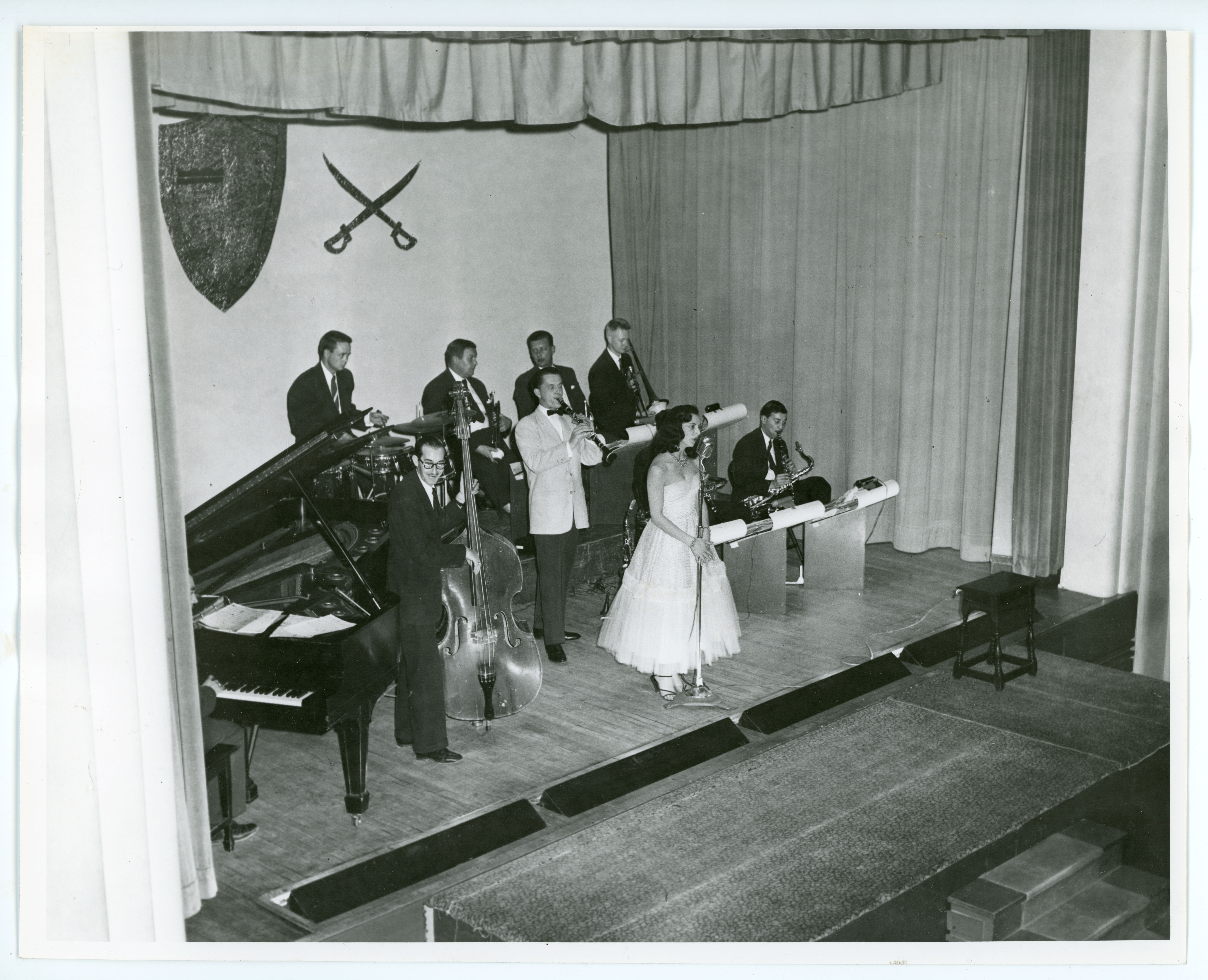
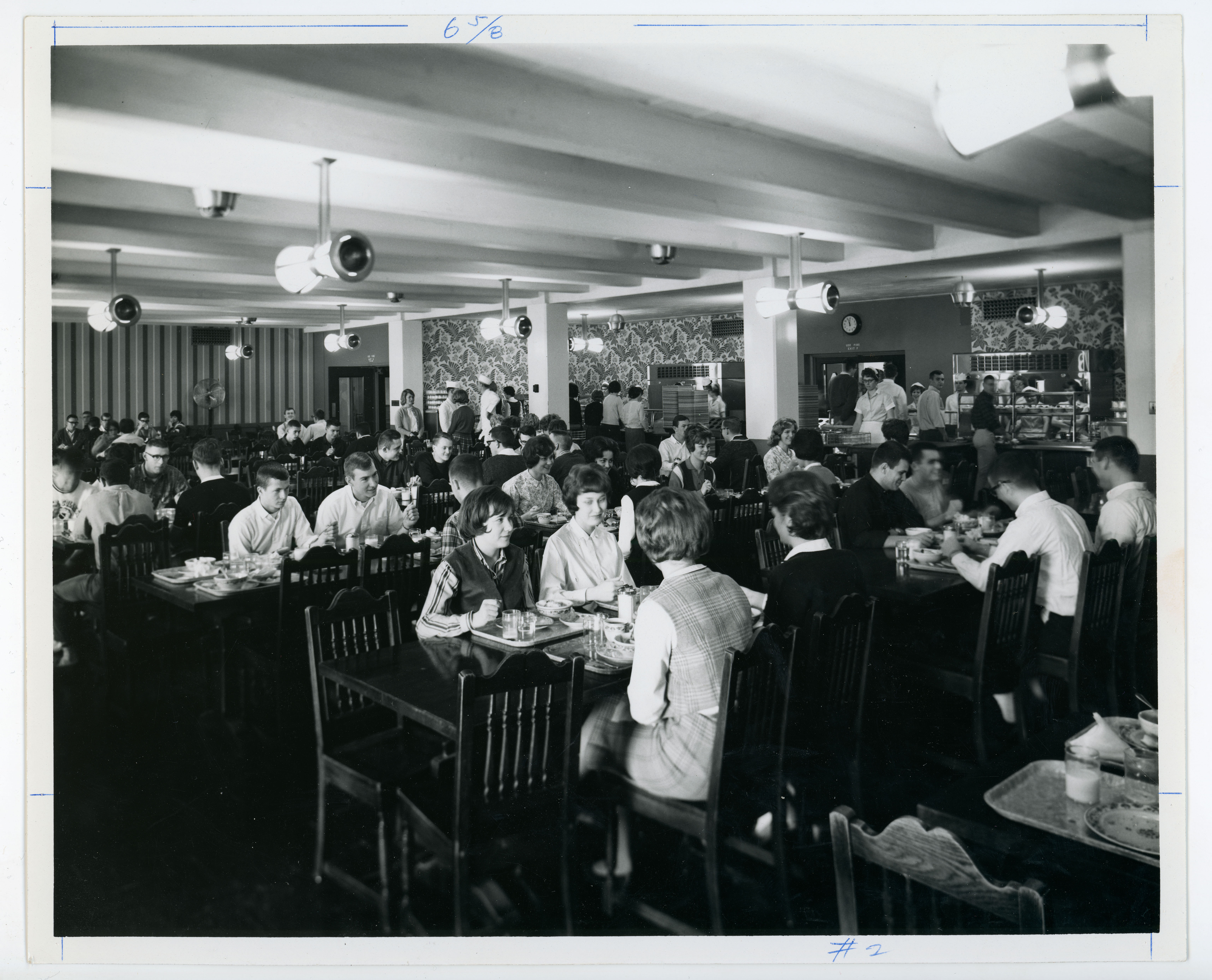
In 1960, the Commons began offering a series of concerts and performances. The Brothers Four and Bob Newhart appeared in the first year. Progress continued on plans for remodeling or expanding the Commons when the Regents approved a $3 student fee increase, earmarked for that purpose, to begin in 1962. Dean Paul Bender announced the remodeled Commons would include a new kitchen, along with a 266-seat auditorium, television lounge, table tennis and billiards room, art gallery, chapel or meditation room, browsing library, music listening room and craft shop. A reflecting pool would be built just south of the Commons to furnish coolant for the building's air conditioning system. Bender stated the budget was $1.6 million and work would take two or three years to complete. While plans were being considered to make the Commons a student union, the Regents authorized installation of two new food service lines in the Commons due to rapid enrollment rises. By October 1962, the new food lines were installed.
With the student fee in place and with Bender commenting plans were “well underway,” students began to look more seriously at possible changes to the Commons.
College Eye editorial writers recommended a good-sized auditorium, rather than a small one; wanted a new snack bar to include plenty of room for casual seating and relaxation; and questioned whether a chapel, a proposed project arising shortly after World War II, was necessary or appropriate. Student government passed a resolution in October 1962 "to work with faculty by investigating the addition of a full-line college bookstore in the new student Union." Bender said while a bookstore was highly favored in the 1959 student survey, it was not included in the current plans.
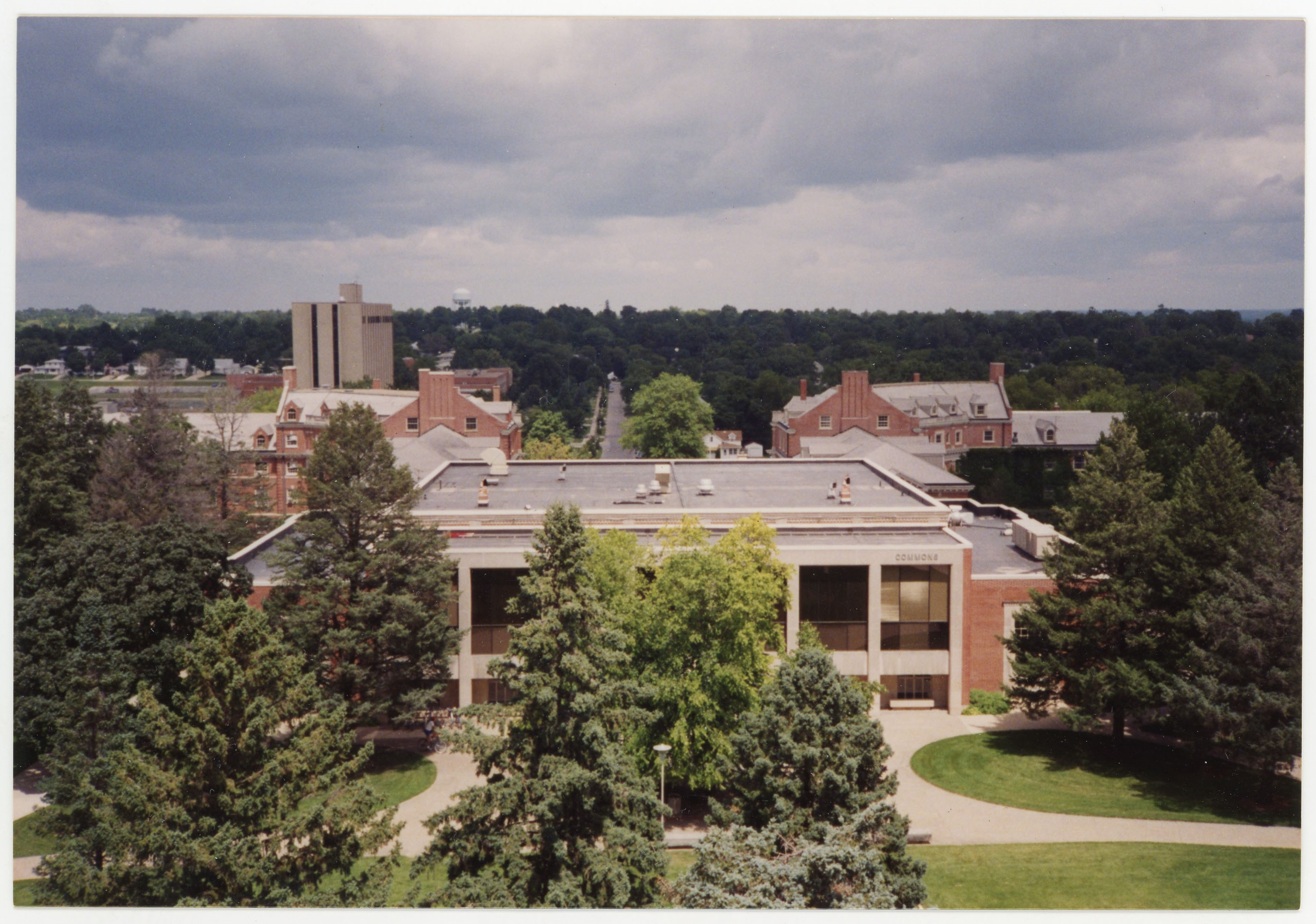
In June 1963, Director Dale Brostrom announced the name “Commons” would be changed to “Union” as "the first step in a program …to make the Union the social, cultural, and recreational center of campus life." He stated the name “Union” would imply "the greatest amount of usage" by students, off-campus groups, and faculty and staff. The Regents approved this name change on August 9, 1963, but the change was short-lived. In January 1964, the Regents approved a request to split the proposed project into two parts: one part was the remodeling of the Union (the former Commons); the other was the construction of a new Union. The new building would eventually become known as Maucker Union. As of September 1, 1964, the Union (the former Commons) would revert to the former name, the Commons. Student fees supplied the $700,000 remodeling budget. Plans called for the Commons to become the dining facility for Bartlett Hall, Lawther Hall, Baker Hall, and a proposed additional men’s dormitory.
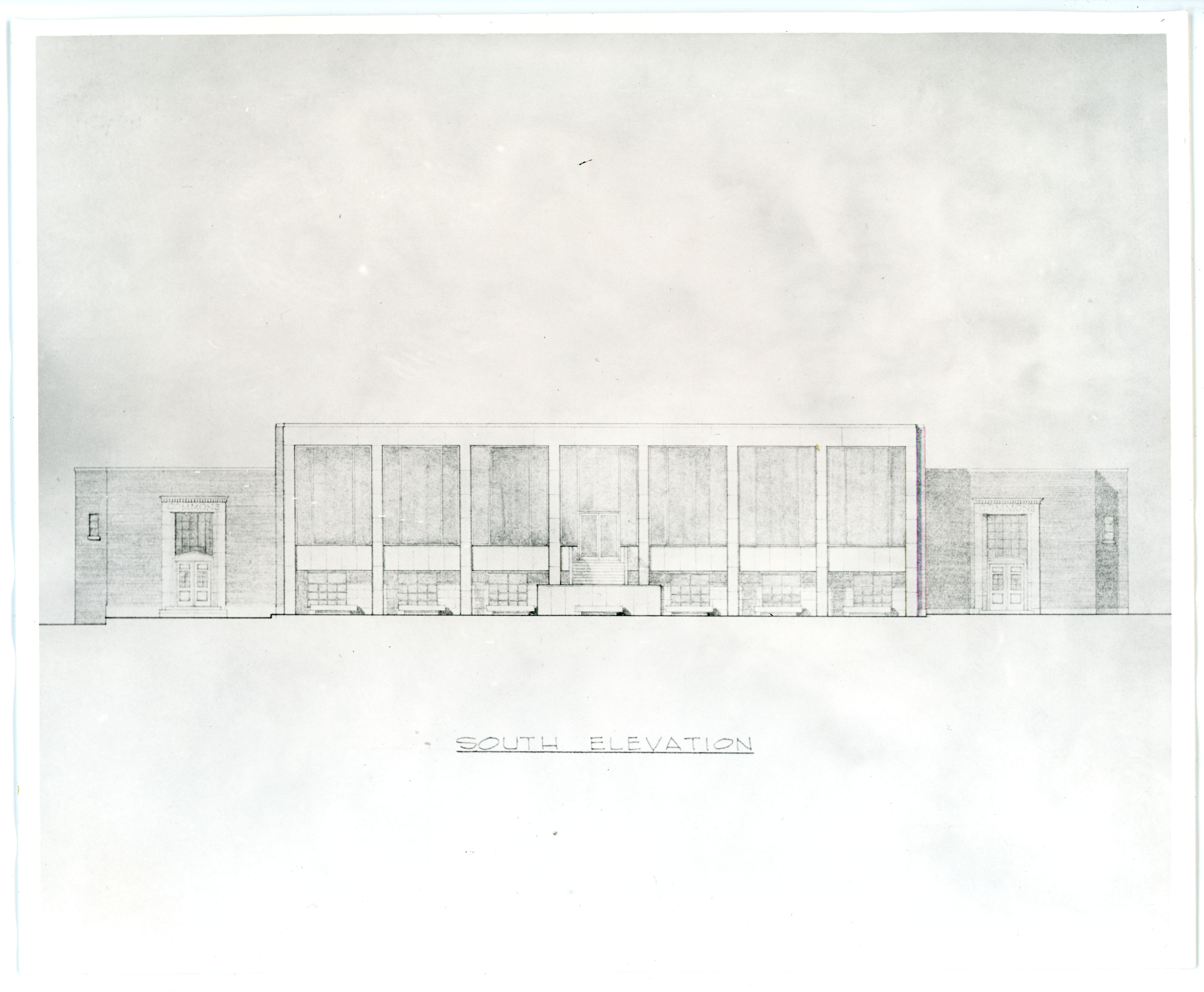
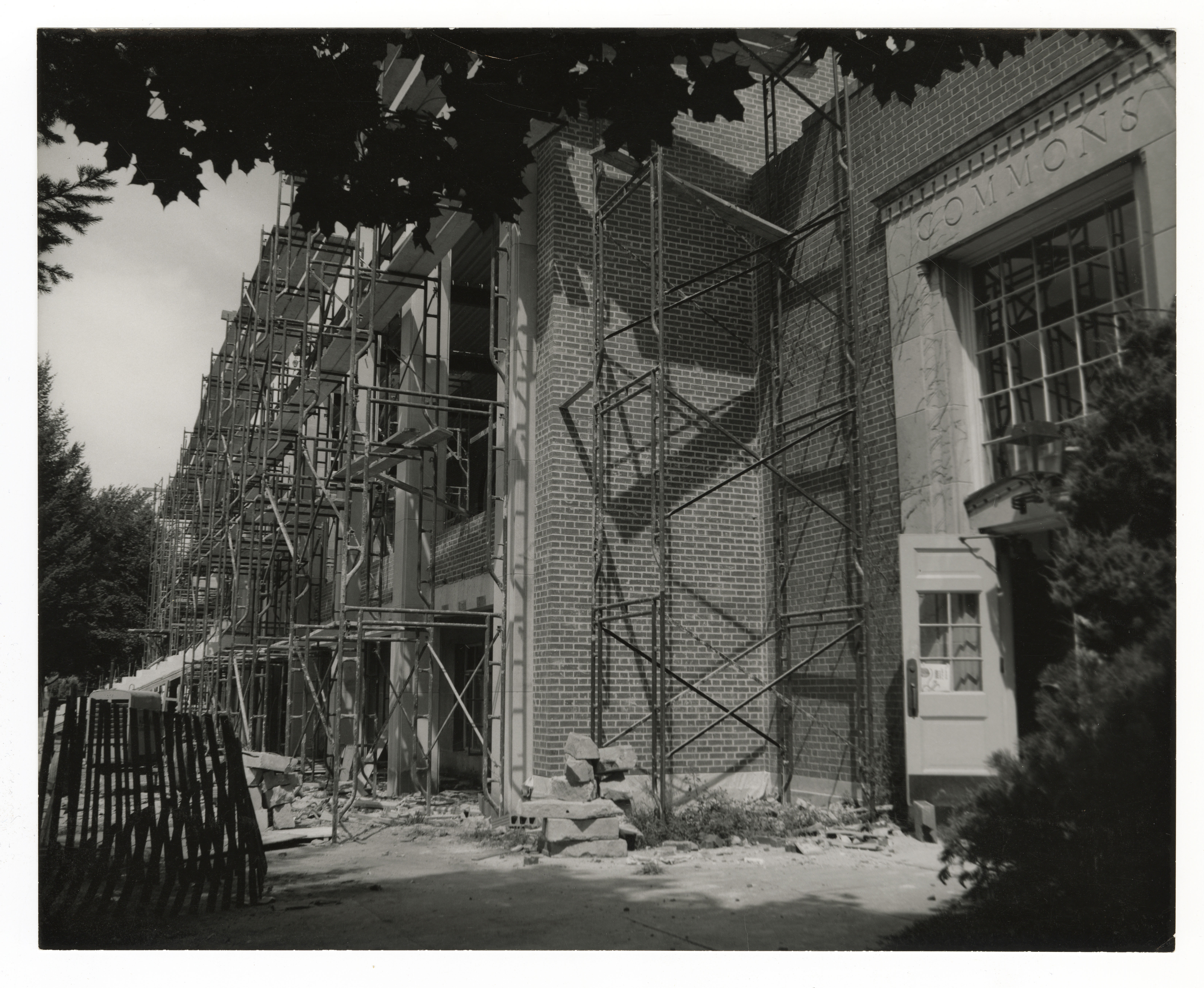
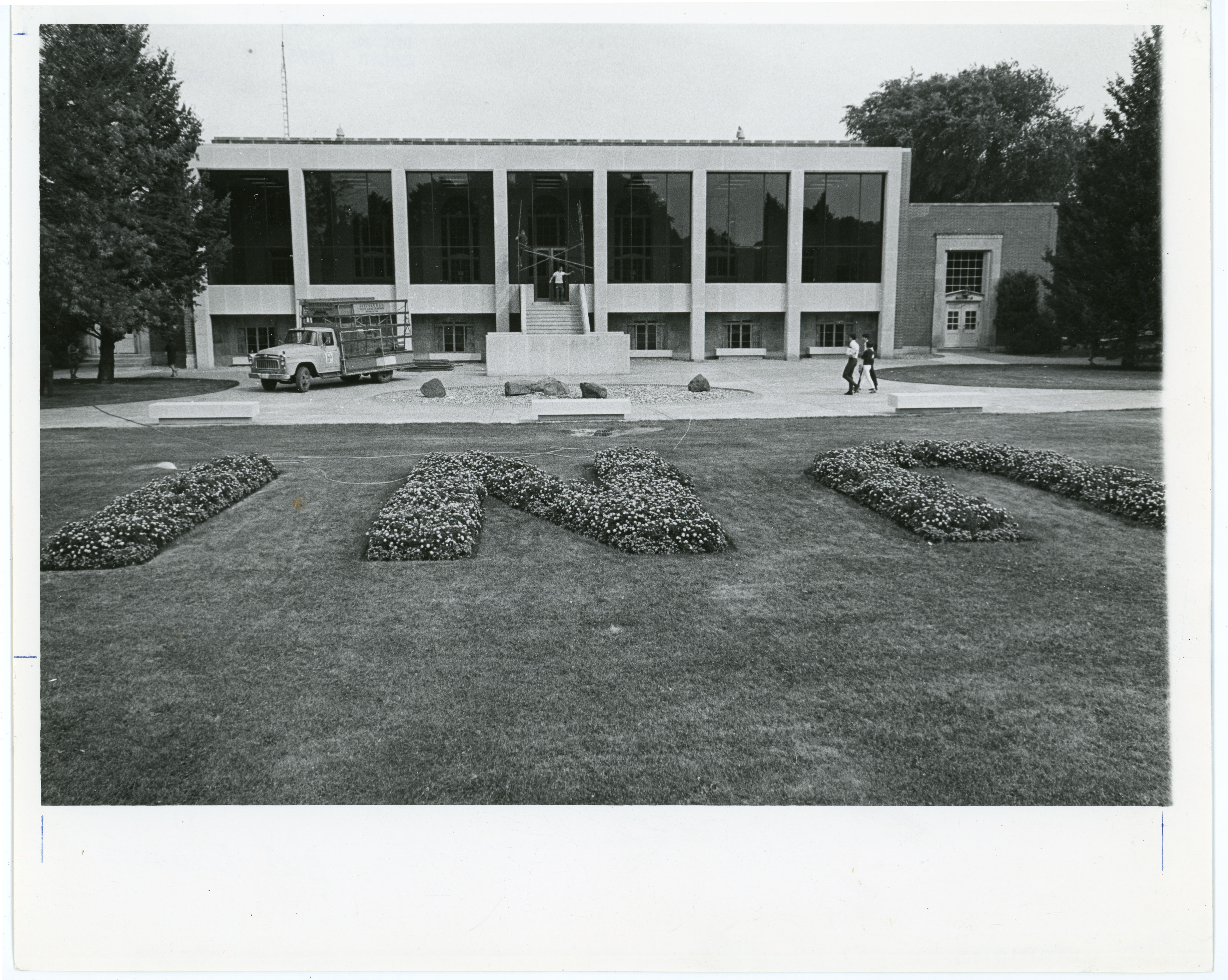
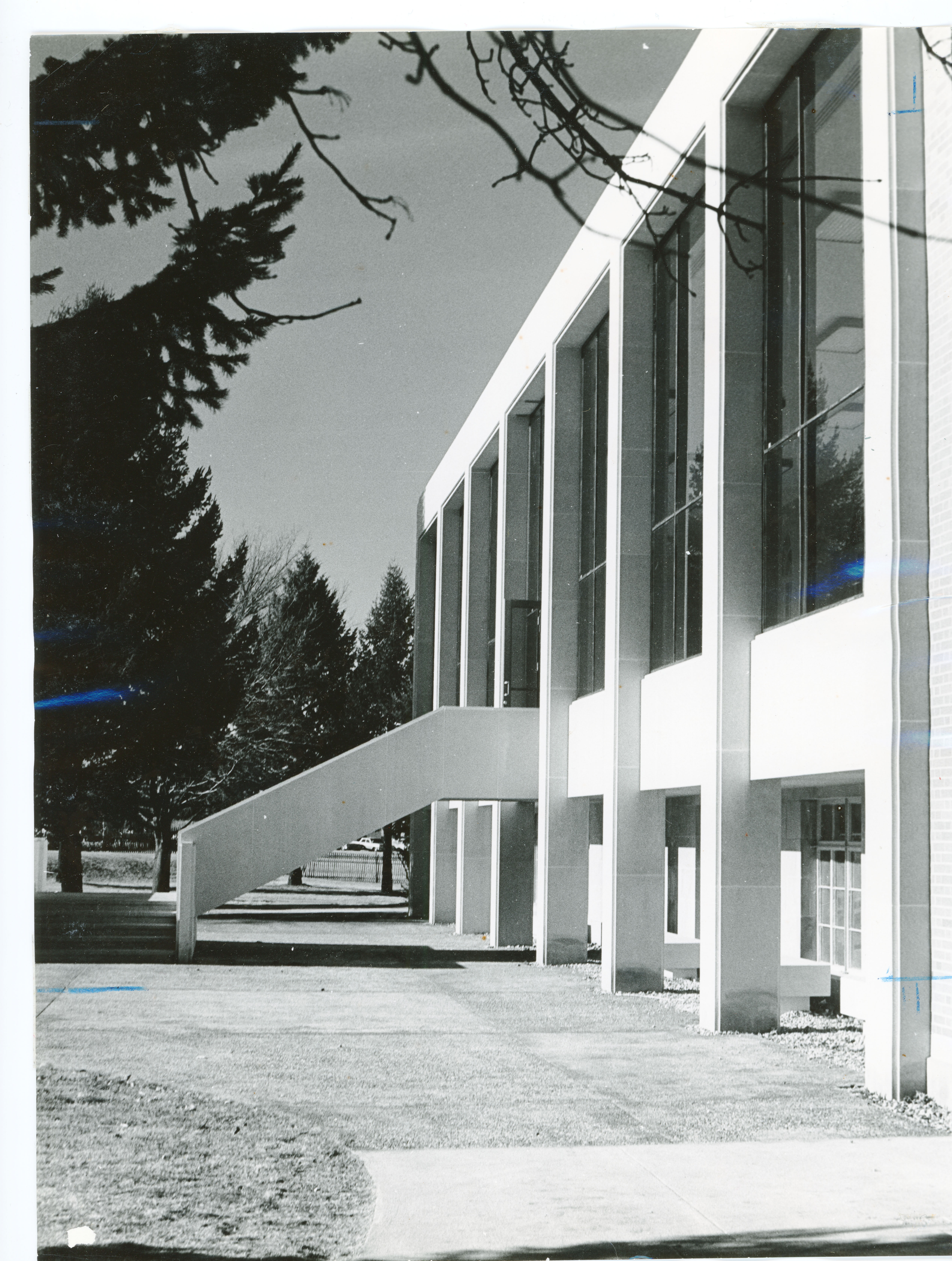
In November 1964, Brostrom announced the Fountain Room, a long-time student favorite, would be closed and moved to another part of the Commons. Students were displeased at this and changes to the television room. In May 1965, the Regents increased the remodeling budget to $800,000, with an additional $20,000 for a new freight elevator. Most of the proposed remodeling would involve interior work, but the south terrace would be enclosed with glass to make an entry hall and a large stairway would be built leading to it.
In October 1965, the Regents awarded a contract of $720,414 for the Commons remodeling beginning the next month and an August 1966 completion date. Major work would include enclosing and extending the south terrace, connecting the three dining rooms, and installing new kitchen and air conditioning equipment.
The Commons closed on May 28, 1966 to allow contractors to complete their work. Some of the work trailed into the fall 1966 semester, and, with the new Union still under construction, Commons staff struggled to find recreational space for students. The jukebox was placed into storage, and in early October 1966, a rainstorm left six inches of water in the Commons basement. Students also disagreed on other aspects of the project, such as the necessity of the Faculty Men’s Lounge.
By late 1968, people were speculating over the future of the Commons after the new Union opened. Many offices in the Commons would move to the Union. John Zahari, director of dining services, stated the Commons would function simply as a dining facility and lounge for residents of Bartlett, Lawther, and Baker Halls.
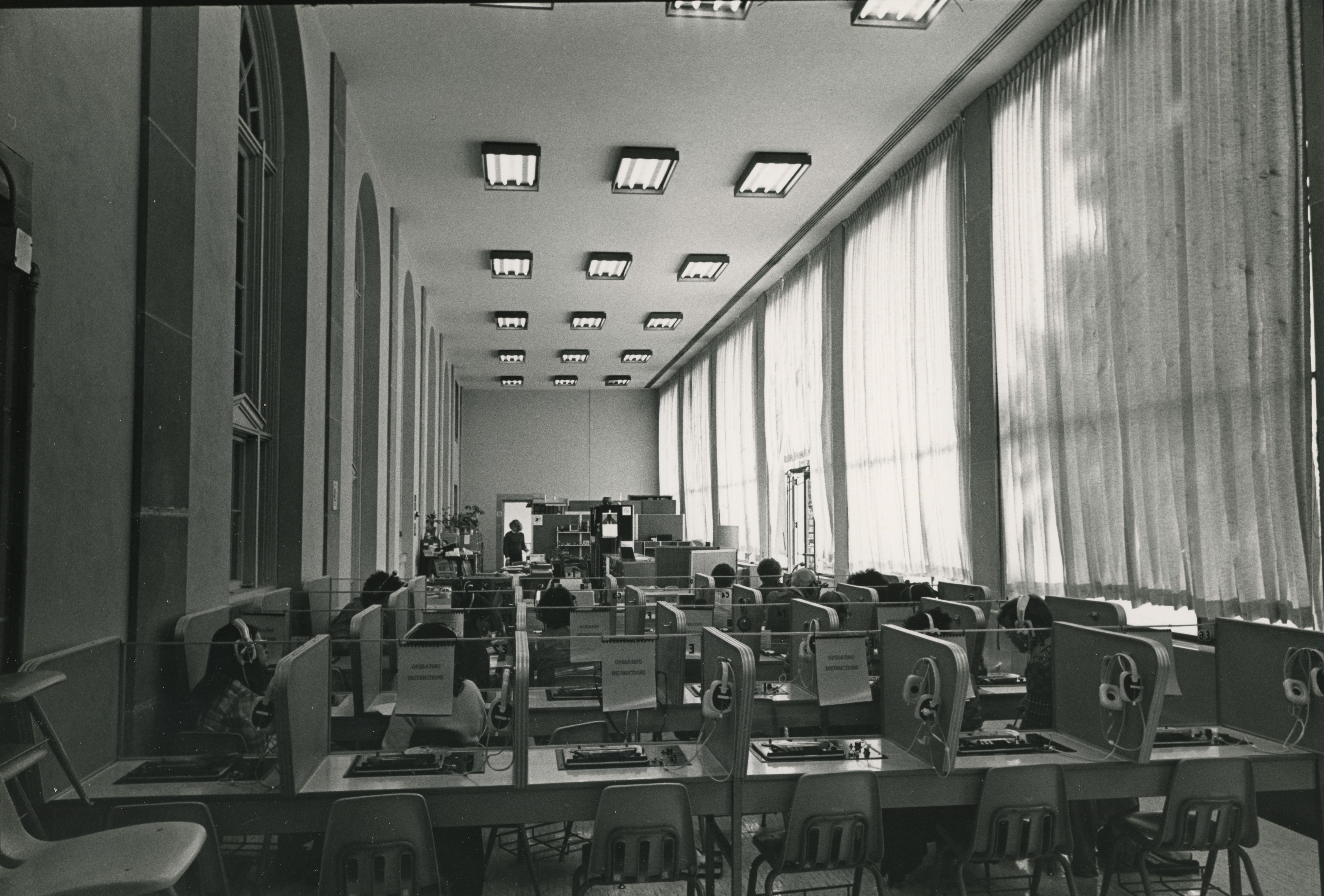
In November 1972, the Regents awarded contracts totaling $28,826 to remodel about 8,360 square feet of space in the Commons for the Educational Media Center, which had lost its offices in the 1972 fire in Old Gilchrist Hall.
In 1978, the Commons cafeteria offered the first non-smoking area in a campus dining center. In 1980, the Commons was one of seven campus buildings modified to increase its energy efficiency. In 1981, the ballroom was painted and refrigeration equipment was modified. It began offering meals for special occasions or visiting dignitaries.
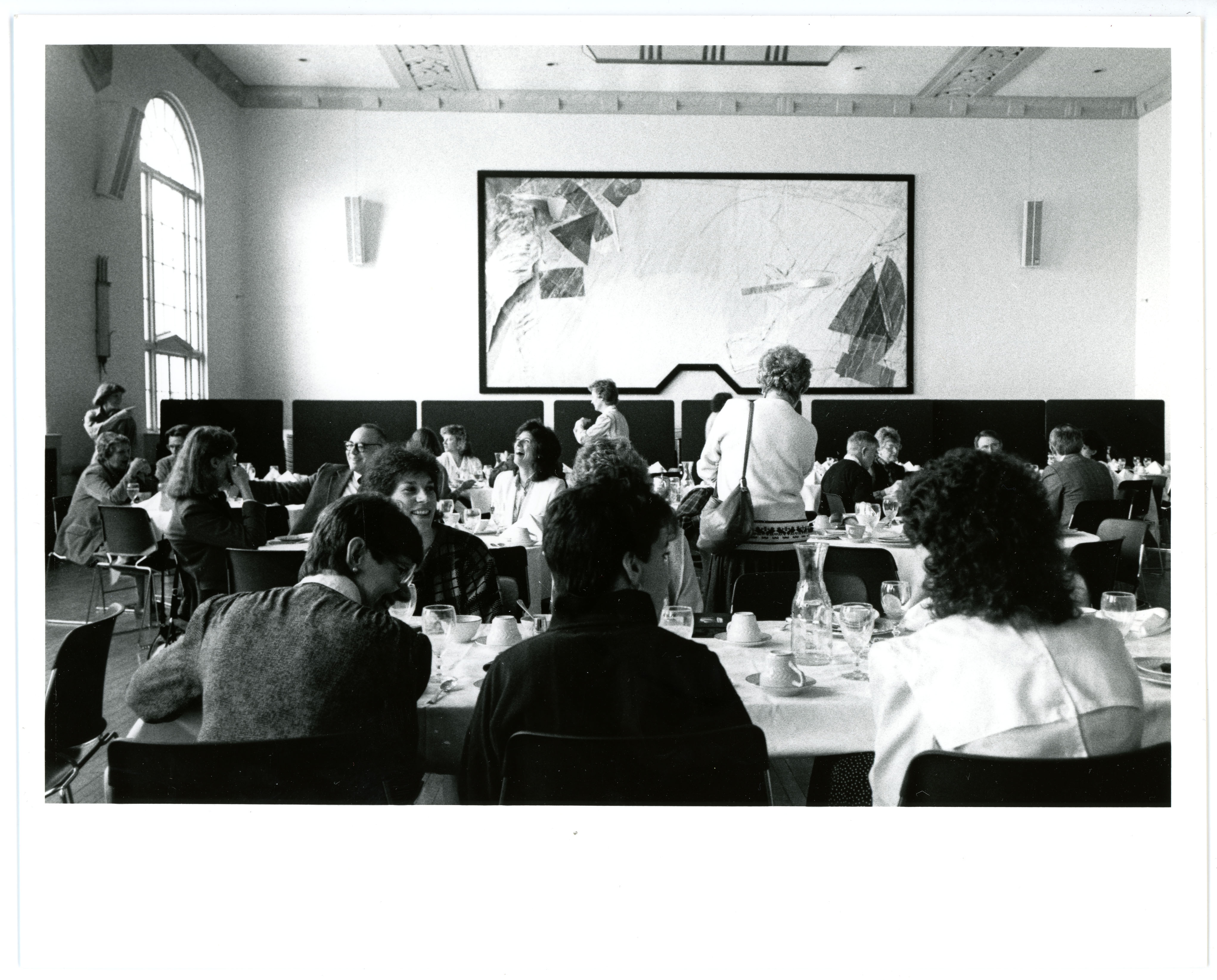
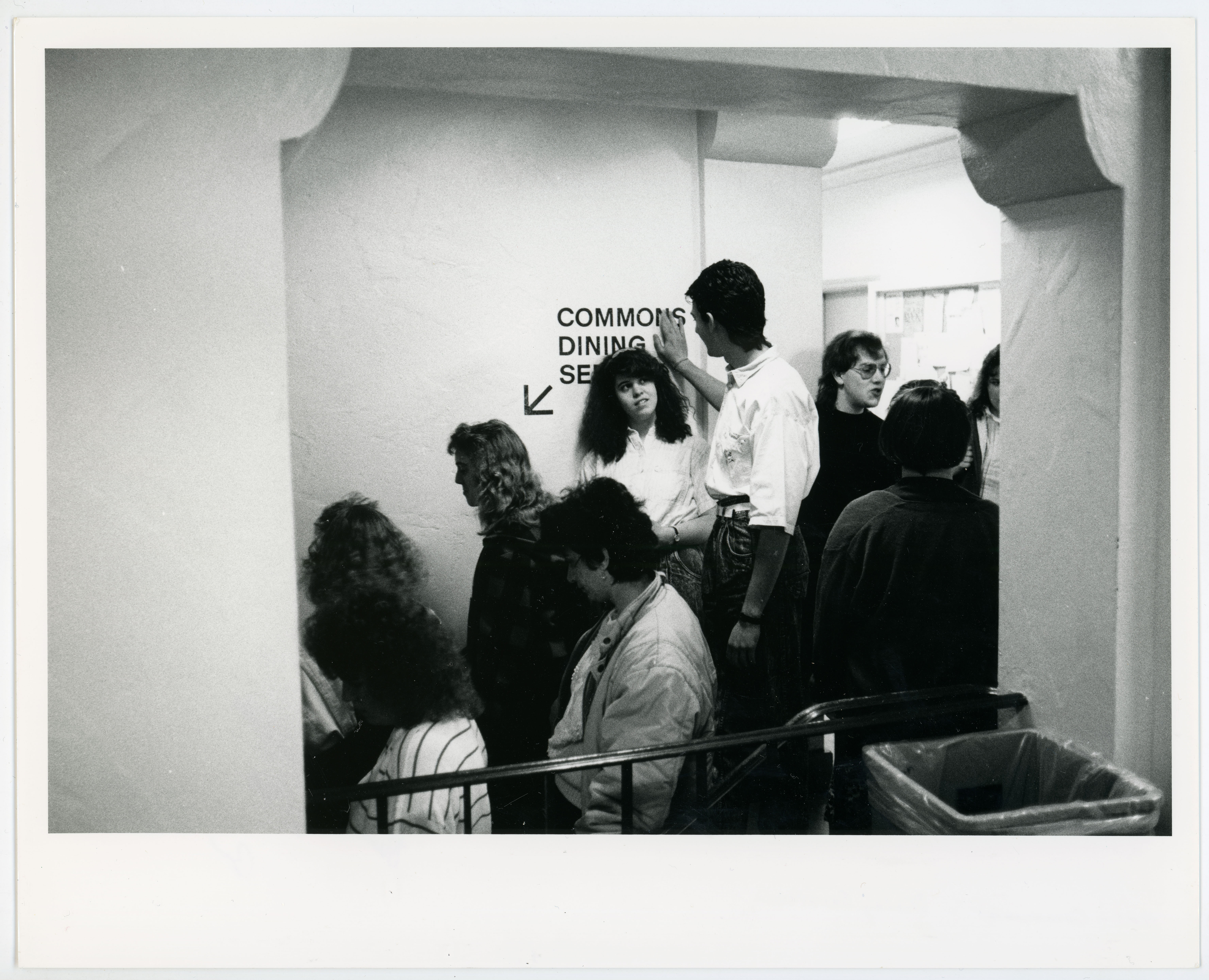
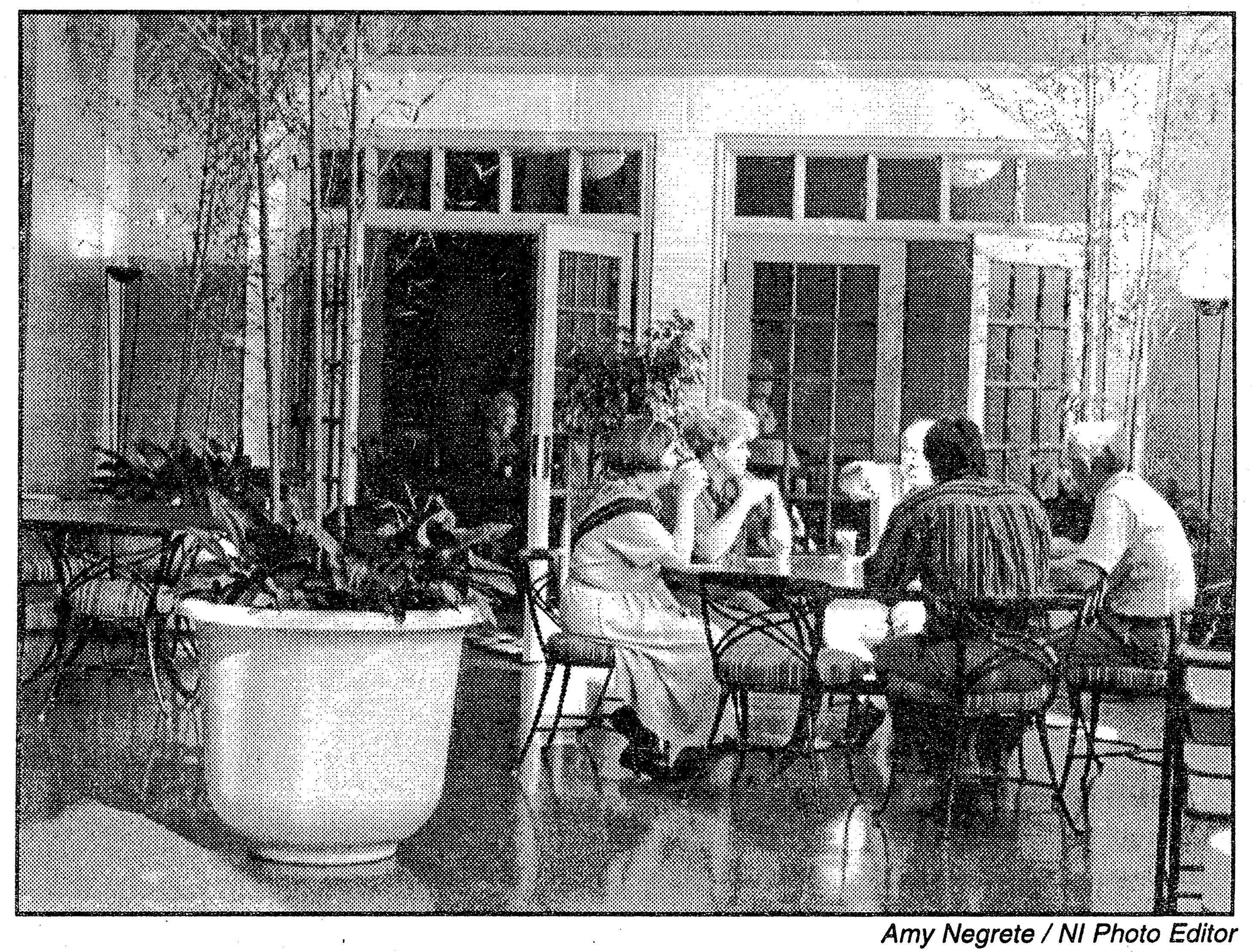
In 1986, the Office of Alumni Relations moved into remodeled quarters in the Commons. In 1991, the Regents approved a contract of $244,640 to renovate space formerly used by the Educational Media Center, turning it into additional dining facilities. Additional work in 1994 changed the look and use of the Commons space. Offices were remodeled so Alumni Relations and University Development could be housed together. The ballroom was repainted, and the former terrace area was renovated to open onto the Georgian Lounge. The project, budgeted at $975,000, brought the Commons into compliance with more stringent fire safety and accessibility standards and also restored some of the building's original Art Deco style.
The Commons Ballroom was dedicated in 1995 in memory of alumni Harry G. Slife and Polly (Prichard) Slife (’42). Offices housed include Alumni Relations, University Development and the UNI Foundation. The lounge and ballroom areas are used for official university dinners and receptions, conference dining and some student activities.
Compiled by Library Assistant Susan Witthoft; edited by a University Archivist Gerald L. Peterson, July 1996; substantially revised by Gerald L. Peterson, with research assistance by Jordan Ockerman and scanning by Gail Briddle, October 2003; updated January 28, 2015 (GP); Photos and captions updated by Graduate Assistant Eliza Mussmann May 10, 2022; content updated by Graduate Intern Marcea Seible, May 2025; updated by Library Assistant Hannah Bernhard, January 2026.