
UNI-Dome (1974)
In the late 1960s, the University of Northern Iowa began planning for a facility which would become the UNI-Dome. It has served as a venue for campus events, athletics, musical performances, and more. For an overview of some of these highlights, visit UNI-Dome Chronology.
In February 1968, Professor Stanley Wood, chair of the Ad Hoc Committee on Auditoria Needs, reported his committee's findings to UNI Director of Technical Services and Planning Marshall Beard. The group recommended three facilities: an auditorium seating 2,000, a theater seating 800, and a coliseum seating 10,000. The total cost of the three facilities would be $9 million, with $3 million for the auditorium, $2 million for the theater, and $4 million for the coliseum. The UNI Foundation would contribute $5 million and the remainder would come from other sources. The coliseum would be used for athletics events, large meetings, conventions and commencement ceremonies. The target date for completion was 1976, the UNI Centennial.
The idea of a domed facility emerged by early 1970. It would be a multi-purpose facility, providing a single site for football, basketball, track, concerts, physical education and recreation. The UNI Foundation commissioned a study by the Cumerford Company of Kansas City, Missouri, on the prospects of fundraising for such a project. Despite discouraging survey results, the UNI Foundation decided to start a $10 million Centennial Capital Campaign in late 1972. The Board of Regents unanimously supported this decision on December 15, 1972.
The first phase of the capital campaign was to raise money for a domed coliseum with a seating capacity of 12,000. When sufficient funds had been raised for the coliseum, campaigning would begin for a theater and a fine arts performance facility. Officials said this priority was established because surveys revealed raising funds for an athletics facility would be easier than for theater or fine arts facilities.
By early 1973, the UNI Foundation commissioned David Geiger and Horst Berger, P. C., of New York, in association with architects Thorson, Brom, Broshar, and Snyder of Waterloo, to develop a need and scope study for a domed facility. Geiger and Berger were consulting engineers for the United States Pavilion at Expo 70 in Osaka, Japan. That pavilion featured the largest clear span, air-supported roof built up to that time. The consultants would also determine the cost for building a facility at UNI. Director of Alumni Services Lee Miller still hoped $8.5 million would cover both the coliseum and a performing arts center. While most of the money would be privately sourced, student fees would also be used. Director of Athletics Stan Sheriff noted the fee was not new. It had been collected since 1966 and portions had been held in a building fund; by 1973, $640,000 had accumulated. Sheriff also noted UNI might begin to charge students a separate fee for admission to athletics events, and he believed a majority of students would support the changes.
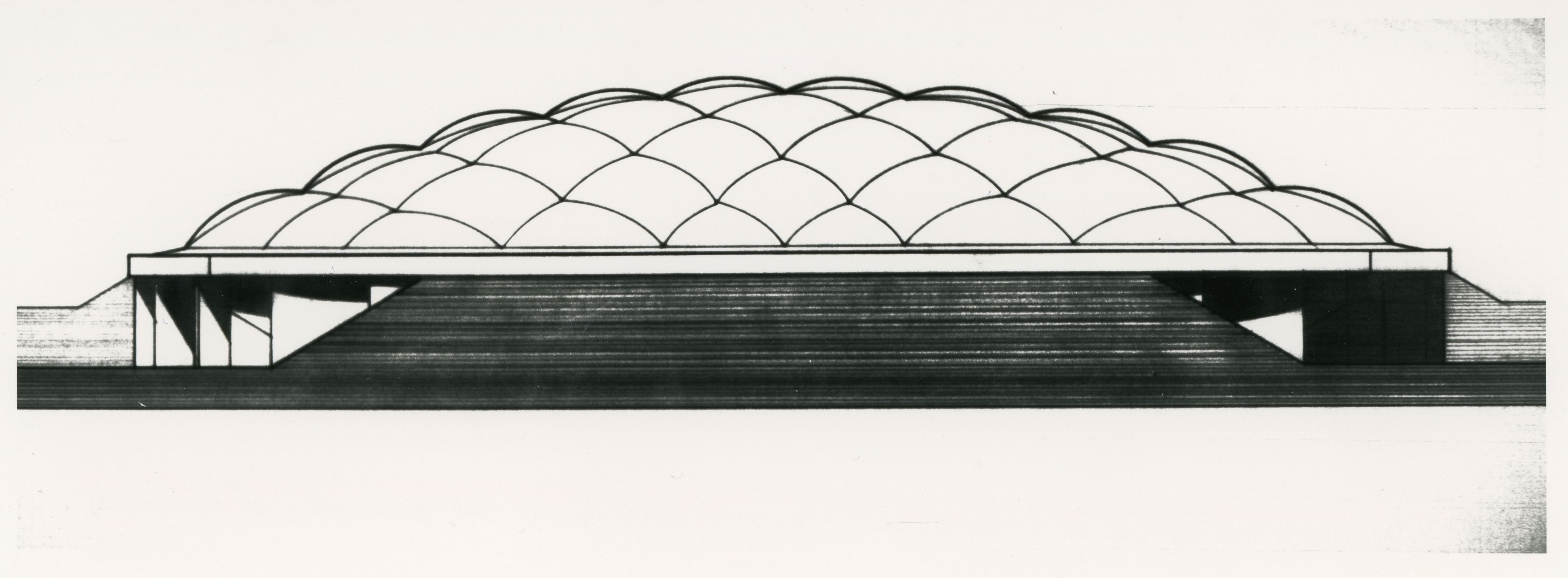
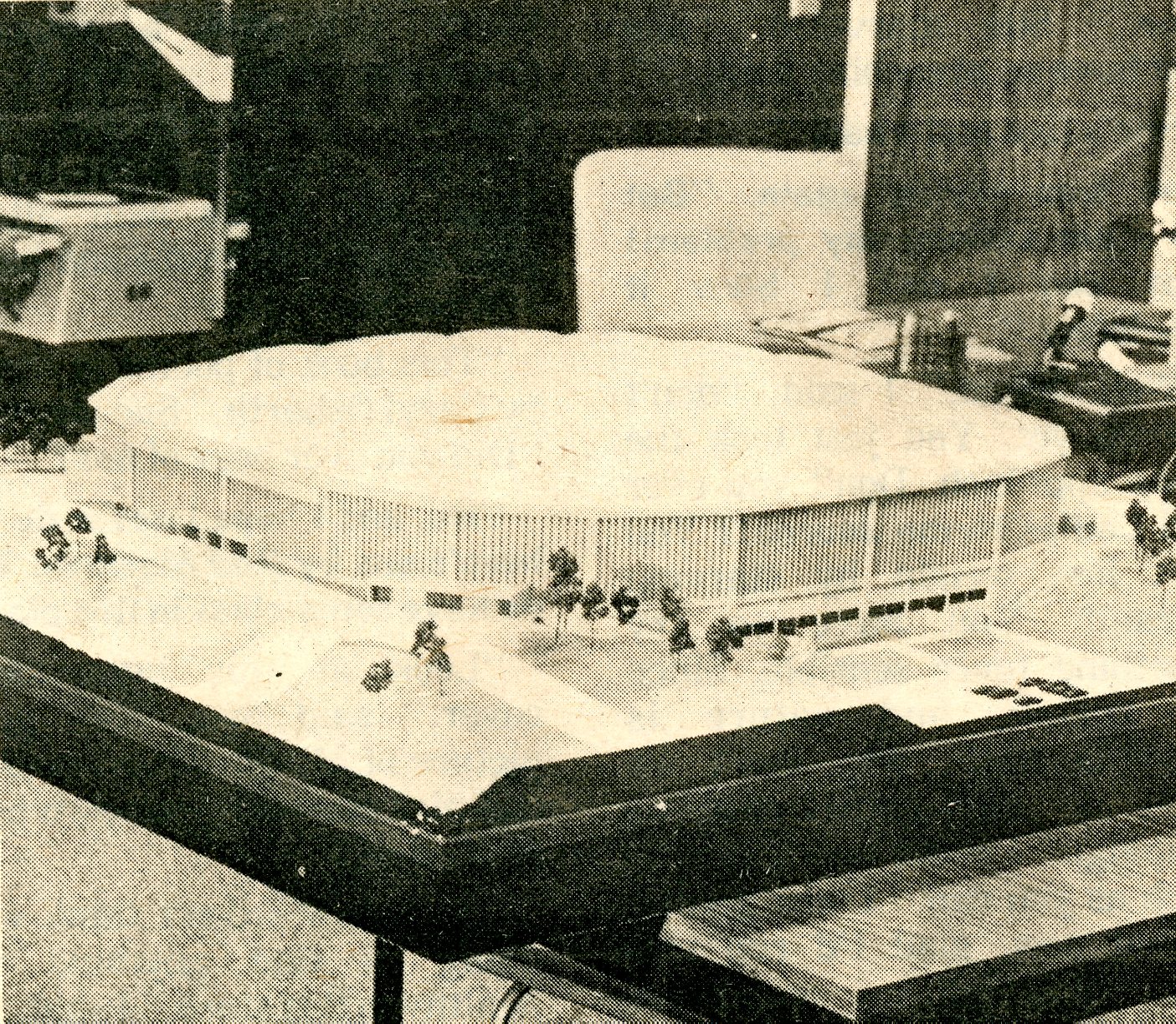
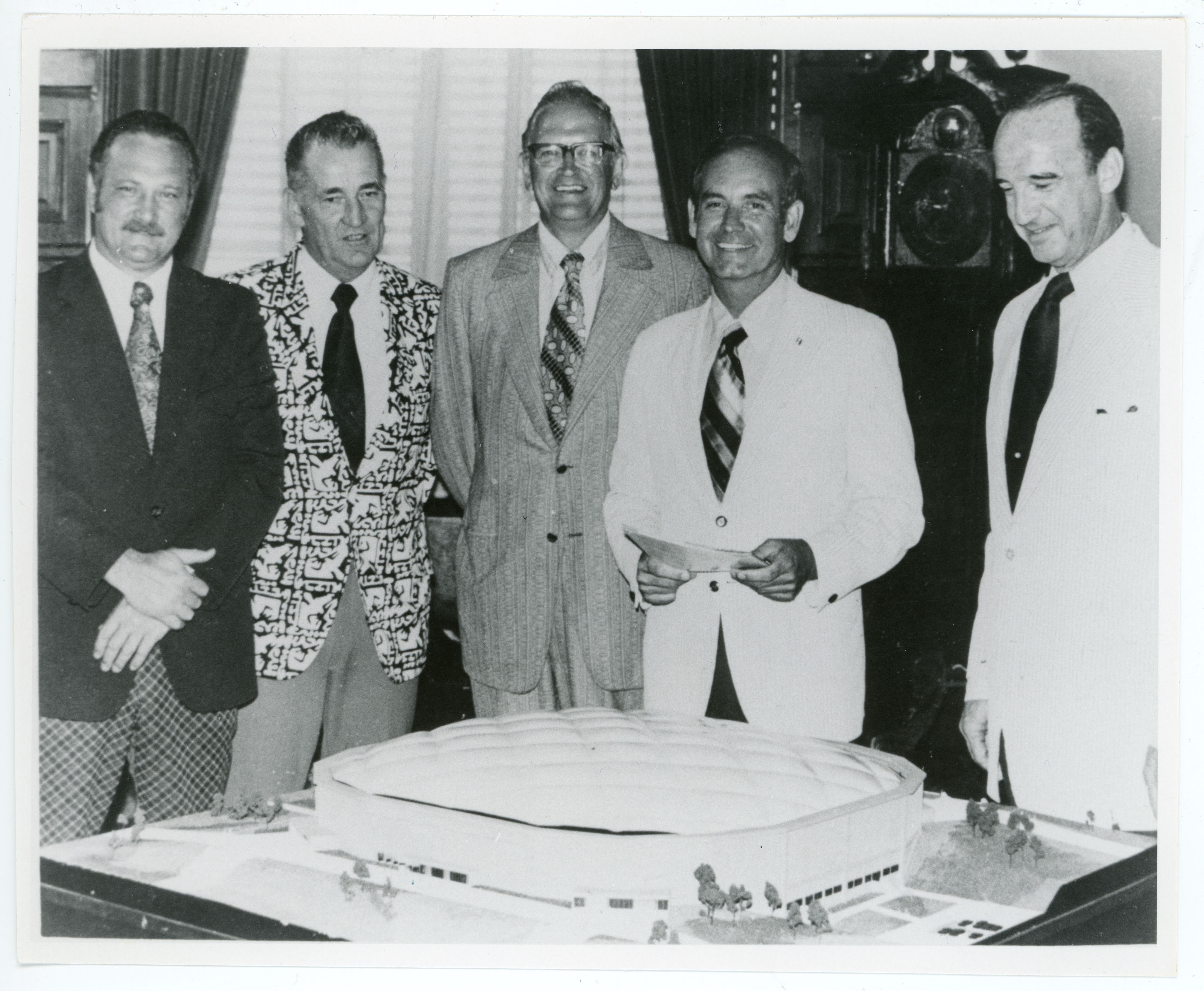
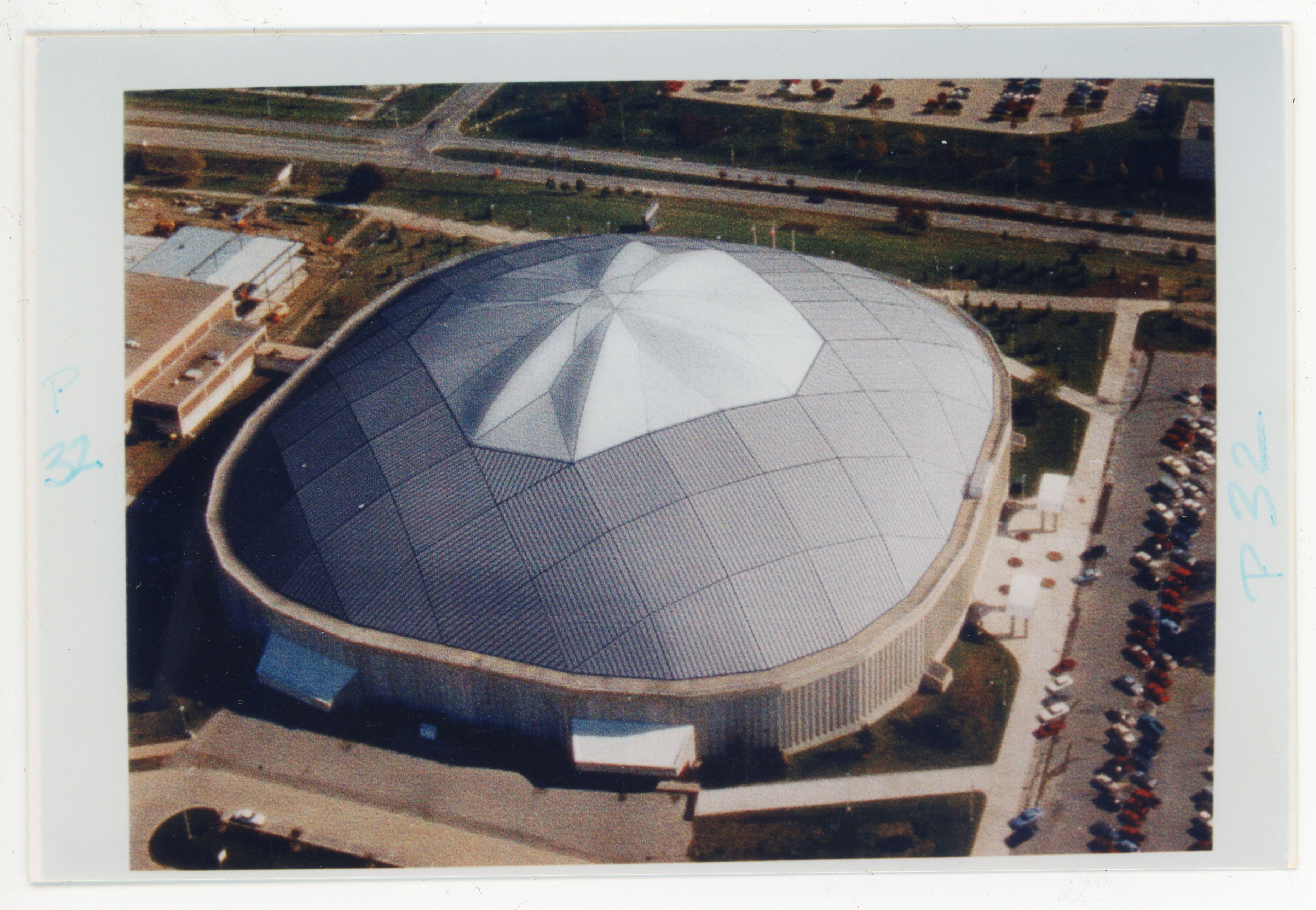
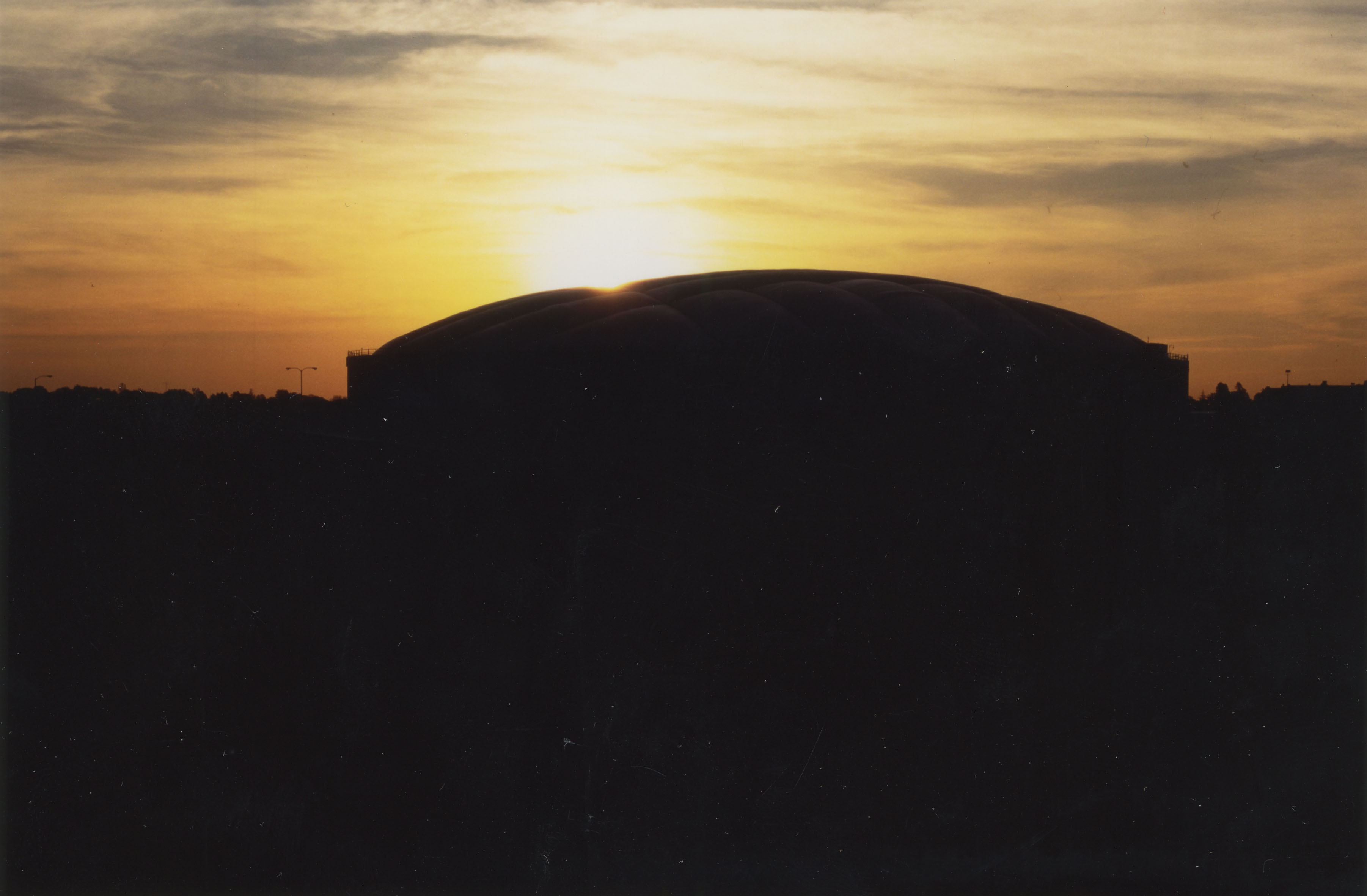
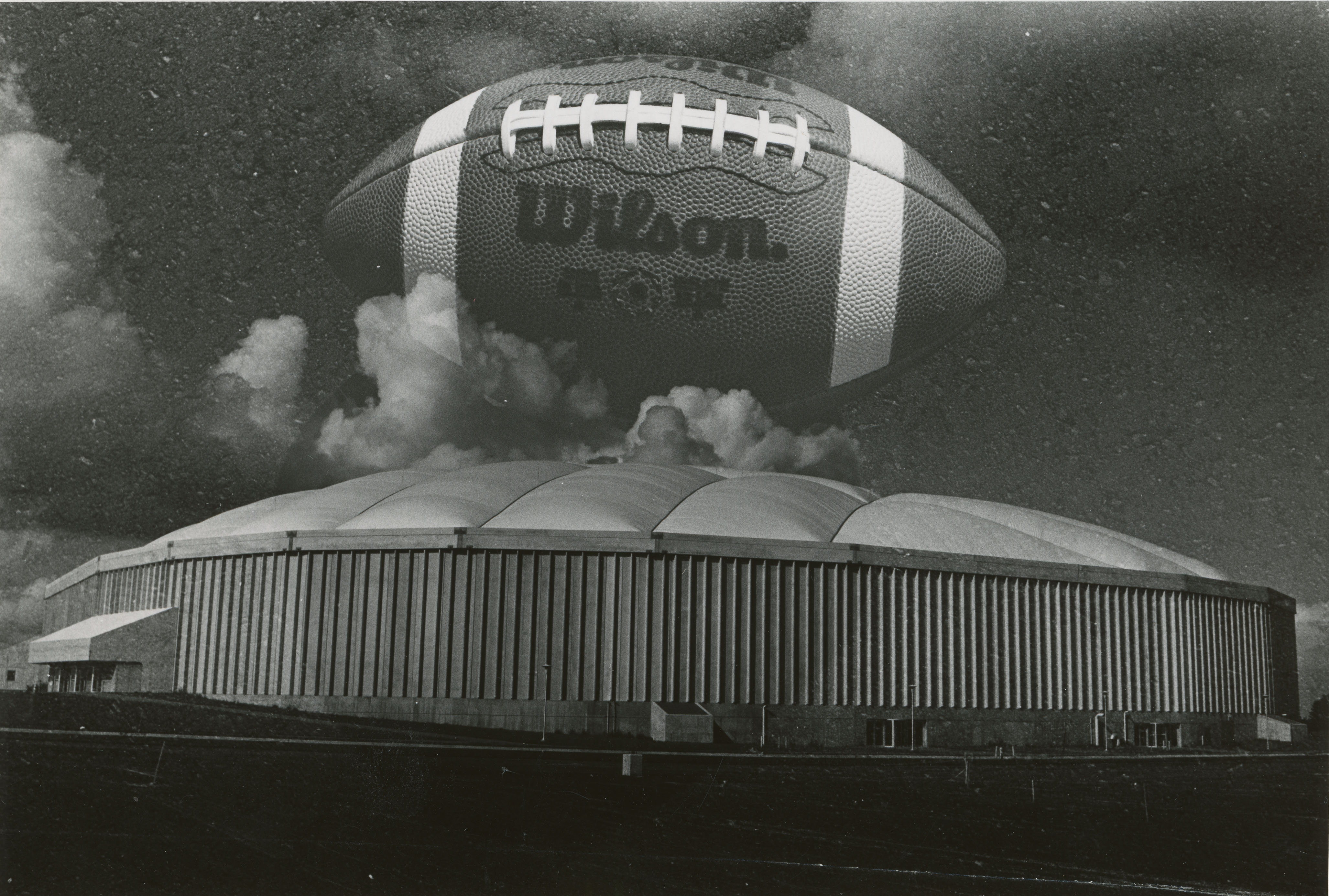
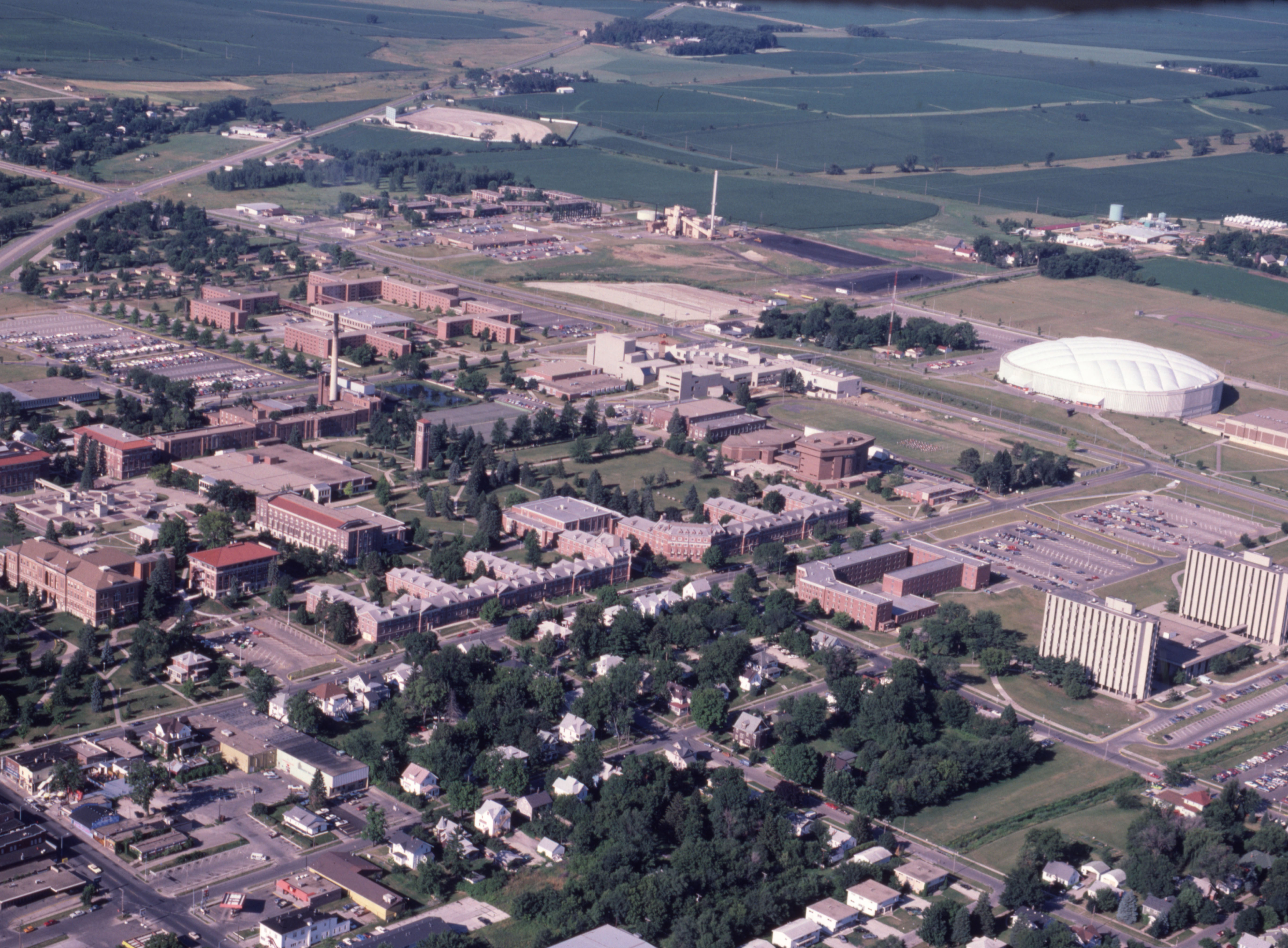
T. Wayne Davis (’43), president of Latta's Bookstore (later University Book and Supply) was named chairman of the capital campaign. In a news conference in April 1973, Davis, Miller, and President John Kamerick discussed the campaign and the Dome. At that point about $3 million had been pledged, 70% of the projected $4.5 million cost for the “UNI-Dome.” The site would likely be west of Hudson Road near the Physical Education Center. The building would have a plastic roof supported by cables, with eight large fans pumping air into it to inflate the roof to its domed shape. Since the roof would be lightweight, the foundation and support ring would not need to be as rigorously engineered as a conventional roof. This would reduce construction costs and speed up the building process. Additionally, the translucent roof would reduce the need for artificial lighting. The circular ring of the Dome would be 464 feet in diameter, and with the roof rising 115 feet above the floor. Officials hoped the facility would be open 16-18 hours per day. They hoped the UNI-Dome would be ready for the 1975 football season, but construction would not begin until all funding was in place.
Vice President for University Relations and Development Edward Voldseth led a series of informational meetings on campus in May 1973. Although student leaders such as Jim Maas, president of the UNI Student Association, supported the Dome, a number of students had misgivings about the project. Some concerns related to student fees, or prioritizing athletics over fine arts facilities. Sheriff continued to promote the idea of the Dome as an asset to the campus and community.
In fall 1973, controversy over the Dome project continued. In a letter to the Northern Iowan student newspaper, Professor Scott Cawelti questioned the need for such a facility, its untested engineering, environmental impact and the ability of the community to support it. Letters from students echoed these questions, with special emphasis on the use of student fees to help finance the project. Administrators continued to maintain the Dome would be a good solution to many problems facing campus. They also thought it would help UNI, which achieved university status in 1967, stand out from other institutions of higher education. Some maintained the UNI-Dome offered the university the opportunity to distinguish itself by constructing a unique facility. In November 1973, Professor Edward Thorne sponsored a resolution calling for the faculty to oppose the project, but the resolution was defeated, 202-43. The UNI Student Association (UNISA) held a similar meeting later that month, but did not vote. In December, a poll taken by one of Professor Dhirendra Vajpeyi's political science classes found 46% of UNI student respondents favored the Dome and 39% opposed it.
By February 1974, Centennial Campaign chair T. Wayne Davis reported fundraising had reached 82% of its $4.5 million goal, the projected cost of the Dome. In March 1974, Roy Carver, president of Bandag Corporation of Muscatine, extended a $750,000 line of credit toward Dome construction. With sufficient financial backing, university officials could take the project to the Board of Regents for approval to begin construction. Around the same time, the student government election ballot included a referendum on the Done. Students voted in favor of the project, 1009-595. Northern Iowan editorial writers noted the project was going forward, and "The UNI-Dome is the only way we're ever going to get money onto this campus to buy the things badly needed in the way of facilities, programs, and educational pursuits."
Building the Dome
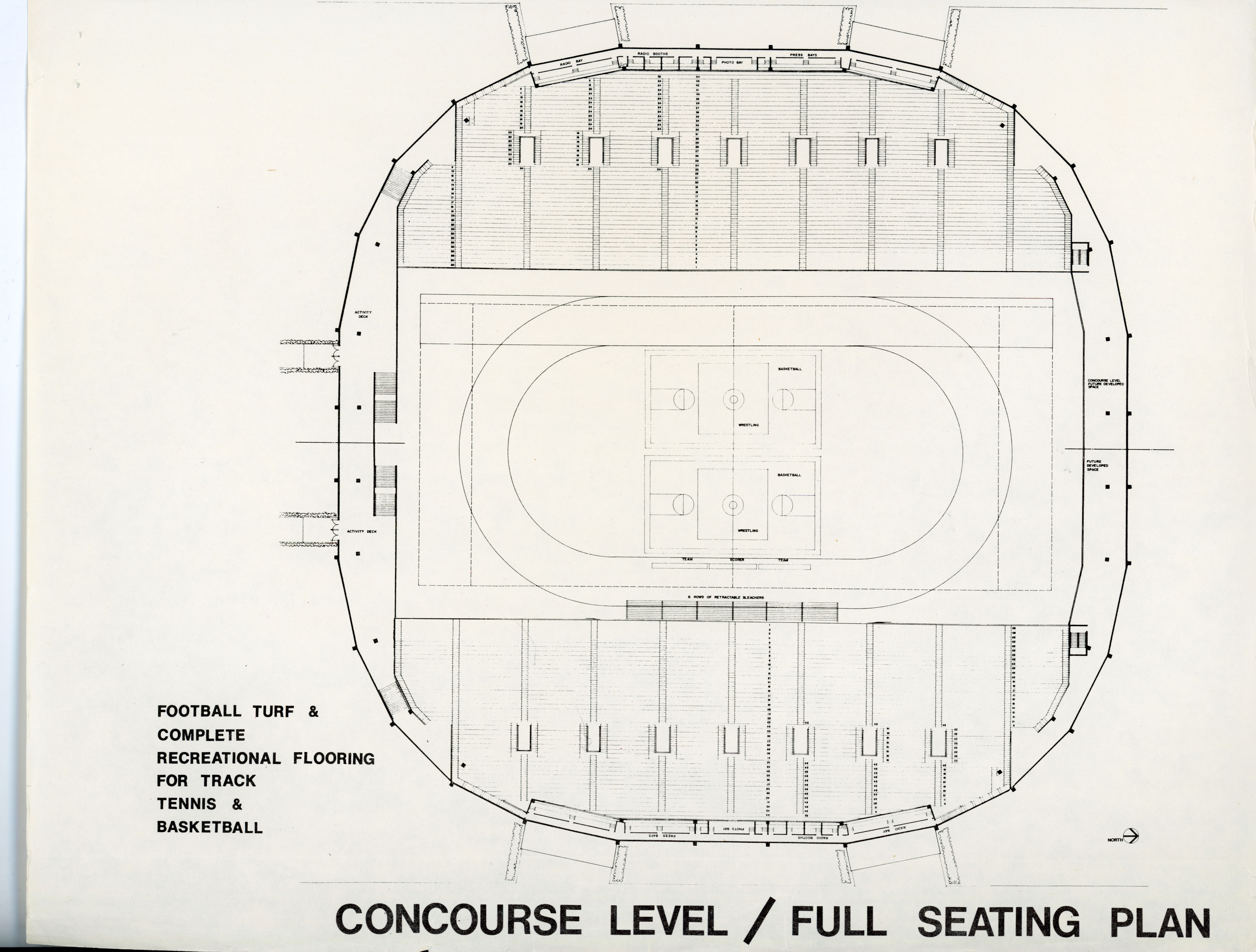
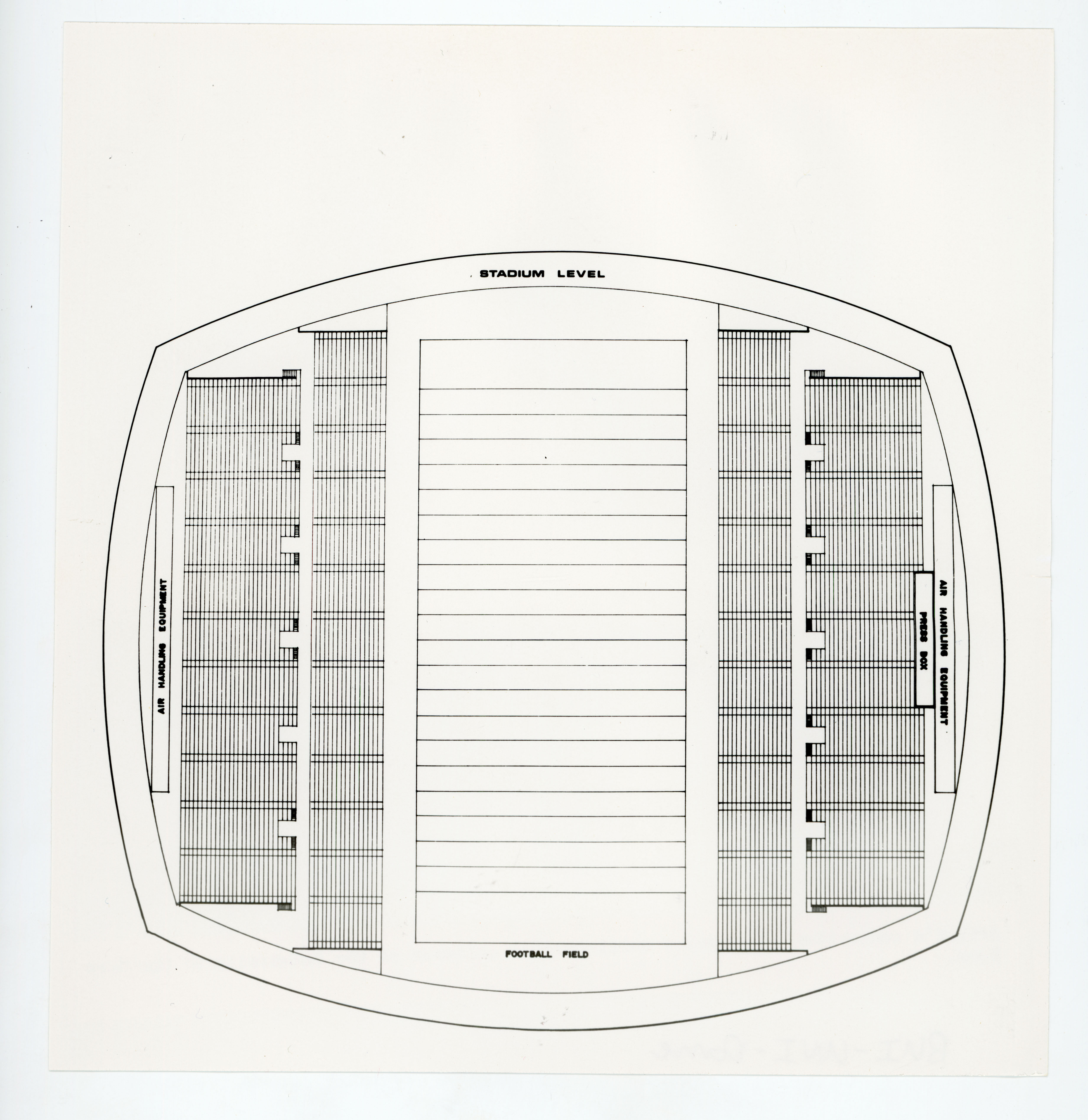
In April 1974, the Board of Regents approved $2.5 million in bonding against student fees. UNI officials hoped construction contracts could be approved by July with construction soon to follow. The Board approved preliminary plans and financing in May. The project, now estimated at $4.8 million plus $320,000 in architectural fees, would concentrate on full development of the west side of the interior, with partial development of other areas as funds permitted. Initial seating capacity would be 8,342. Architects estimated utilities would cost about $44,000 annually.
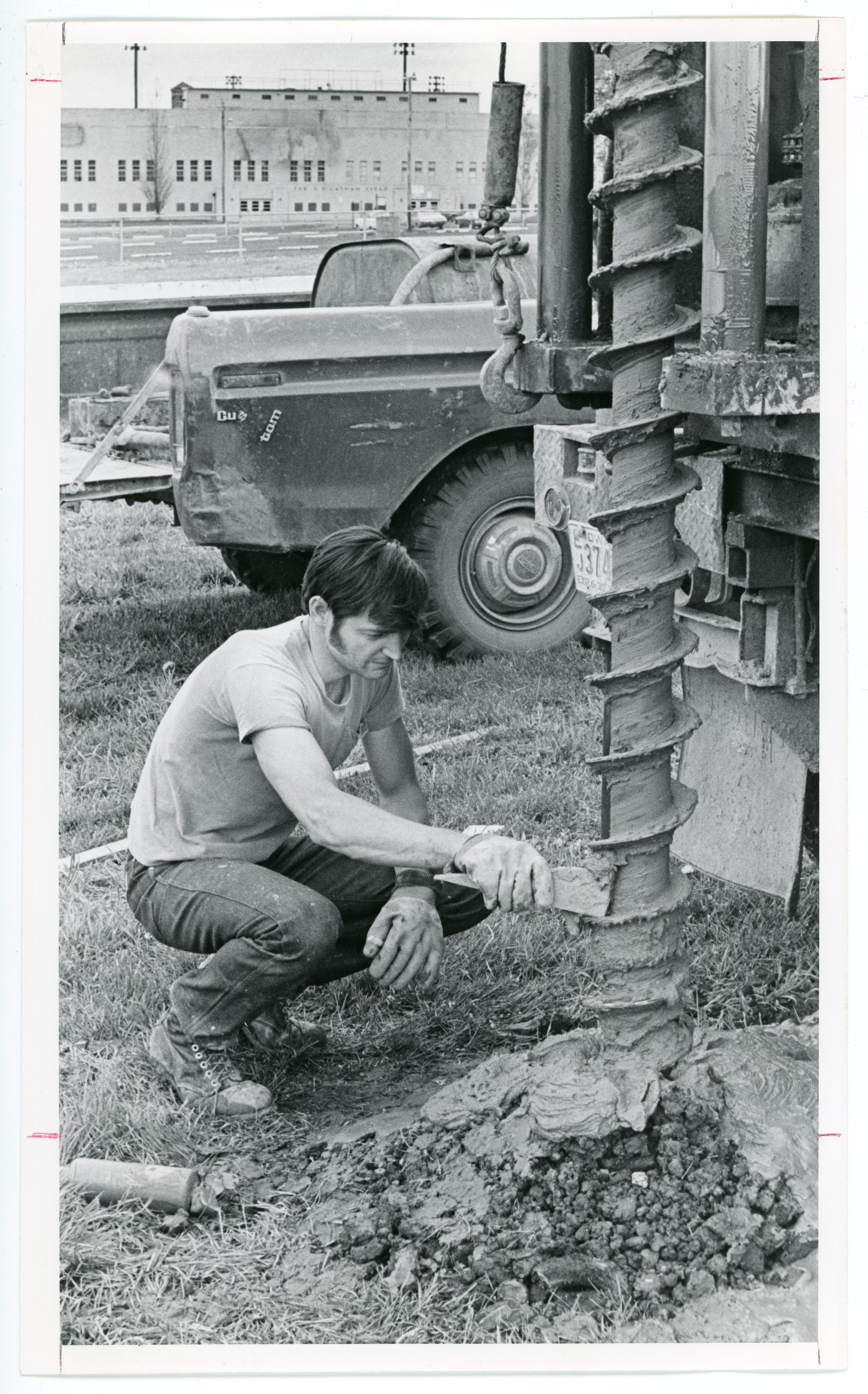
By June, the intercollegiate athletics staff was using a new logo with a "jaunty Panther" striding across the top of the Dome. Crews also began to conduct soil tests on the area west of Hudson Road. An editorial writer for the Northern Iowan speculated about the potential for increased flooding along Dry Run Creek once the Dome and parking areas were built. Other writers that summer complained about the administrative decision to begin charging students for admission to athletics contests in fall 1974, believing they had a commitment from the administration not to begin charging admission until after the Dome was completed.
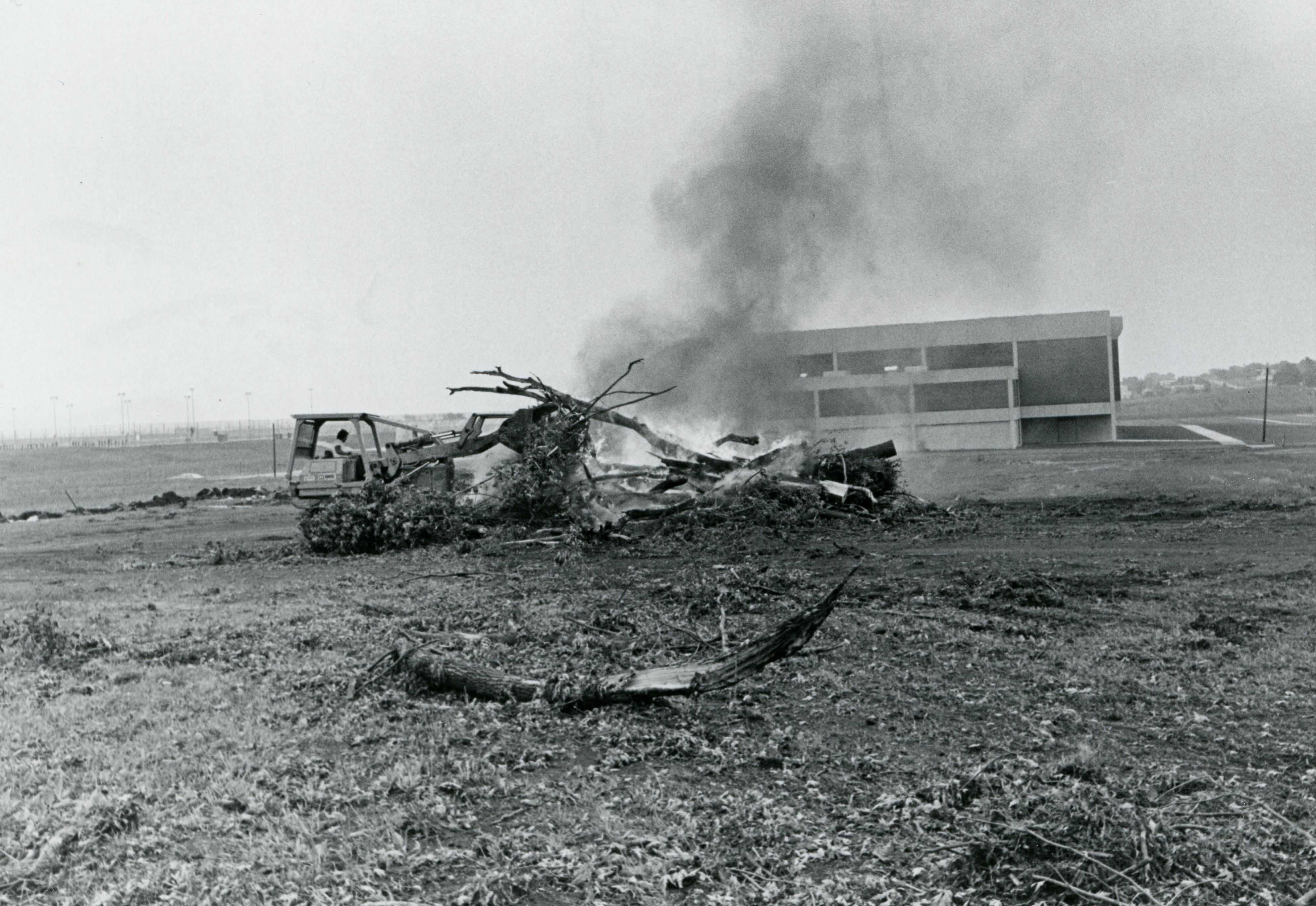
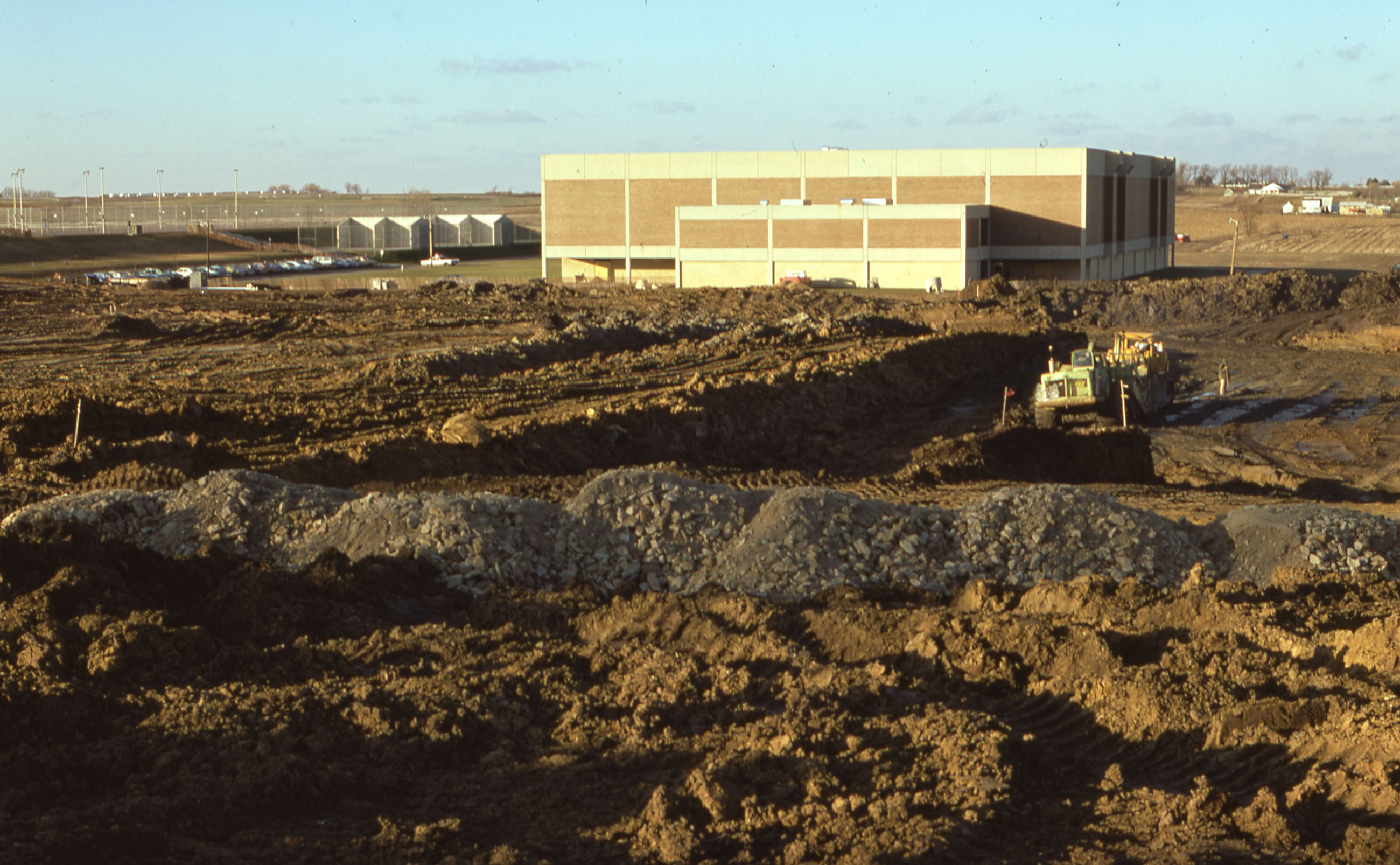
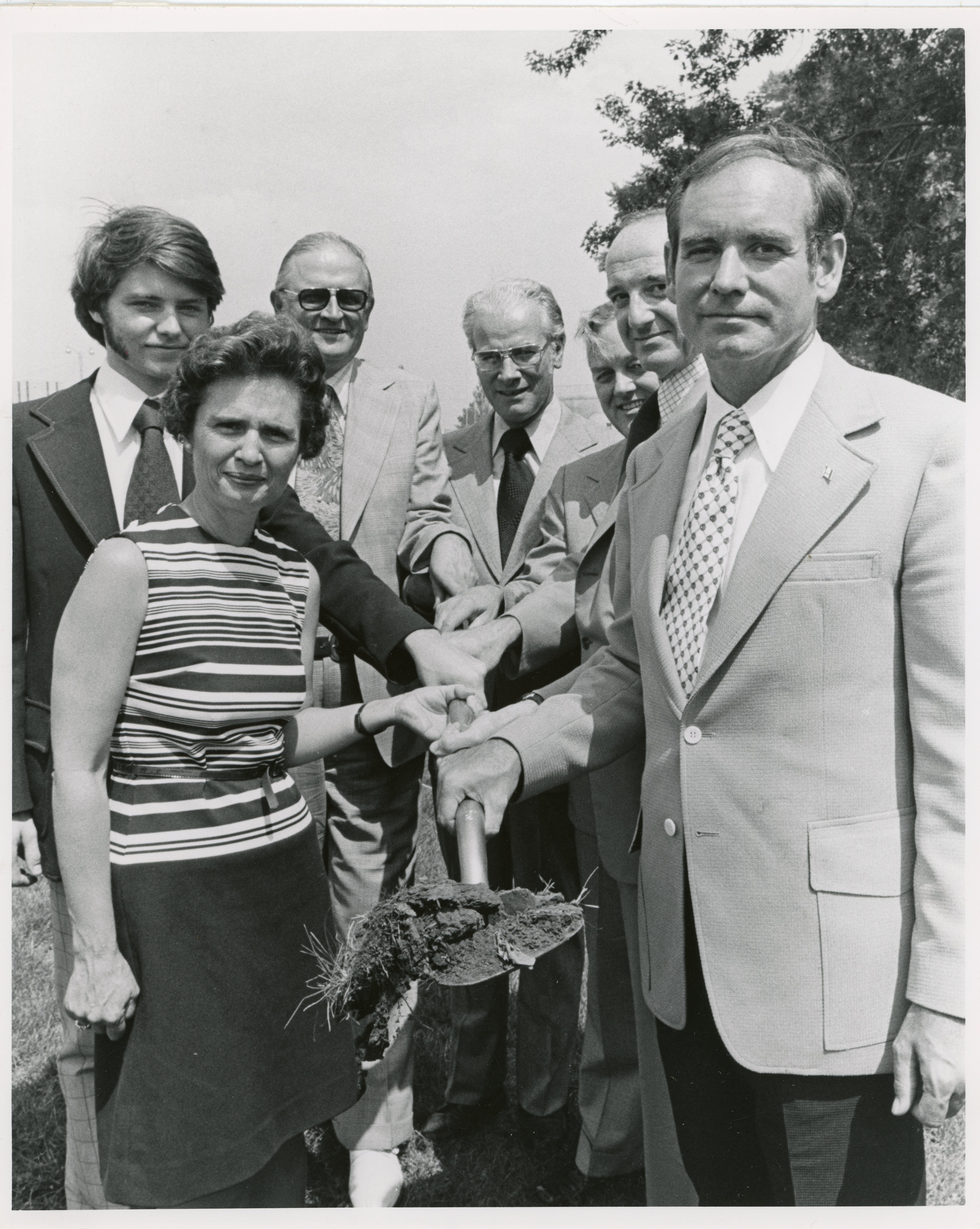
In July 1974, the Regents approved an increased budget of $5.55 million. They also awarded the general contract to John G. Miller Construction Company of Waterloo, the mechanical contract to Young Plumbing and Heating Company of Waterloo, the electrical contract to See Electric Inc. of Waterloo, and the sound system contract to Sioux Sound of Des Moines. The groundbreaking ceremony for the UNI-Dome took place on July 26, 1974.
Construction began, but rapidly rising inflation made the building of the Dome a rush for money. By September 1974, the cost of the project had risen to $7.024 million. Vice President for Administrative Services Robert Stansbury said "the bond market got very tough in May and June of 1974 and we had some tough thinking to do in order to save the project." Because state law at the time prohibited paying more than 7% on bonds, there was only one bidder: John Nuveen and Company of Chicago bid 6.999713% for a 31-year issue.
Because of inflation and consequent increase in construction costs, UNI put portions of the project on alternate status. Certain items such as additional seating, landscaping, a finished playing field, and locker room facilities would be added to the construction budget only when additional money became available. Heating costs alone were now estimated at $72,000 annually. Approximately $975,000 was taken from the student activities building fund instead of the proposed $300,000, leaving little for a fine arts auditorium.
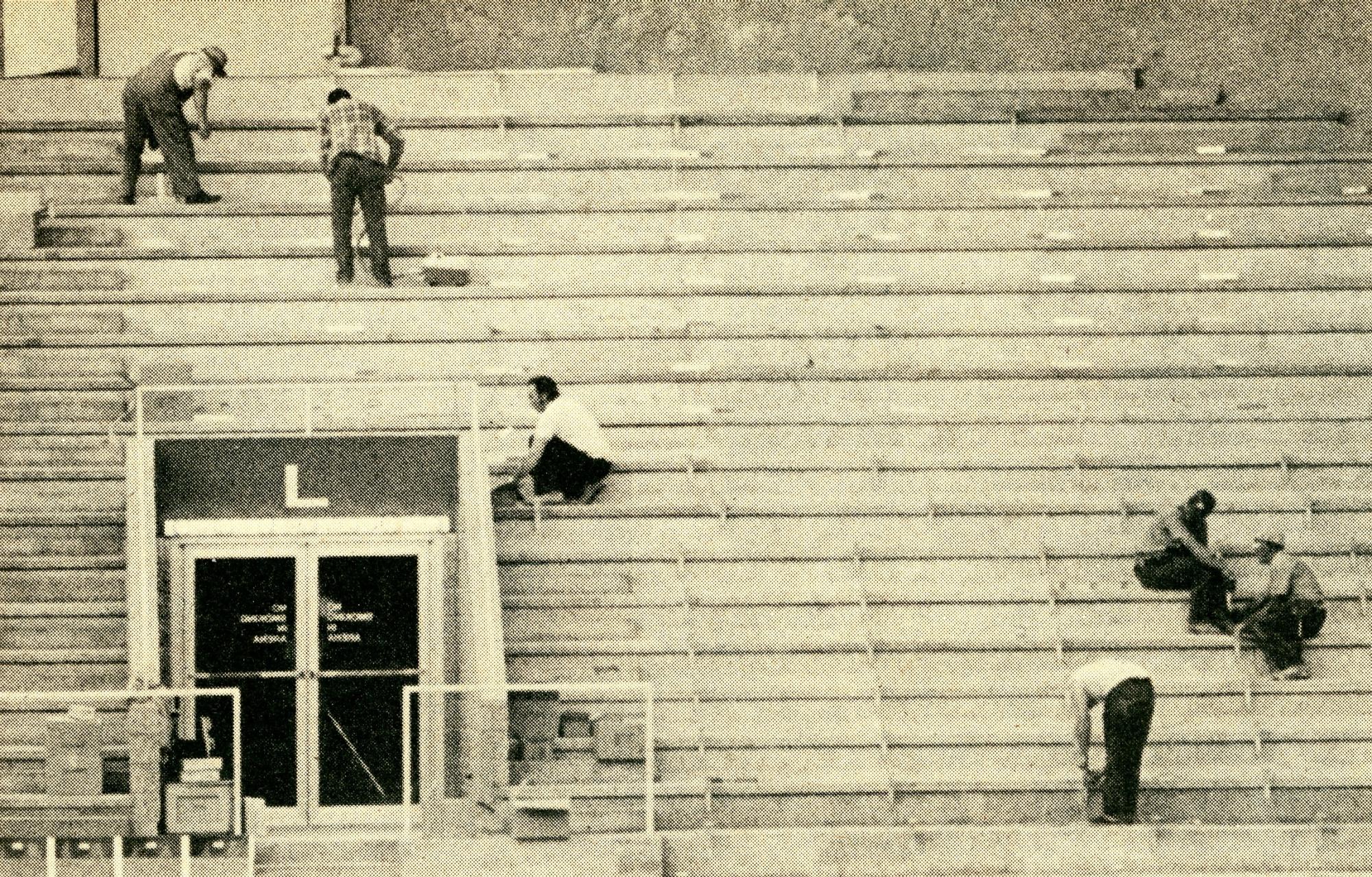
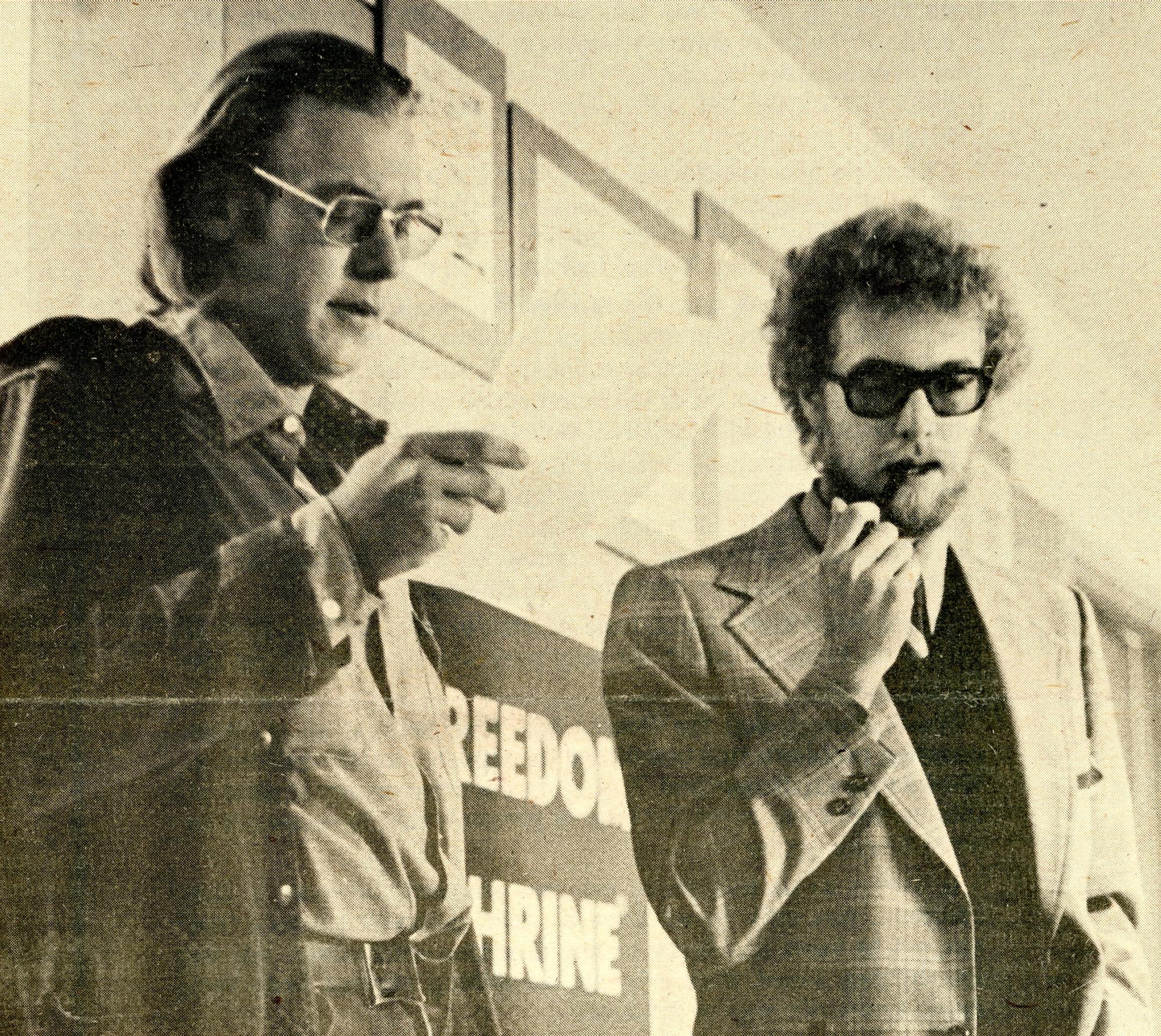
Rising costs increased controversy over the project. The Northern Iowan supported student Paul Kilmer’s decision to file suit in Black Hawk County Small Claims Court over charging admission to athletics events. The newspaper encouraged students to appear at the athletics ticket office to get tickets for the upcoming football game, noting "the Administration will have a hard time to justify not giving you a ticket. If you have any trouble, we suggest you ask whomever is selling the tickets if the athletic department or administration has ever gotten any formal approval from the Board of Regents to initiate this action." About 200 students filled the lobby of the Men's Gymnasium (later West Gymnasium) to demand tickets. This resulted in an exchange between the students and Stan Sheriff, with little settled and students leaving without tickets. Editorial writers in the Northern Iowan were upset and believed the student body would pay more and get less than what was promised less than a year earlier: "We think a line should be drawn, that students should decide how far they are willing to be pushed, and not allow any further indecencies beyond that point."
The UNI Foundation responded to the financial difficulties by increasing its fundraising goal by $1.1 million to meet the new $7 million budget. This increase from the approved $5.9 million budget would allow more seating and double-layered roof fabric. Lee Miller said a large portion of the additional money needed to be raised quickly to forestall even greater inflationary increases in construction costs. He noted inflation caused costs to rise $70,000 for each month construction was delayed, although completion was still scheduled for September 1975.
Miller outlined special efforts to attract large donations. One included Dome entrance naming opportunities for donors who pledged $100,000. The four entrances were eventually named for C.B. McDonald; John S. Latta, Sr. (1903); T. Wayne Davis (’43); and sisters Inez Radell (1916) and Neva Radell (1917).
In October 1974, a group called the Student Coalition organized to support Kilmer's lawsuit and try to become involved in decisions made on the use of student fees. The group stated they were "against the policies that allow student activity money to be used at the whim of Central Administration." The Northern Iowan urged students to attend the hearing of Kilmer's suit. Judge Everett Scott eventually ruled against Kilmer. Some students also wanted the administration to organize two boards for Dome governance: a policy board and a programming board. When President Kamerick set up the boards, students complained about being underrepresented.
In February 1975, a group of students called the Coalition of People Involved gathered petition signatures to name the new building the Richard M. Nixon Memorial Coliseum. Unexpectedly, the petitions were stolen. A spokesman for the group stated he wanted "to stop construction of the Dome, and take the remainder of the money for a performing arts center. Education seems to be taking a second place at UNI." President Kamerick responded to the petition and other questions in a statement which was covered in the Northern Iowan on February 25.
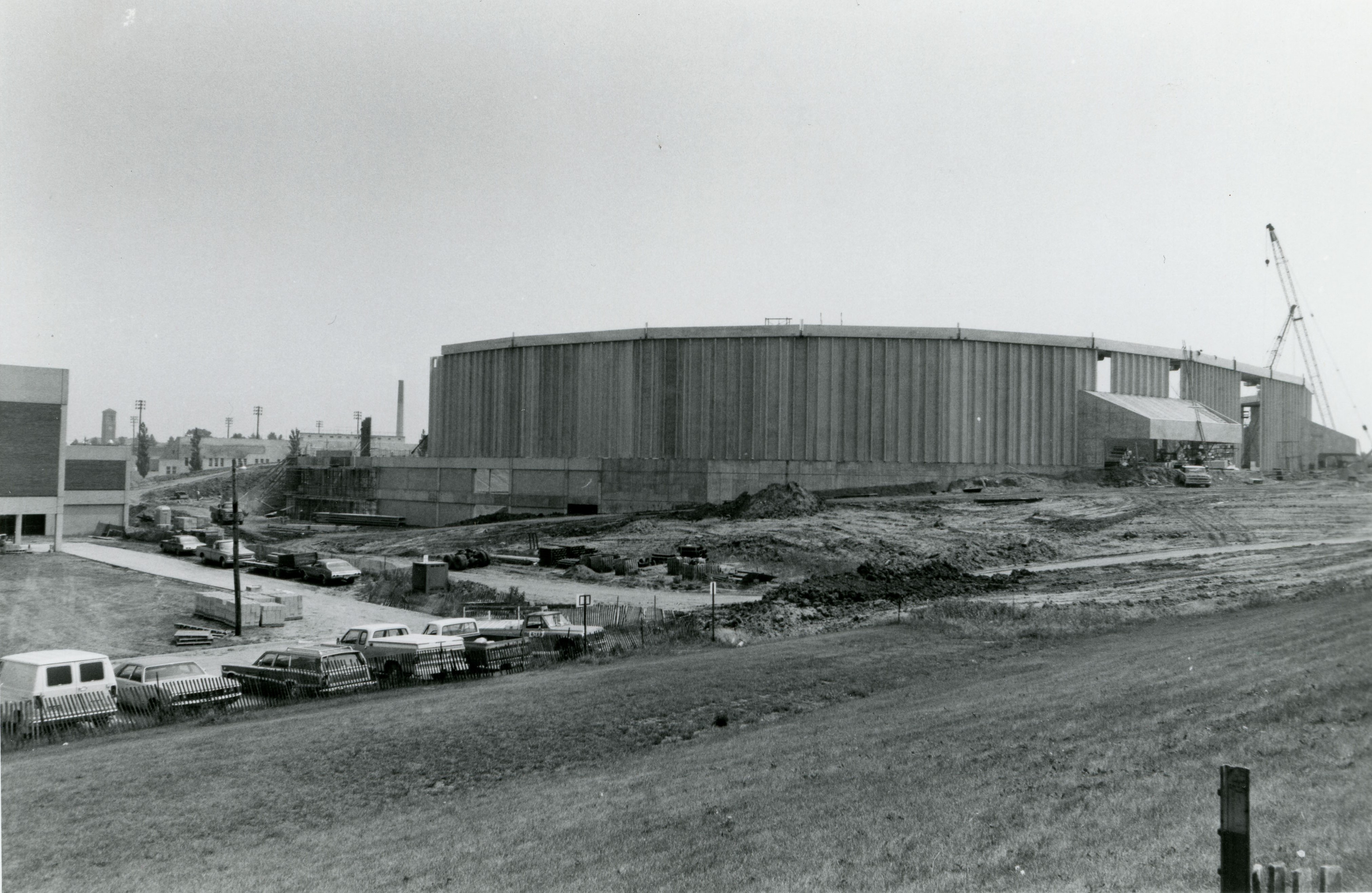
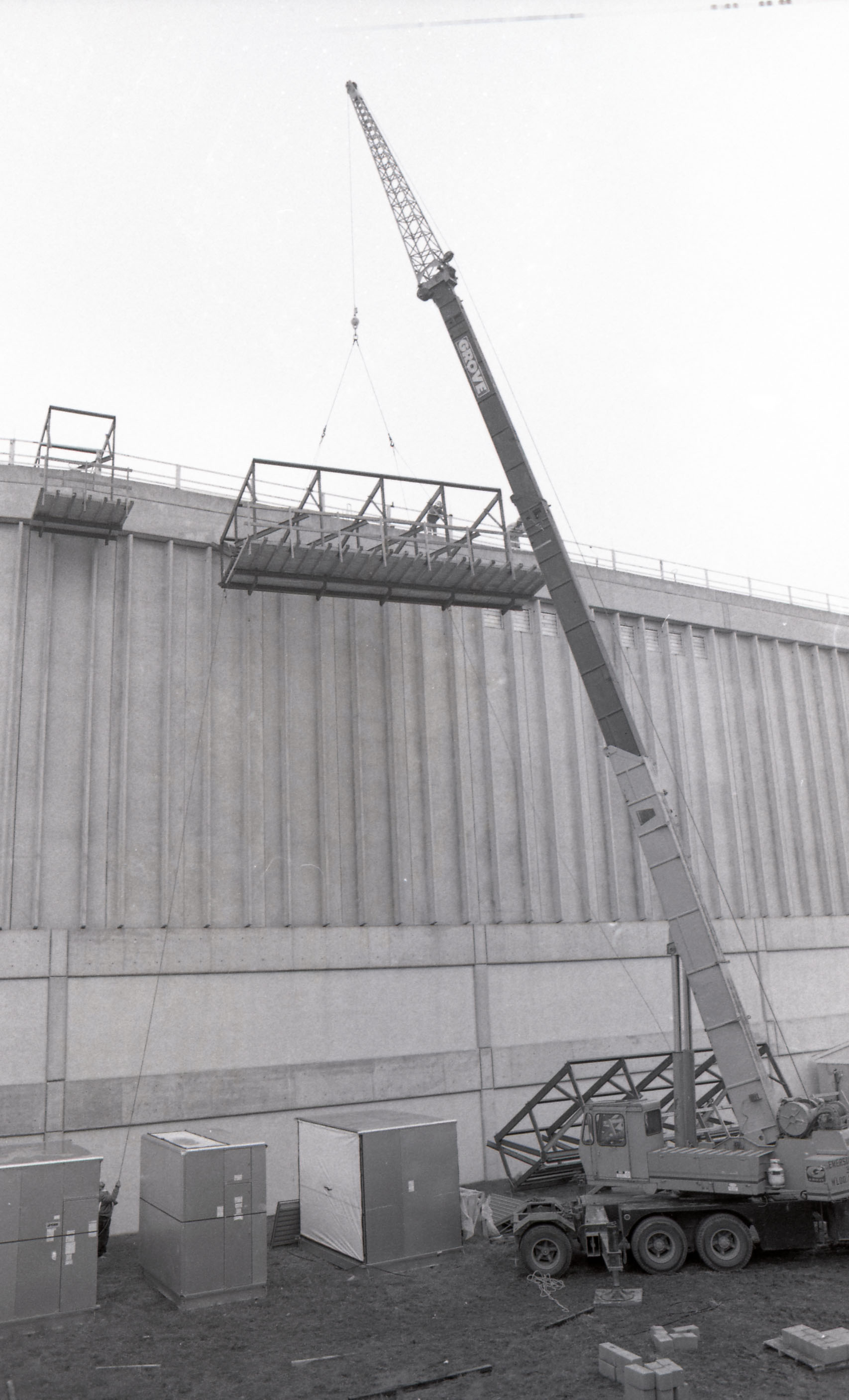
By Spring 1975, the Dome was taking shape. Director of Engineering Services Thomas Paulson said construction was only slightly behind schedule and dry weather would help meet a November 1, 1975 completion date. By September, construction cranes were putting some of the side panels into place. On October 31, 1975, the roof was inflated for testing. Miller said if everything went well, the roof would stay inflated, with an "Inflation Party" to be held on November 8. Everyone was invited to inspect the new facility. At the event, Panther kicker Jim Fransen tried but could not hit the 115 foot high roof with a football.
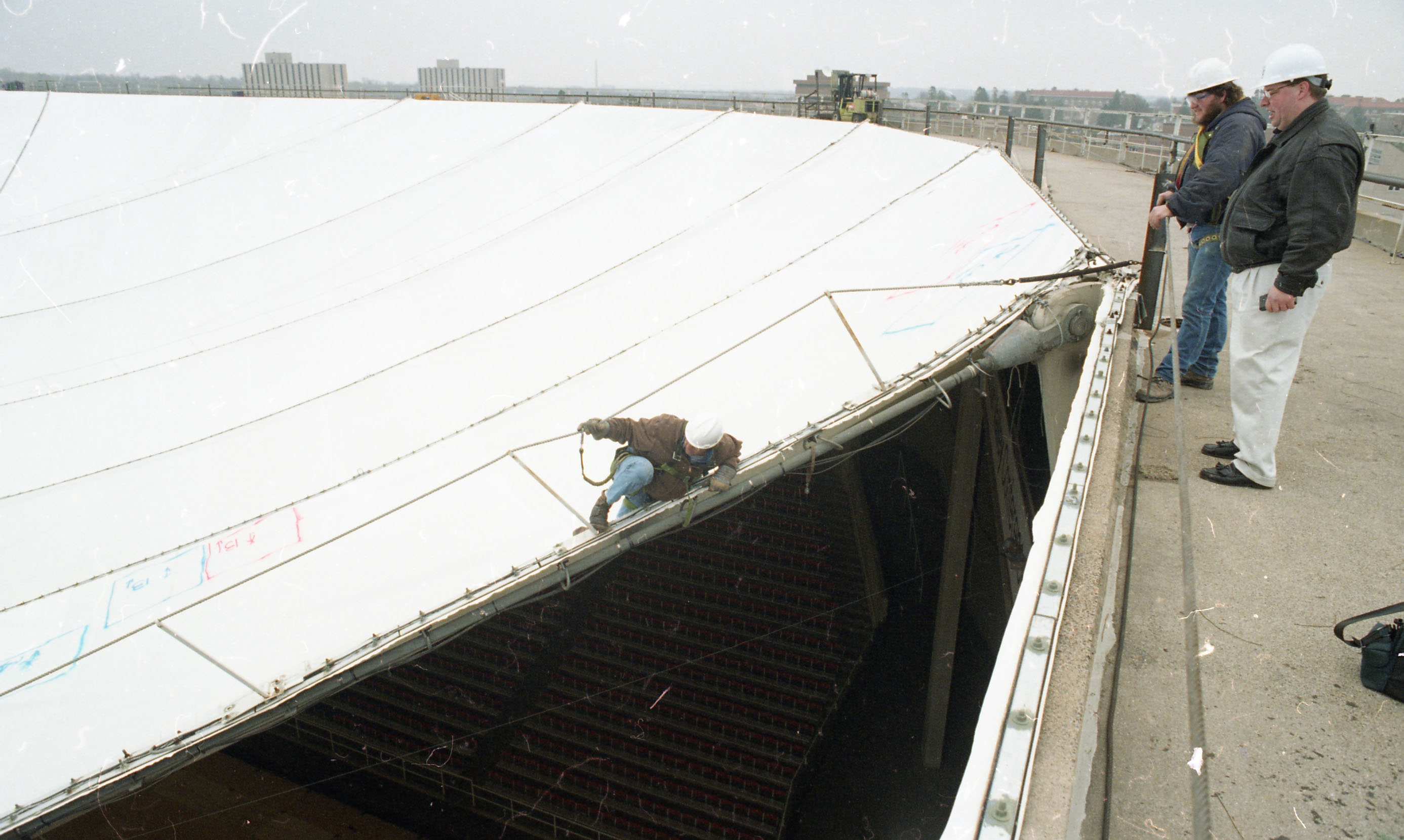
However, during a storm the next day, high winds tore out a panel of the fabric roof and the Dome deflated. Heavy rains fell onto the now concave roof and threatened to tear more of the fabric. An official from Dow Corning, makers of the roof fabric, shot holes into the sagging membrane to allow rainwater to drain and take the strain off the cables supporting the roof. The problem likely began with an interruption of electrical power, leading to partial deflation of the roof. More strong winds a week later tore off an additional seven panels. Another panel was lost before emergency repairs could be made.
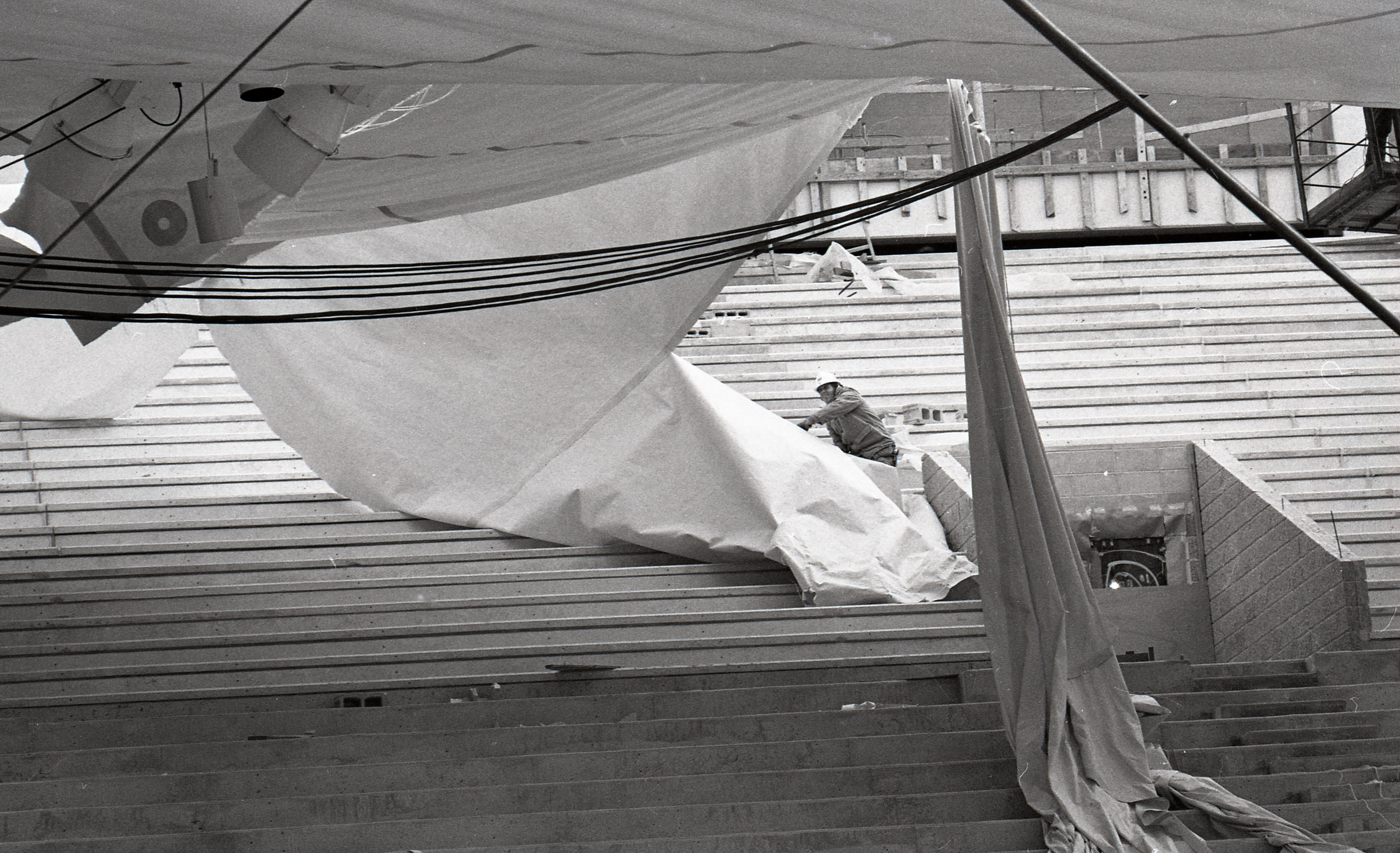
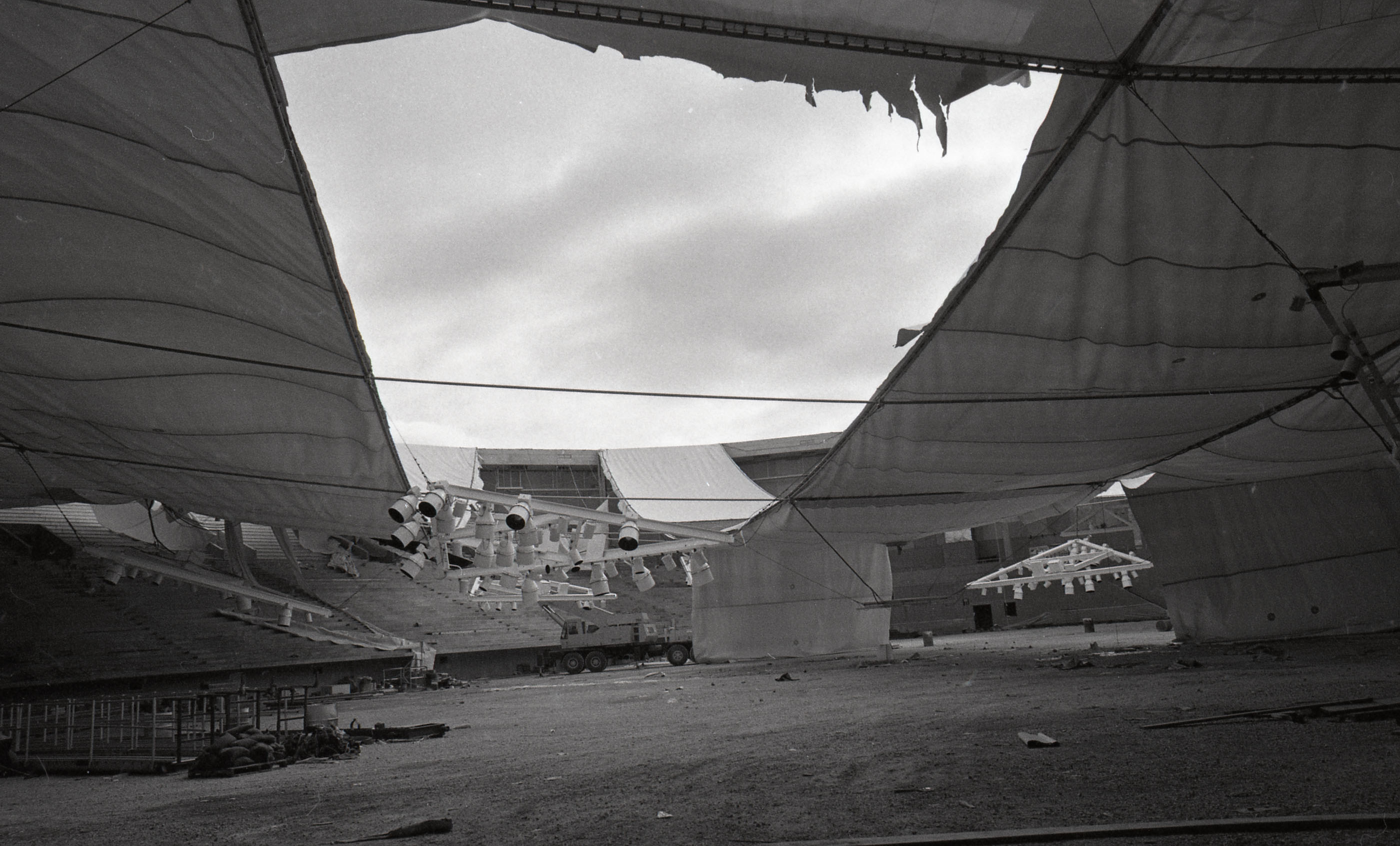
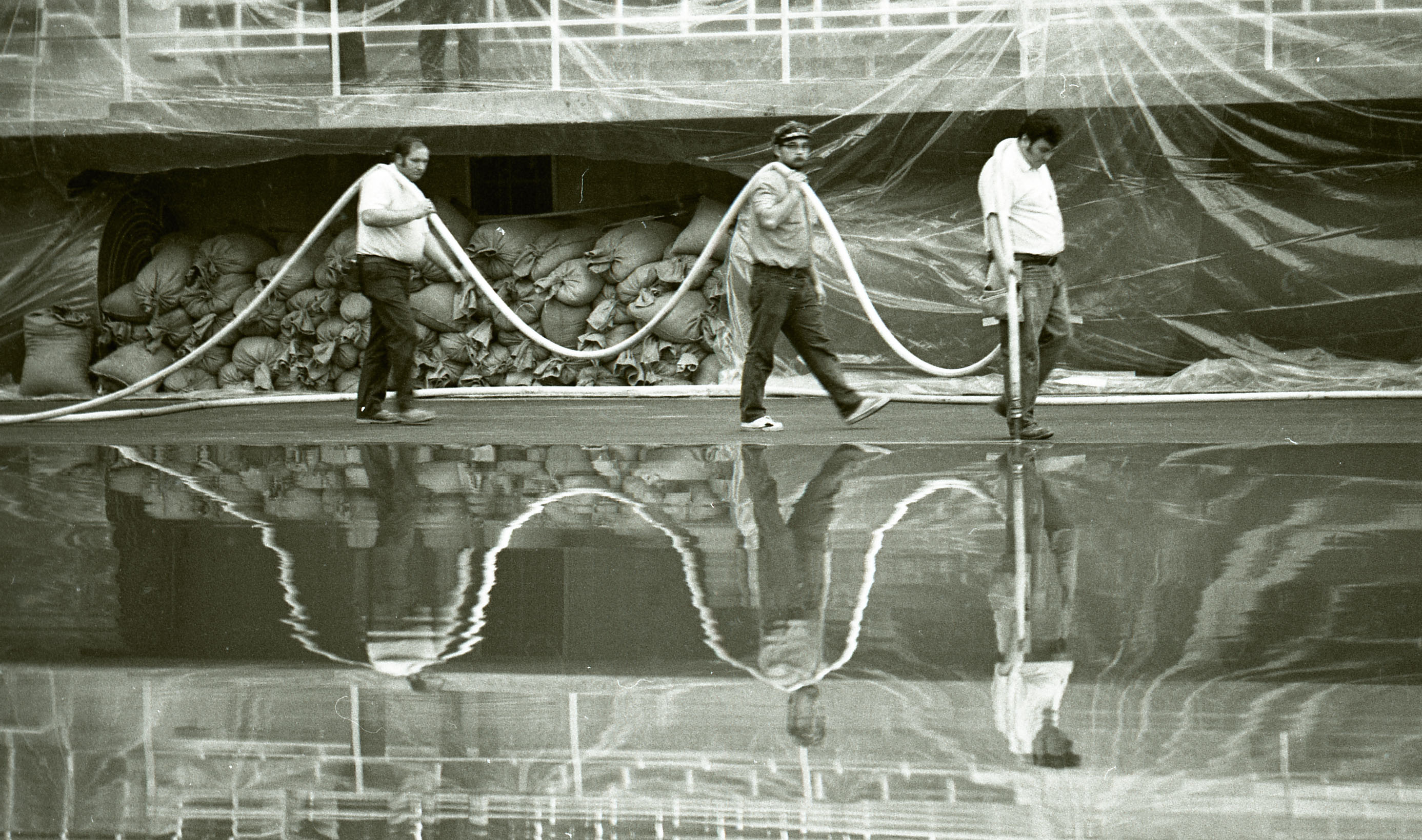
Damaged to the facility totaled over $100,000. Northern Iowan editorial writers asked why the Dome was inflated without an emergency power generator. If lightning was the source of the problem, they asked why lightning arrestors were not in place. An official report confirmed the sequence of events that caused the damage, and later, in March 1976, the Regents approved construction change orders to include six foot lightning rods and an additional emergency generator.
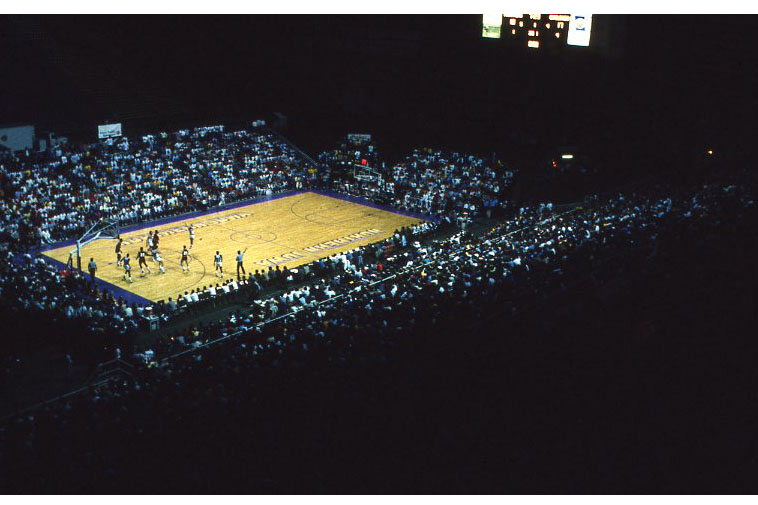
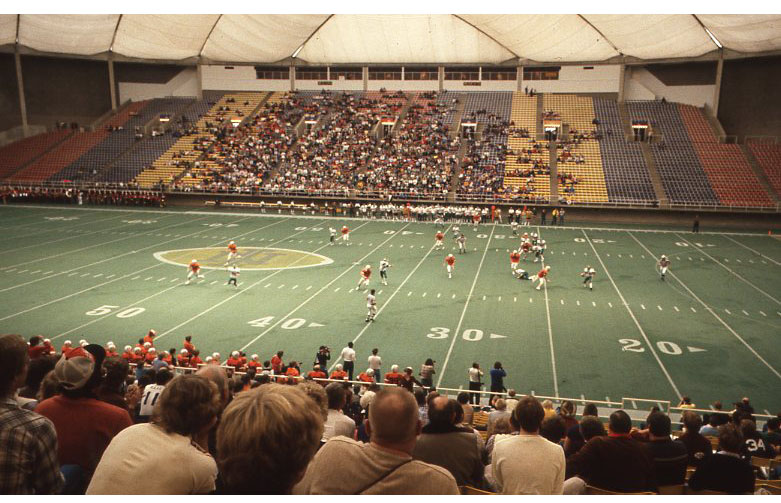
Crews repaired the damage and the roof was re-inflated on November 29, 1975. By late January 1976, crews installed the synthetic surface on the floor of the Dome. By February 7, the Dome was ready to be the site of the first official event: a wrestling contest against the University of Iowa. The Northern Iowan wrote: "Let's take advantage of this unique facility and enjoy the opportunities it has to offer. The appeal is there." Iowa defeated UNI, 31-8, but the crowd was impressed by the new facility. The first football game, the alumni-varsity contest, as well as the first Commencement occurred in May 1976.
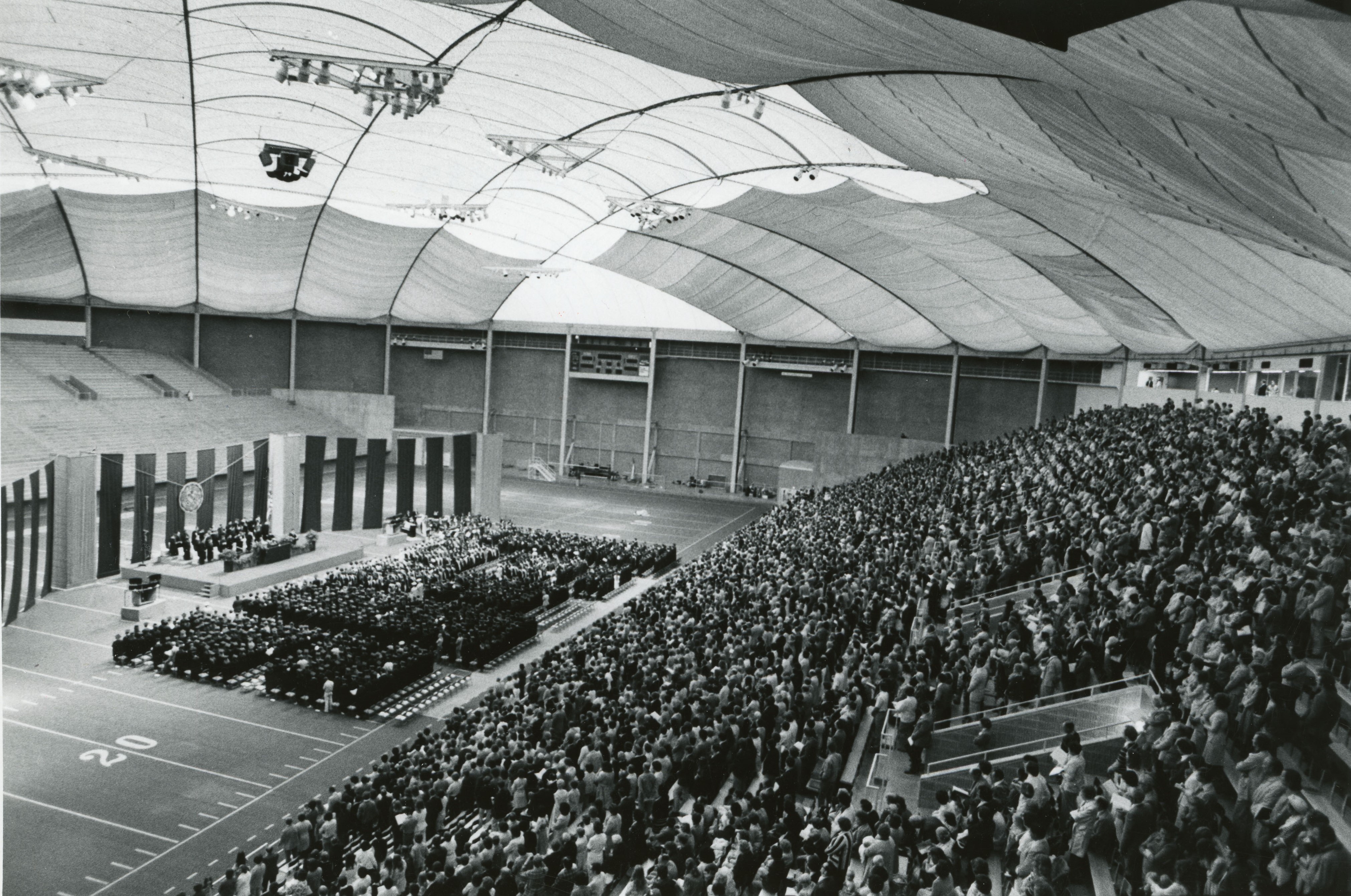
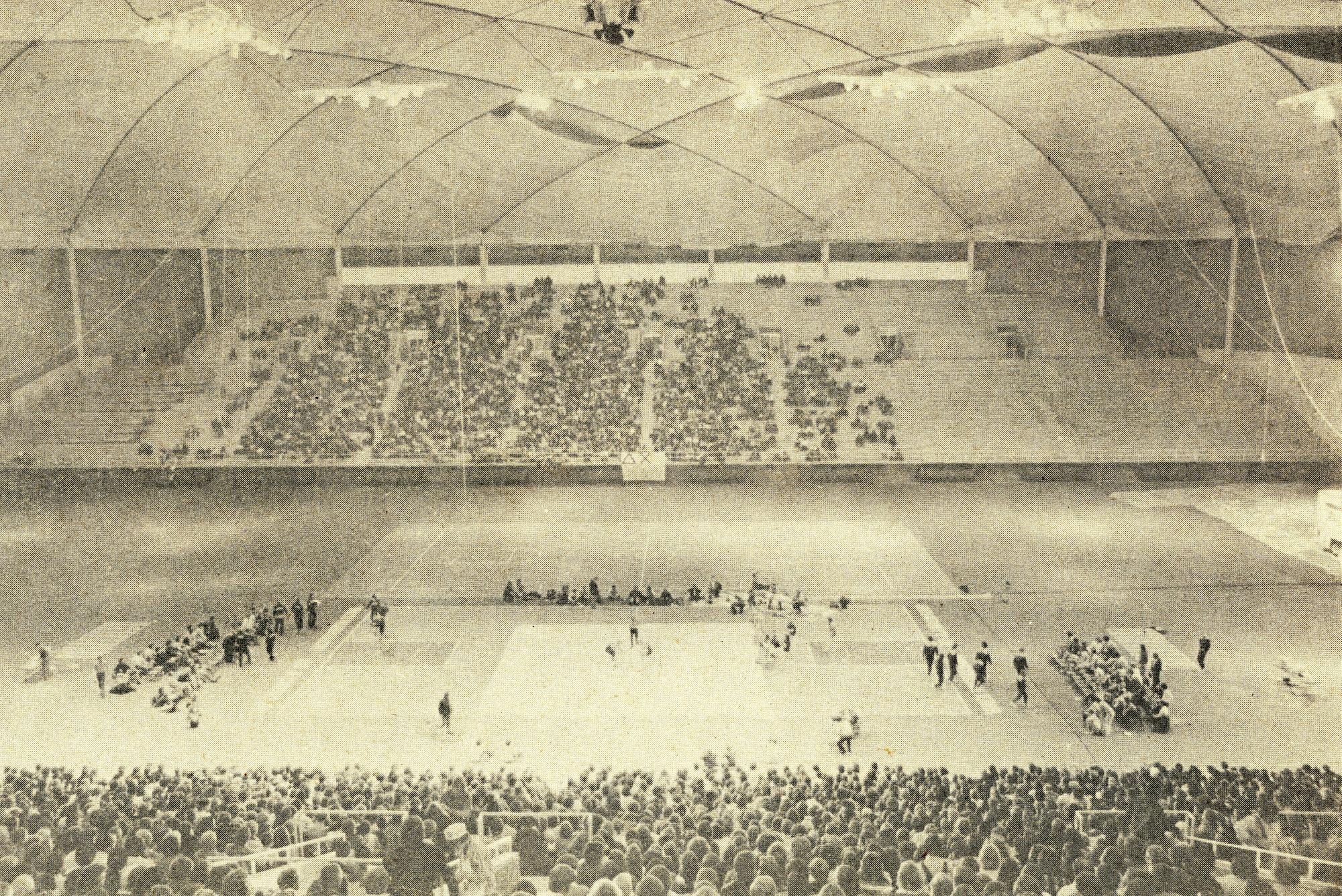
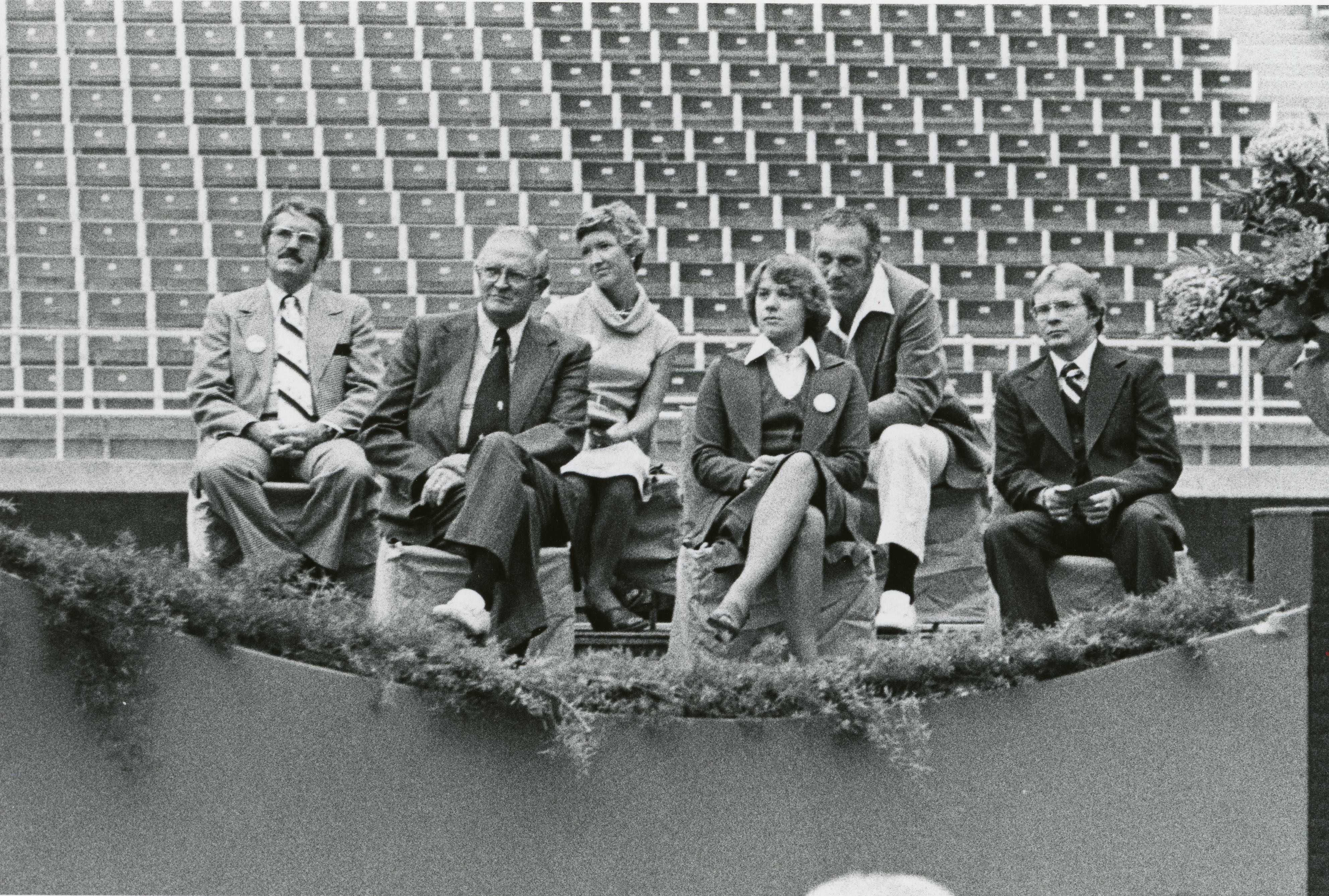
The weekend of September 3-5, 1976, was set as the grand opening of the Dome. Harry Chapin performed Friday night. A dedication ceremony was held Saturday afternoon, and UNI played Northern Michigan Saturday night. Interdenominational religious services were held on Sunday.
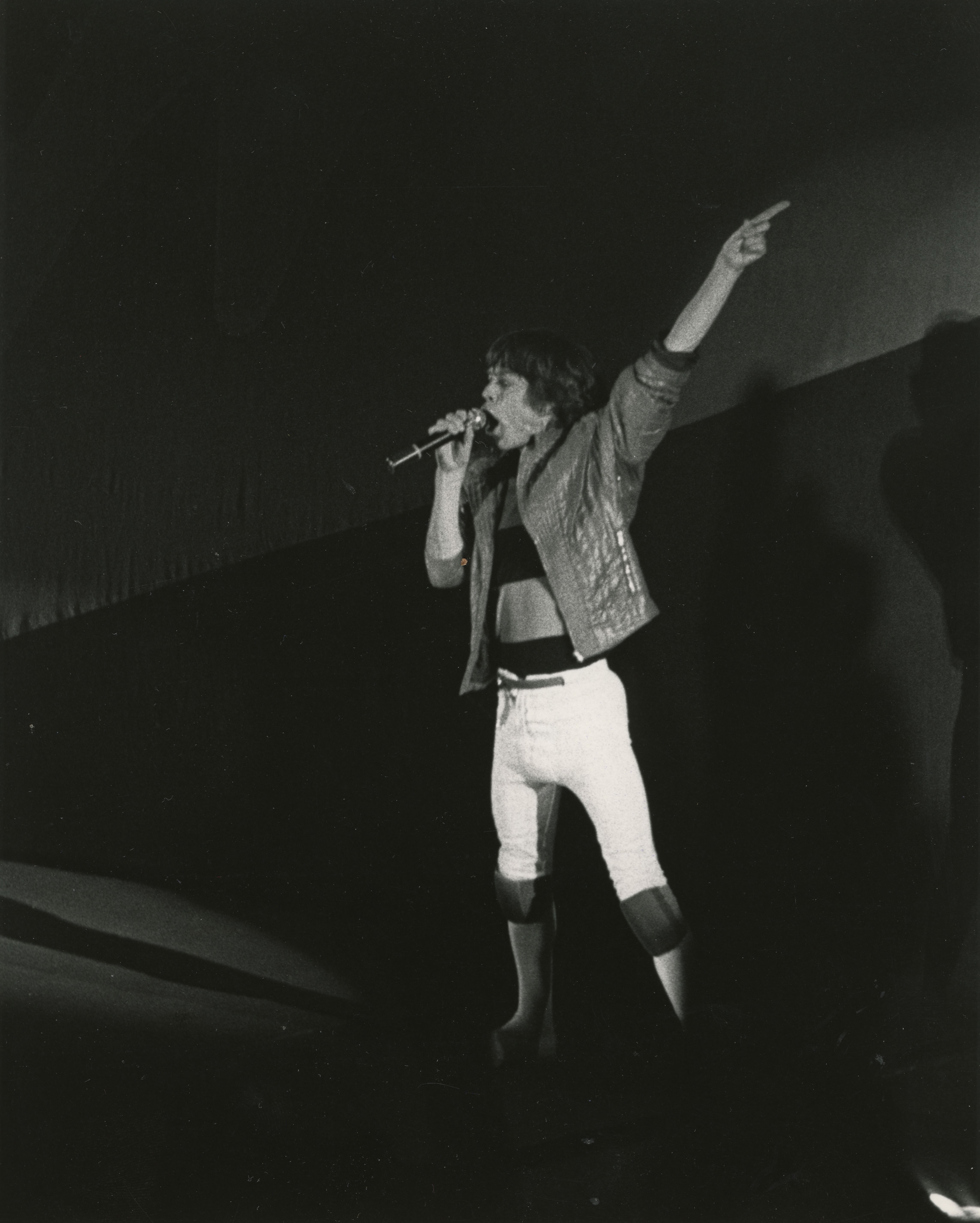
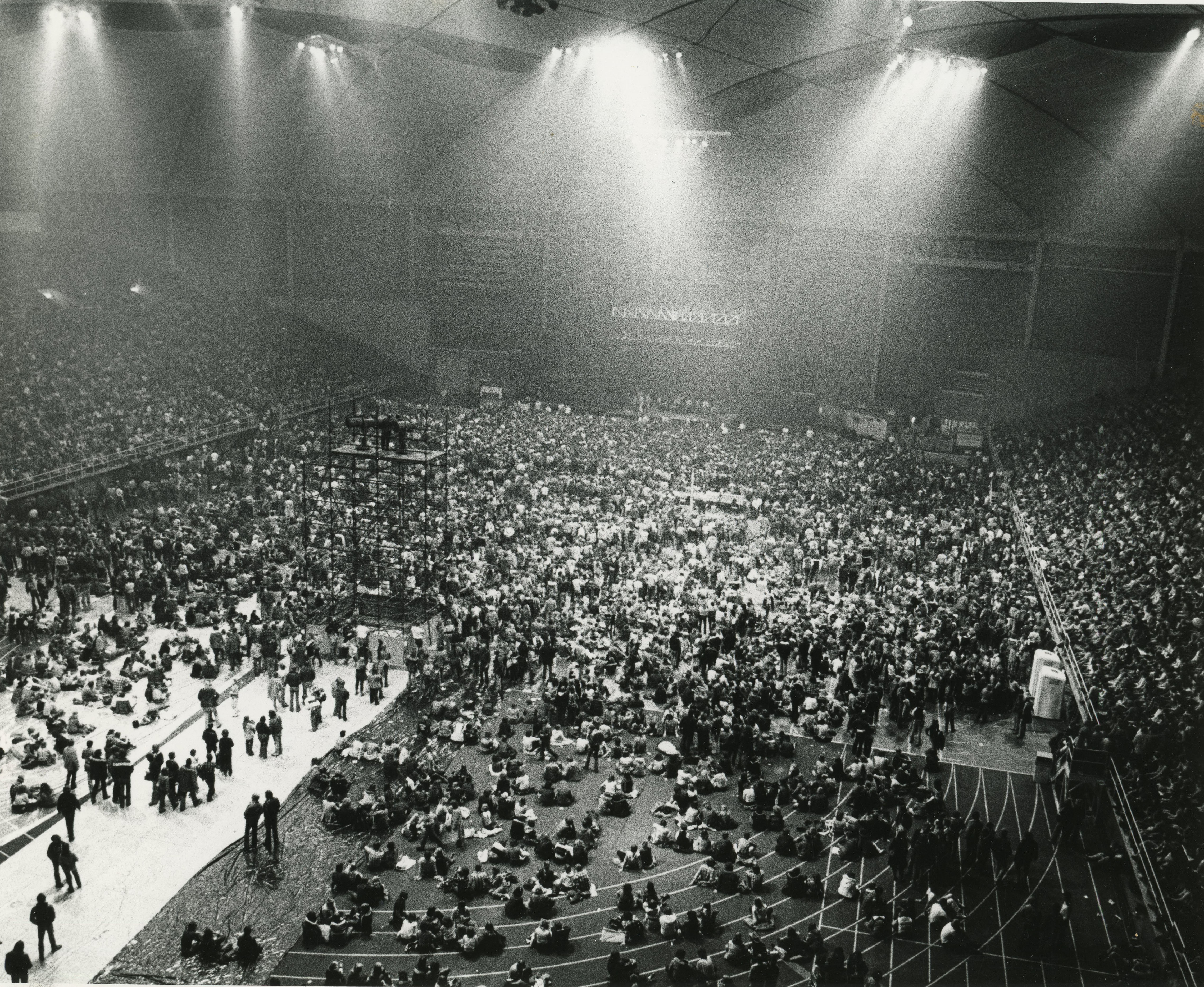
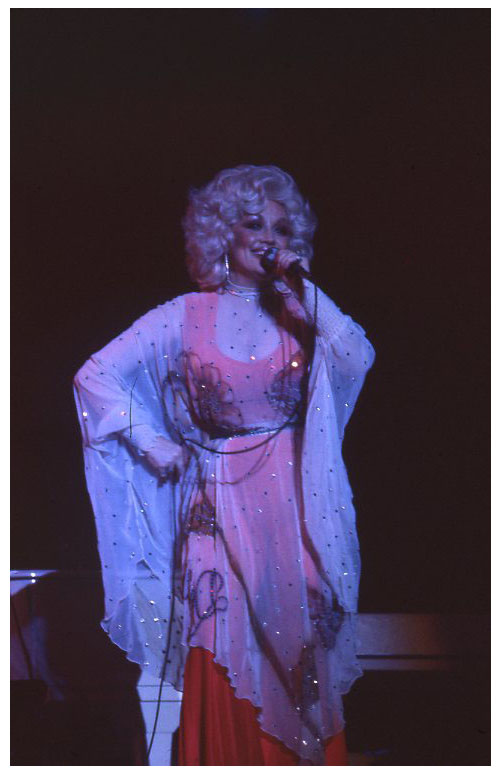
Shortly after the Dome opened, debates began over whether the building would host rock concerts. Vice President of Administrative Services Robert Stansbury was quoted as saying, "I cannot conceive of a rock type concert in the UNI-Dome." He cited potential damage to the playing surface and drug abuse by the audience as his primary concerns. However, each request for use of the Dome would be treated on an individual basis. Rock concerts were offered in the Dome, particularly in its early years. Performers included Harry Chapin, Chicago, Alice Cooper, the Doobie Brothers, the Grateful Dead, the Who, Fleetwood Mac, Willie Nelson, Waylon Jennings, Dolly Parton, the Rolling Stones, and more. Some groups were satisfied with the Dome as a venue, while others cited trouble with acoustics or equipment installation in the cavernous open space.
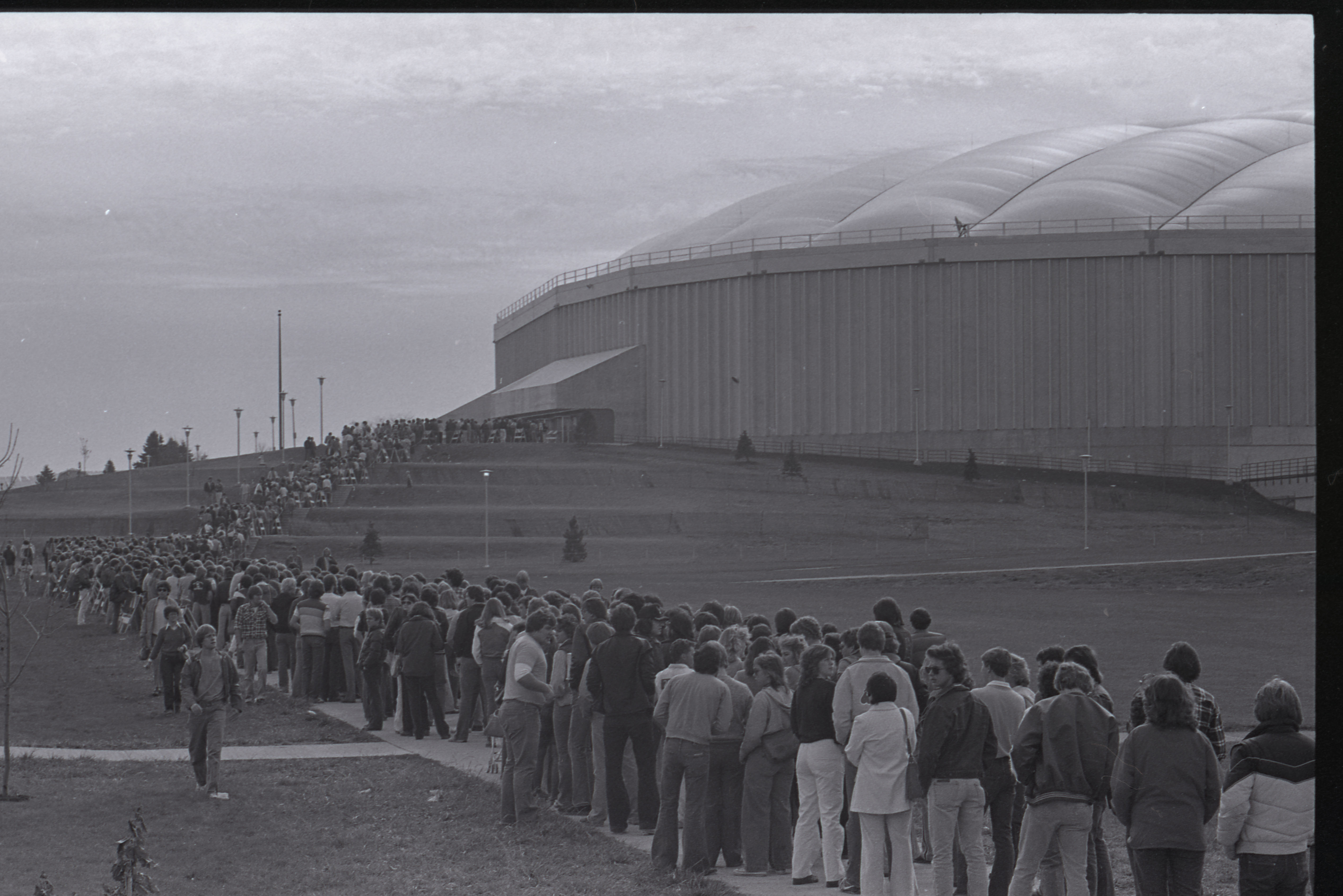

The Dome’s roof continued to present an issue. Dome Service Manager Richard Brownell said, "When the Dome was completed, it was understood that some problems would still have to be worked out." In July 1976, Owens Corning added a sealant to the roof panel seams to halt leakage. In January 1977, basketball and wrestling contests were moved to the West Gym because temperatures inside the Dome had dropped into the 50s, and condensation dripped from the roof onto athletics areas. On June 30, 1977, the roof deflated again. The main fans failed, and reserve fans could not keep up with rainwater pooling on the roof. Only one panel ripped in this roof failure. The roof was temporarily repaired and re-inflated by the next day, and permanently repaired in August. By the time the 1977 football season started, the complete complement of 16,392 permanent seats was ready.
While financing for the Dome was in place, the Foundation still needed to raise money to cover its debt, including a $750,000 loan from Roy Carver. The principal was due in three equal parts on December 31, 1977, 1978, and 1979. The Foundation and the Alumni Association increased their efforts to meet the deadlines. By September 1978, the debt had been reduced to $600,000. In December 1979, the Foundation sold $600,000 in industrial revenue bonds through the City of Cedar Falls. The term of these bonds was ten years, and the interest rate was reduced from 15.5% to 7%. Miller said under the earlier interest rate, "Every year we had to raise close to $100,000 for the interest alone…." The Foundation was ultimately able to pay off the debt in 1986 with money from donations by Inez and Neva Radell.
In fall 1977, controversy arose over the use of the Dome as a symbol of UNI. Images of the new facility had begun to appear on parking permits, letterhead, and more. Professor Robley Wilson introduced a bill in the Faculty Senate to limit use of the "Home of the Dome" slogan to athletics and alumni matters. Wilson said, "This is not an athletic stadium where there happens to be a university. It's a university where there happens to be an athletic stadium." In January 1978, the Faculty Senate voted to recommend to the administration the Home of the Dome slogan be used only for athletics and alumni matters.
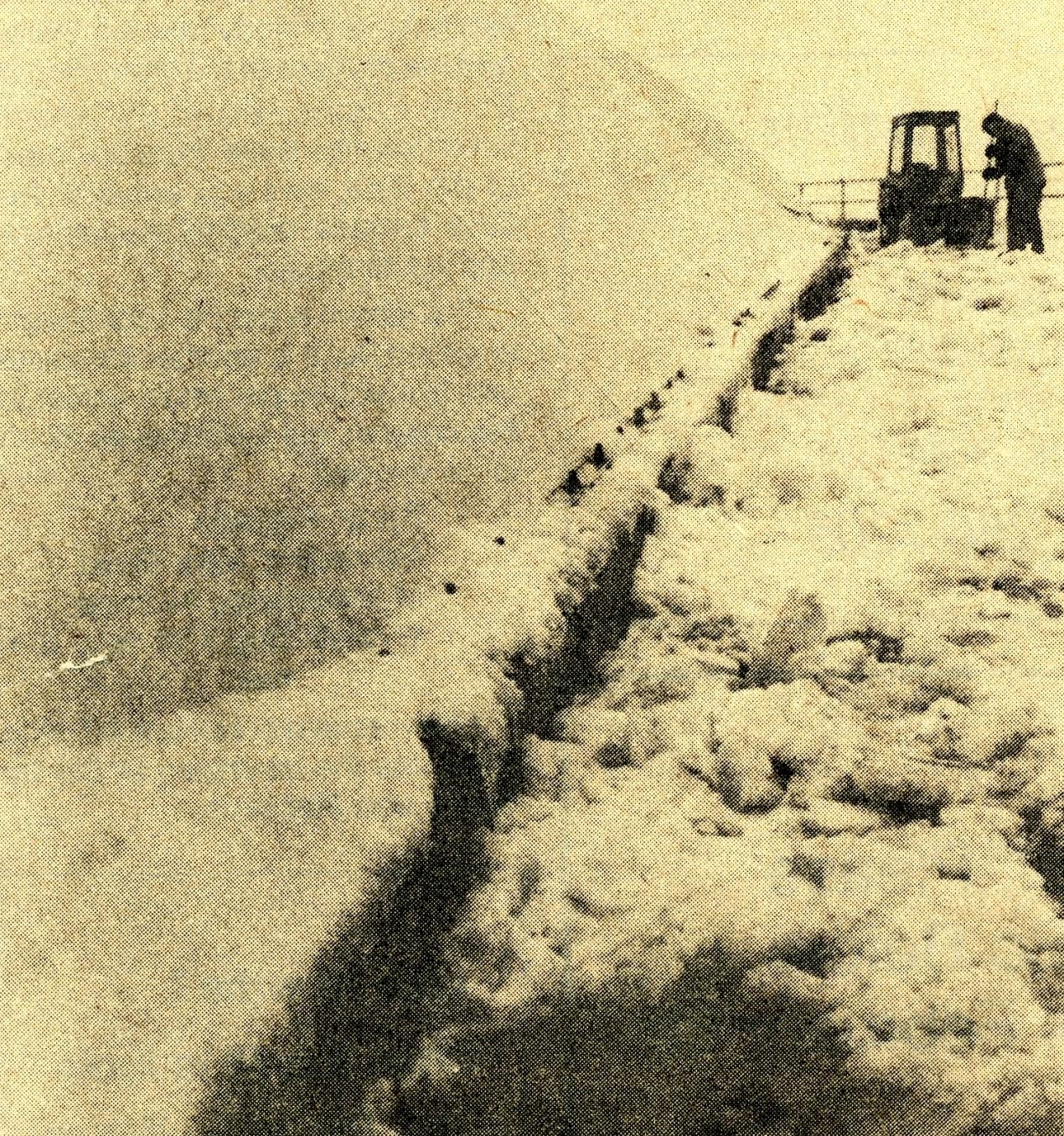
In 1979, a guard rail was installed around the Dome’s high exterior walkway where the inflatable roof met the concrete ring. Members of Local 2659 of the American Federation of State, County, and Municipal Employees had complained the situation was dangerous for employees who were required to go onto the inflatable roof to remove snow. Consequently, the Iowa Occupational Safety and Health Administration ordered installation of the safety measure.
In 1983, the Regents authorized $350,000 to install new lighting in the Dome to significantly increase lighting levels. The Regents also authorized $196,000 to construct additional office space on the east side of the Dome. In 1984, a new $54,000 sign was installed between the Dome and Hudson Road to inform the public about campus events and UNI-Dome activities. In 1985, the Regents approved $81,745 for a new sound system.
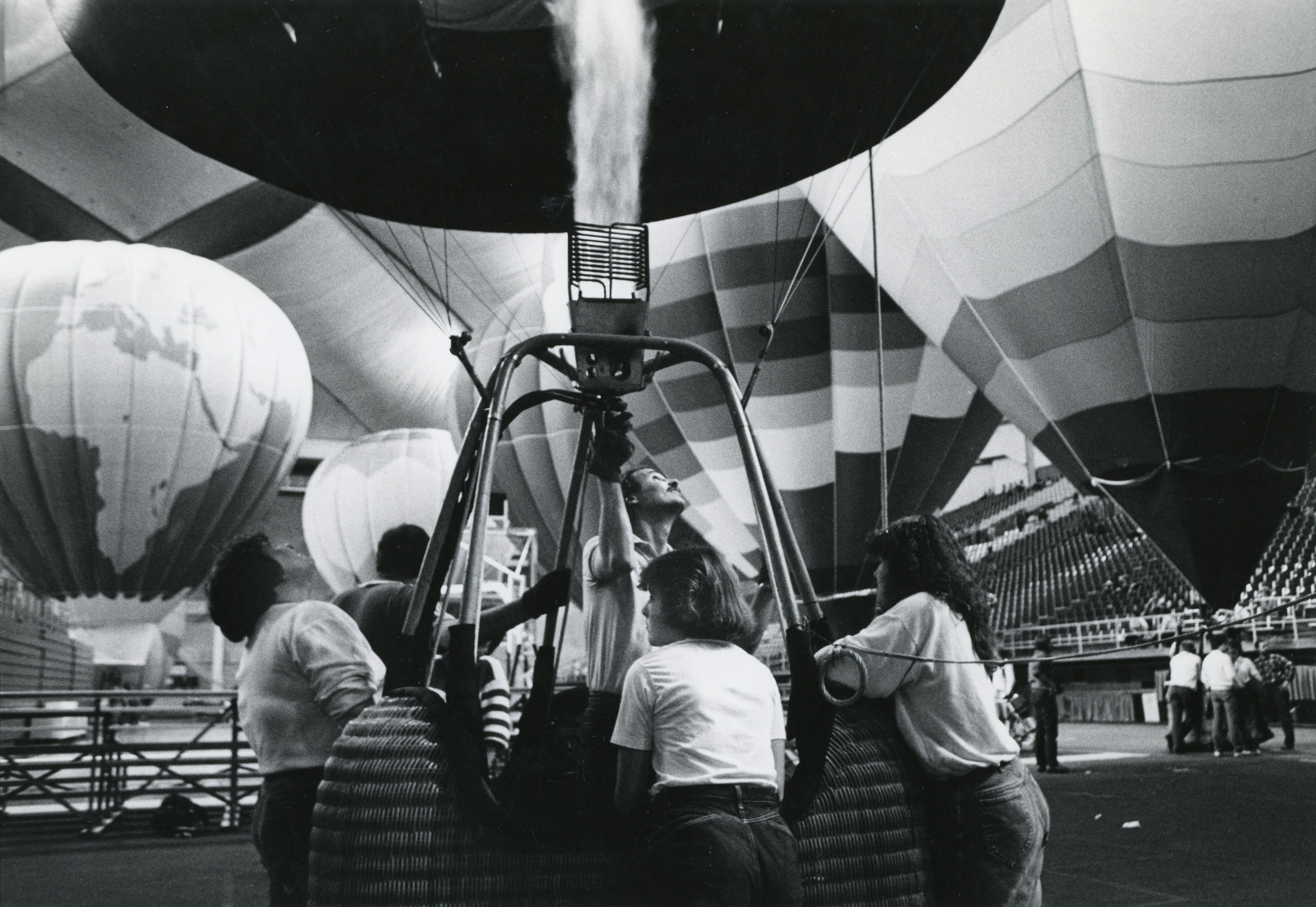
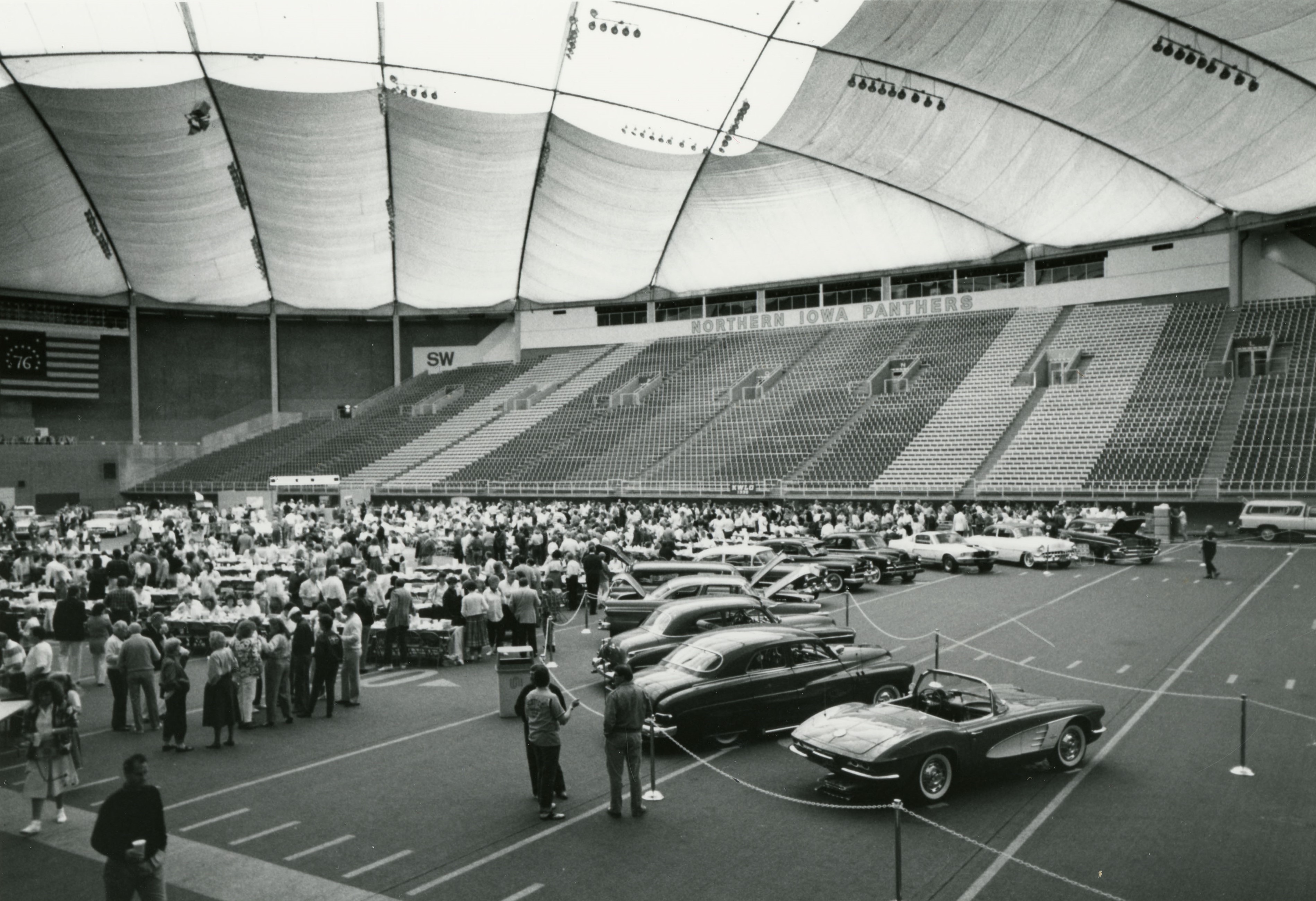
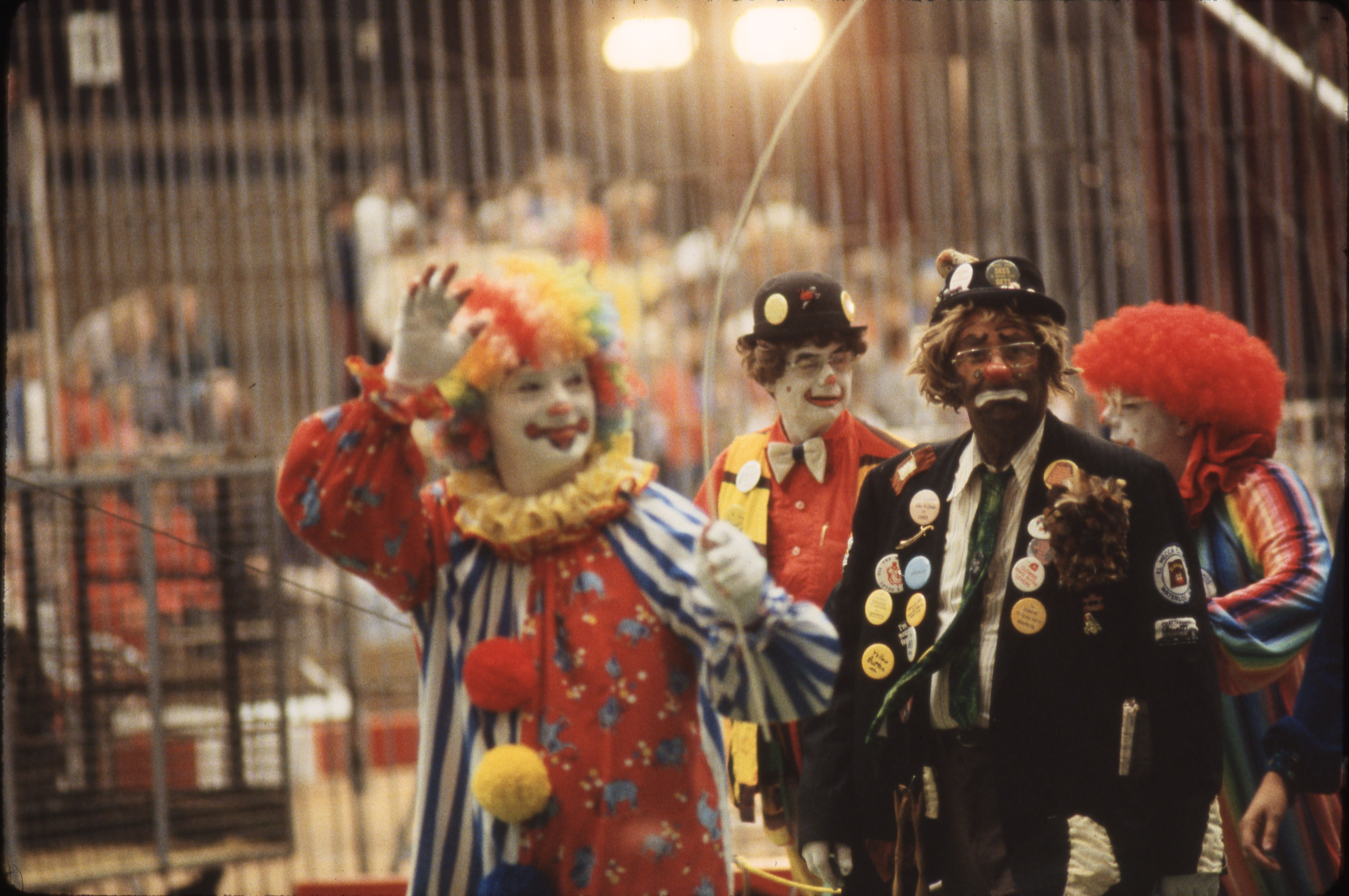
By the Dome’s 10th anniversary, ongoing payments were ahead of schedule and only $125,000 remained on the bond debt. Over 4 million people had used the facility for athletics contests, rock concerts, circuses, commencements and sports shows. The anniversary celebration included sand volleyball and inflation of hot air balloons inside the Dome.
A new scoreboard was installed for the 1986 football season. The Dome also acquired a portable, wooden basketball floor. The floor belonged to Waterloo's McElroy Auditorium and was loaned to UNI on the condition it would be returned if needed in McElroy. Bids for new courtside seating also went out that fall.
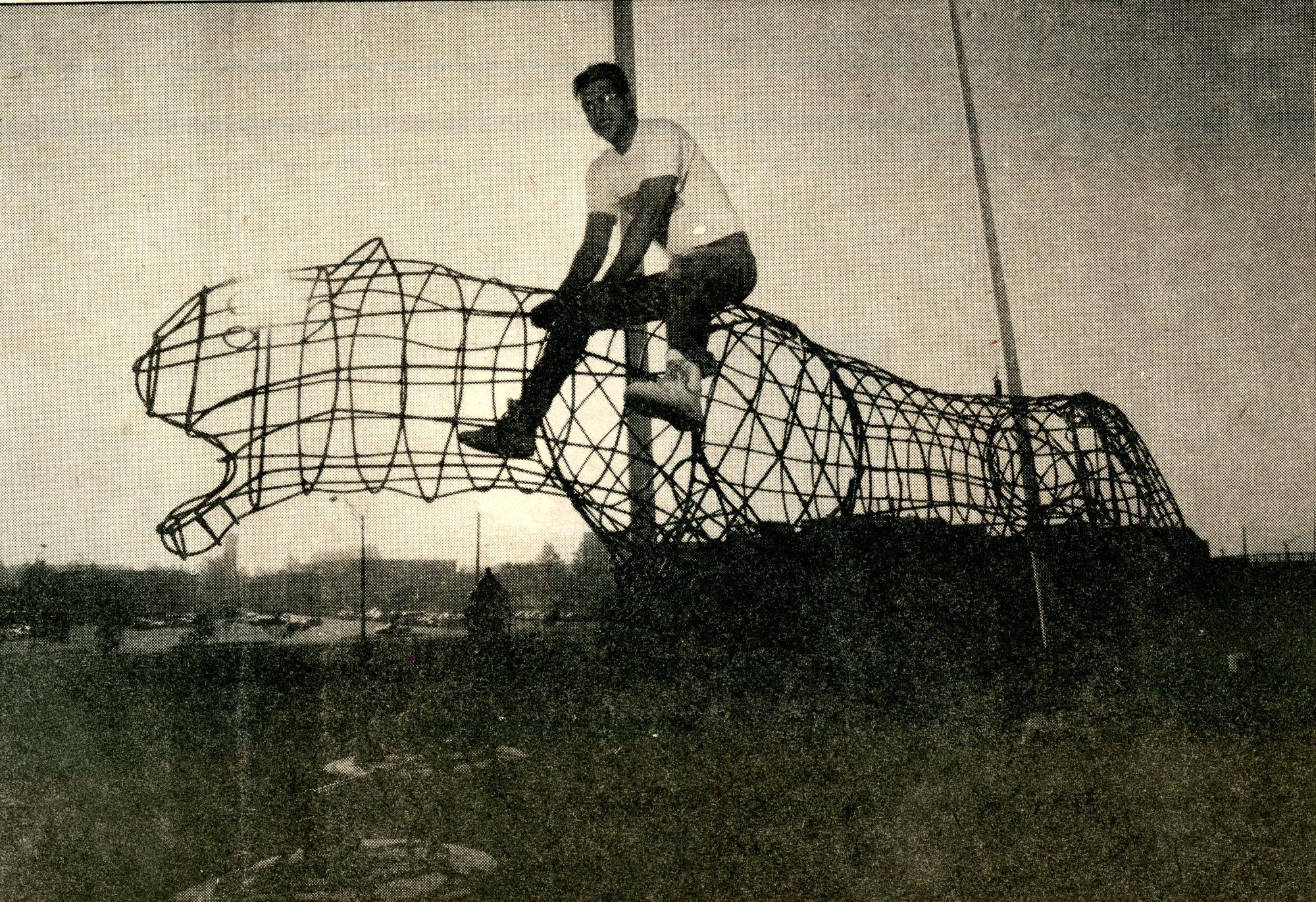
In 1990, student Rob Lorenson constructed a wire sculpture in the shape of a Panther. He hoped shrubbery would grow over the sculpture and turn it into a topiary.
In 1991, the floor of the Dome was resurfaced with a new composite material for $817,000. In 1993, the football field was named in honor of former football coach and athletics director Stan Sheriff, a proponent of the UNI-Dome project. Sheriff died January 16, 1993. UNI held a memorial service and field dedication ceremony for him on April 24, 1993, prior to the spring football game.
On December 7, 1994, during a women's basketball game in the Dome, the roof began to leak under the burden of heavy snow. With water dripping onto the court, game officials ended the contest. Snow accumulated faster than it could be cleared and the roof fabric tore. The tear ultimately caused the roof to deflate for the first time since 1977. High winds then tore out a large triangular piece of fabric near the north end of the Dome.
Commencement was moved to the West Gymnasium and basketball games were shifted to McElroy Auditorium in Waterloo and the Five Seasons Center in Cedar Rapids. The roof was reinflated December 19, 1994, after a temporary replacement panel was installed by the Birdair Company from New York. Damage was covered by the UNI-Dome’s $23 million insurance policy with $750,000 deductible. The insurance company agreed to pay about $4 million to settle UNI’s damage claim on the Dome in February 2000.
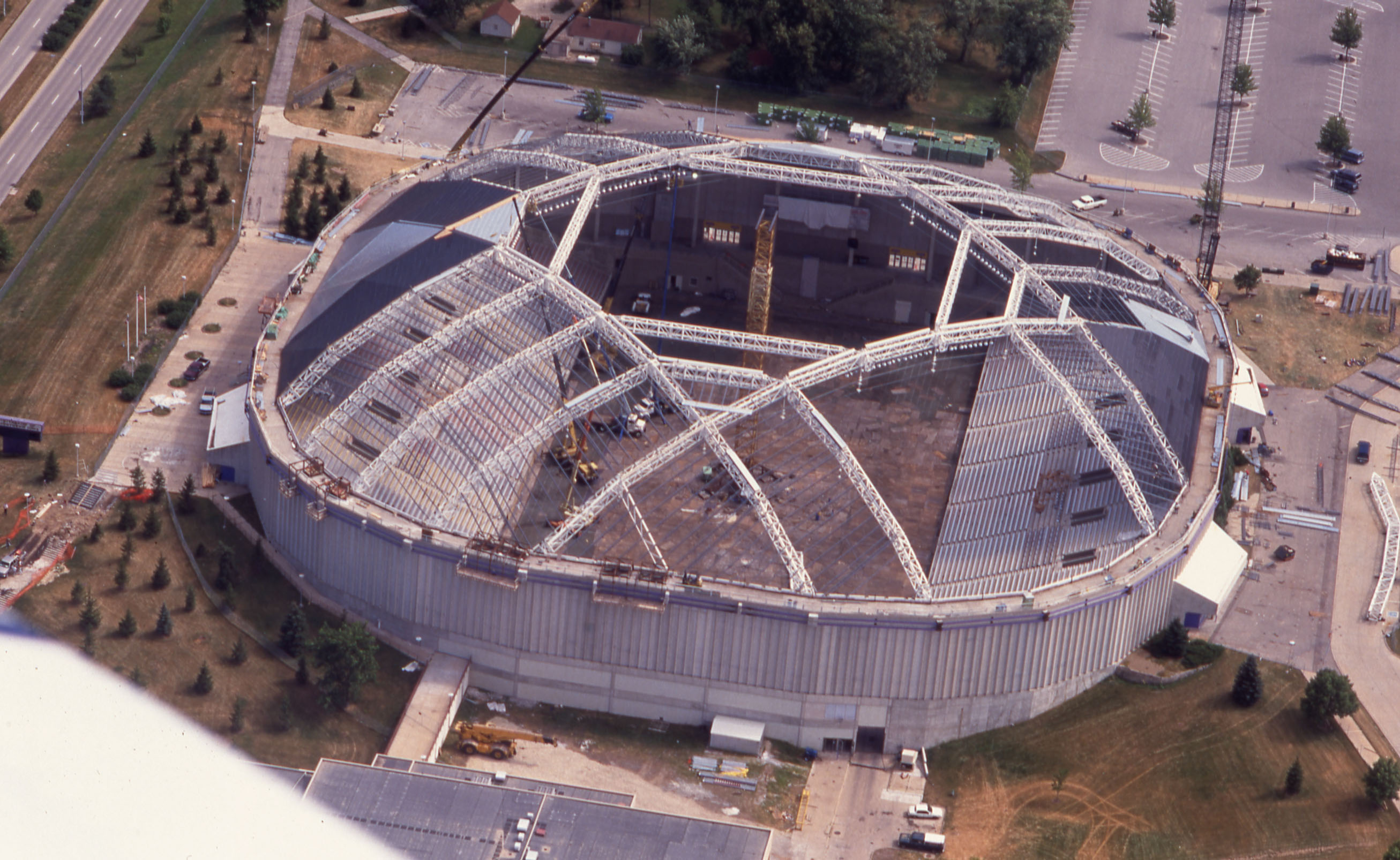
By late 1996, the UNI-Dome was one of nine air-supported domes in the United States. Four fans blew air into the facility. Two ran most of the time, but one could support the roof if necessary. Two of the fans were 125 horsepower with a capability of blowing 135,000 cubic feet of air per minute. The other two fans were 40 horsepower with capacities of 60,000 cubic feet per minute. Dampers allowed the Dome to maintain a relatively constant interior air pressure. Emergency generators could power the fans if regular electrical service were interrupted. By this point, the roof fabric was aging and new technologies had evolved. The Regents approved funding for a new roof which would not be air-supported The new roof support system would consist of a series of arched beams with a central skylight. The cost of the project was estimated at $8.035 million, funded by the insurance settlement from the 1994 deflation and revenue bonds. Light Structures Design Consultants were involved with planning the roof modifications, and the new roof was projected to last 30 years.
Construction started in fall 1997 with exterior work on strengthening the outer ring to support the heavier roof. Penn-Co Construction Company was the general contractor for the roof project. On March 23, 1998, the Dome was deflated for the last time to allow construction to begin on the roof itself. Most of the old roof fabric went to the Bremer County landfill to be used to cover refuse. The new "hybrid" roof would consist of two parts. The lower section would have an external finished surface of stainless steel. The translucent center portion would be Teflon-coated fiberglass. This center portion, or skylight, would comprise about 45,000 of the 160,000 square feet of roof. The project, including interior modifications and remodeling, was budgeted at $11.8 million. The facility was set to be ready for the September 10, 1998, football game against McNeese State.
The first beam for the solid part of the roof was in place by late April. By mid-June all the main beams were in place. In mid-July the contractor stated construction complications would delay completion of the project until October. Construction crews from as far away as Germany and Ireland worked to bring the project to completion. The opening home football game was played at Waterloo's Memorial Stadium, but the field was ready for play on October 3, 1998, against Southwest Missouri State.
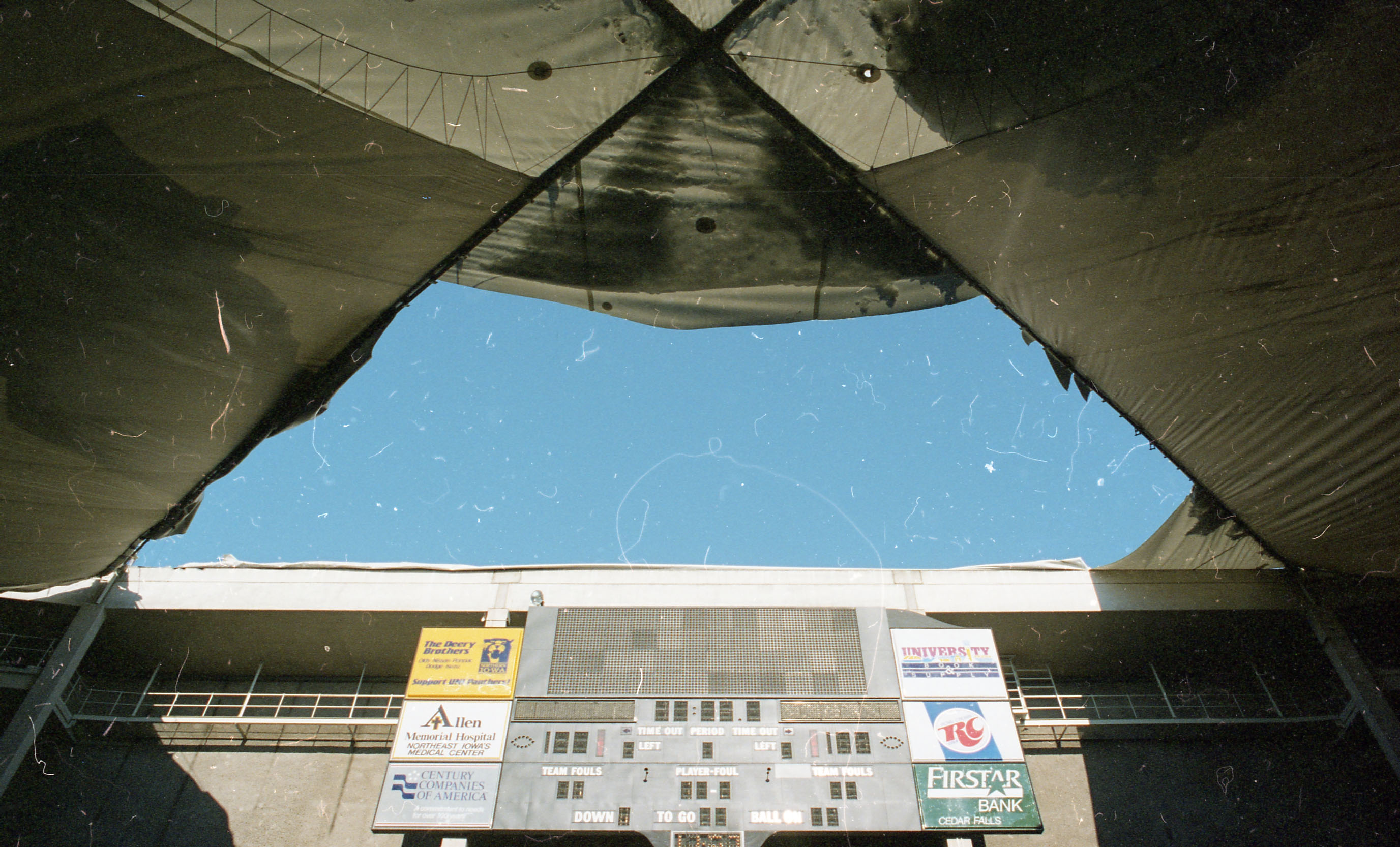
Unfortunately, the roof leaked. During a football game on October 28, 1998, rainwater dripped onto the playing field and a portion of the crowd. Dome operations manager Kevin Buisman said the exterior fabric had not been completely installed and problems could be expected to occur. Ongoing work forced December commencement ceremonies to be held in the West Gymnasium. In January 1999, both men's and women's home basketball games were moved to the West Gymnasium for the remainder of their seasons due to continuing leaks in the Dome roof. The leaks seemed to be located in places where the steel and fabric portions of the roof met. Contractors returned to campus in the spring of 1999 to concentrate their work on those problem areas.
On July 21, 2000, UNI filed a lawsuit against Penn-Co Construction and Light Structures Design Consultants for what the university alleged were defects in construction of the new roof. Both defendants eventually settled with UNI. In September 2002, Light Structures Design Consultants settled its portion of the suit with a payment of $1,424,803.62 to the university. In December 2003, Penn Co Construction paid the university $1,400,000 as its part of the settlement. The university hired an engineering firm to assist in correcting problems associated with the construction. In May 2001, the Dome closed for the remainder of spring and most of summer for repair and improvements. It was scheduled to be ready for the first football game of the 2001 season on August 28.
On September 29, 2001, the Dome celebrated its 25th anniversary with speakers and a ribbon-cutting ceremony before a football game against Youngstown State. The Dome closed again for spring and summer 2002 to continue to work on various problems, especially the leaky roof. In October 2002, a video board was installed in the Dome. Officials hoped it would help to generate advertising revenue for the university.
On July 10, 2009, a strong windstorm passed through the central part of Cedar Falls. The storm caused considerable damage to the Dome roof, with most damage sustained on the stainless steel portion. The university made immediate repairs in order to keep the building watertight. In December 2009, the university asked the Board of Regents for permission to undertake major repairs or even a roof replacement during summer 2010. The repairs would cost about $4.3 million dollars, and the roof was insured by Traveler's Insurance Company, with a $100,000 deductible clause.
In summer 2014, the Dome scoreboard underwent a $1.2 million upgrade. In July 2014, Director of Athletics Troy Dannen stated planning was underway for major UNI-Dome renovations. The Dome needed wider concourses, premium seating and larger restrooms. The renovations would be a "low eight-figure project" and part of a larger capital campaign.
Summary
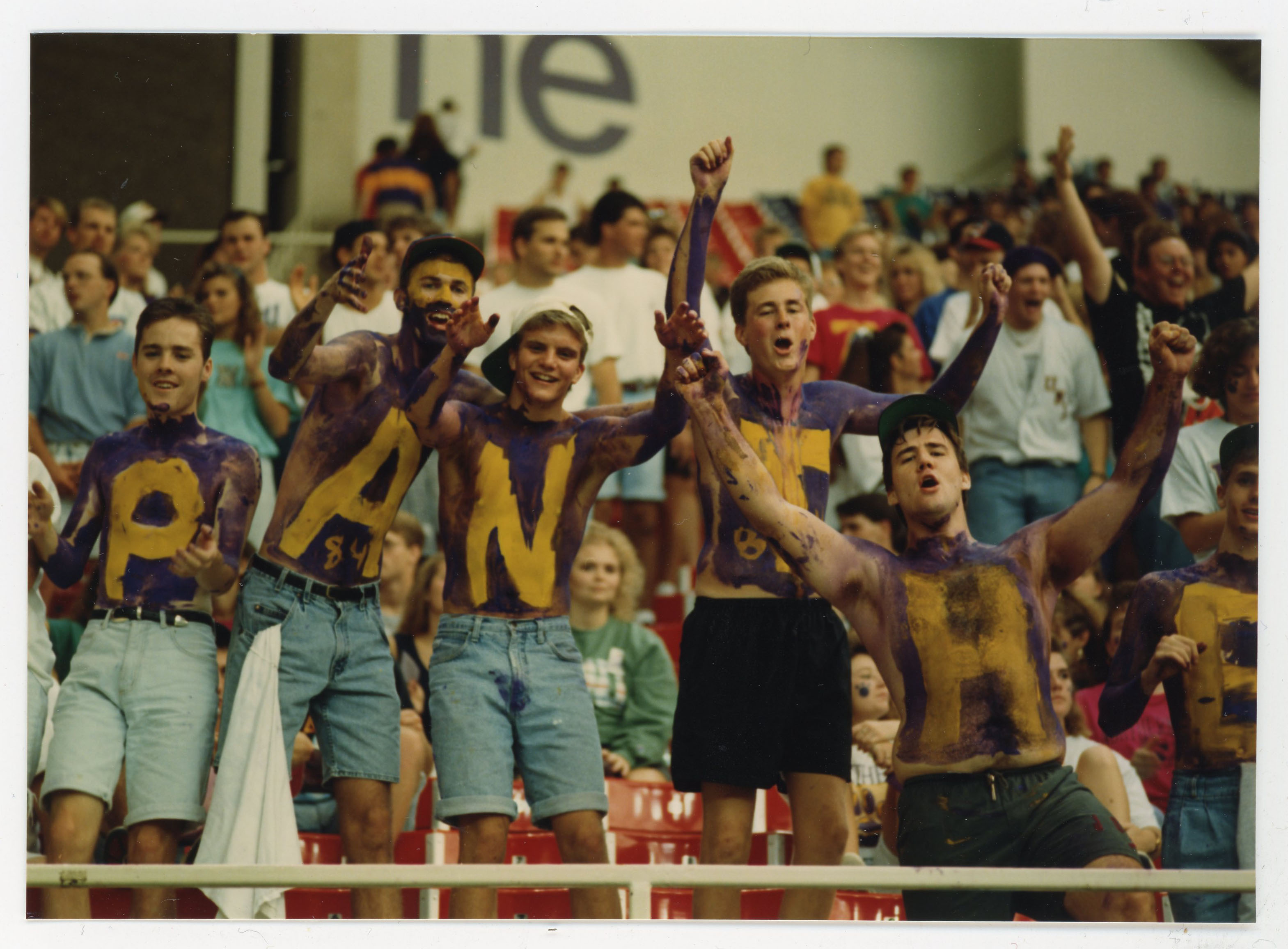
Currently the Dome is used for athletics, recreation, community events, commencements, and more. It has been the site of national sports tournaments, performances by some well-known music groups, and memorable UNI athletics contests. It remains a recognizable symbol of the University of Northern Iowa.
Compiled by Library Assistant Susan Witthoft; edited by University Archivist Gerald L. Peterson, July 1996; substantially revised and updated by Gerald L. Peterson, with research assistance by Student Assistants Jacki Ellenwood and Anthony Boggs, and scanning by Library Assistant Gail Briddle, October 2003; updated January 28, 2015 (GP); photos and citations updated by Graduate Assistant Eliza Mussmann April 12, 2023; content updated by Graduate Intern Marcea Seible, June 2025; revised and updated by Hannah Bernhard, February 2026.