
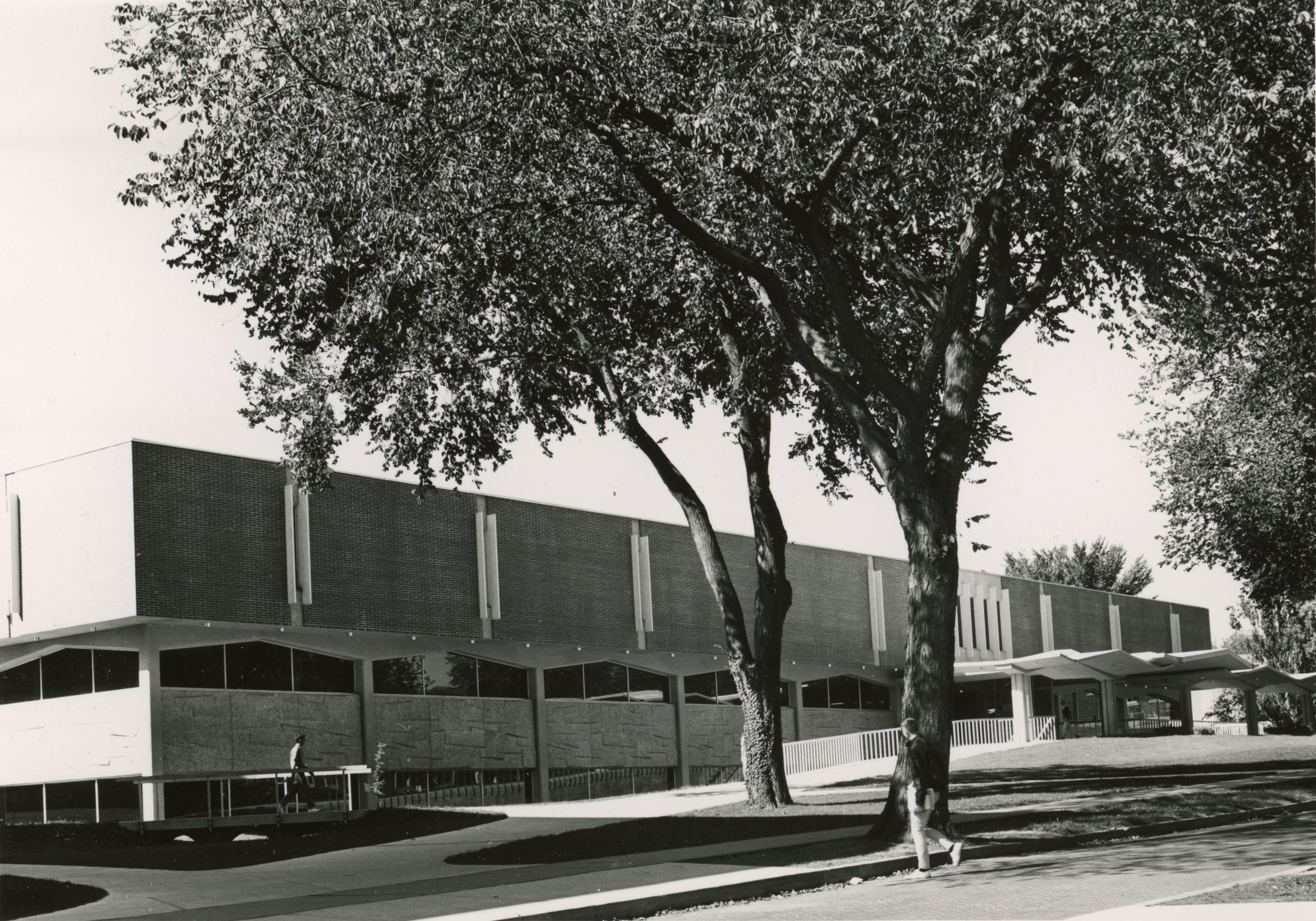
Rod Library (1963)
Beginning in May 1911, the building now known as Seerley Hall served as the library of the Iowa State Teachers College (now the University of Northern Iowa). By the 1950s, the book collection had expanded beyond the building’s intended 100,000 volume capacity, and it was not well suited for new media formats. The building was also not large enough to accommodate the projected growth in college enrollment of the post-World War II baby boom. In 1956, Marshall Beard, later in charge of campus planning, stated the college intended to convert Seerley Hall into a classroom building and build a new library. By 1960, the site for the new library was designated as between Wright Hall and the East Gymnasium (now the Innovative Teaching and Technology Center).
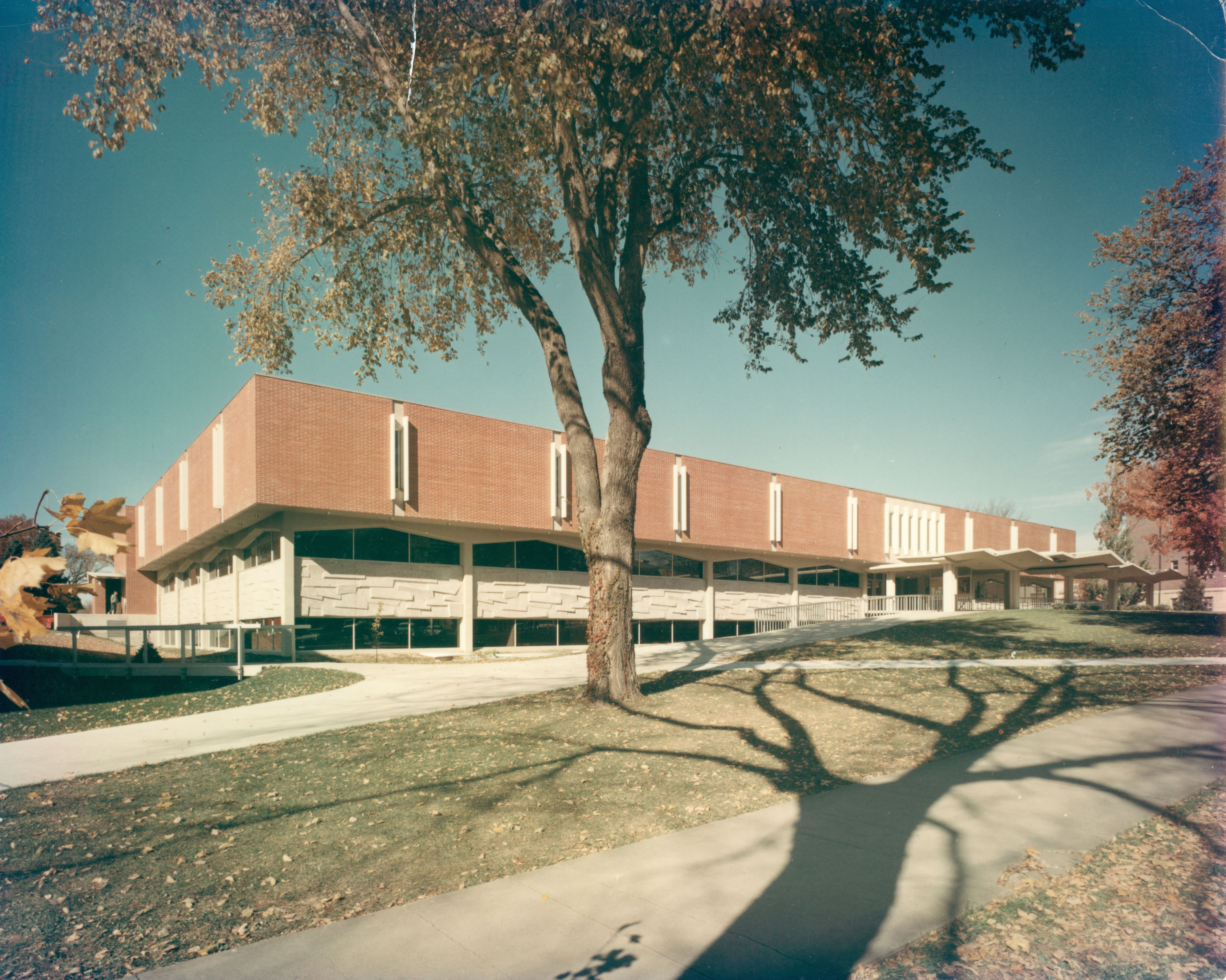
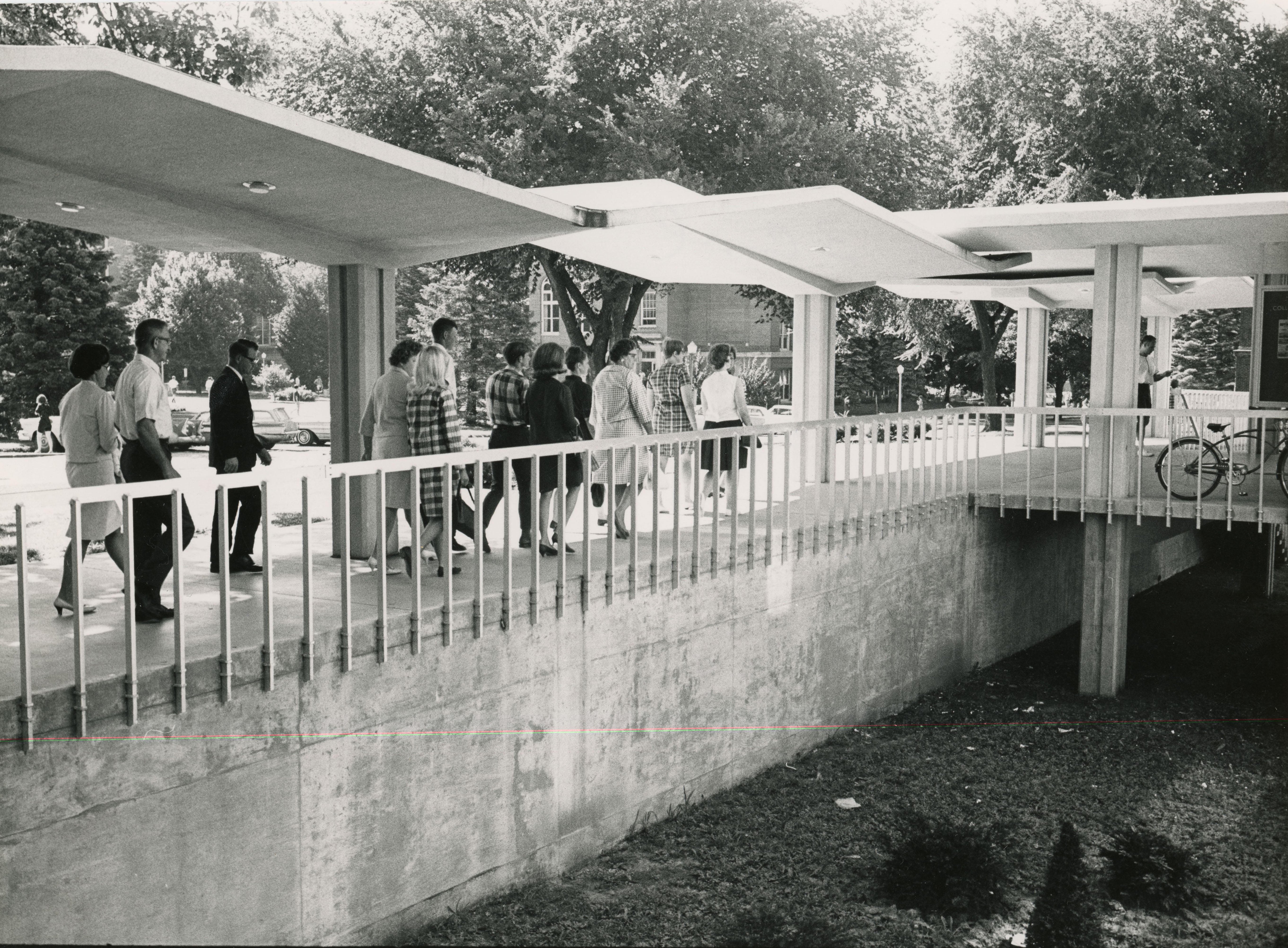
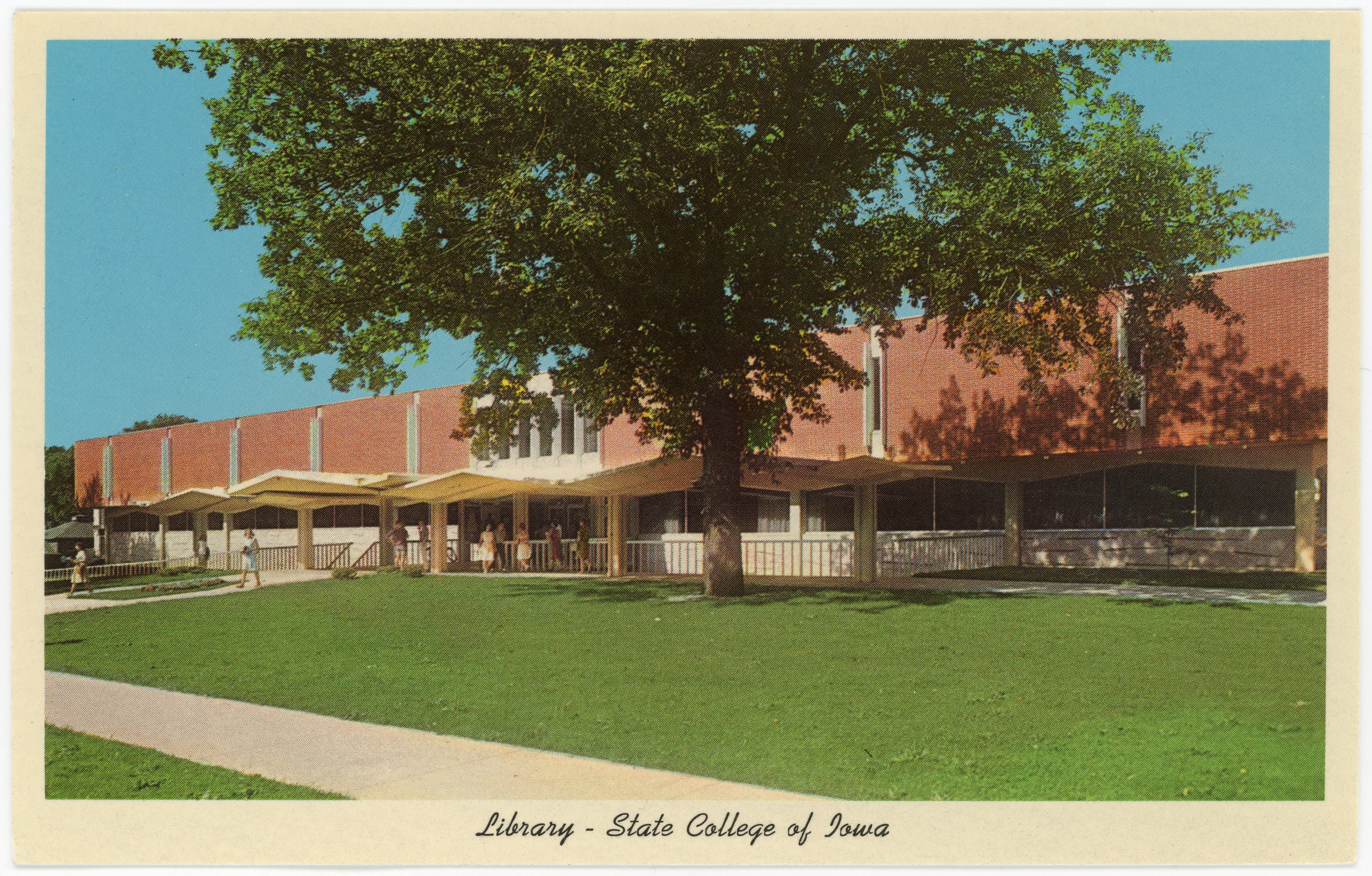
In spring 1961, the library staff, headed by Donald O. Rod, surveyed students to see what they wanted in a new library. In June 1961, the General Assembly appropriated $1.5 million for the new building and plans were underway by October 1961. The library was projected to be built in three phases. The architects for the project were Thorson and Brom, of Waterloo, with assistance from Rod, who was trained in architecture as well as library science. Officials hoped the groundbreaking could be in spring 1962. The new library would be air conditioned, hold 275,000 volumes, include seating for 1,000 students plus individual carrels, have study rooms and listening facilities, and house the Department of Library Science. There would also be a sunken, recessed “Reading Garden" in front of the new building. It would feature modular construction with columns and beams instead of walls bearing the weight load. This design would enhance flexibility for future changes. Officials hoped the building would be complete by fall 1963.
Soil tests at the building site were conducted in November 1961. The Board of Regents awarded contracts for building construction in September 1962. Henkel Construction Company of Mason City won the general contract; Young Heating Company of Waterloo won the mechanical contract; and See Electric Company of Waterloo won the electrical contract. The building, measuring 235 feet x 127 feet and including about 90,000 square feet of space on three levels, would be similar in design to Russell Hall. The groundbreaking ceremony was held October 8, 1962, and excavation soon followed. Several short strikes involving workers on the project hampered initial progress on the building.
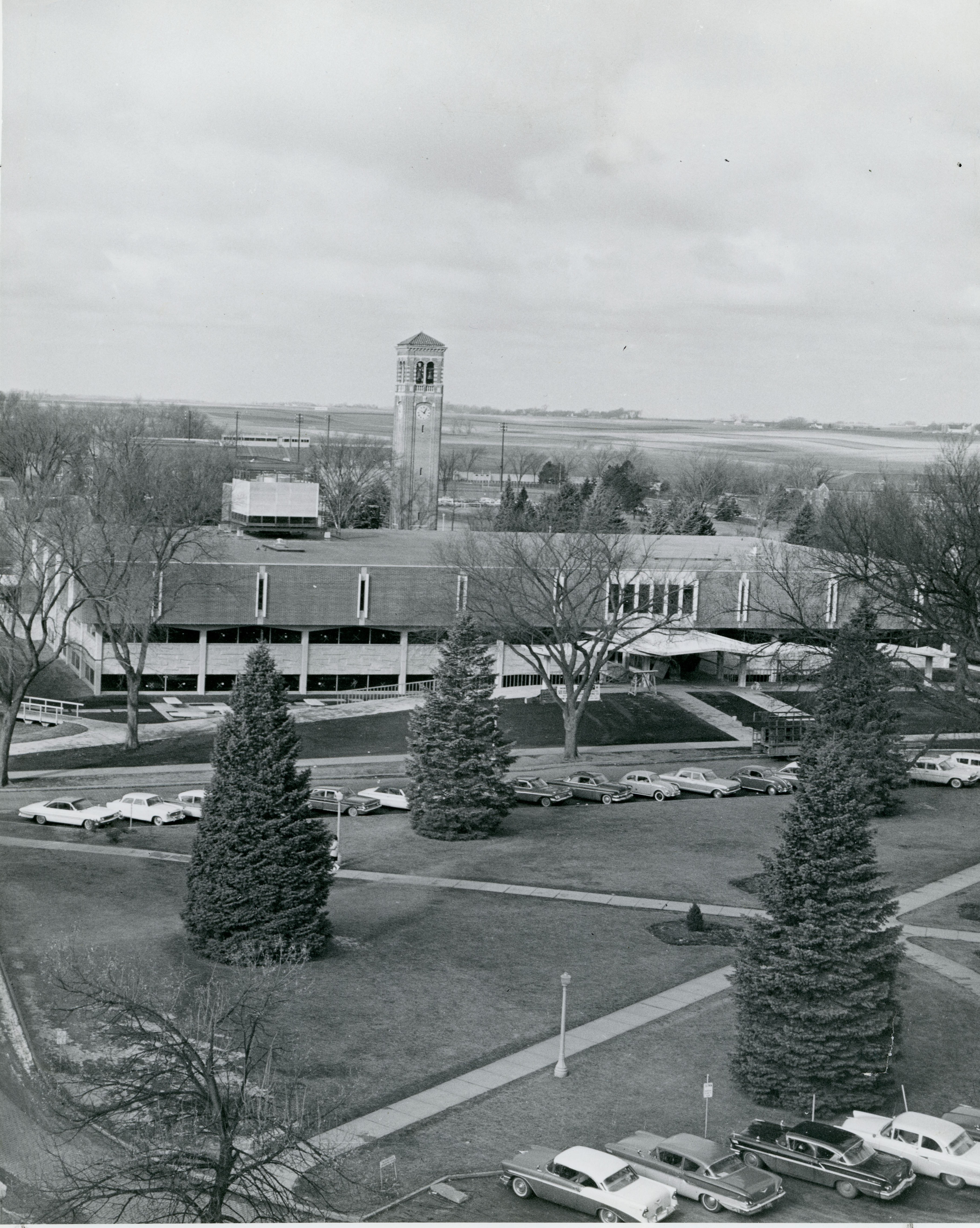
Work was back on schedule by January 1963. The lower level was enclosed and construction progressed on the floor of the main level. Completion of Phase I was set for April 1964. Before it was completed, in June 1963, Rod said: "The day the new library is ready for use it will be overcrowded." He noted rapidly growing enrollment and changing curriculum made it nearly impossible to keep up with projected needs. The first phase was being constructed to allow for easy expansion to the west.
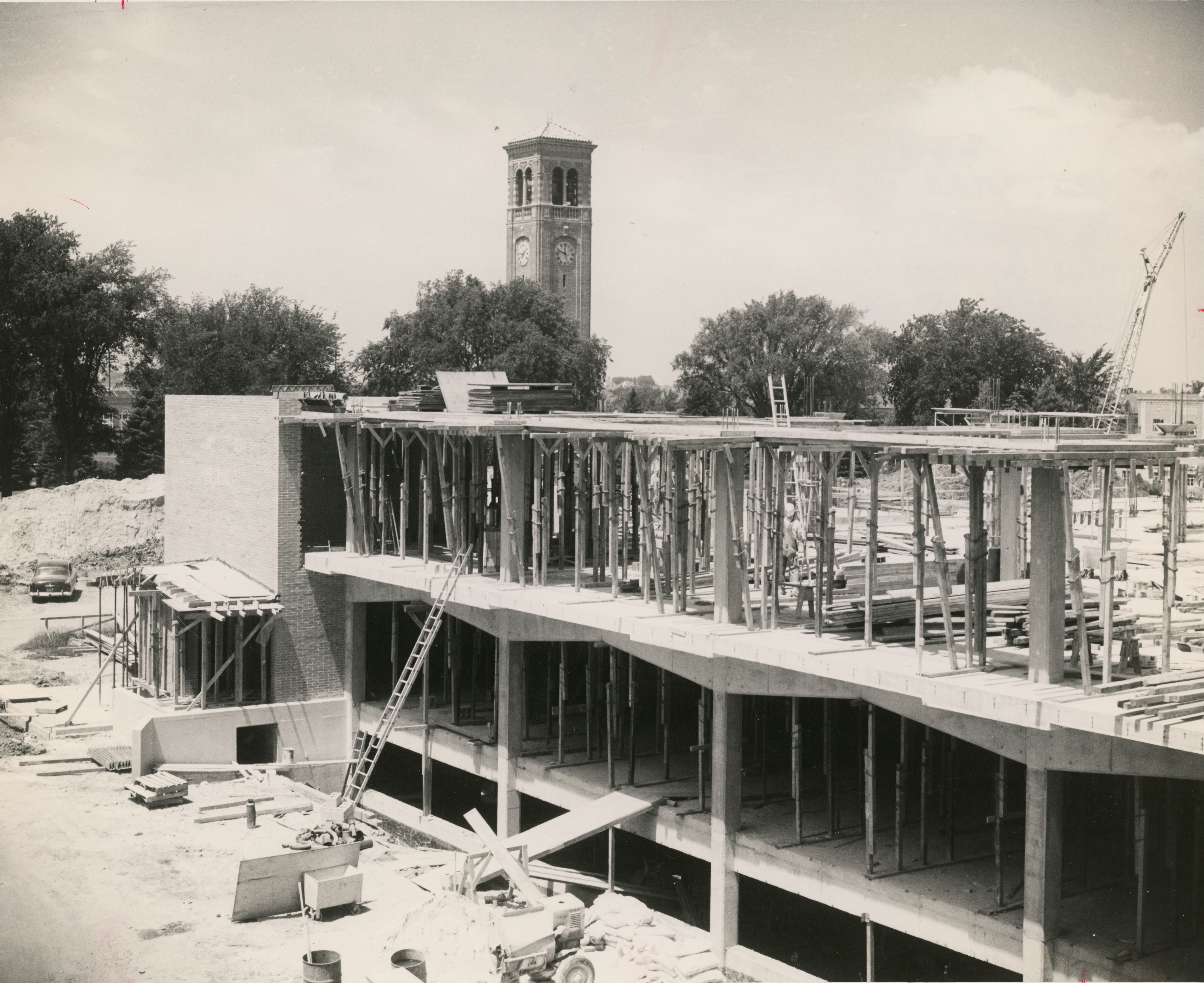
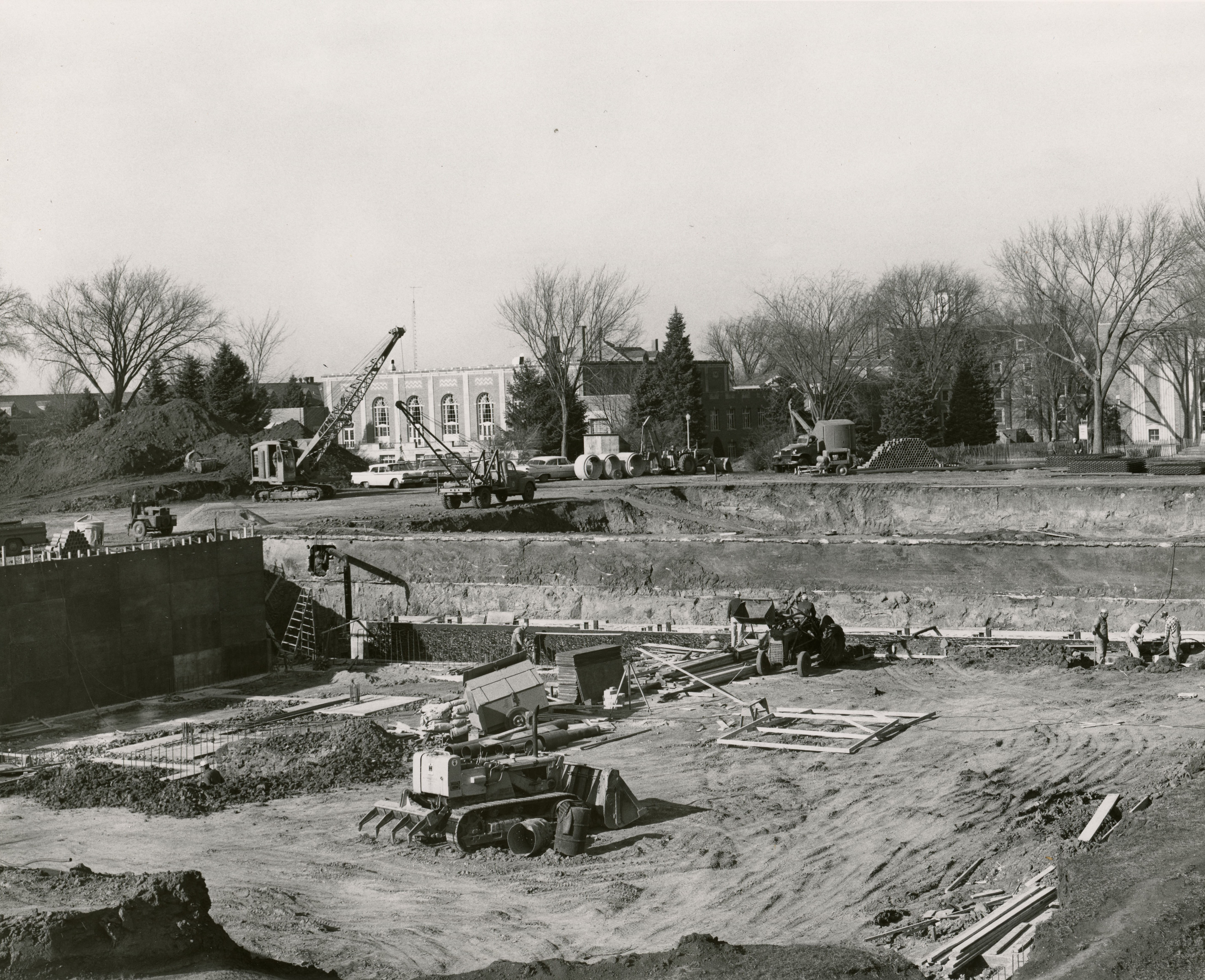
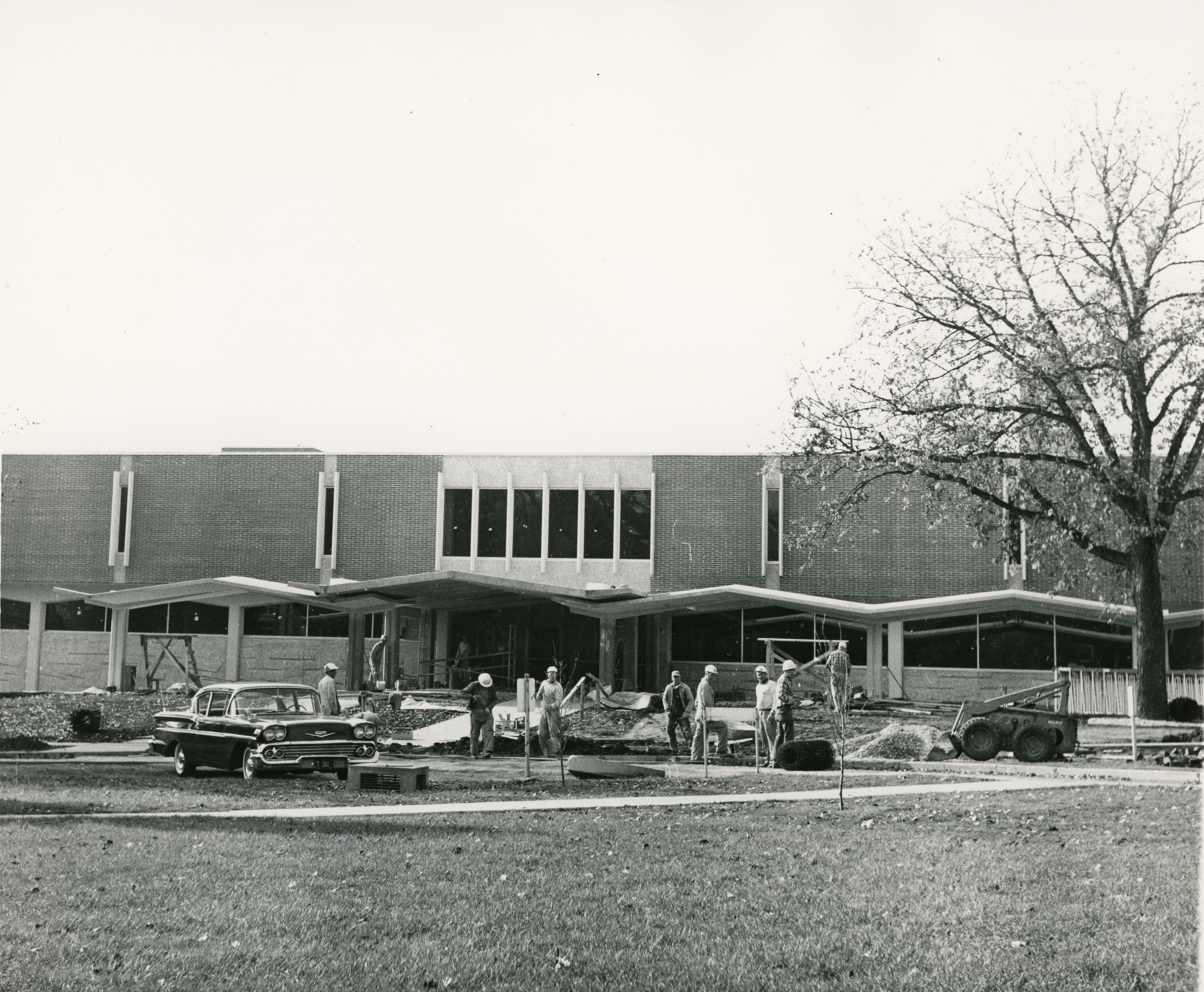
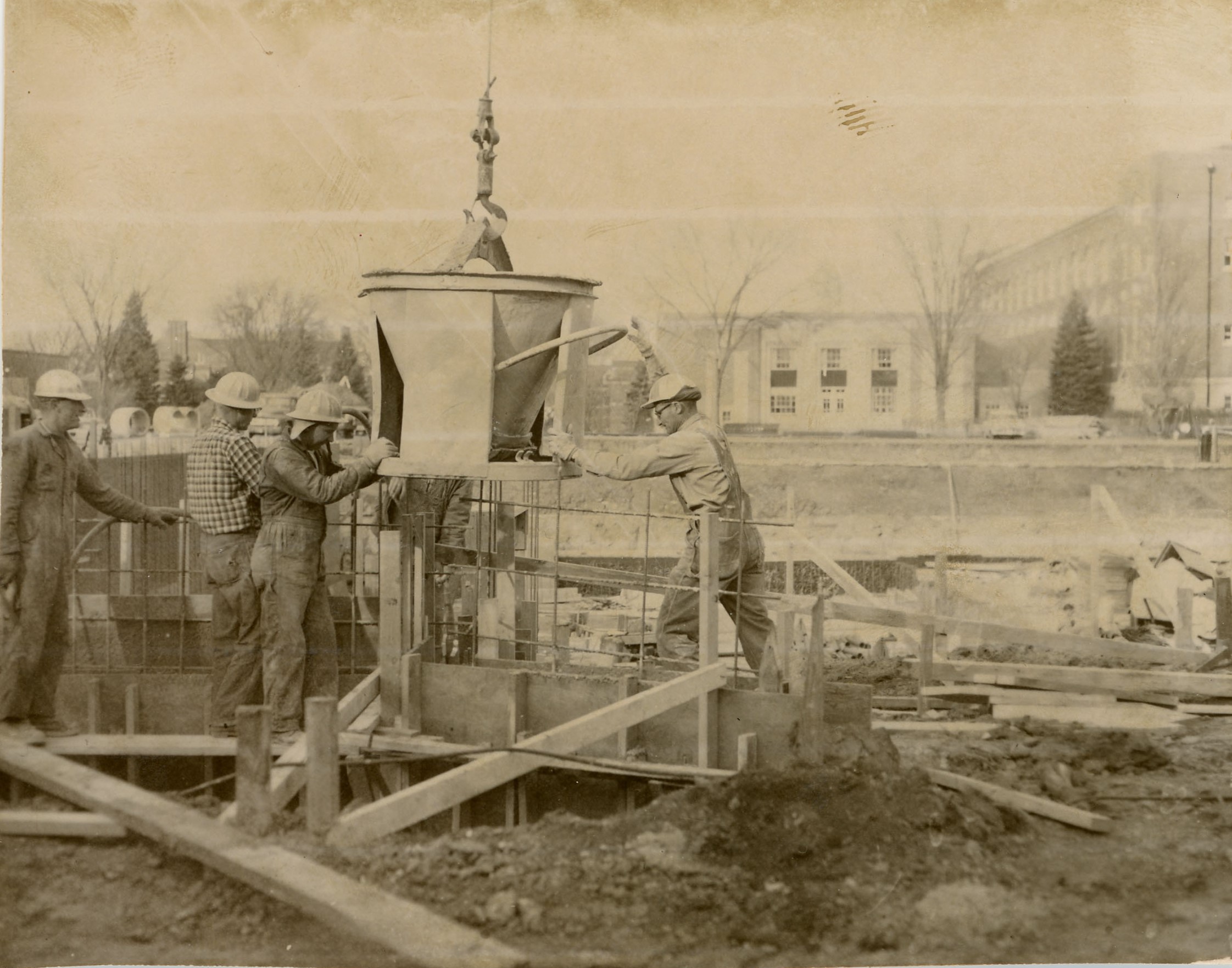
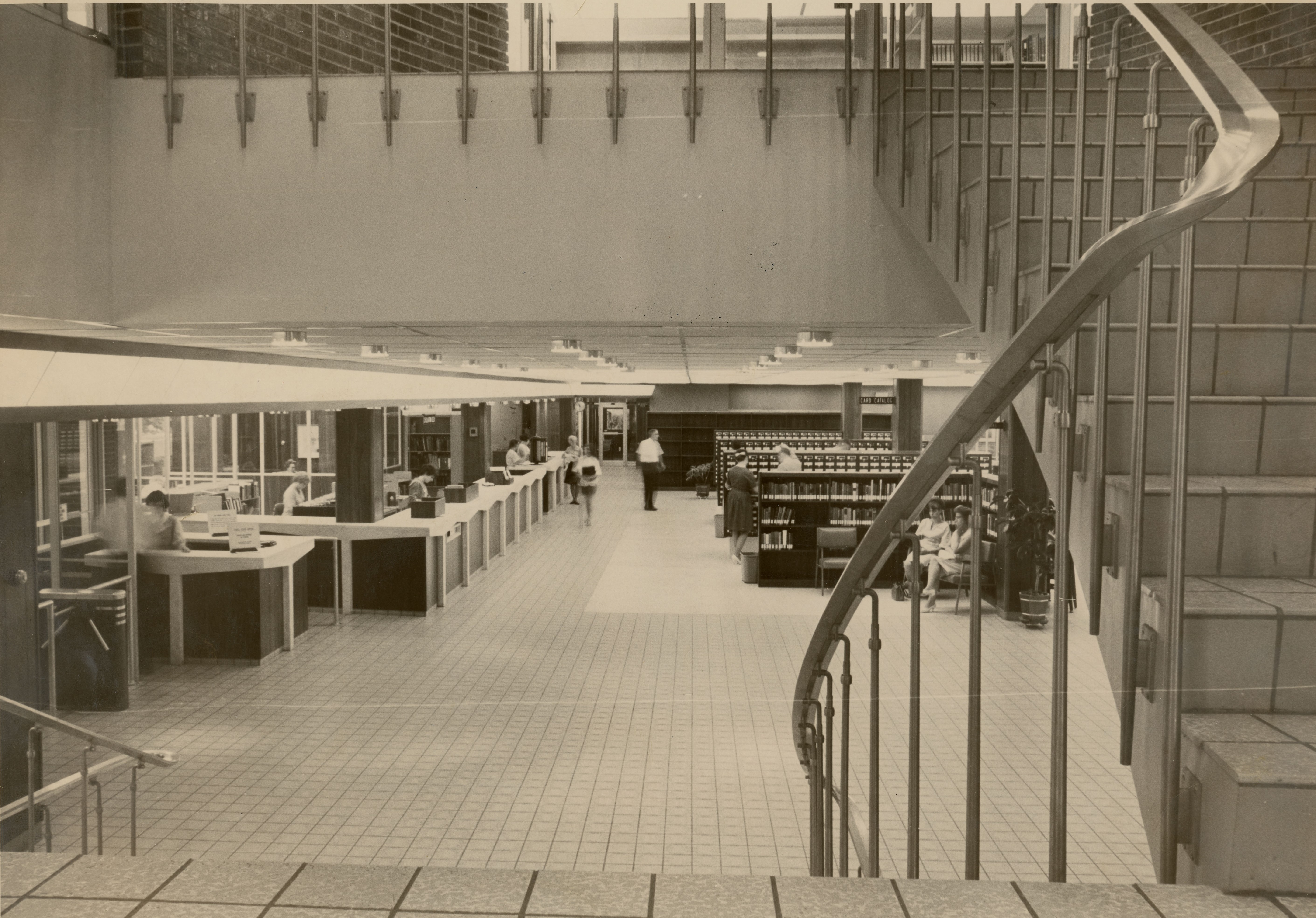
The building was completed in July 1964. Library staff and professional movers shifted the 210,000 volume collection from Seerley Hall to the new building in August and early September and the building was ready for students on September 14, 1964. The cost of the building and equipment was about $1.7 million, with $1.5 million from the General Assembly and the remainder from donations and supplementary funds.
By the beginning of 1965, the majority of the furniture, equipment, and services, with the notable exception of the music collection, were in place. The library offered photocopy service at 10 cents per copy, graduate study rooms, discussion rooms and a browsing room. About 3,000 to 4,000 students used the building daily. An open house for the new building, as well as the newly-completed Hagemann Hall, Regents Dining Center and Administration Building (now Gilchrist Hall), was held on October 10, 1965.
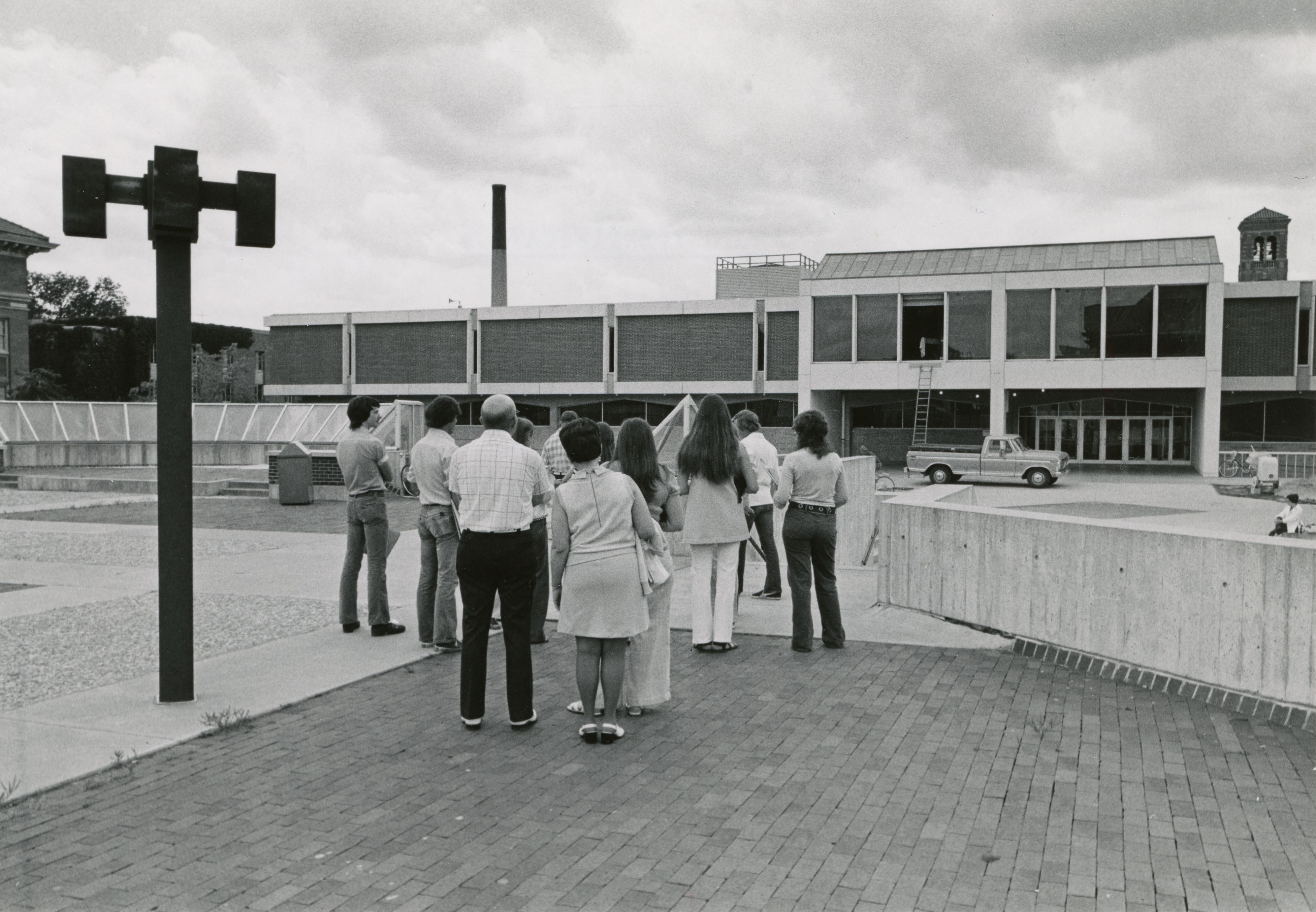
As early as August 1966, the college asked the Board of Regents for $2 million for Unit II of the library. In December 1970, the Regents authorized the university to begin negotiations with an architect for a $3 million project. In April 1971, the Regents approved selection of Thorson, Brom, Broshar, Snyder of Waterloo for architectural services. Plans were complete and on display by November 1971. Funding for the project would come from academic revenue bonds authorized by the General Assembly. In October 1972, the Regents approved contracts for the library addition. John G. Miller Construction Company of Waterloo was the general contractor; Young Plumbing and Heating Company of Waterloo was the mechanical contractor; and Paulson Electric Company of Waterloo was the electrical contractor. The addition would add 82,300 square feet to the library, increase seating to about 2,100 students, and bring the book capacity up to at least 700,000 volumes. It also included some renovation of the existing structure.
Work began on Phase II in March 1973 and mirrored Phase I. In May, the main entrance to the library was closed for the summer for alterations. Officials hoped the addition would be complete by September 1974, but construction and delays in ordering furniture slowed progress. Rod hoped he and the staff would spend much of the winter 1974 break supervising final touches and moving the collections.
The addition was ready in January 1975. It offered greatly expanded bookstacks and study space as well as separate quarters for Documents and Maps, Art and Music, and Special Collections and University Archives. The student newspaper, the Northern Iowan, discussed the addition in an editorial. The editorial thanked the General Assembly, Regents, administration and others responsible for the work. It said, "Nothing appears to have missed the designers' eyes--aesthetics, acoustics, and comfort are more than abundant in every corner." Iowa author Frederick Manfred was the keynote speaker at the dedication of the addition on May 6, 1976, where he talked about the value of books and reading in his life.
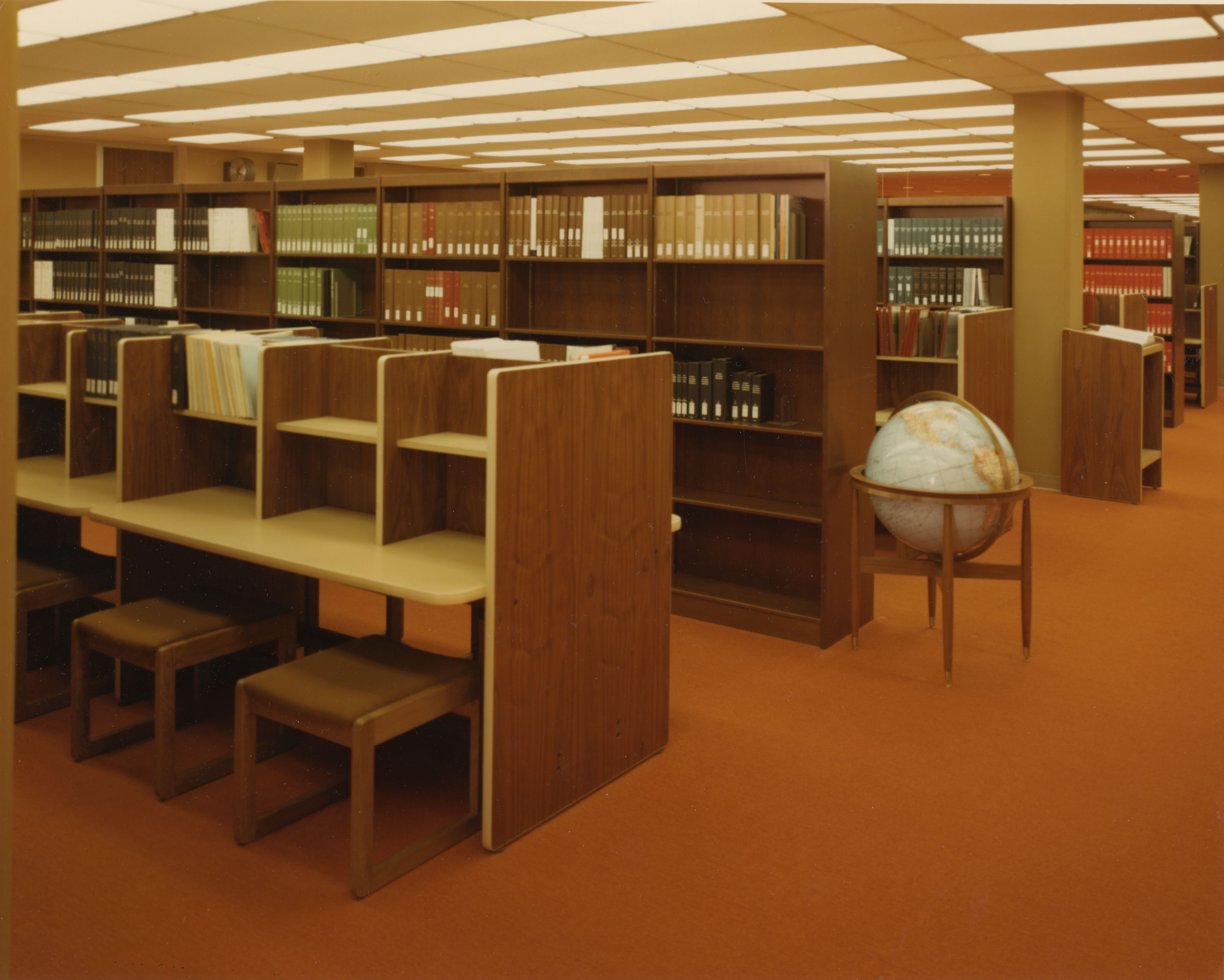
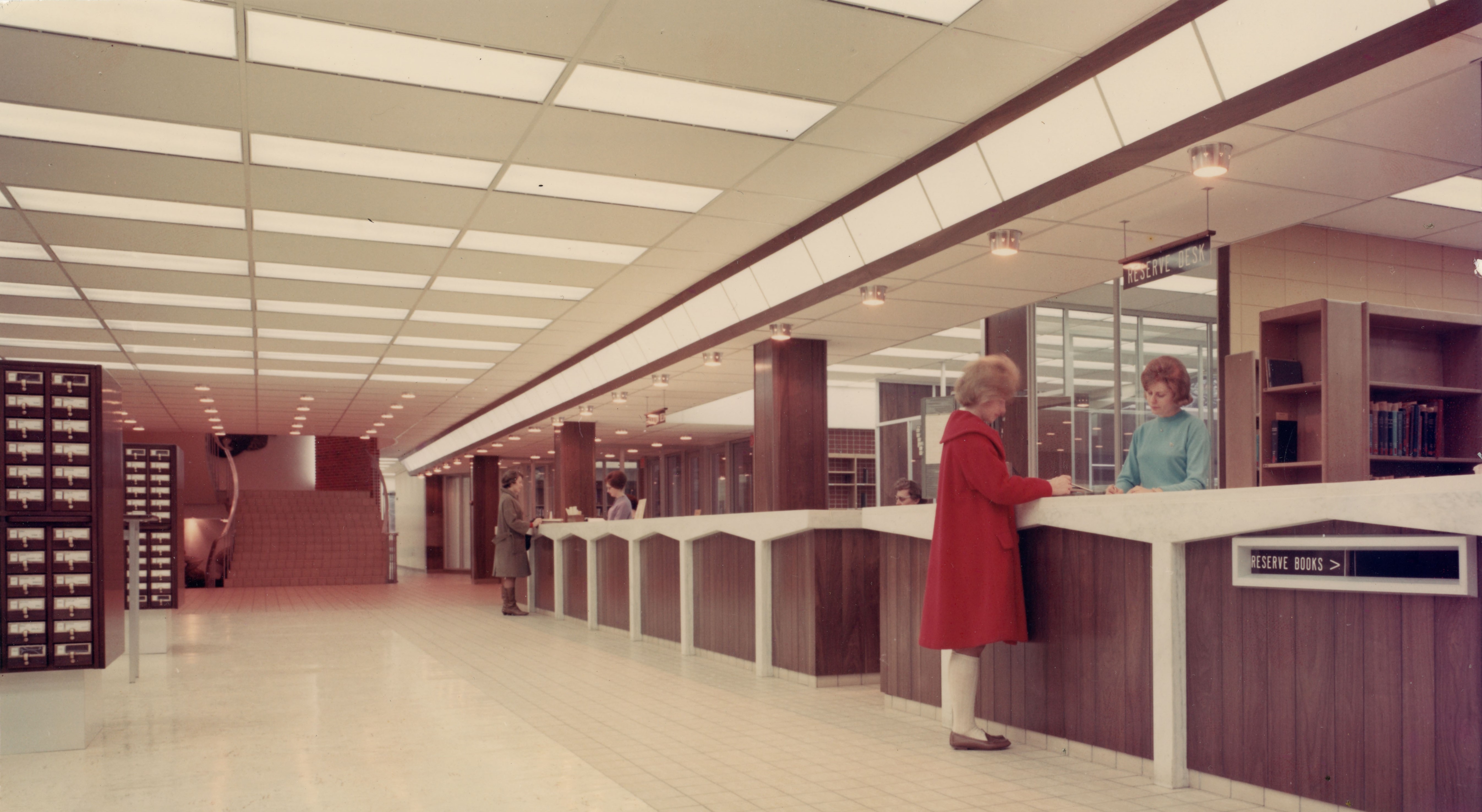
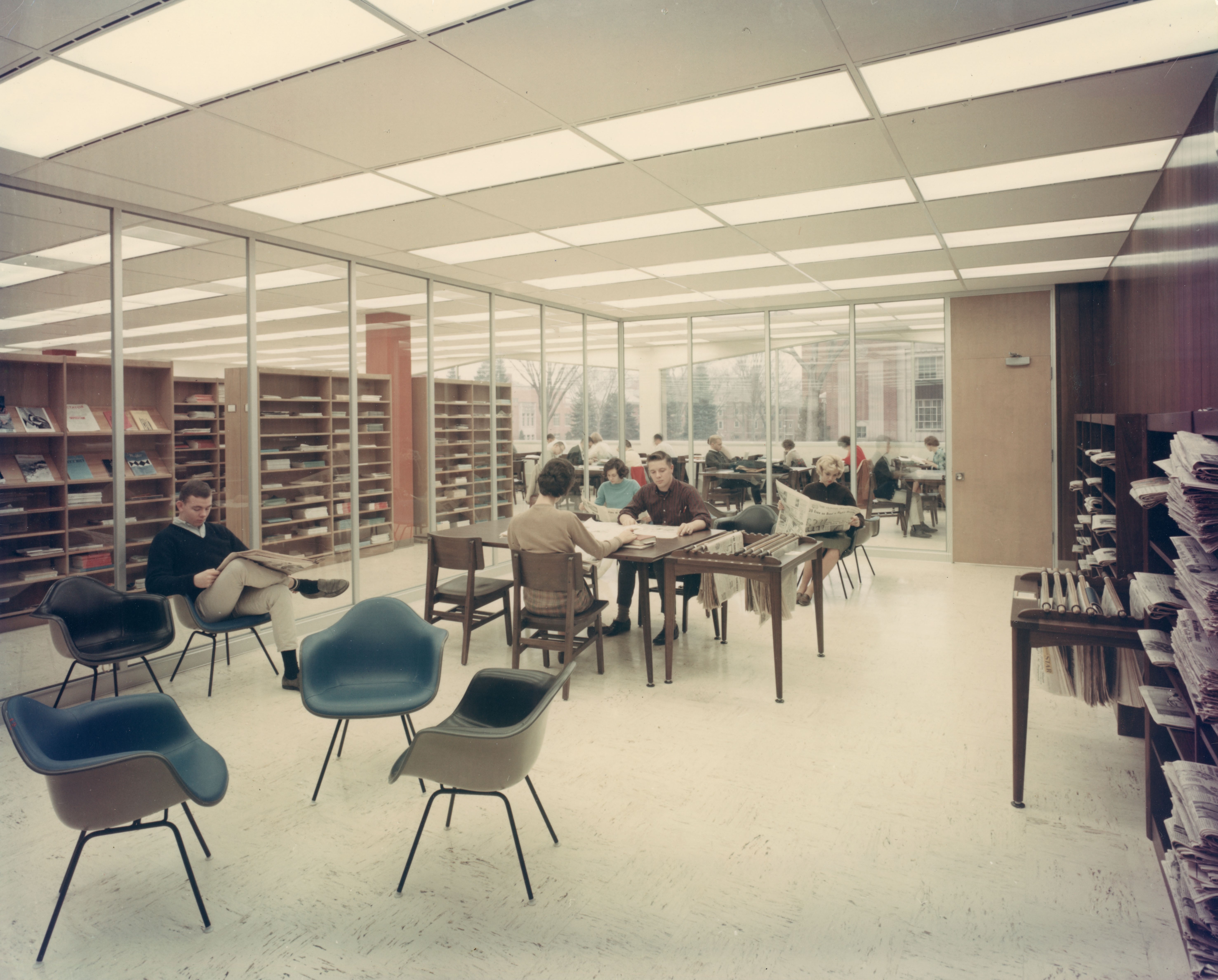
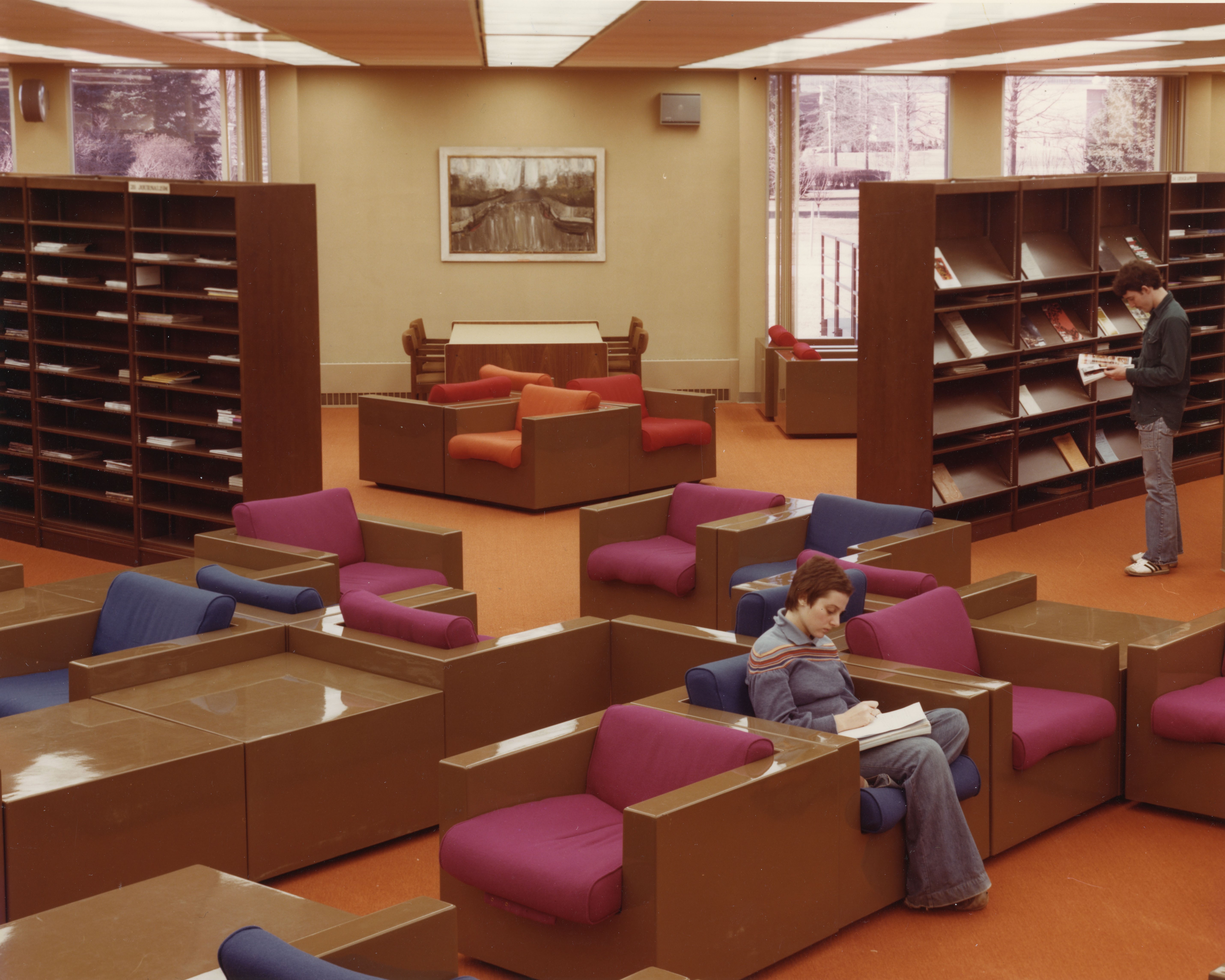
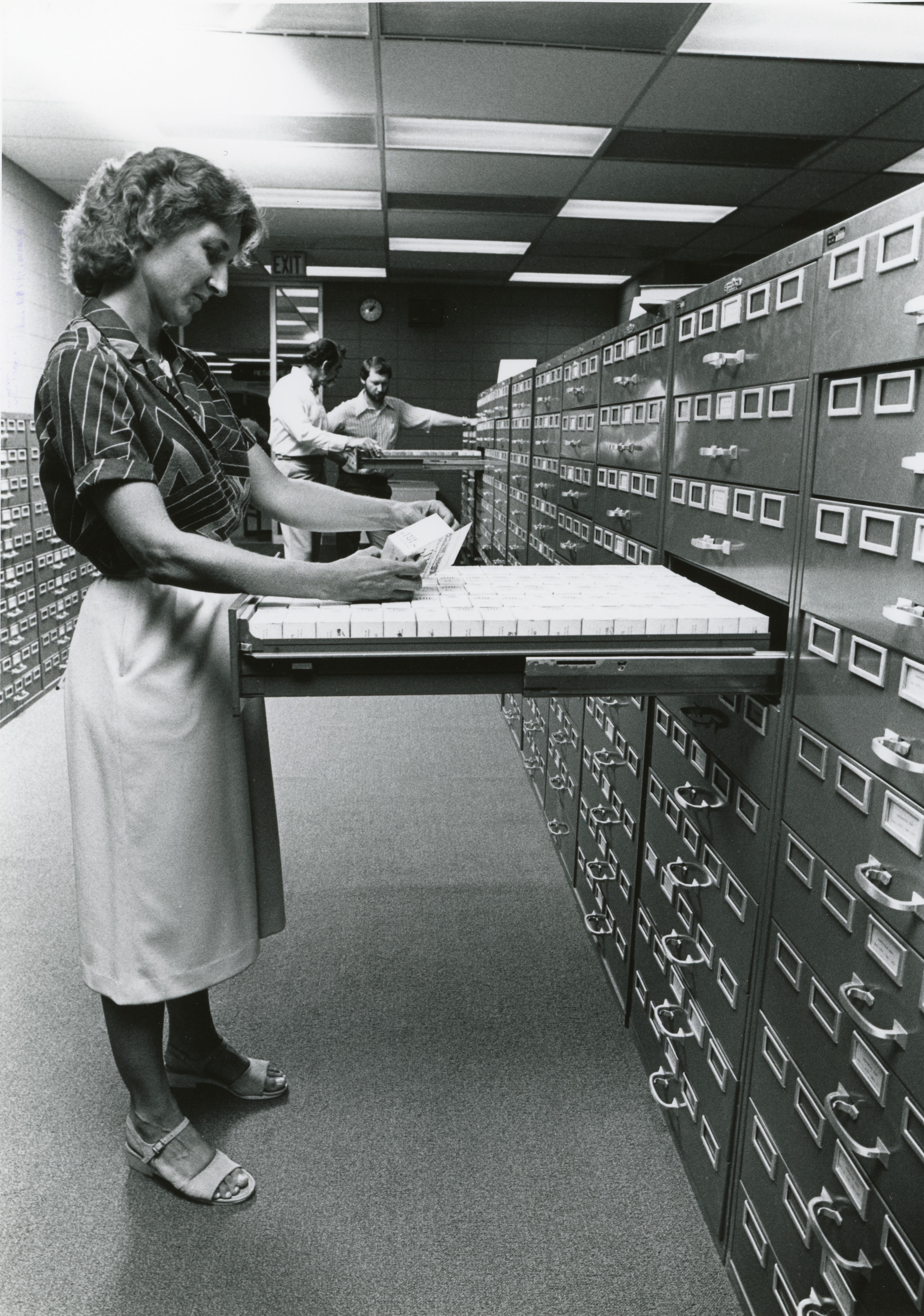
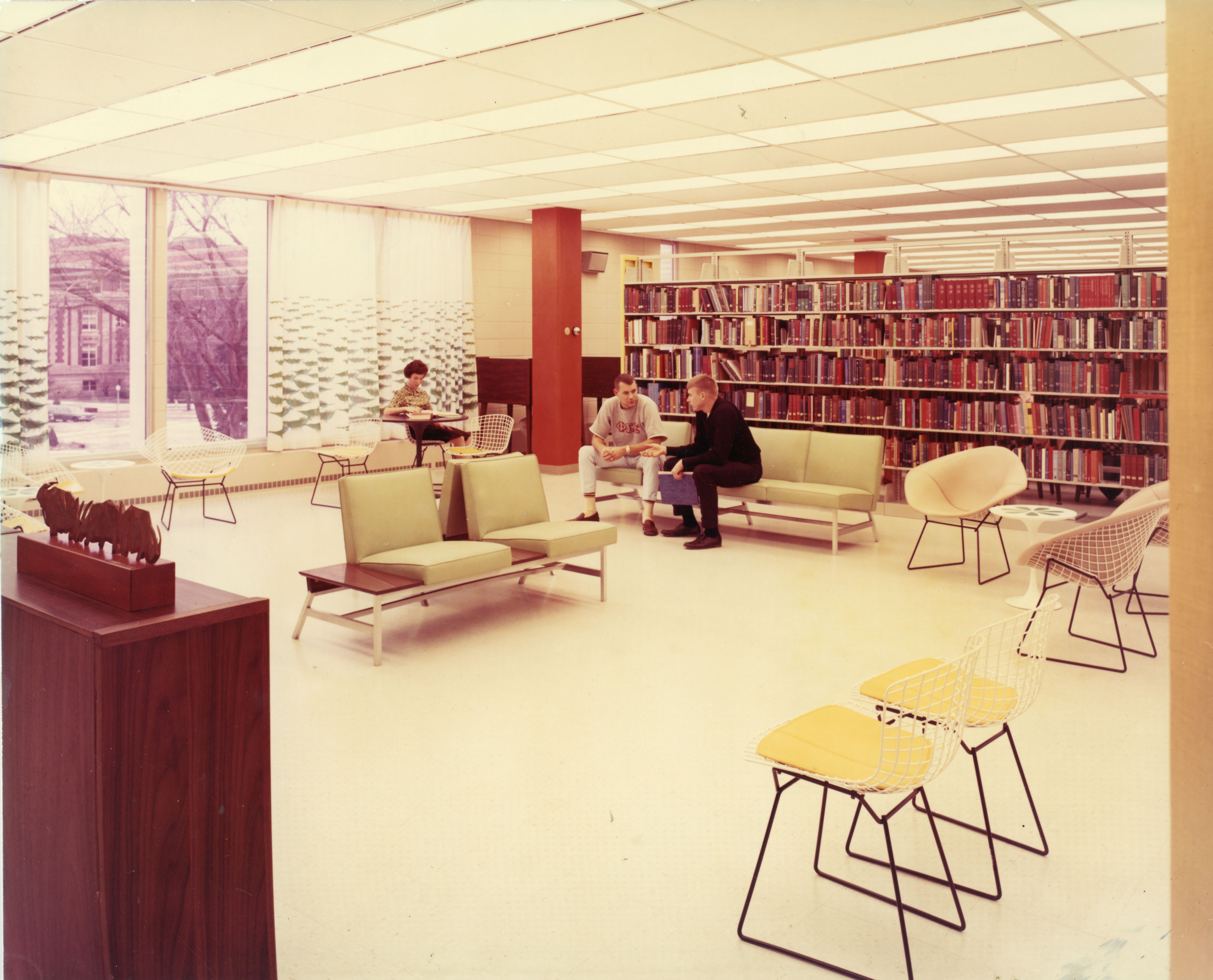
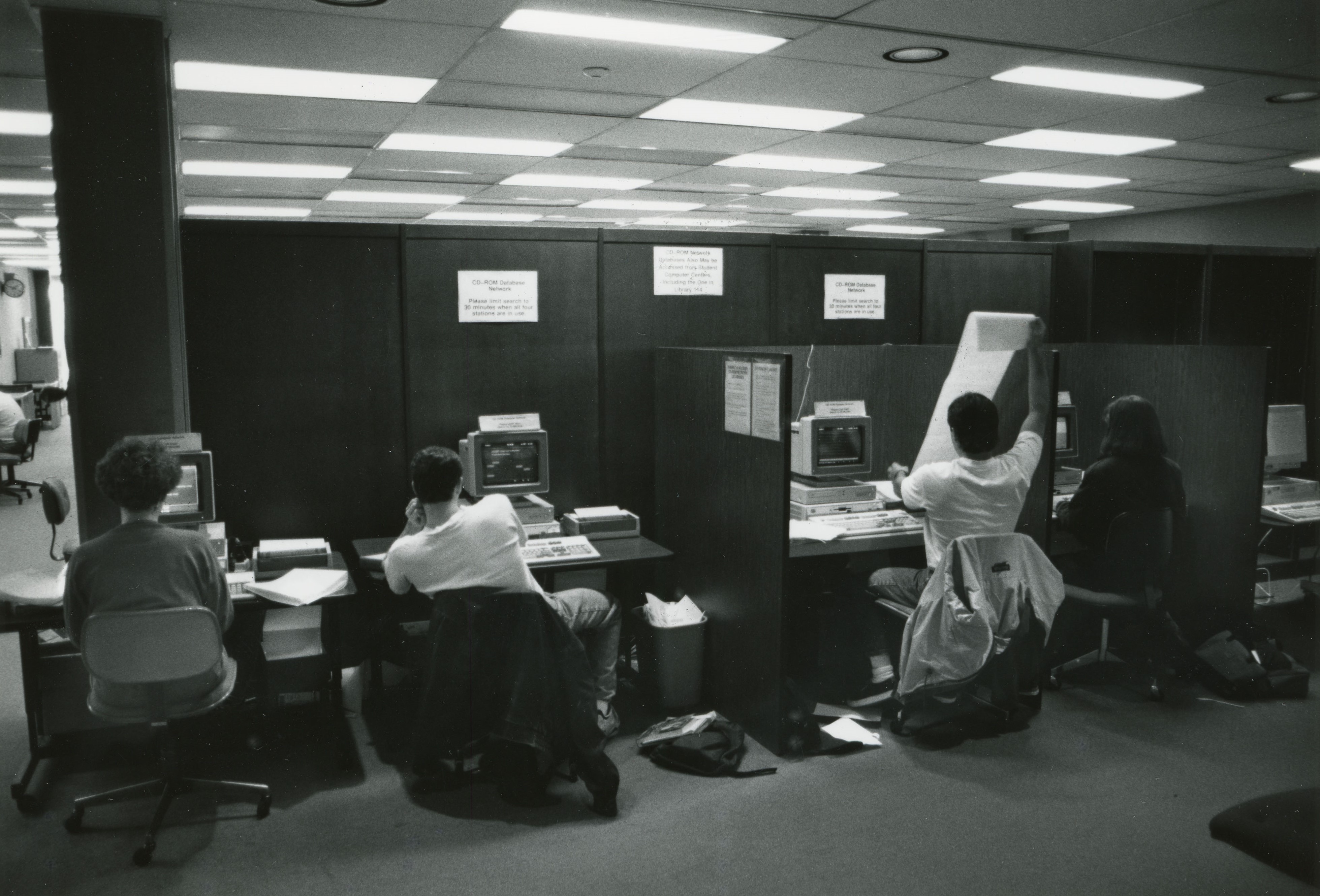
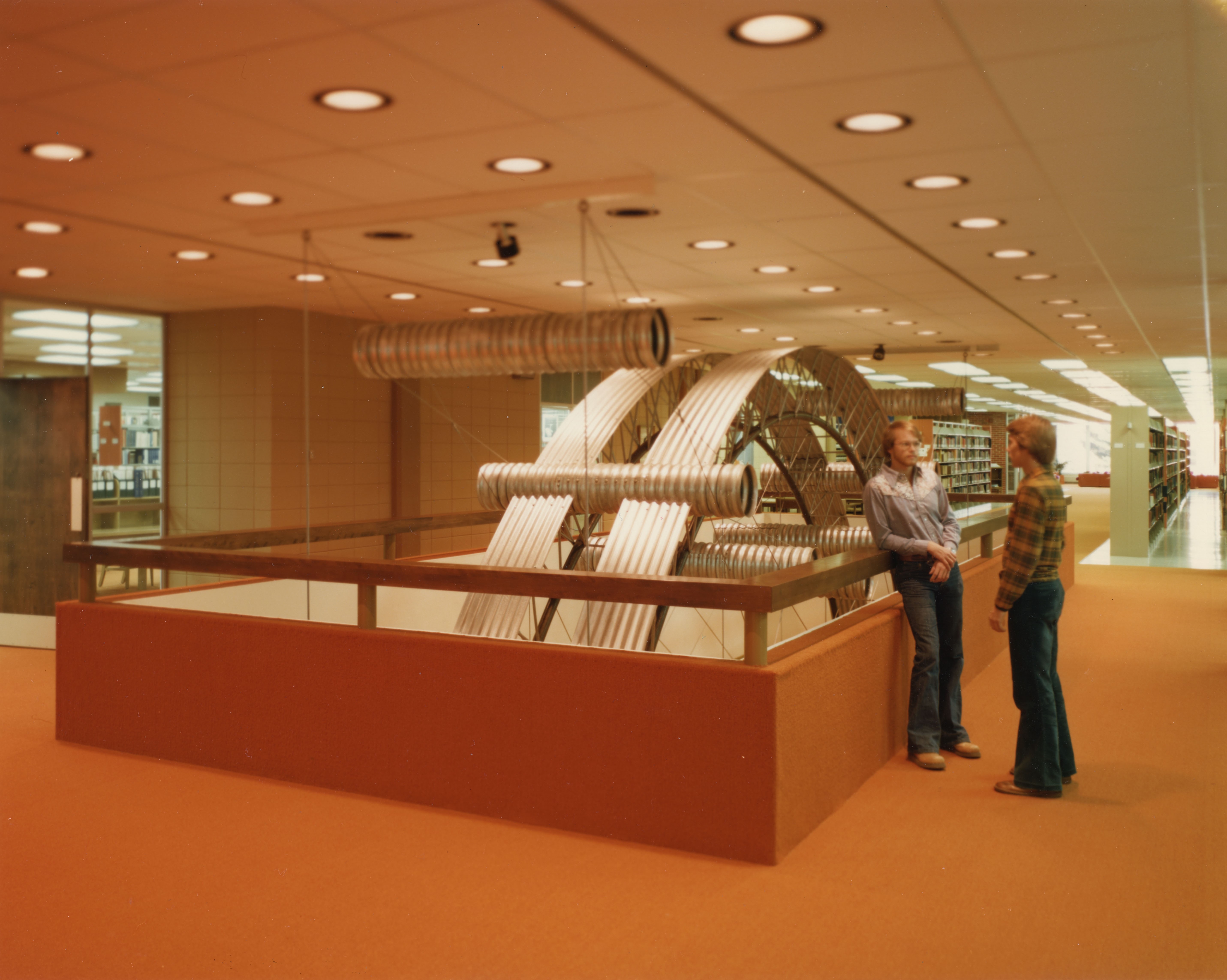
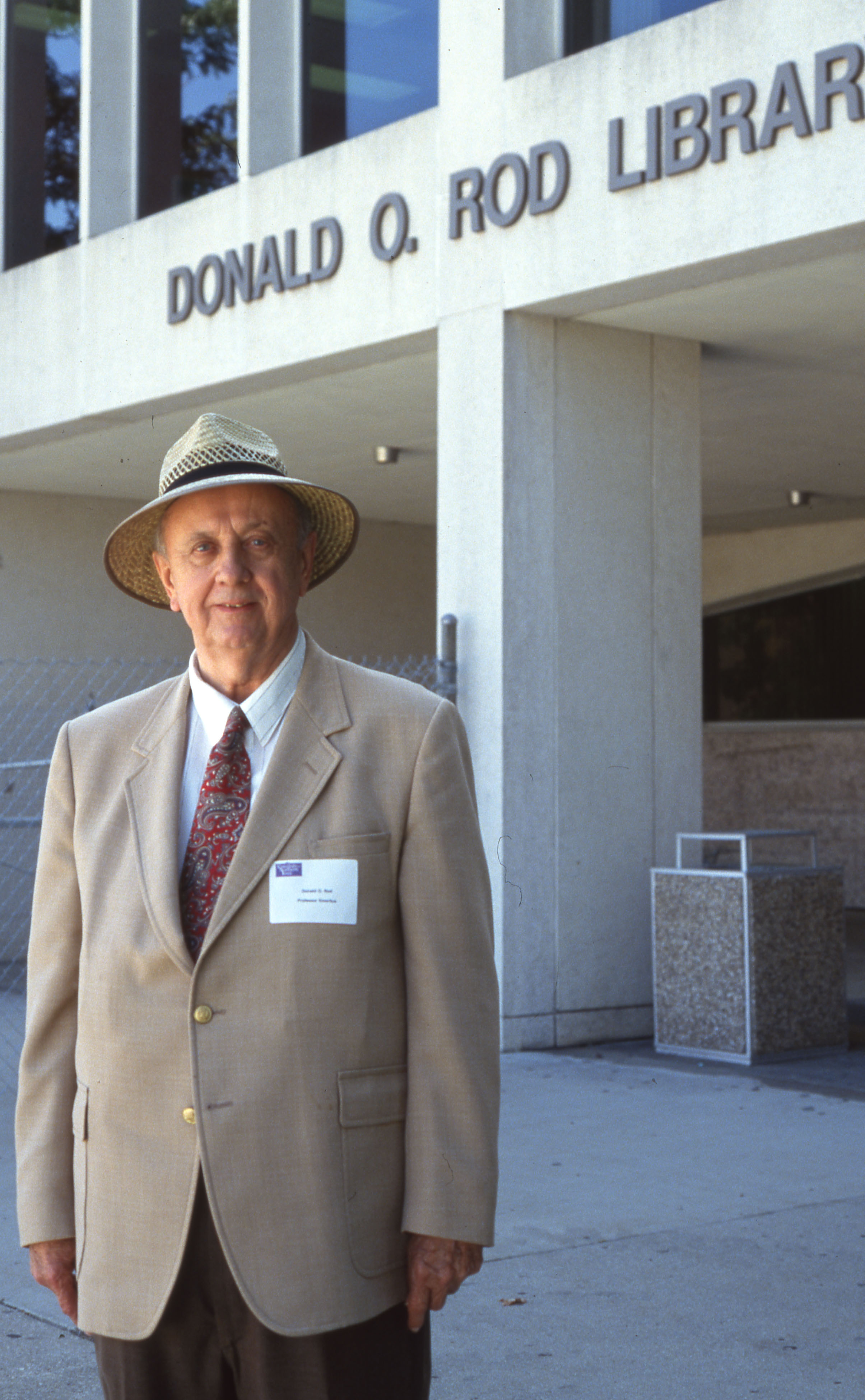
In 1980, following the death of Professor Josef Fox, a group of his friends and students circulated a petition asking the library be named in his honor. The administration took no action. In April 1986, the building was named the Rod Library to honor the contributions of Donald Olaf Rod, who served as director from 1953 through 1986. In 1953, when Rod arrived on campus, the library had an operating budget of $70,000, including a book budget of $15,000. The collection numbered 150,000 volumes. When he retired in 1986, the budget was $2.5 million, with $759,000 for books, and a collection over 600,000 volumes.
In spring 1989, the General Assembly approved $15,000 to begin planning for a $7 million library addition, which would include space for the Educational Media Center. In November 1989, the Regents selected Herbert, Lewis, Kruse, and Blunck of Des Moines as the architect for the project. Planning began, but due to economic difficulties, funding was not obtained until June 1993, when the Regents sold $7.4 million in academic revenue bonds to finance the work.
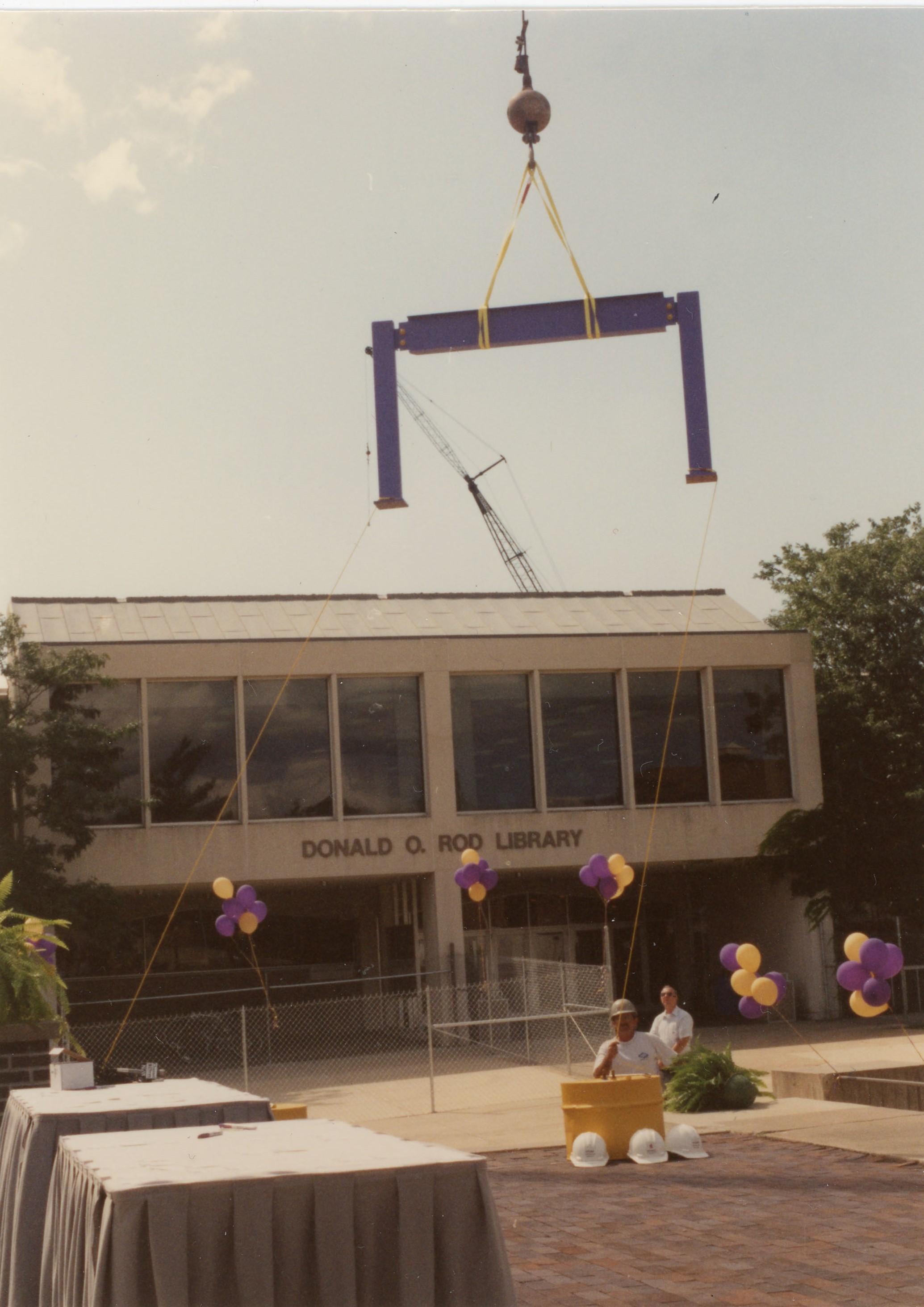
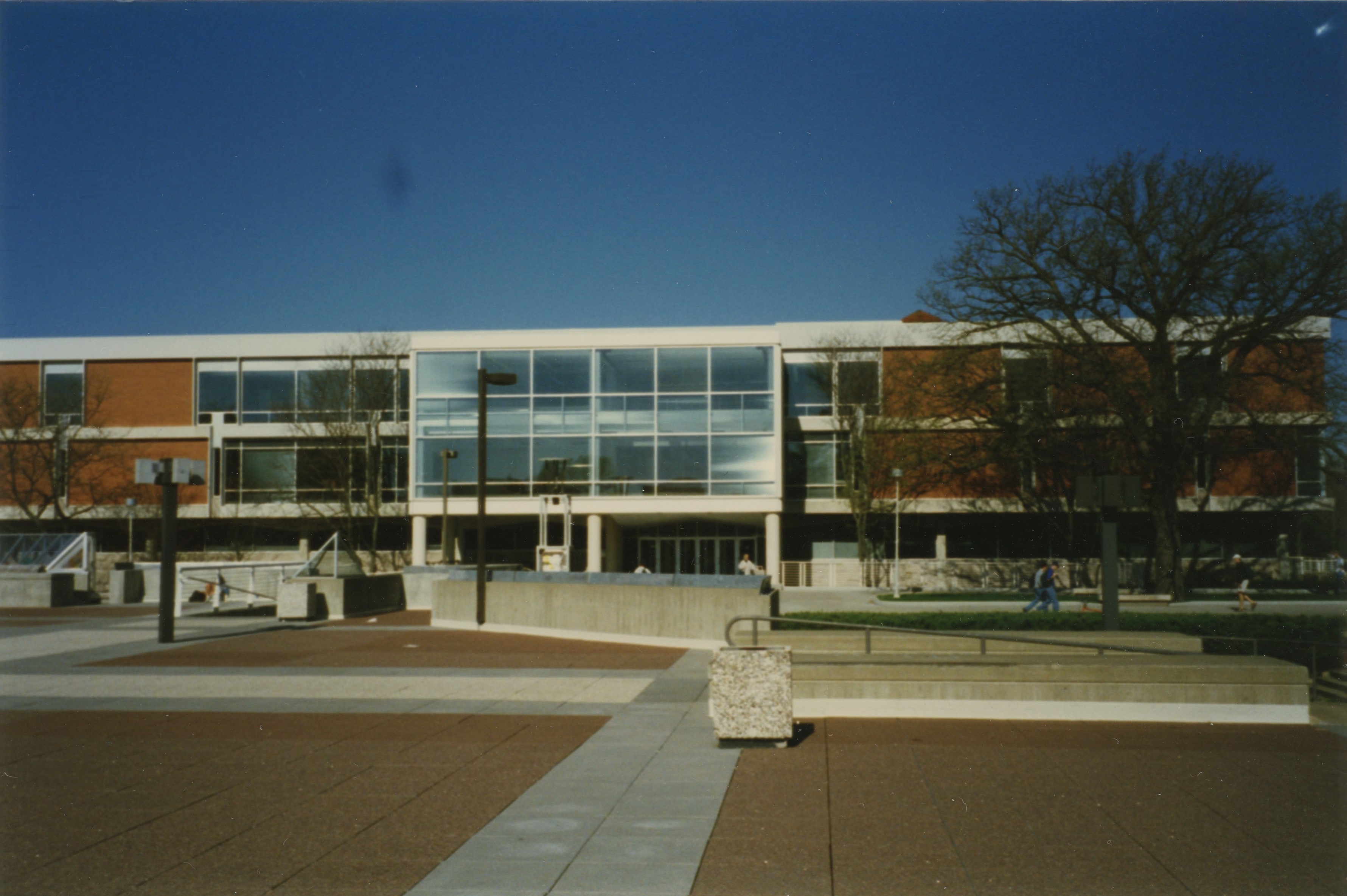
Work began on Phase III of the Rod Library in July 1993 with a formal roof beam raising ceremony on August 3. Story Construction Company of Ames was the general contractor. The target completion date was summer 1995. The project would include constructing an additional level on top of the existing building and extensive remodeling of library facilities. Exterior and interior modifications, especially in window design and lounge layout, were also included. Instead of including space for the Educational Media Center, the fourth level addition would house the Center for the Enhancement of Teaching, as well as bookstacks and study space. Several facilities would be shifted on the existing three levels. The Documents and Maps Collection would move from the third to the second level. The Youth Collection would move from the first to the third level, and Special Collections and University Archives would move from the second to the third level. All periodicals services would be consolidated on the first level.
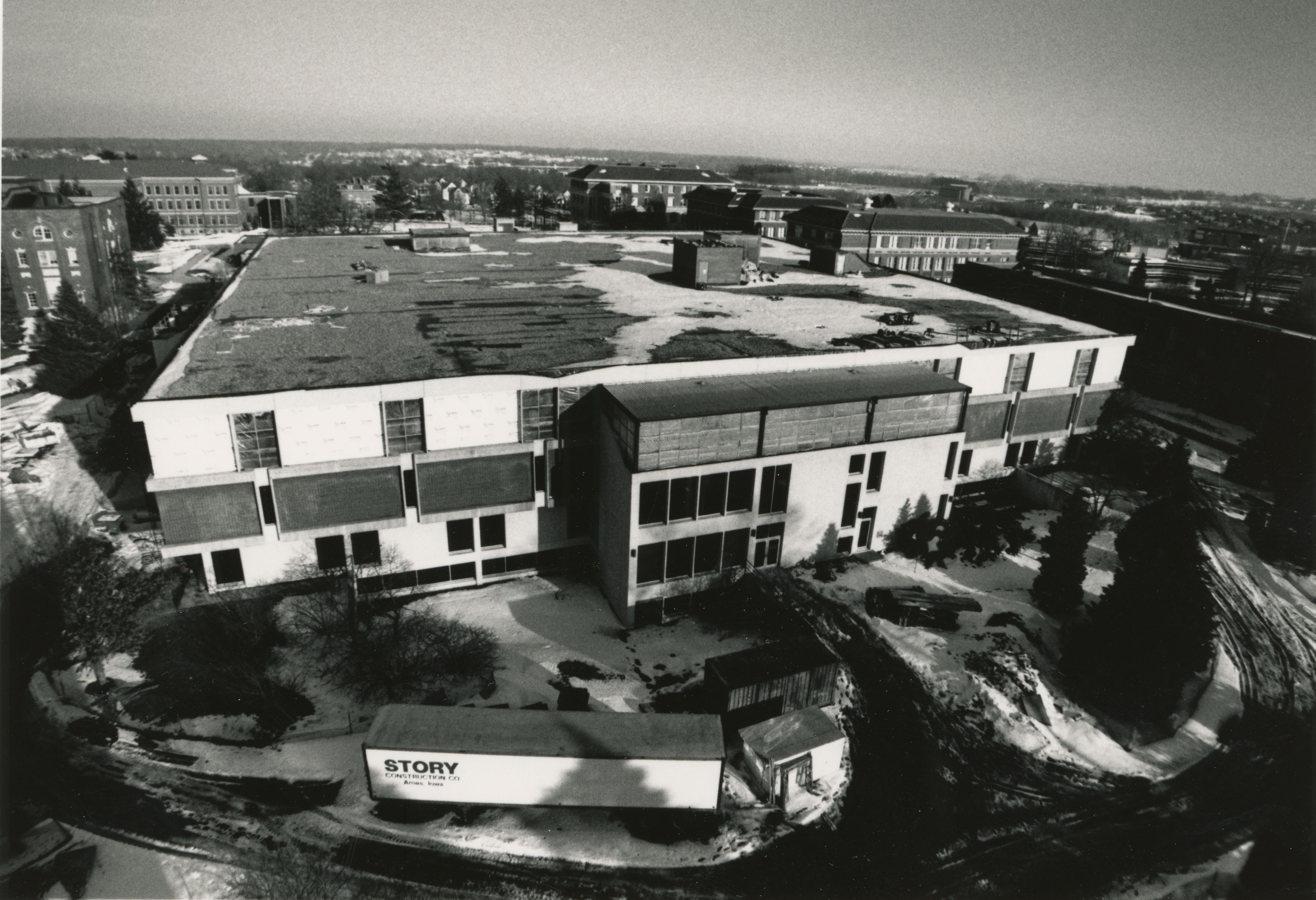
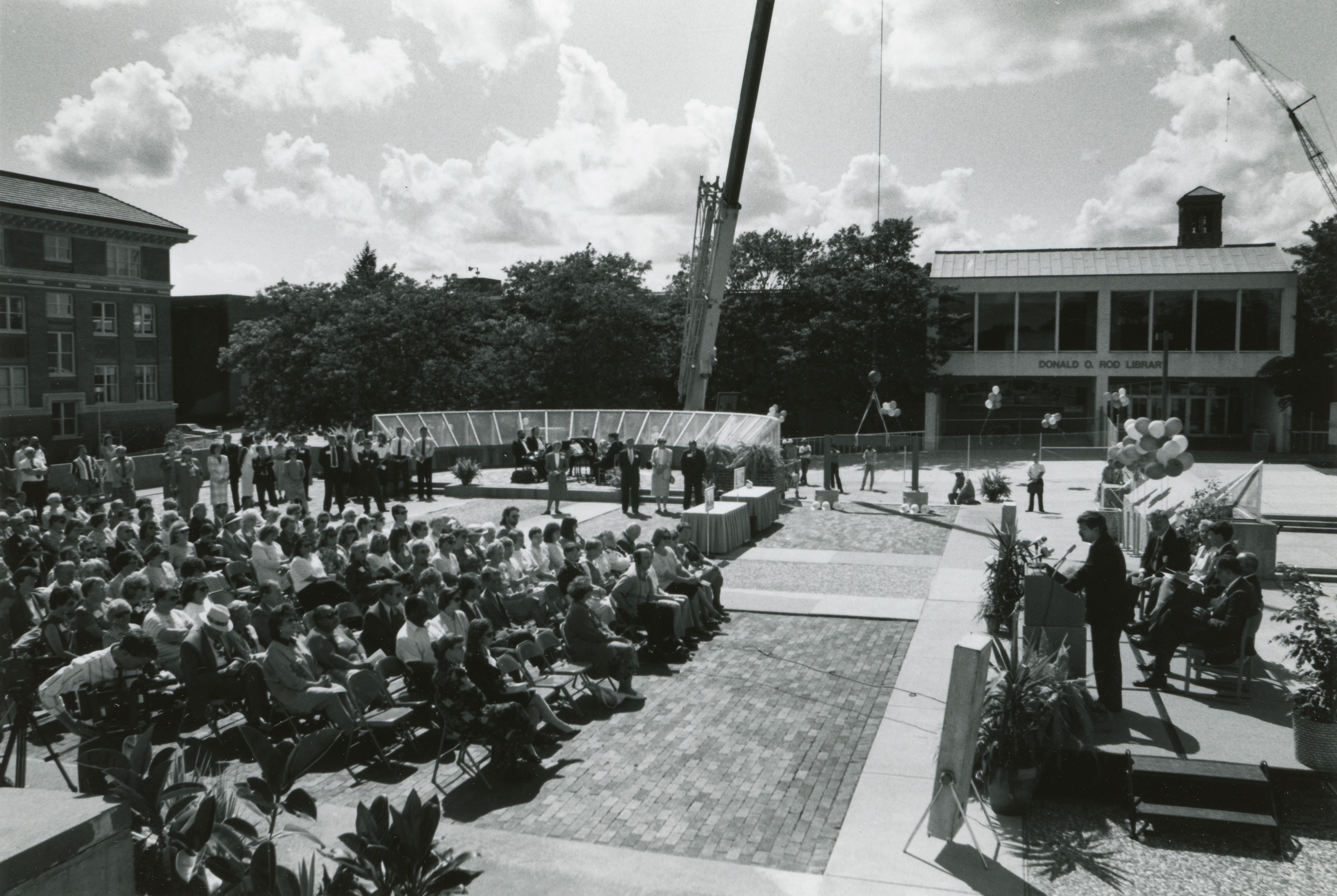
Construction and renovation work occurred simultaneously. Story Construction supervisor Martin Miille cited this complication as an advantage. When his crews faced lulls in one phase of their work, they could refocus their efforts on the other phase. Cooperation between Story Construction and the library staff helped keep inconvenience to patrons at a minimum. The library was closed only a single day during the project, which was completed in summer 1995. On December 15, 1995, Lieutenant Governor Joy Corning (’51, ’54) spoke at the dedication of the addition. The project added space for 250,000 books, 400 study spaces, and 12 group study rooms.
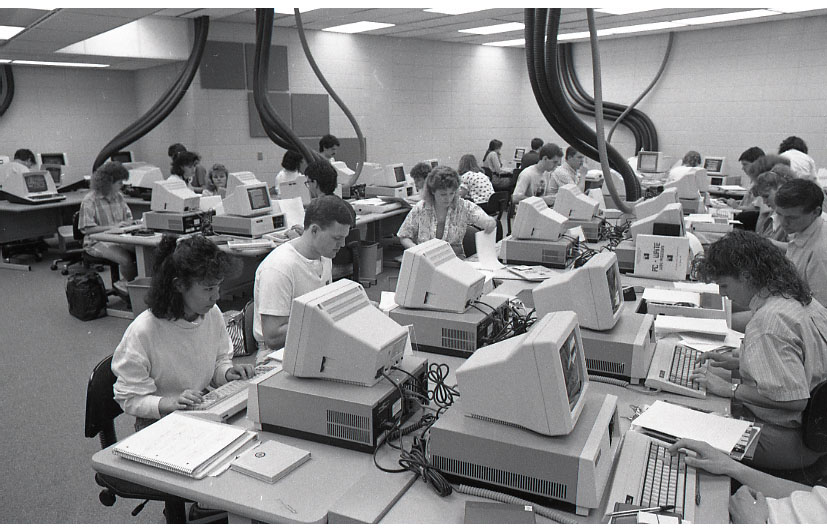
In 1997, a new Copy Center was added to the lower level of the building. Moveable compact shelving was installed in summer 1998 for periodicals on the lower level.
For more information about Rod Library and its services, visit https://library.uni.edu/.
Compiled by Library Assistant Susan Witthoft; edited by University Archivist Gerald L. Peterson, July 1996; substantially revised by Gerald L. Peterson, with research assistance by Student Assistant Jacki Ellenwood and scanning by Library Assistant Gail Briddle, February-March 2004; updated March 22, 2012; photos updated and citations added by Student Assistant Nicholas Steffens, December 9, 2021; content revised and updated by Library Assistant Hannah Bernhard, February 2026.